SEO Content Writer Tools: Manual vs Automated Platforms
Explore the evolving landscape of content creation tools, comparing manual writing with fully automated platforms. Discover which approach best suits your content strategy and business needs.

Zakariae

The content marketing landscape has fundamentally shifted. What once required teams of writers, editors, and SEO specialists working around the clock can now be accomplished through intelligent automation, yet many marketers remain uncertain about which approach delivers the best results for their specific needs. Whether you're an SEO agency juggling multiple client accounts, a small business owner wearing every hat, or a content marketing manager at a B2B company trying to scale output without scaling headcount, understanding the spectrum of content creation tools has never been more critical.
The choice between manual content creation and fully automated platforms isn't simply about speed versus quality anymore. Modern AI-powered solutions have blurred these lines considerably, offering sophisticated outputs that rival human writers while delivering at scales previously unimaginable. This comprehensive comparison will walk you through everything you need to know about selecting the right approach for your content strategy, examining the strengths, limitations, and ideal use cases for each methodology.
Key Takeaways
- Manual content creation offers unmatched originality and subject matter expertise but creates significant bottlenecks that limit scaling potential and increase time-to-publish by 15x or more compared to automated alternatives.
- Fully automated platforms can produce publication-ready, SEO-optimized articles with images, internal links, and multimedia elements in minutes rather than days, dramatically reducing cost per article.
- Hybrid approaches combining AI generation with human oversight often deliver the best balance of quality, consistency, and efficiency for most marketing teams.
- Brand voice consistency is achievable through both methods, but automated platforms with knowledge base features can maintain voice across hundreds of articles more reliably than rotating human writers.
- ROI calculations must account for hidden costs in manual workflows, including revision cycles, editor time, SEO optimization passes, and image sourcing.
- Publishing velocity directly impacts organic traffic growth, with teams publishing 30 or more articles monthly seeing significantly faster domain authority improvements.
Understanding the Content Creation Spectrum
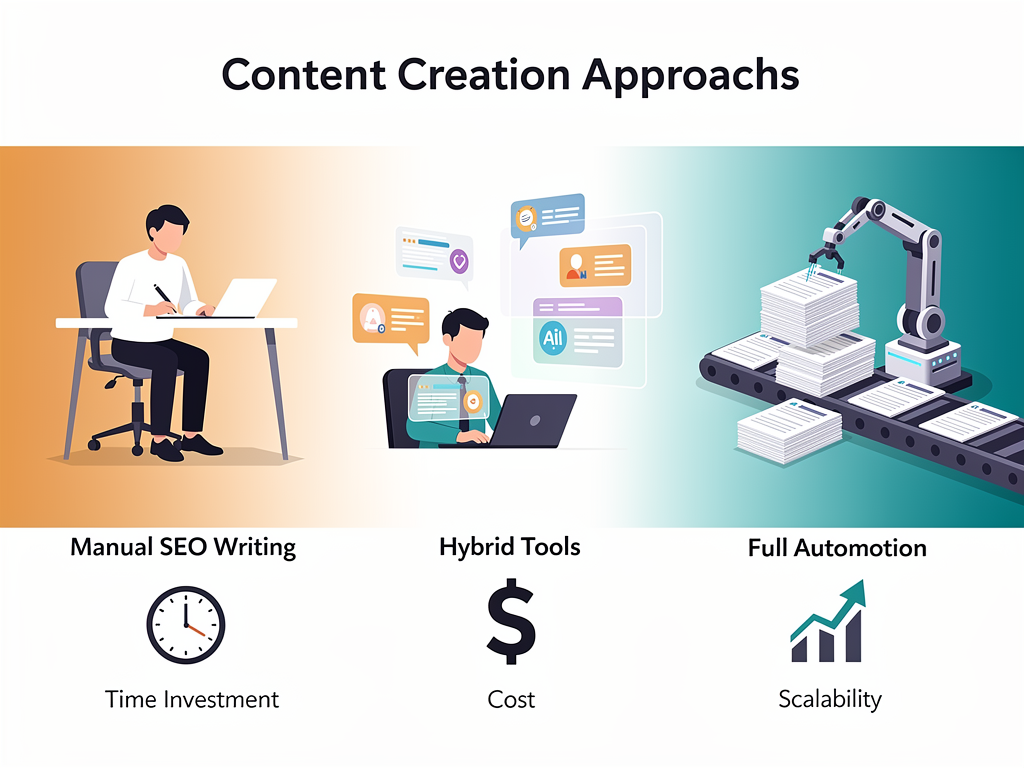
Before diving into specific comparisons, it's essential to understand that content creation tools exist on a broad spectrum rather than in binary categories. At one end, you have completely manual processes where human writers research, outline, draft, edit, optimize, and format every piece from scratch. At the opposite end, fully automated platforms handle the entire workflow from topic ideation through publication with minimal human intervention.
Between these extremes lie various hybrid solutions: AI writing assistants that help human writers work faster, optimization tools that analyze and improve existing content, and semi-automated platforms that generate drafts requiring human editing. Each position on this spectrum offers distinct advantages depending on your content goals, budget constraints, team capabilities, and quality requirements.
The seo content writer tool category has expanded dramatically over the past two years, with new entrants offering increasingly sophisticated capabilities. Understanding where different solutions fall on this spectrum helps you make informed decisions about which tools deserve your investment and attention. Some organizations benefit from maintaining multiple tools across the spectrum, using manual creation for cornerstone content while leveraging automation for supporting articles and regular blog posts.
The Case for Manual Content Creation
Manual content creation remains the gold standard for certain content types and situations. When you need original reporting, expert interviews, proprietary research, or deeply nuanced industry analysis, human writers bring irreplaceable value to the table. They can conduct primary research, synthesize complex information from multiple sources, and inject genuine expertise and personality into their work.
Human writers excel at creating content that requires emotional intelligence and cultural sensitivity. They understand context, can read between the lines of industry developments, and bring lived experience to their writing. For thought leadership pieces, executive bylines, and content designed to establish genuine authority, manual creation often produces superior results that resonate more deeply with sophisticated audiences.
The manual approach also offers complete control over every aspect of the content. Writers can pivot mid-article based on new insights, incorporate breaking news, and make judgment calls about tone and approach that automated systems might miss. This flexibility proves particularly valuable for controversial topics, crisis communications, or content addressing sensitive subjects where nuance matters enormously.
Limitations of Manual Workflows
Despite these advantages, manual content creation comes with significant drawbacks that increasingly impact competitive positioning. Research indicates that manual writing processes are now at least 15 times slower than automated systems, creating substantial bottlenecks that limit growth potential. A skilled writer might produce one to three high-quality articles per day, while automated platforms can generate dozens of publication-ready pieces in the same timeframe.
Cost structures present another challenge. Professional content writers command rates ranging from $0.10 to $1.00 per word or more for specialized content, meaning a single 2,000-word article might cost anywhere from $200 to $2,000. When you factor in editing, SEO optimization, image sourcing, and formatting, the true cost per published piece often exceeds initial estimates by 40% or more.
Consistency also suffers in manual workflows. Different writers bring different styles, quality levels, and interpretations of brand guidelines. Maintaining a unified voice across dozens or hundreds of articles requires extensive style guides, editorial oversight, and revision cycles that add time and cost to every piece. For teams publishing at scale, this inconsistency can dilute brand identity and confuse audiences.
The Rise of Fully Automated Content Platforms
Fully automated content platforms represent the cutting edge of content marketing technology. These systems handle the entire content creation workflow from initial topic research through final publication, incorporating SEO optimization, image generation, internal linking, and even multimedia embedding without requiring human intervention at each step.
Modern automated platforms leverage advanced language models trained on vast datasets to produce content that reads naturally and engages readers effectively. They analyze search intent, competitor content, and ranking factors to create articles optimized for both human readers and search engine algorithms. The best platforms also incorporate brand voice training, allowing them to maintain consistent tone and style across all outputs.
What distinguishes fully automated platforms from simple AI writing tools is their end-to-end workflow automation. Rather than just generating text that requires formatting, optimization, and publishing by humans, these platforms handle every step. They research topics, generate comprehensive outlines, write full articles with proper heading structures, create or source relevant images, add schema markup, insert internal links, and publish directly to your CMS.

Key Capabilities of Modern Automated Platforms
Today's leading automated content platforms offer capabilities that would have seemed impossible just a few years ago. AI-powered keyword research identifies high-opportunity topics based on search volume, competition levels, and relevance to your business. Content planning features generate editorial calendars aligned with your strategic goals, ensuring consistent publishing schedules without manual planning overhead.
Advanced platforms like SeoSmart produce long-form articles of 5,000 words or more, complete with images, internal links, and embedded YouTube videos. This comprehensive approach ensures each piece of content arrives publication-ready, eliminating the multiple handoffs and revision cycles that slow down manual workflows. The platform's knowledge base feature allows you to train the AI on your brand voice, product details, and industry terminology, ensuring outputs align with your established content standards.
Integration capabilities have also matured significantly. One-click publishing to WordPress, Webflow, Shopify, and other popular content management systems eliminates the copy-paste workflows that waste time and introduce formatting errors. Schema markup automation ensures your content is properly structured for rich snippets and enhanced search results without requiring technical SEO expertise from your team.
Head-to-Head Comparison: Speed and Efficiency
When comparing manual and automated approaches, speed differences are immediately apparent and substantial. A professional writer working on a comprehensive 3,000-word article typically needs four to eight hours for research, writing, and initial editing. Add another two to four hours for SEO optimization, image sourcing, formatting, and publication preparation. The total time investment for a single quality article often reaches 10 to 12 hours.
Fully automated platforms compress this timeline dramatically. From topic selection to published article, the entire process can complete in minutes rather than hours. This efficiency gain isn't merely about speed for its own sake; it fundamentally changes what's possible for content marketing programs. Teams that previously published four articles monthly can now publish 30 or 60 without proportional increases in resources or budget.
| Metric | Manual Creation | Fully Automated |
|---|---|---|
| Time per 3,000-word article | 10-12 hours | 15-30 minutes |
| Articles per month (single resource) | 8-15 | 60+ |
| Time to first publish | 3-5 days | Same day |
| Revision cycles typical | 2-4 rounds | 0-1 rounds |
| SEO optimization included | Additional step | Built-in |
This efficiency advantage compounds over time. Organizations publishing at higher volumes build topical authority faster, capture more long-tail keywords, and establish stronger internal linking structures. The cumulative effect of consistent, high-volume publishing often outweighs the marginal quality advantages of slower manual approaches, particularly for competitive keywords where content freshness and comprehensiveness matter.
Quality and Accuracy Considerations
Quality concerns represent the primary hesitation many marketers have about automated content. Early AI writing tools produced content that was obviously machine-generated, filled with awkward phrasing, factual errors, and generic statements that failed to engage readers. These legitimate concerns have shaped perceptions that don't always reflect current capabilities.
Modern automated platforms have addressed many historical quality issues through advanced language models, knowledge base integration, and sophisticated prompt engineering. The best platforms produce content that passes AI detection tools, reads naturally, and provides genuine value to readers. They incorporate current information, cite relevant sources, and structure arguments logically.
However, quality comparisons must be context-specific. For highly technical content requiring deep subject matter expertise, manual creation by qualified experts typically produces superior results. For general informational content, product descriptions, how-to guides, and SEO-focused blog posts, automated platforms often match or exceed the quality of average freelance writers while maintaining perfect consistency.

Ensuring Accuracy in Automated Content
Factual accuracy remains an area requiring attention regardless of creation method. Human writers can misremember statistics, misattribute quotes, or perpetuate outdated information. Automated systems can generate plausible-sounding but incorrect statements, particularly for rapidly evolving topics or niche subjects with limited training data.
The solution for both approaches involves verification workflows and knowledge base management. Platforms that allow you to upload proprietary information, product specifications, and verified facts produce more accurate outputs than those relying solely on general training data. Similarly, editorial review processes that focus specifically on fact-checking rather than stylistic preferences help catch errors before publication.
Smart content teams implement tiered review processes based on content type and risk level. High-stakes content like medical information, legal guidance, or financial advice receives thorough human review regardless of creation method. Lower-risk content like general blog posts or product roundups might receive lighter review or proceed directly to publication after automated quality checks.
Cost Analysis: True Investment Requirements
Understanding the true cost of content creation requires looking beyond obvious line items to capture the full investment each approach demands. Manual content creation costs extend far beyond writer payments to include editing, SEO optimization, image licensing, formatting, and project management overhead. These hidden costs often double or triple the apparent per-article expense.
Consider a typical manual workflow for a B2B company producing blog content. A freelance writer charges $300 for a 2,000-word article. An editor spends 90 minutes reviewing and revising at an internal cost of $75. An SEO specialist optimizes the piece for 45 minutes at $50. Someone sources and licenses images for $30 plus 30 minutes of time. Finally, a team member formats and publishes the content, adding another 30 minutes. The true cost approaches $500 or more per article when all factors are included.
Automated platforms operate on fundamentally different economics. Subscription-based pricing spreads costs across high volumes, dramatically reducing per-article expenses. A platform producing 30 articles monthly for a fixed subscription fee might deliver content at $10 to $30 per article, representing cost reductions of 80% or more compared to fully manual approaches.
ROI Calculations for Different Business Types
Return on investment calculations vary significantly based on business model and content goals. For affiliate marketers and niche site builders, the math often favors automation strongly. These businesses succeed through volume, capturing long-tail keywords across broad topic areas. The ability to publish 60 articles monthly rather than 10 can mean the difference between a profitable site and one that never gains traction.
E-commerce stores face similar calculations. Product descriptions, category pages, buying guides, and comparison content all benefit from automation's efficiency. A store with 500 products needing optimized descriptions would spend months and thousands of dollars on manual creation but could complete the project in weeks with automated assistance.
B2B companies and SaaS businesses often find hybrid approaches most cost-effective. Automated platforms handle the volume of supporting content needed to build topical authority, while manual creation focuses on cornerstone pieces, case studies, and thought leadership that require human expertise and original insights. This combination maximizes both efficiency and quality where each matters most.
SEO Performance: Which Approach Ranks Better?
The ultimate test for any content creation approach is search engine performance. Does the content rank? Does it drive organic traffic? Does it convert visitors into customers or leads? These questions matter far more than theoretical debates about quality or authenticity.
Evidence increasingly suggests that well-optimized automated content performs comparably to manual content in search rankings. Google's algorithms evaluate content based on relevance, comprehensiveness, user experience signals, and authority factors rather than creation method. An automated article that thoroughly addresses search intent, incorporates relevant keywords naturally, and provides genuine value can outrank a manually written piece that misses key subtopics or lacks proper optimization.
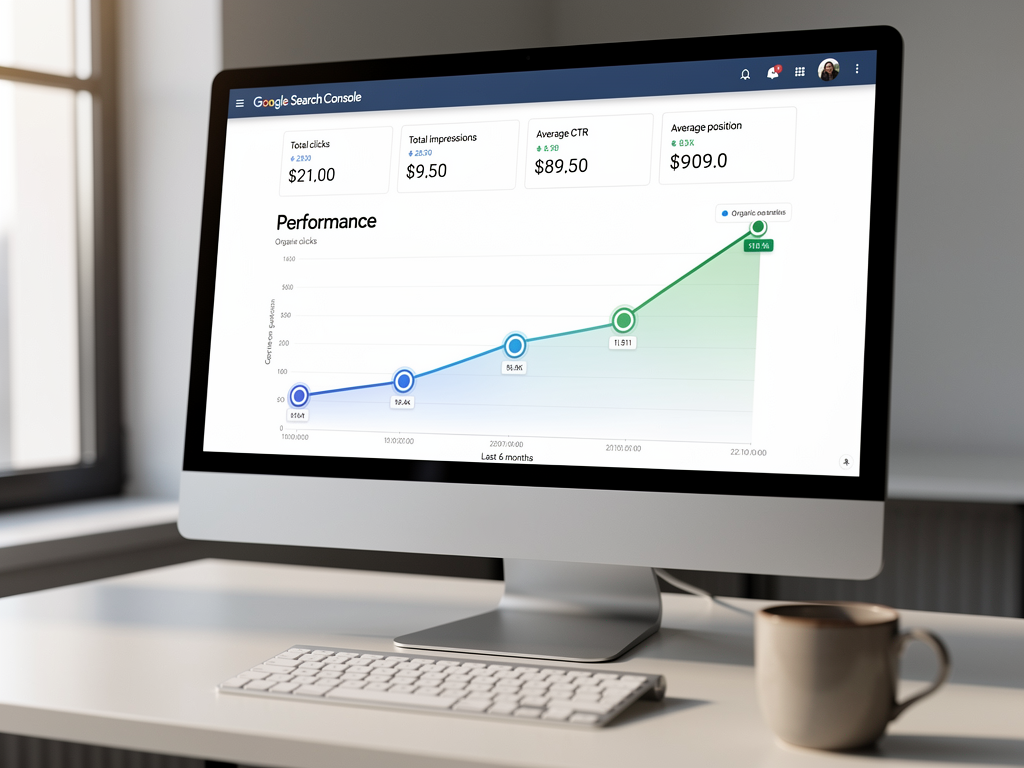
Publishing velocity also impacts SEO performance significantly. Search engines favor fresh content and reward sites that demonstrate ongoing activity and topical coverage. Teams publishing 30 articles monthly build authority faster than those publishing four, assuming comparable quality levels. The compound effect of consistent publishing creates momentum that's difficult to achieve with resource-constrained manual approaches.
Technical SEO Advantages of Automation
Automated platforms often excel at technical SEO elements that human writers frequently overlook or implement inconsistently. Schema markup, for instance, requires specific formatting that many writers don't understand. Automated platforms can apply appropriate schema types consistently across all content, improving chances for rich snippets and enhanced search results.
Internal linking represents another area where automation shines. Building comprehensive internal link structures manually requires maintaining awareness of all existing content and making deliberate linking decisions for each new piece. Automated platforms can analyze your entire content library and insert relevant internal links automatically, strengthening site architecture and distributing link equity effectively.
Meta titles, descriptions, and heading structures also benefit from automation's consistency. While individual writers might craft excellent meta descriptions sometimes, they often rush these elements or forget them entirely under deadline pressure. Automated systems apply the same optimization standards to every piece, ensuring no article publishes with missing or suboptimal metadata.
Brand Voice and Content Consistency
Maintaining consistent brand voice across large content libraries presents challenges for both manual and automated approaches, though the nature of these challenges differs significantly. Manual workflows struggle with consistency because different writers bring different styles, interpretations, and quality levels. Even with detailed style guides, variation creeps in as teams scale.
Automated platforms address consistency through knowledge base features and brand voice training. By uploading examples of your preferred tone, key messaging points, product terminology, and stylistic preferences, you can configure the system to produce content that sounds authentically like your brand. This training persists across all content, ensuring the 100th article maintains the same voice as the first.
The AI-powered content automation platform approach proves particularly valuable for agencies managing multiple client accounts. Each client's knowledge base contains their specific brand guidelines, ensuring content for different clients maintains distinct voices without requiring writers to context-switch or risk cross-contamination of brand elements.
Customization and Flexibility
Critics of automated content sometimes argue that it produces generic, one-size-fits-all outputs. While this criticism applied to earlier tools, modern platforms offer extensive customization options that address these concerns. Article templates, tone settings, target audience specifications, and content structure preferences all allow you to shape outputs to your specific needs.
Flexibility in content types has also expanded dramatically. Today's platforms can produce blog posts, product descriptions, landing page copy, email sequences, social media content, and more. Different content types require different approaches, and sophisticated platforms adjust their outputs accordingly rather than applying a single template to all requests.
The ability to incorporate proprietary information through knowledge bases further enhances customization. By uploading product specifications, customer testimonials, case study data, and industry research, you ensure automated content reflects your unique value propositions and competitive advantages rather than generic industry statements.

Workflow Integration and Publishing Efficiency
Content creation represents only part of the content marketing workflow. Getting content from draft to published state involves multiple steps that can create bottlenecks regardless of how efficiently the initial content was produced. Workflow integration capabilities significantly impact overall efficiency and should factor heavily into platform selection decisions.
Manual workflows typically involve multiple handoffs: writer to editor, editor to SEO specialist, SEO specialist to designer for images, designer to publisher for CMS entry. Each handoff introduces delays, communication overhead, and potential for errors or miscommunication. A single article might touch five or more people before going live, with each transition adding hours or days to the timeline.
Fully automated platforms compress these handoffs dramatically. One-click publishing to WordPress, Webflow, Shopify, and other CMS platforms eliminates the manual entry step entirely. Built-in image generation removes the need for separate design resources. Integrated SEO optimization means no separate optimization pass is required. The entire workflow from topic to published article can happen within a single system.
Content Calendar and Scheduling Capabilities
Consistent publishing schedules matter for both audience expectations and search engine signals. Manual workflows often struggle with consistency because production bottlenecks create unpredictable delays. A writer getting sick, an editor going on vacation, or an unexpected priority project can derail carefully planned editorial calendars.
Automated platforms with auto-scheduling features maintain publishing consistency regardless of team availability. Content can be queued weeks or months in advance, with the system handling publication at optimal times. This reliability helps build audience habits around your content and demonstrates to search engines that your site is actively maintained and updated.
Sprint-based content models take this further by committing to specific publishing volumes over defined periods. Rather than ad-hoc content production, teams can plan for 30 or 60 articles monthly, knowing the automated system will deliver consistently. This predictability enables better resource planning, more accurate forecasting, and stronger alignment between content production and business goals.
Backlink Building and Off-Page SEO
Content creation and on-page optimization represent only part of the SEO equation. Off-page factors, particularly backlinks from authoritative external sites, remain crucial ranking signals. Different content creation approaches impact link building potential in distinct ways.
Manual content creation advocates often argue that human-written content attracts more natural backlinks because it offers unique insights, original research, or compelling narratives that other sites want to reference. This argument holds merit for exceptional content but overstates the link-earning potential of average articles. Most content, regardless of creation method, earns few or no organic backlinks without active promotion.
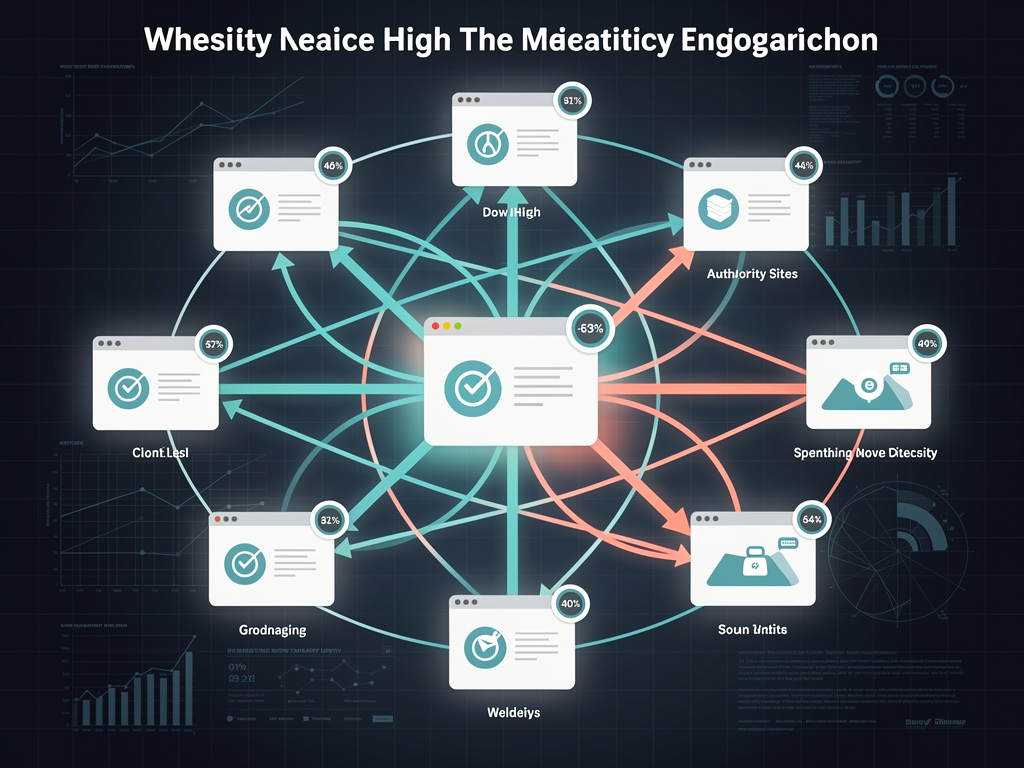
Some automated platforms address link building directly through backlink exchange networks that connect content publishers for mutual benefit. These networks facilitate legitimate link exchanges between relevant sites, building the off-page authority that helps content rank. This integrated approach to link building represents a significant advantage over manual workflows that treat content creation and link building as entirely separate activities.
Content Promotion Considerations
Regardless of creation method, content requires promotion to reach its potential audience and earn links. Manual workflows often leave promotion as an afterthought, with teams exhausted from the creation process and lacking energy or resources for distribution. Automated workflows free up time previously spent on creation, allowing teams to focus more attention on promotion and distribution.
Social media sharing, email newsletter inclusion, influencer outreach, and community engagement all benefit when teams aren't consumed by content production demands. The efficiency gains from automation can be reinvested in activities that amplify content reach and impact rather than simply producing more content without corresponding promotion.
Strategic content planning also improves when production constraints are removed. Teams can create content specifically designed for link earning, such as original research, comprehensive guides, or tool roundups, knowing they have the capacity to produce both link-bait content and the supporting articles needed for topical authority.
Use Case Analysis: When to Choose Each Approach
Different business situations call for different content creation approaches. Understanding which method fits your specific circumstances helps you invest resources wisely and achieve better results. Let's examine several common scenarios and the approaches that typically work best for each.
SEO agencies managing multiple clients often benefit most from automated platforms. The ability to produce consistent, high-quality content across numerous accounts without proportional staffing increases enables better margins and more competitive pricing. Automation handles the volume work while agency strategists focus on planning, client communication, and performance optimization.
Small business owners managing their own SEO face severe time constraints that make manual content creation impractical. These entrepreneurs need to focus on core business operations, not spending hours writing blog posts. Automated platforms allow them to maintain active content programs without sacrificing time better spent on customers, products, or services.
Scenario-Specific Recommendations
Affiliate marketers and niche site builders should strongly consider fully automated approaches. Success in affiliate marketing depends heavily on content volume and keyword coverage. The ability to publish 60 articles monthly rather than 10 can dramatically accelerate site growth and revenue generation. Quality thresholds for affiliate content are often lower than for other content types, making automation particularly well-suited.
E-commerce store owners needing product descriptions, category content, and buying guides benefit from automation's efficiency and consistency. Hundreds of product pages require optimization, and manual approaches simply can't scale to meet these demands cost-effectively. Automated platforms can produce comprehensive product content that improves both SEO performance and conversion rates.
SaaS companies requiring regular content production often find hybrid approaches optimal. Automated platforms handle the volume of supporting content needed to build topical authority, including how-to guides, feature explanations, and comparison articles. Manual creation focuses on case studies, thought leadership, and technical documentation where human expertise adds irreplaceable value.

Implementation Strategies for Automated Platforms
Transitioning to automated content creation requires thoughtful implementation to maximize results. Simply signing up for a platform and generating content without strategy rarely produces optimal outcomes. Successful implementations follow structured approaches that align automation capabilities with business objectives.
Begin by auditing your existing content and identifying gaps. Which topics should you cover that you haven't addressed? Which existing articles need updates or expansion? Which keywords represent opportunities you've been unable to pursue due to resource constraints? This audit provides the foundation for your automated content strategy.
Next, develop your knowledge base thoroughly before generating content at scale. Upload brand guidelines, product information, competitor analysis, customer personas, and examples of content that represents your desired quality and tone. The more context you provide, the better your automated outputs will align with your brand and audience expectations.
Quality Control and Review Processes
Even with sophisticated automation, implementing appropriate review processes ensures content meets your standards before publication. The level of review should match content risk and importance. High-stakes content receives thorough human review, while lower-risk content might proceed with lighter oversight or automated quality checks.
Establish clear quality criteria and review checklists that reviewers can apply consistently. Focus reviews on areas where automation might struggle: factual accuracy, brand voice alignment, sensitive topic handling, and competitive positioning. Avoid spending review time on elements automation handles well, like grammar, structure, and basic SEO optimization.
Track quality metrics over time to identify patterns and improvement opportunities. If certain content types consistently require more revision, adjust your templates or knowledge base to address common issues. Continuous improvement of your automated workflows compounds efficiency gains over time.
Measuring Success: KPIs and Performance Tracking
Effective content programs require robust measurement frameworks regardless of creation method. However, automated platforms often provide better visibility into content performance through integrated analytics and reporting features. Understanding which metrics matter most helps you evaluate success and optimize your approach.
Publishing velocity serves as a leading indicator of future organic traffic growth. Track articles published per week or month and monitor trends over time. Consistent publishing at target volumes indicates your content program is operating effectively, while dips suggest workflow issues requiring attention.
Indexing speed measures how quickly search engines discover and index your new content. Platforms with automated IndexNow submissions or similar features typically achieve faster indexing than manual workflows. Faster indexing means faster potential for ranking and traffic generation.

Traffic and Ranking Metrics
Organic traffic growth represents the ultimate measure of content marketing success for most organizations. Track both absolute traffic numbers and growth rates. Healthy content programs show consistent month-over-month traffic increases as new content gets indexed and begins ranking.
Keyword rankings provide more granular insight into content performance. Monitor rankings for target keywords across your content portfolio. Identify which articles are gaining traction and which might need optimization or promotion support. Ranking improvements often precede traffic increases, making this a useful leading indicator.
Engagement metrics like time on page, scroll depth, and bounce rate indicate whether content resonates with readers. Strong engagement signals suggest content quality meets audience expectations, while poor engagement might indicate misalignment between content and search intent or quality issues requiring attention.
Common Pitfalls and How to Avoid Them
Both manual and automated content creation approaches carry risks that can undermine results if not properly managed. Understanding common pitfalls helps you implement safeguards that protect content quality and SEO performance.
Over-reliance on automation without strategy represents a significant risk. Generating large volumes of content without clear topical focus, keyword targeting, or business alignment wastes resources and can even harm SEO performance through keyword cannibalization or thin content penalties. Always pair automation with strategic planning that ensures each piece serves a specific purpose.
Neglecting content updates and maintenance affects both manual and automated content over time. Information becomes outdated, competitors publish better content, and search algorithms evolve. Build regular content audits and updates into your workflow regardless of how content was originally created.
Quality Degradation Warning Signs
Watch for signs that content quality is slipping below acceptable thresholds. Declining engagement metrics often indicate quality issues before they impact rankings. If time on page drops or bounce rates increase, investigate whether recent content meets your quality standards.
Increased revision requirements suggest your automated setup needs adjustment. If reviewers consistently flag the same issues, update your templates, knowledge base, or configuration to address root causes rather than repeatedly fixing symptoms.
Negative user feedback through comments, social media, or customer service channels provides direct quality signals. Take complaints about content quality seriously and investigate whether they indicate systemic issues requiring attention.

Future Trends in Content Creation Technology
The content creation landscape continues evolving rapidly, with new capabilities emerging that will further blur lines between manual and automated approaches. Understanding these trends helps you make investment decisions that position your content program for future success.
Generative Engine Optimization (GEO) represents an emerging frontier as AI assistants like ChatGPT, Claude, and Perplexity increasingly influence how users discover and consume information. Content optimized for traditional search may need adaptation to perform well in AI-powered discovery contexts. Forward-thinking platforms are already incorporating GEO considerations into their optimization approaches.
Multimodal content generation is expanding beyond text to include images, videos, and interactive elements. Platforms that generate accompanying visuals, embed relevant videos, and create comprehensive multimedia content packages will deliver increasing advantages over text-only solutions.
Integration and Ecosystem Development
Deeper CMS integrations will continue streamlining publishing workflows. Beyond simple content transfer, future integrations will handle advanced features like A/B testing setup, personalization configuration, and dynamic content insertion. The goal is eliminating all manual steps between content creation and optimized publication.
AI visibility tracking will become increasingly important as AI assistants influence more user journeys. Understanding how AI models reference your brand and content helps identify opportunities and gaps that traditional SEO tools miss. Platforms incorporating this visibility layer provide strategic advantages in an evolving search landscape.
Automated performance optimization will close the loop between content creation and results. Rather than creating content and hoping it performs, future platforms will automatically test, optimize, and update content based on performance data, creating continuous improvement cycles without manual intervention.
Making the Right Choice for Your Organization
Selecting the right content creation approach requires honest assessment of your specific situation, goals, and constraints. No single approach works best for everyone, and the optimal choice depends on factors unique to your organization.
Consider your content volume requirements first. If you need to publish 30 or more articles monthly to compete effectively in your market, manual approaches likely can't scale without significant budget increases. Automation becomes not just convenient but necessary for competitive positioning.
Evaluate your quality thresholds realistically. Not all content requires the same quality level. Cornerstone content, thought leadership, and high-stakes pages warrant premium investment, while supporting content and long-tail keyword targeting might perform adequately with automated creation. Matching approach to content importance optimizes resource allocation.
Building Your Content Stack
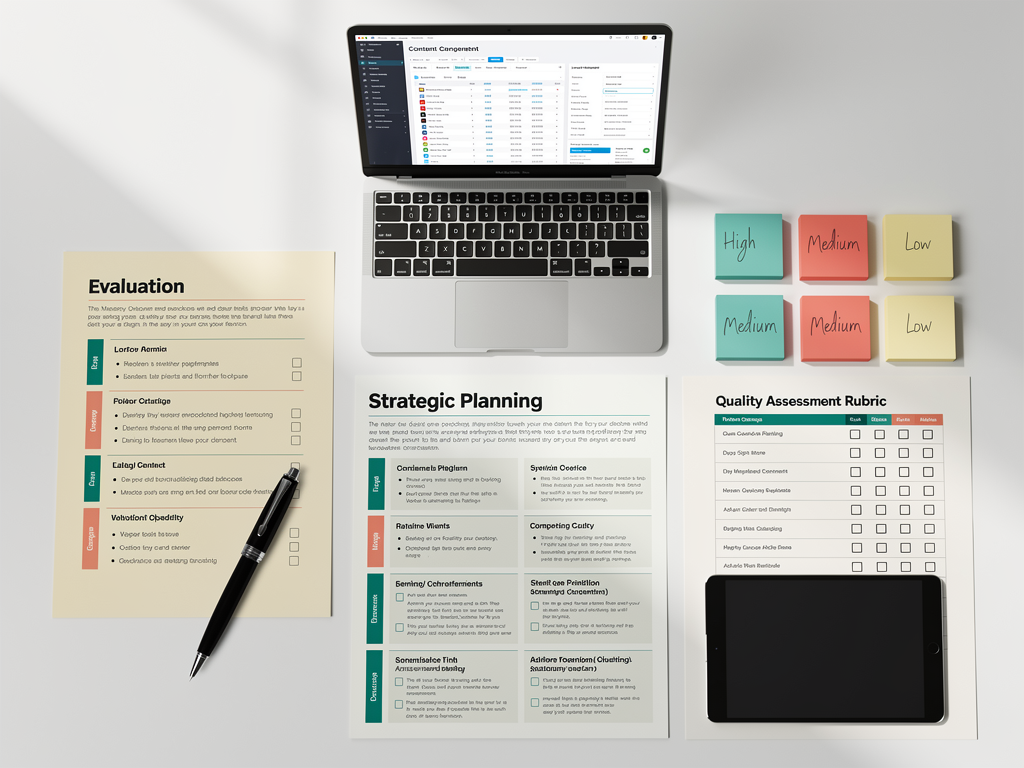
Most successful content programs employ multiple tools and approaches rather than relying on a single solution. Your content stack might include a fully automated platform for volume production, specialized tools for specific content types, and manual creation capacity for premium pieces.
Start with your highest-impact need. If volume is your primary constraint, begin with an automated platform that addresses production bottlenecks. If quality concerns dominate, focus first on establishing strong editorial processes before adding automation. Build your stack incrementally based on demonstrated results rather than attempting comprehensive transformation all at once.
Regularly reassess your approach as your situation evolves. What works for a startup building initial content presence differs from what works for an established brand maintaining market leadership. Stay flexible and willing to adjust your mix as circumstances change.
Conclusion
The choice between manual and fully automated content creation isn't binary, and the best approach for your organization depends on your specific goals, resources, and competitive context. Manual creation offers unmatched originality and expertise for premium content but creates bottlenecks that limit scaling. Fully automated platforms deliver remarkable efficiency and consistency but require thoughtful implementation to maximize quality.
For most organizations, the optimal path involves strategic combination of both approaches. Automated platforms handle the volume of content needed to build topical authority and capture long-tail opportunities, while manual creation focuses on cornerstone pieces, thought leadership, and content requiring genuine human expertise. This hybrid approach maximizes both efficiency and quality where each matters most.
The content marketing landscape rewards those who can produce quality content consistently at scale. Whether you're an SEO agency managing multiple clients, a small business owner wearing every hat, or a content marketing manager trying to scale output, understanding your options and choosing wisely positions you for success. The tools available today make comprehensive content programs accessible to organizations of all sizes, and those who leverage them effectively will capture the organic traffic opportunities that drive sustainable growth.
Frequently Asked Questions
Can automated content actually rank as well as manually written content?
Yes, well-optimized automated content can rank comparably to manually written content for most keyword types. Search engines evaluate content based on relevance, comprehensiveness, user experience signals, and authority factors rather than creation method. Modern automated platforms produce content that thoroughly addresses search intent, incorporates relevant keywords naturally, and provides genuine value to readers. Studies show that publishing velocity often matters more than marginal quality differences, meaning teams publishing 30 articles monthly with automation frequently outperform those publishing four manually written pieces. The key is ensuring your automated platform produces content that meets quality thresholds and receives appropriate optimization for your target keywords.
How do I maintain brand voice consistency with automated content?
Maintaining brand voice with automated content requires proper platform configuration and knowledge base development. Start by uploading examples of content that represents your desired tone and style. Include brand guidelines, key messaging points, terminology preferences, and examples of both good and bad content. Most sophisticated platforms allow you to specify tone settings, target audience characteristics, and stylistic preferences that shape all outputs. Review initial outputs carefully and refine your configuration based on what works and what needs adjustment. Once properly configured, automated platforms often maintain more consistent voice than rotating human writers because they apply the same parameters to every piece without variation or interpretation drift.
What types of content should I still create manually?
Certain content types benefit significantly from manual creation despite automation advances. Original research and data analysis requiring interpretation and insight typically need human expertise. Thought leadership pieces expressing unique perspectives or controversial positions require authentic human voice. Case studies involving customer interviews and narrative construction benefit from human storytelling abilities. Content addressing sensitive topics like health, legal, or financial matters often warrants human oversight for accuracy and appropriate tone. Executive bylines and personal brand content should reflect genuine individual perspectives. Technical documentation requiring deep subject matter expertise may need specialist writers. Consider manual creation for any content where originality, expertise, or personal connection significantly impacts value.
How much can I realistically save by switching to automated content creation?
Cost savings from automated content creation typically range from 60% to 85% compared to fully manual approaches when all costs are properly accounted. A comprehensive manual workflow including writing, editing, SEO optimization, image sourcing, and publishing often costs $400 to $600 per article when all labor is included. Automated platforms producing comparable content might cost $15 to $50 per article depending on subscription tier and volume. However, savings calculations must include implementation costs, learning curves, and any review processes you maintain. Most organizations see positive ROI within two to three months of implementation, with savings compounding as teams optimize their automated workflows and reduce review requirements over time.
Will Google penalize my site for using AI-generated content?
Google has explicitly stated that AI-generated content is not inherently against their guidelines. Their focus is on content quality and helpfulness rather than creation method. Google's helpful content system evaluates whether content provides value to users, demonstrates expertise, and satisfies search intent regardless of how it was produced. The risk comes not from using AI but from producing low-quality, unhelpful, or misleading content at scale. Automated content that thoroughly addresses topics, provides accurate information, and genuinely helps users performs well in search rankings. The key is ensuring your automated platform produces quality outputs and that you maintain appropriate oversight to catch any issues before publication. Focus on creating helpful content and the creation method becomes irrelevant to search performance.
How do I get started with automated content creation?
Starting with automated content creation involves several key steps. First, audit your current content situation to identify gaps, opportunities, and volume requirements. Second, evaluate platforms based on your specific needs, considering factors like CMS integration, content types supported, customization options, and pricing structure. Third, develop your knowledge base thoroughly before generating content at scale, including brand guidelines, product information, and quality examples. Fourth, start with a pilot program producing limited content to validate quality and refine your configuration. Fifth, establish review processes appropriate to your quality requirements and risk tolerance. Finally, scale gradually while monitoring performance metrics and making adjustments based on results. Most teams achieve full implementation within four to six weeks following this structured approach.
Ready to Transform Your Content Production?
If you're ready to experience the power of fully automated content creation, SeoSmart offers everything you need to write, publish, and rank on autopilot. With brand-tailored 5,000-word articles complete with images, internal links, and YouTube videos, plus automatic publishing and backlink building through an integrated exchange network, SeoSmart eliminates the bottlenecks holding your content program back. Start with 500 free credits and discover how automated content creation can transform your organic traffic growth. Your competitors are already scaling their content production, so the question isn't whether to automate, but how quickly you can get started.
Subscribe to our newsletter
Subscribe to our newsletter and stay up-to-date with the latest news and updates.