Revitalize Aging Content with AI Rewriter Tools
Discover how AI rewriter tools can help refresh your content while maintaining SEO rankings. Learn strategies to combat content decay and stay visible in AI-driven search environments.

Zakariae

Content decay is an inevitable reality for every website owner, marketer, and SEO professional. That blog post you published two years ago, the one that once drove thousands of visitors and dozens of conversions, is now quietly losing traffic month after month. According to research analyzing nearly one million pages, approximately 72% of blog posts achieve half or less of their maximum monthly traffic within just six months of publication. After two years, the picture becomes even more sobering, with 80% to 90% of pages seeing traffic reduced to 20% or less of their peak levels.
The traditional response to content decay has been straightforward: update the statistics, add a few new paragraphs, and republish. But the emergence of AI search features has fundamentally changed this equation. Your content can now rank on page one while simultaneously becoming invisible to AI-generated responses that increasingly dominate search results. Studies show that organic click-through rates dropped by 61% for queries where AI Overviews appeared, plummeting from 1.76% to just 0.61%. This means your carefully crafted content strategy requires a more sophisticated approach than ever before.
The solution lies in leveraging intelligent rewriting tools that can refresh your existing content while preserving the SEO equity you have built over time. This comprehensive guide will walk you through everything you need to know about using an ai rewriter to breathe new life into aging content, maintain your hard-won rankings, and ensure your material remains visible in both traditional and AI-powered search environments.
Key Takeaways
- Content decay accelerates faster than most teams anticipate, with the majority of pages losing significant traffic within six months of publication, making regular content refreshes essential for maintaining organic visibility.
- AI search has created a second dimension of content decay where pages can maintain rankings while losing traffic to AI-generated summaries, requiring structural changes beyond simple updates.
- Preserving URL equity during content refreshes is critical, as changing URLs without proper redirects can destroy years of accumulated backlink value and domain authority.
- Structured content with clear headers, Q&A formats, and schema markup significantly increases the likelihood of being cited in AI Overviews and featured snippets.
- The decision to update versus completely rewrite should be based on factors including current ranking position, backlink profile, content relevance, and competitive landscape.
- Automated content platforms can streamline the refresh process by generating optimized rewrites with proper formatting, internal linking, and multimedia integration.
- Post-refresh monitoring should track both traditional metrics and AI visibility to ensure content performs well across all search environments.
Understanding Content Decay in the AI Search Era
Content decay has always been a challenge for digital marketers, but the mechanisms driving it have evolved significantly. Traditional content decay occurs when information becomes outdated, competitors publish superior content, or search algorithms update their ranking criteria. These factors remain relevant, but a new dimension has emerged that many SEO professionals are only beginning to understand.
The rise of AI-powered search features, including Google's AI Overviews and various chatbot interfaces, has created what experts call "AI-invisibility." This phenomenon occurs when your content maintains its position in traditional search results but fails to be cited or referenced by AI systems that increasingly provide direct answers to user queries. The practical impact is substantial: users receive answers without ever clicking through to your website, even when your content technically ranks well.
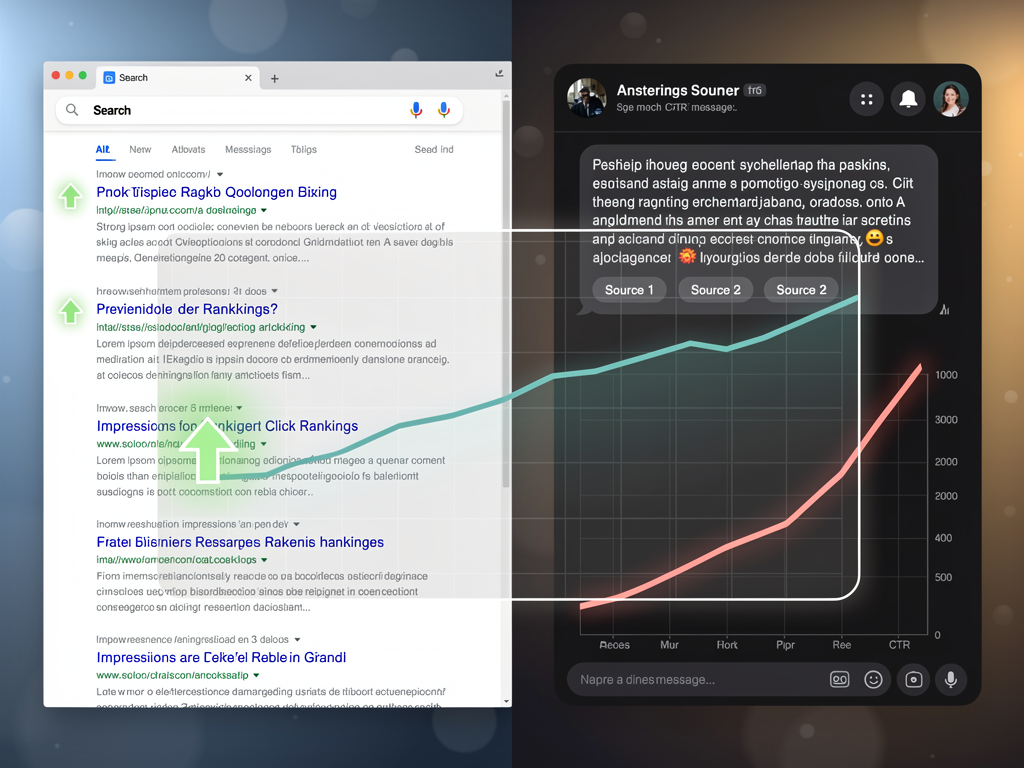
Research indicates that 92.36% of AI Overview citations come from domains ranking in the top ten positions. However, being in the top ten does not guarantee citation. The content must be structured in ways that AI systems can easily extract and reference. Brands that successfully earn AI citations experience approximately 35% more organic clicks compared to non-cited competitors, creating a significant competitive advantage.
This dual-decay phenomenon explains a frustrating pattern many website owners have noticed: stable or even improving average positions in Google Search Console alongside declining clicks and traffic. You are ranking, but you are not being cited. Understanding this distinction is the first step toward developing an effective content refresh strategy that addresses both traditional and AI-driven visibility challenges.
The Decision Framework: Update Versus Complete Rewrite
Before diving into any content refresh project, you must make a critical decision that will determine your approach and resource allocation. Should you update the existing content with targeted improvements, or should you completely rewrite the piece from scratch? This decision carries significant stakes, as making the wrong choice can either destroy accumulated URL equity or waste resources on insufficient changes.
Choosing to update rather than rewrite makes sense in several scenarios. If your content currently ranks in positions one through ten for target keywords, a complete rewrite introduces unnecessary risk. Similarly, if the page has accumulated valuable backlinks from authoritative sources, preserving the existing URL and content structure protects that equity. Updates are also preferable when the core information remains accurate and only peripheral details require refreshing, such as statistics, examples, or supplementary sections.
Complete rewrites become necessary under different circumstances. When your content has dropped beyond page two and shows no signs of recovery, the existing structure may be fundamentally misaligned with current search intent. If competitors have published substantially superior content that addresses the topic more comprehensively, incremental updates may not bridge the gap. Rewrites are also appropriate when the original content was thin, poorly structured, or created before you understood your audience's actual needs.
| Factor | Choose Update | Choose Rewrite |
|---|---|---|
| Current Ranking | Positions 1-10 | Beyond page 2 |
| Backlink Profile | Strong external links | Few or no quality links |
| Content Quality | Solid foundation | Thin or poorly structured |
| Search Intent Match | Aligned with current intent | Mismatched with user needs |
| Competitive Gap | Minor improvements needed | Substantial gap to close |
| Time Investment | Limited resources available | Resources for comprehensive work |
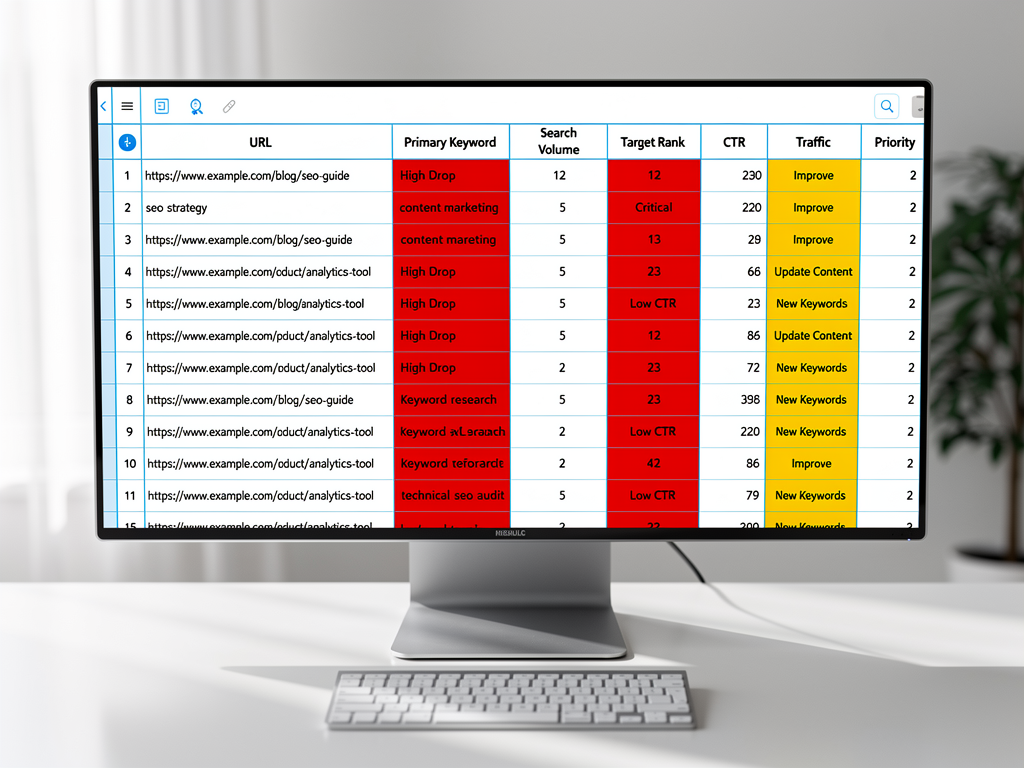
A useful framework for prioritization involves categorizing your content into three buckets. The first bucket contains high-priority refresh candidates: pages with declining traffic but strong backlink profiles and historical ranking performance. The second bucket includes medium-priority candidates: pages with moderate traffic that could benefit from optimization but are not urgently declining. The third bucket contains low-priority or archive candidates: pages with minimal traffic, no backlinks, and topics that may no longer align with your content strategy.
Preserving URL Equity and Historical Signals
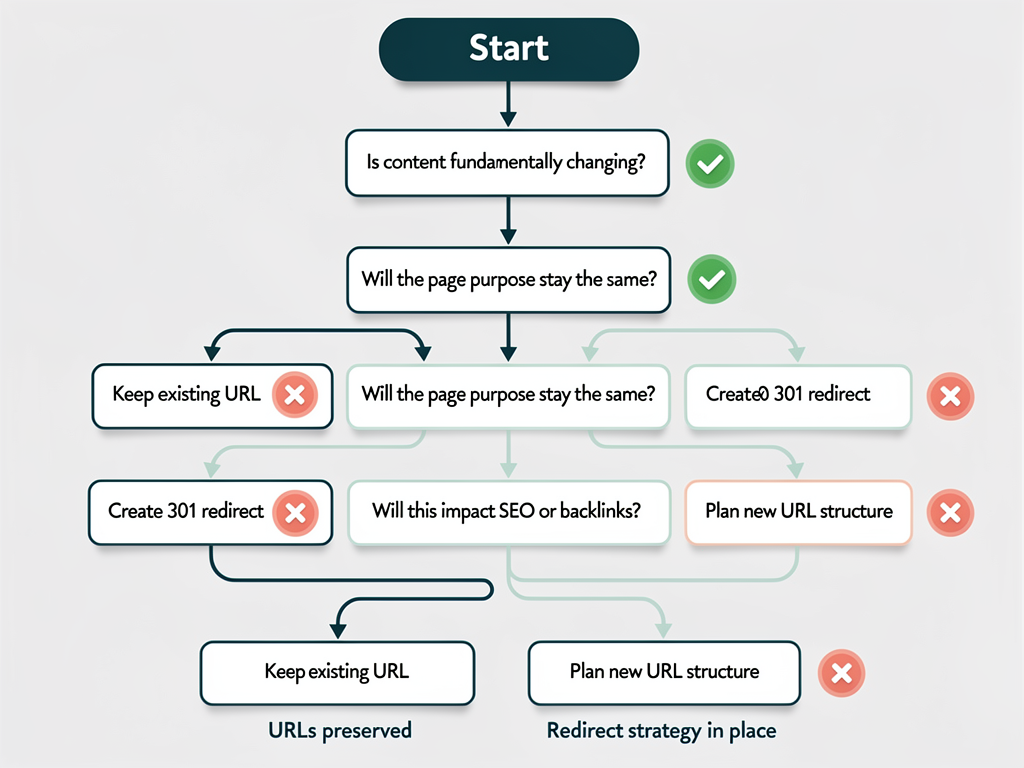
One of the most common mistakes during content refreshes involves changing URLs without understanding the consequences. Your URL accumulates equity over time through backlinks, user engagement signals, and search engine indexing history. Changing a URL without proper redirects can instantly destroy years of accumulated value, causing dramatic ranking drops that may take months to recover from.
The preservation hierarchy for content refreshes should follow a clear order of priority. First, keep the original URL whenever possible. If the URL structure is acceptable and the page has any meaningful backlink profile, maintain it exactly as is. Second, if you must change the URL, implement a proper 301 redirect from the old URL to the new one immediately upon publication. Third, update internal links throughout your site to point directly to the new URL rather than relying on redirects for internal navigation.
Publication date handling requires careful consideration as well. Best practices suggest keeping the original publication date while adding a visible "Last updated" notation that signals freshness to both users and search engines. This approach preserves the historical trust associated with the original publication while demonstrating that the content has been recently maintained. Avoid the temptation to simply change the publication date to the current date, as this can appear manipulative and may not provide the freshness signals you expect.
Internal linking architecture deserves special attention during refresh projects. Before making changes, audit how the target page connects to other content on your site. Identify pages that link to the content you are refreshing and ensure those links remain functional after your updates. Also examine outbound internal links from the refreshed page to ensure they point to current, relevant content rather than outdated or deleted pages.
Restructuring Content for AI Extraction and Citation
Making your content "extractable" by AI systems requires deliberate structural choices that differ from traditional SEO optimization. AI systems parse content looking for clear, definitive answers to specific questions. Narrative-style content that buries key information within flowing paragraphs often fails to earn citations, even when it contains accurate and valuable information.
The transformation from narrative to extractable structure involves several key changes. First, lead with direct answers rather than building toward conclusions. If someone searches for "how long does content refresh take to show results," your content should provide a clear answer in the first sentence of the relevant section, followed by supporting context and nuance. Second, use question-based headers that mirror how users actually search. Headers like "How Long Does a Content Refresh Take to Impact Rankings?" are more extractable than generic headers like "Timeline Considerations."
Pro Tip: Review the "People Also Ask" boxes for your target keywords. These questions reveal exactly how users phrase their queries and what AI systems consider related topics. Structure your refreshed content to directly answer these questions with clear, concise responses followed by detailed explanations.
Header architecture plays a crucial role in enabling AI systems to chunk and process your content effectively. Use a logical hierarchy where H2 tags represent major topic sections and H3 tags break down subtopics within those sections. Avoid skipping header levels, as this confuses both AI parsers and human readers. Each header should accurately describe the content that follows, functioning as a mini-title for that section.
Lists and tables significantly improve extractability. When presenting multiple items, options, or steps, use bulleted or numbered lists rather than comma-separated items within paragraphs. When comparing options or presenting data, use properly formatted HTML tables with clear headers. AI systems can more easily parse and cite structured data presentations than equivalent information buried in prose.
Implementing Schema Markup for Enhanced Visibility
Schema markup provides explicit signals to search engines about your content's structure, authorship, and purpose. While schema implementation does not directly guarantee rankings, it significantly increases the likelihood of earning rich results and AI citations by making your content's meaning unambiguous to automated systems.
Several schema types prove particularly valuable for refreshed content. Article schema establishes basic metadata including headline, author, publication date, and modification date. This schema type is essential for blog posts and editorial content, providing search engines with clear signals about content freshness and authorship. FAQ schema marks up question-and-answer pairs within your content, making them eligible for FAQ rich results and increasing the likelihood of AI citation for specific queries.
HowTo schema is valuable for instructional content, marking up step-by-step processes in ways that search engines can display as rich results. If your refreshed content includes tutorials, guides, or process explanations, HowTo schema can significantly enhance visibility. Author schema, implemented through Person markup linked to your Article schema, establishes author credentials and expertise, supporting E-E-A-T signals that influence both traditional rankings and AI citation likelihood.
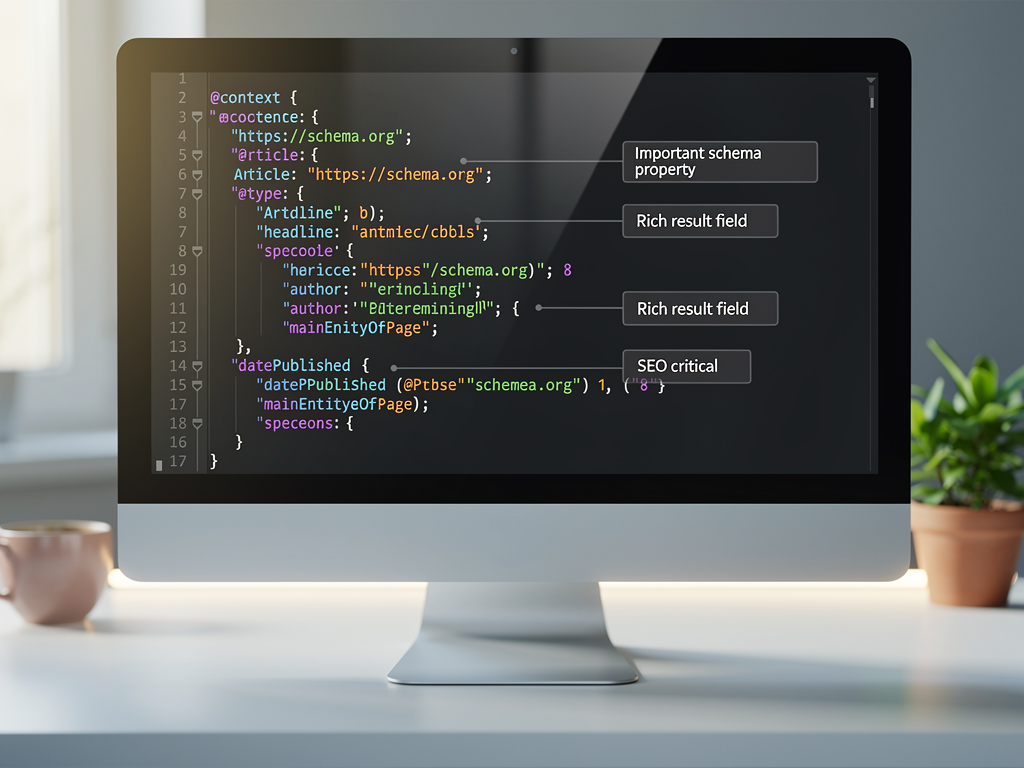
Implementation at scale requires systematic approaches rather than manual markup of individual pages. Content management systems and publishing platforms increasingly offer built-in schema generation based on content structure. When selecting tools for content creation and refresh workflows, prioritize platforms that automatically generate appropriate schema markup based on your content's format and purpose. This automation ensures consistent implementation without requiring technical expertise for each piece of content.
Optimizing for E-E-A-T in Refreshed Content
Experience, Expertise, Authoritativeness, and Trustworthiness have become increasingly important ranking factors, particularly for content in sensitive categories. When refreshing content, you have an opportunity to strengthen E-E-A-T signals that may have been weak or absent in the original publication.
Entity density refers to how thoroughly your content references and connects to established entities that search engines recognize. These entities include people, organizations, concepts, and topics that exist in knowledge graphs. Refreshed content should clearly identify authors with verifiable credentials, reference authoritative sources, and demonstrate connections to recognized expertise in the subject matter.
Building author credibility requires more than simply adding a byline. Create or enhance author pages that detail relevant qualifications, experience, and other published work. Link author bylines to these detailed pages, and ensure author information is consistent across your site and external platforms. When possible, have content reviewed or contributed to by recognized experts in the field, and clearly indicate their involvement.
Citation sources significantly impact how AI systems evaluate content trustworthiness. When refreshing content, audit your sources and replace outdated or weak references with current, authoritative citations. Prioritize primary sources over secondary reporting, academic research over opinion pieces, and established institutions over unknown websites. The sources you cite signal to AI systems what caliber of information your content represents.
Expert Insight: AI systems increasingly evaluate the credibility of sources cited within content. Linking to government databases, peer-reviewed research, and recognized industry authorities signals higher content quality than citing anonymous blog posts or content farms. During content refreshes, upgrading your citation sources can meaningfully impact AI visibility.
Preventing Keyword Cannibalization During Refreshes
Content refreshes can inadvertently create or worsen keyword cannibalization, where multiple pages on your site compete for the same search queries. This internal competition dilutes your ranking potential and confuses search engines about which page should rank for specific terms. Proactive detection and strategic linking prevent these issues.
Before beginning any refresh project, audit your existing content for potential cannibalization. Search your site for the target keywords of the content you plan to refresh. Identify any other pages that target similar terms or cover overlapping topics. Understanding this landscape before making changes allows you to make strategic decisions about consolidation, differentiation, or intentional topic separation.
Link architecture maximizes equity flow while preventing cannibalization. Establish clear topical hierarchies where pillar pages cover broad topics comprehensively and cluster pages address specific subtopics in depth. Internal links should flow from cluster pages to pillar pages, concentrating authority on your most important content. When refreshing content, ensure your internal linking reinforces rather than undermines this hierarchy.
Sometimes the best refresh strategy involves consolidation rather than individual updates. If you have multiple underperforming pages targeting similar keywords, combining them into a single comprehensive resource often produces better results than refreshing each separately. This consolidation concentrates backlink equity, eliminates internal competition, and creates a more authoritative resource that better serves user intent.
Leveraging Automated Platforms for Efficient Refreshes
Manual content refreshes become unsustainable as your content library grows. A site with hundreds of blog posts cannot realistically audit, rewrite, and optimize each piece individually without significant resource investment. Automated content platforms offer scalable solutions that maintain quality while dramatically reducing the time and effort required for comprehensive refresh programs.
Modern AI-powered SEO content platforms can analyze existing content, identify optimization opportunities, and generate refreshed versions that incorporate current best practices. These platforms typically integrate keyword research, competitive analysis, and content generation into unified workflows that would otherwise require multiple tools and manual coordination.
When evaluating platforms for content refresh workflows, consider several key capabilities. The platform should understand your existing content and brand voice rather than generating generic output. It should incorporate proper formatting including headers, lists, and tables that enhance both readability and AI extractability. Integration with your content management system enables efficient publishing without manual copy-paste workflows. Finally, the platform should support schema markup generation and other technical SEO elements automatically.
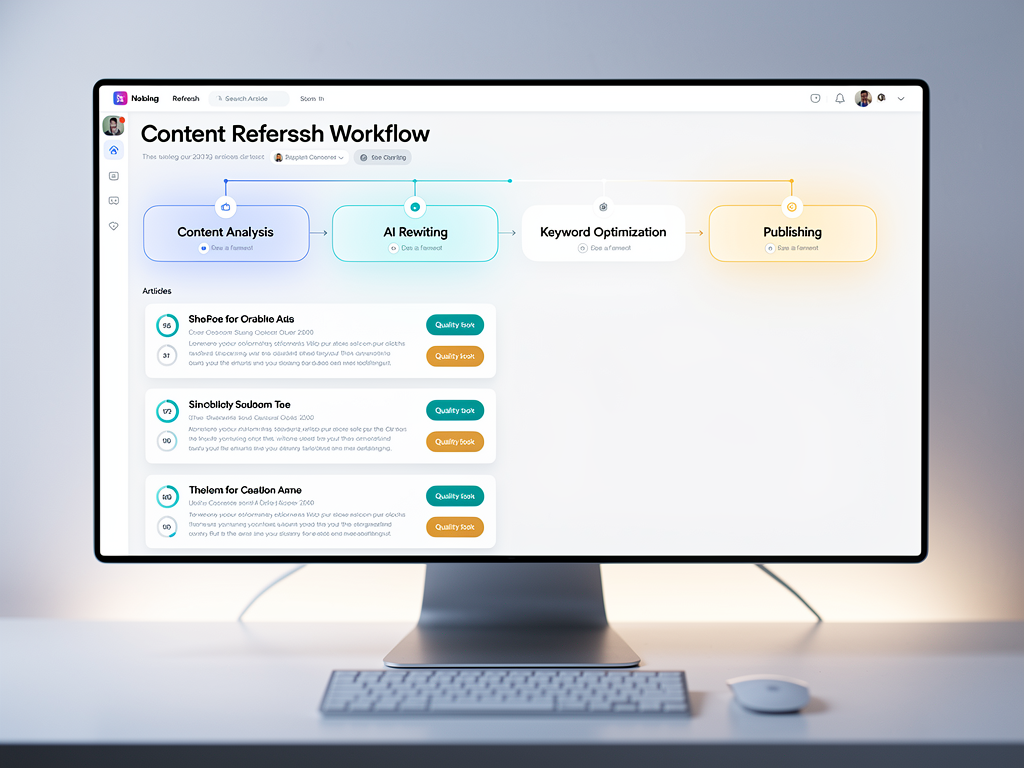
The automated content sprint approach proves particularly valuable for systematic refresh programs. Rather than addressing content decay reactively when traffic drops become severe, scheduled content sprints proactively refresh content on a regular cadence. This approach prevents the accumulation of severely decayed content and maintains consistent quality across your entire content library.
Optimizing Title Tags and Meta Descriptions for AI-Era SERPs
Title tags and meta descriptions require different optimization approaches when competing with AI Overviews and other enhanced search features. Traditional advice focused on keyword placement and click-worthy phrasing remains relevant, but additional considerations now influence effectiveness.
When AI Overviews appear for a query, users often receive direct answers without scrolling to traditional results. To earn clicks in this environment, your title must offer something the AI Overview does not provide. This might include specific expertise, unique data, comprehensive coverage, or a perspective the AI summary lacks. Generic titles that simply describe the topic offer no compelling reason to click when users have already received a basic answer.
Meta descriptions should preview the unique value your content provides rather than simply summarizing the topic. Instead of "Learn about content refresh strategies for SEO," consider "Discover the specific structural changes that increased our AI citation rate by 47% and the exact schema markup that earned featured snippets for 23 target keywords." Specific, results-oriented descriptions create curiosity that generic summaries cannot satisfy.
| Element | Traditional Approach | AI-Era Approach |
|---|---|---|
| Title Tag | Keyword + modifier + brand | Unique angle + specific value proposition |
| Meta Description | Topic summary with keyword | Specific results, data, or exclusive insights |
| Character Length | 60 characters title, 155 description | Same limits, but front-load differentiation |
| Call to Action | Generic "Learn more" | Specific benefit: "See the exact template" |
Testing title and description variations becomes more important in the AI search era. What works for queries without AI Overviews may fail for queries where AI provides direct answers. Monitor click-through rates segmented by query type when possible, and be prepared to iterate on your approach based on performance data rather than assumptions about best practices.
Post-Refresh Monitoring and Timeline Expectations
Understanding realistic timelines for content refresh results prevents premature conclusions and unnecessary additional changes. Search engines do not immediately recognize and reward content improvements. The process involves recrawling, reindexing, and reevaluation that occurs over weeks rather than days.
The typical post-refresh timeline follows a predictable pattern. During the first one to two weeks, search engines recrawl and reindex the updated content. You may see fluctuations in rankings as the new version is evaluated. Weeks two through four typically show initial ranking movements, either improvements or temporary drops as the algorithm reassesses the page. Weeks four through eight reveal more stable results, with rankings settling into new positions that reflect the refresh's impact. Full stabilization often requires eight to twelve weeks, particularly for competitive keywords.
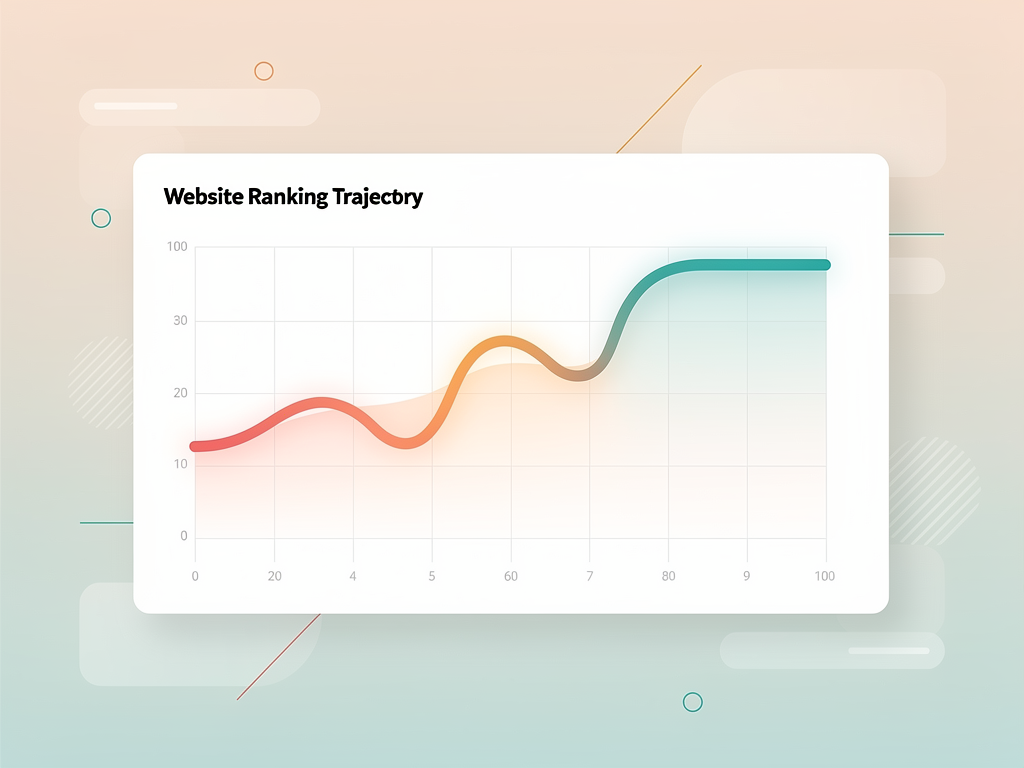
Search Console metrics deserve close attention during the post-refresh period. Monitor impressions, clicks, click-through rate, and average position for the refreshed URL specifically. Look for patterns rather than day-to-day fluctuations. Increasing impressions suggest improved visibility even if clicks have not yet followed. Improving average position indicates ranking gains. Rising click-through rate at stable positions suggests your title and description improvements are working.
Monitoring Tip: Create a Search Console comparison view that shows the refreshed page's performance for the 90 days before refresh versus the 90 days after. This comparison reveals trends that daily monitoring might miss and provides clearer evidence of refresh impact.
Measuring AI Visibility Beyond Traditional Metrics
Traditional SEO metrics including rankings, traffic, and conversions remain important but increasingly fail to capture the complete picture of content performance. AI visibility represents a new dimension that requires different measurement approaches.
Direct measurement of AI citations is challenging because AI systems do not provide analytics dashboards showing when and how they cite your content. However, several proxy metrics and manual checks can provide insight. Regularly search for your target keywords in AI interfaces including ChatGPT, Google's AI Overview, and Bing Chat. Note whether your content appears in citations or influences the generated responses. While time-consuming, this manual monitoring reveals patterns that automated tools cannot yet capture.
Leading indicators often precede direct AI citation. Earning featured snippets for target queries strongly correlates with AI citation likelihood, as both depend on extractable content structure. Appearing in "People Also Ask" boxes suggests your content successfully answers specific questions in ways AI systems recognize. Increasing brand mentions in AI responses, even without direct links, indicates growing authority in your topic area.

Third-party tools are beginning to emerge that track AI citations and visibility, though the space remains immature. Evaluate these tools carefully, understanding their methodology and limitations before relying on their data. The most reliable approach currently combines automated tracking of traditional metrics with periodic manual audits of AI citation status for your most important content.
Common Mistakes That Destroy Refresh Value
Even well-intentioned content refreshes can fail or cause harm when common mistakes occur. Understanding these pitfalls helps you avoid them in your own refresh programs.
Changing URLs without redirects remains the most damaging mistake. As discussed earlier, URLs accumulate equity over time. Changing a URL and failing to implement a 301 redirect instantly severs the connection between that equity and your content. The new URL starts essentially from zero, regardless of how much the content has improved. Always maintain URLs when possible, and always implement redirects when changes are necessary.
Over-optimization during refreshes can trigger algorithmic penalties or manual actions. In the enthusiasm to improve content, some marketers stuff keywords unnaturally, add excessive internal links, or implement manipulative schema markup. These tactics may provide short-term gains but create long-term risks. Focus on genuine quality improvements rather than exploiting perceived ranking factors.
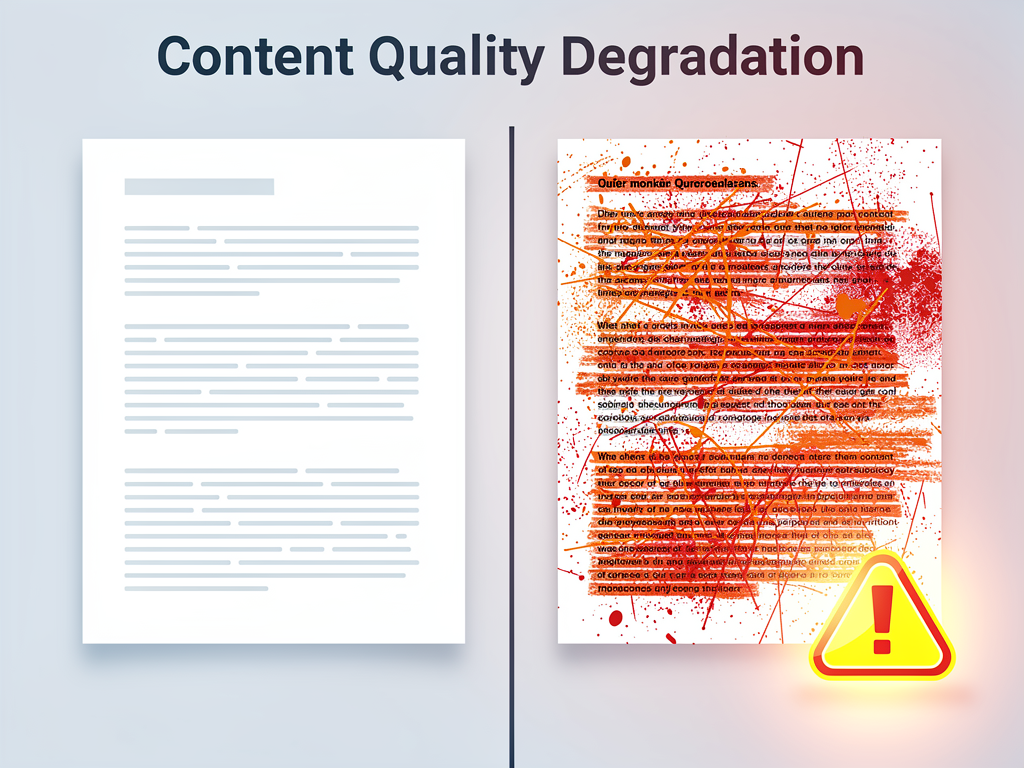
Removing content that still drives traffic or conversions represents another common error. During audits, some pages may appear underperforming based on traffic alone, but closer examination reveals they drive valuable conversions or serve important roles in the customer journey. Before removing or dramatically changing any content, verify its actual business impact beyond traffic metrics.
Ignoring the AI visibility dimension leads to incomplete refreshes that address only traditional decay. As discussed throughout this guide, content can maintain rankings while losing traffic to AI summaries. Refreshes that focus solely on traditional SEO factors miss the structural and formatting changes needed for AI extractability. Every refresh should consider both dimensions of visibility.
Building a Sustainable Content Refresh Program
One-time content refreshes provide temporary relief but do not solve the underlying challenge of continuous content decay. Building a sustainable refresh program ensures your content library maintains quality and visibility over time without requiring crisis-mode interventions.
Establish a regular audit cadence based on your content volume and resources. Quarterly audits work well for most sites, allowing you to identify decay patterns before they become severe while not overwhelming your team with constant evaluation. During each audit, categorize content into the three-bucket framework discussed earlier and prioritize refresh work accordingly.
Create standardized refresh workflows that ensure consistency across your team. Document the specific steps for each type of refresh, from minor updates to complete rewrites. Include checklists for URL preservation, schema implementation, internal linking updates, and post-refresh monitoring. Standardization prevents mistakes and enables team members to execute refreshes without requiring senior oversight for every piece.
Leverage automated content generation tools to scale your refresh capacity. Manual refreshes of every piece of content become impossible as your library grows. Platforms that can analyze existing content, identify improvement opportunities, and generate optimized refreshes dramatically increase the volume of content you can maintain. The key is selecting tools that understand your brand voice and produce output that genuinely improves upon the original rather than simply creating different versions of the same problems.
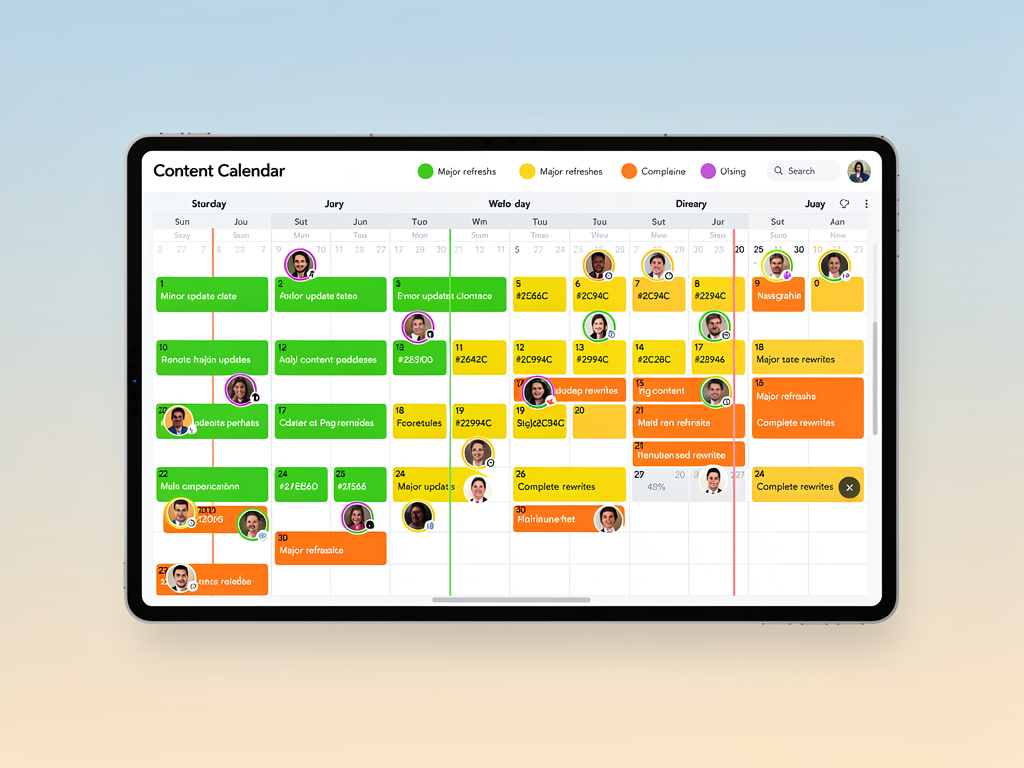
Integrate refresh metrics into your regular reporting. Track the percentage of your content library that has been refreshed within the past year, the average age of your top-performing content, and the correlation between refresh activity and traffic trends. These metrics help justify ongoing investment in content maintenance and demonstrate the value of proactive refresh programs to stakeholders.
Advanced Strategies for Competitive Content Refreshes
When your content competes directly with strong competitors, basic refreshes may not be sufficient to gain or maintain advantage. Advanced strategies can help you create meaningful differentiation that search engines and users recognize.
Conduct thorough competitive analysis before refreshing content in competitive spaces. Identify what top-ranking competitors cover that you do not, what unique angles or data you can provide that they cannot, and where their content falls short of user needs. Your refresh should not simply match competitor content but should exceed it in specific, identifiable ways.
Original research and proprietary data create differentiation that competitors cannot easily replicate. If your refresh can include survey results, case study data, or analysis of proprietary datasets, you create unique value that justifies both user attention and search engine preference. Even small-scale original research, such as analyzing your own customer data or conducting informal industry surveys, provides differentiation that purely researched content cannot match.
Expert contributions elevate content authority in ways that AI systems increasingly recognize. When refreshing content, consider adding quotes, insights, or contributions from recognized experts in your field. These contributions provide unique perspectives, strengthen E-E-A-T signals, and create content that competitors cannot simply replicate by covering the same topics.
Multimedia integration enhances both user experience and AI visibility. Refreshed content should include relevant images with descriptive alt text, embedded videos that provide additional value, and interactive elements where appropriate. Platforms like SeoSmart can automatically integrate AI-generated images and relevant YouTube videos into refreshed content, ensuring multimedia enhancement without requiring manual curation for each piece.
Conclusion
Content refresh strategies have evolved significantly in response to AI-powered search features that create new dimensions of visibility and decay. Simply updating statistics and republishing no longer suffices when your content must compete for both traditional rankings and AI citations. Success requires understanding the dual nature of modern content decay, making strategic decisions about updates versus rewrites, preserving URL equity during changes, restructuring content for AI extractability, and implementing proper schema markup and E-E-A-T signals.
The most successful content refresh programs combine strategic thinking with operational efficiency. They prioritize content based on potential impact, execute refreshes using standardized workflows, leverage automation to scale beyond manual capacity, and measure results across both traditional and AI visibility dimensions. Building sustainable refresh programs prevents the accumulation of severely decayed content and maintains consistent quality across growing content libraries.
Whether you manage a handful of blog posts or thousands of pages, the principles outlined in this guide apply. Start by auditing your existing content to identify decay patterns and prioritize refresh candidates. Implement the structural changes that enhance AI extractability. Preserve URL equity while making meaningful improvements. Monitor results across multiple dimensions and iterate based on data rather than assumptions. With systematic attention to content maintenance, you can ensure your content continues to drive traffic, engagement, and conversions long after initial publication.
Frequently Asked Questions
How Long Does It Take for a Refreshed Blog Post to Rank Better?
Content refresh results typically require eight to twelve weeks to fully stabilize, though you may observe initial movements within two to four weeks. The timeline depends on several factors including your site's crawl frequency, the competitiveness of target keywords, and the extent of changes made. During the first one to two weeks, search engines recrawl and reindex the updated content, often causing temporary ranking fluctuations. Weeks two through four typically show initial ranking movements as algorithms reassess the page. More stable results emerge during weeks four through eight, with full stabilization occurring by week twelve for most content. Avoid making additional changes during this period unless you identify clear errors, as constant modifications can extend the evaluation period and make it difficult to attribute results to specific changes.
Should I Update or Completely Rewrite My Old Blog Posts?
The decision depends on your content's current performance and accumulated equity. Choose updates when your content ranks in positions one through ten, has accumulated valuable backlinks, and maintains accurate core information that simply needs supplementary improvements. Updates preserve URL equity and minimize risk while still improving content quality. Choose complete rewrites when content has dropped beyond page two with no recovery signs, when competitors have published substantially superior content, or when the original piece was thin and poorly structured. Rewrites are also appropriate when search intent has shifted significantly since original publication. Before deciding, audit the page's backlink profile using tools like Ahrefs or Moz, review its ranking history, and assess how well it currently matches user intent for target keywords. This data-driven approach prevents both unnecessary rewrites that destroy equity and insufficient updates that fail to address fundamental problems.
How Do I Structure Content So AI Will Cite It?
AI systems favor content structured for easy extraction rather than narrative flow. Lead with direct answers to specific questions rather than building toward conclusions. Use question-based headers that mirror actual search queries, such as "How Long Does Content Refresh Take?" rather than generic headers like "Timeline Considerations." Implement clear header hierarchies with H2 tags for major sections and H3 tags for subtopics. Use bulleted and numbered lists for multiple items rather than comma-separated lists within paragraphs. Format comparative information in HTML tables with clear headers. Add FAQ sections with concise, direct answers followed by supporting detail. Implement appropriate schema markup including Article, FAQ, and HowTo schemas that explicitly signal content structure to search engines. Review "People Also Ask" boxes for your target keywords to understand how users phrase queries and structure your content to directly answer those questions.
What Schema Markup Helps With AI Search Rankings?
Several schema types significantly enhance AI visibility and citation likelihood. Article schema establishes essential metadata including headline, author, publication date, and modification date, providing clear signals about content freshness and authorship. FAQ schema marks up question-and-answer pairs, making them eligible for FAQ rich results and increasing AI citation probability for specific queries. HowTo schema is valuable for instructional content, marking up step-by-step processes that search engines can display as rich results. Author schema, implemented through Person markup linked to Article schema, establishes author credentials supporting E-E-A-T signals. Organization schema provides context about your business entity. Implement schema using JSON-LD format in your page's head section, and validate implementation using Google's Rich Results Test tool. Many content management systems and publishing platforms now offer built-in schema generation, reducing the technical expertise required for consistent implementation.
How Do I Measure If My Content Is Being Cited by AI?
Direct measurement of AI citations remains challenging because AI systems do not provide analytics dashboards. However, several approaches provide insight into AI visibility. Manually search your target keywords in AI interfaces including ChatGPT, Google's AI Overview, Perplexity, and Bing Chat, noting whether your content appears in citations or influences responses. Track featured snippet acquisition, as earning featured snippets strongly correlates with AI citation likelihood. Monitor "People Also Ask" appearances, which indicate your content successfully answers specific questions in extractable formats. Watch for brand mentions in AI responses even without direct links. Use Search Console to track click-through rates for queries where AI Overviews appear, comparing performance to queries without AI features. Third-party tools for AI citation tracking are emerging but remain immature. The most reliable current approach combines automated tracking of traditional metrics with periodic manual audits of AI citation status for your most important content.
Will Changing My Blog Post URL Hurt My Rankings?
Changing URLs without proper redirects will almost certainly hurt rankings, potentially severely. URLs accumulate equity over time through backlinks, user engagement signals, and indexing history. Changing a URL severs the connection between that accumulated equity and your content, essentially forcing the new URL to start from zero regardless of content quality. If you must change a URL, implement a 301 redirect from the old URL to the new one immediately upon publication. Update internal links throughout your site to point directly to the new URL. Submit the new URL for indexing through Search Console. Even with proper redirects, expect some temporary ranking fluctuation as search engines process the change. The best practice is to maintain existing URLs whenever possible, only changing them when absolutely necessary for site architecture or branding reasons. URL changes should never be made casually as part of routine content refreshes.
Ready to Transform Your Content Refresh Strategy?
Stop watching your valuable content decay while competitors capture your traffic. SeoSmart provides the AI-powered content platform you need to refresh, optimize, and publish content at scale. With automated content sprints, built-in schema markup, AI-generated images, and one-click publishing to WordPress, Webflow, Shopify, and more, you can maintain a thriving content library without overwhelming your team. Start with 500 free credits and discover how automated content optimization can revitalize your SEO performance. Get started with SeoSmart today and turn content decay into content growth.
Subscribe to our newsletter
Subscribe to our newsletter and stay up-to-date with the latest news and updates.