Mastering Long-Form SEO: AI Paragraph Generators Explained
Learn how to leverage AI paragraph generators for crafting SEO-optimized long-form articles. Discover the power of a section-by-section approach to enhance content quality, coherence, and depth, while maintaining creative control and meeting SEO objectives.

Zakariae

Creating long-form content that ranks well in search engines requires more than just stringing together paragraphs and hoping for the best. Modern SEO demands strategic structure, comprehensive coverage, and the kind of depth that satisfies both search algorithms and human readers. For SEO agencies, content marketing managers, and small business owners juggling multiple responsibilities, the challenge of producing high-quality, lengthy articles consistently can feel overwhelming. This is where understanding how to leverage AI writing tools effectively becomes a game-changer, allowing you to build SEO-optimized articles section by section with precision and purpose.
Key Takeaways
- Section-by-section writing produces higher-quality long-form content than attempting to generate entire articles in one prompt.
- Strategic outlining before content generation ensures comprehensive topic coverage and logical flow.
- Keyword integration should happen naturally throughout each section rather than being forced into final drafts.
- Human oversight remains essential for fact-checking, brand voice consistency, and adding unique insights.
- Content briefs dramatically improve AI output quality by providing context, tone guidelines, and specific requirements.
- Iterative refinement through multiple passes creates polished content that outperforms single-draft approaches.
- Automation platforms can streamline the entire workflow from research to publishing while maintaining quality standards.
Understanding the Section-by-Section Approach to Long-Form Content
The traditional approach to AI-assisted content creation often involves feeding a single prompt into a tool and expecting a complete, publication-ready article. This method consistently produces mediocre results because it asks the AI to handle too many variables simultaneously: research, structure, keyword optimization, tone, and depth all in one generation. The output typically lacks coherence, misses important subtopics, and reads like generic filler content that neither search engines nor readers find valuable.
A section-by-section approach fundamentally changes this dynamic. By breaking your article into discrete components, each with its own focused prompt and requirements, you gain granular control over every aspect of your content. Think of it like building a house: you would not ask a contractor to construct the foundation, frame, electrical, plumbing, and finishing all in one undifferentiated task. Each phase requires specific expertise, materials, and attention to detail.
When you generate content section by section, you can ensure that each H2 heading receives adequate depth and coverage. You can verify that transitions between sections flow naturally. You can check that keywords appear in appropriate densities without stuffing. Most importantly, you can inject your own expertise, examples, and unique perspectives into each component before moving to the next. This methodology transforms AI from a replacement for human writers into a powerful amplification tool that handles the heavy lifting while you maintain creative control.

Creating a Comprehensive Content Brief Before You Write
Every successful long-form article begins with a thorough content brief. This document serves as your roadmap, ensuring that every section you generate contributes to a cohesive whole that serves both SEO objectives and reader needs. Without a brief, you risk creating disjointed content that wanders off-topic, misses search intent, or fails to address the questions your target audience actually asks.
Your content brief should include several essential elements. Start with the primary keyword and a list of secondary keywords you want to target throughout the article. Include semantic variations and related terms that signal topical authority to search engines. Document the search intent behind your target queries: is the reader looking for information, comparing options, seeking a tutorial, or ready to make a purchase decision? This understanding shapes everything from your headline to your conclusion.
Next, outline the specific questions your article must answer. Use tools like Answer the Public or examine the "People Also Ask" boxes in Google search results to identify what your audience wants to know. These questions often become your H2 and H3 headings, creating a structure that directly addresses user queries. Include competitor analysis notes: what are the top-ranking articles covering, and more importantly, what are they missing? Your content brief should identify gaps you can fill to provide superior value.
Finally, document your brand voice guidelines, target word count, required internal links, and any specific examples or data points you want to include. The more detailed your brief, the better your AI-generated sections will align with your vision. Many content teams find that spending 30 minutes on a comprehensive brief saves hours of editing and rewriting later in the process.
Structuring Your Article Outline for Maximum SEO Impact
The outline is where your content brief transforms into an actionable plan. A well-structured outline does more than list topics: it creates a logical progression that guides readers from initial curiosity to deep understanding, while simultaneously signaling to search engines that your content comprehensively covers the subject matter.
Begin with your introduction, which should hook readers immediately and establish what they will learn. Follow this with a "Key Takeaways" section that provides immediate value and encourages readers to continue for the full details. Then arrange your main H2 sections in a sequence that builds knowledge progressively. For informational content, this often means moving from foundational concepts to advanced applications. For comparison content, you might organize by criteria or by option.
| Outline Element | Purpose | SEO Benefit |
|---|---|---|
| Introduction | Hook readers, establish relevance | Reduces bounce rate, increases dwell time |
| Key Takeaways | Provide immediate value | Featured snippet opportunity |
| Foundational H2 Sections | Build baseline understanding | Targets informational queries |
| Advanced H2 Sections | Deliver deep expertise | Demonstrates topical authority |
| Practical Applications | Show real-world usage | Targets how-to queries |
| FAQ Section | Address common questions | Targets PAA boxes, voice search |
| Conclusion with CTA | Summarize and convert | Encourages engagement signals |
Each H2 section in your outline should include notes about the specific points to cover, the approximate word count target, and any keywords that should appear naturally within that section. This level of detail ensures that when you generate each section, you have clear parameters that prevent both thin content and unnecessary bloat. Aim for at least 200 to 400 words per major section, with some sections expanding to 500 or more words when the topic demands deeper exploration.
Generating Your Introduction and Hook
The introduction sets the tone for your entire article and determines whether readers continue or bounce. When generating this section with AI assistance, provide context about your target audience, their pain points, and the specific value your article delivers. A generic prompt produces a generic introduction, but a detailed prompt that includes audience demographics, emotional triggers, and the unique angle of your content produces something compelling.
Effective introductions for SEO content typically follow a proven structure. Open with a statement that resonates with your reader's current situation or challenge. This creates immediate relevance and signals that you understand their needs. Follow with a brief explanation of why this topic matters now, perhaps referencing industry trends, algorithm updates, or shifting best practices. Then preview what the article covers without giving everything away, creating curiosity that drives continued reading.
When using AI to generate introductions, consider creating multiple versions and selecting the strongest one. You might prompt for a version that leads with a statistic, another that opens with a question, and a third that starts with a bold statement. Compare these options against your brand voice guidelines and select the approach that best captures attention while setting appropriate expectations. Remember that your introduction should include your primary keyword naturally, ideally within the first 100 words, to signal relevance to search engines.
Pro Tip: Always review AI-generated introductions for accuracy and originality. Generic openings like "In today's digital landscape" or "Content is king" signal low-quality content to sophisticated readers. Replace these with specific, relevant hooks that demonstrate genuine expertise.

Developing Body Sections with Depth and Authority
The body of your article is where you deliver on the promises made in your introduction. Each H2 section should function as a mini-article, complete enough to provide standalone value while contributing to the larger narrative. This approach satisfies readers who skim for specific information while rewarding those who read comprehensively.
When generating body sections, provide your AI tool with the specific subtopic, relevant keywords to include, the target word count, and any examples or data points you want incorporated. The more specific your prompt, the more useful the output. Instead of asking for "a section about keyword research," ask for "a 300-word section explaining how to identify long-tail keywords for B2B SaaS content, including mention of search volume thresholds and competition analysis, written for marketing managers with intermediate SEO knowledge."
Each body section should include multiple paragraph types to maintain reader engagement. Explanatory paragraphs establish concepts and definitions. Example paragraphs illustrate abstract ideas with concrete applications. Analysis paragraphs provide your unique perspective on why something matters or how it connects to broader trends. Instructional paragraphs give readers specific steps they can implement. Varying paragraph types prevents monotony and demonstrates the comprehensive coverage that search engines reward.
Do not neglect the power of internal linking within your body sections. As you generate content about related topics, identify opportunities to link to other relevant pages on your site. These links distribute page authority, help search engines understand your site structure, and keep readers engaged with your content longer. Tools like automated content platforms with built-in internal linking can streamline this process by suggesting relevant connections as you write.
Incorporating Keywords Naturally Throughout Each Section
Keyword optimization remains fundamental to SEO success, but the approach has evolved significantly from the days of exact-match stuffing. Modern search algorithms understand semantic relationships, user intent, and content quality. Your keyword strategy must reflect this sophistication by prioritizing natural integration over mechanical insertion.
Start by mapping keywords to specific sections during your outlining phase. Your primary keyword should appear in the introduction, at least one H2 heading, and the conclusion. Secondary keywords should be distributed across body sections where they fit naturally within the topic being discussed. Long-tail variations often work best in FAQ sections, where the question format mirrors how users actually search.
When generating each section, include relevant keywords in your prompt but instruct the AI to prioritize readability. After generation, review the output for keyword presence and density. If a keyword appears too frequently, it creates an unnatural reading experience and may trigger spam filters. If it appears too infrequently, you miss optimization opportunities. Aim for a density between 0.5% and 2% for primary keywords, with secondary keywords appearing two to five times throughout the full article.
Pay special attention to keyword placement in high-value positions: the first paragraph of each section, subheadings, image alt text, and the opening sentence after each H2. These positions carry additional weight in search algorithms. However, never sacrifice clarity for keyword placement. A sentence that reads awkwardly because of forced keyword insertion hurts both user experience and SEO performance. Search engines have become remarkably good at identifying and penalizing unnatural language patterns.
Adding Visual Elements and Multimedia Integration
Long-form content without visual breaks creates reader fatigue and increases bounce rates. Strategic placement of images, tables, videos, and other multimedia elements improves engagement metrics while providing additional optimization opportunities through alt text and captions.
Plan your visual elements during the outlining phase. Identify sections that would benefit from explanatory diagrams, comparison tables, or illustrative images. Complex processes often become clearer with flowcharts. Data-heavy sections gain impact with charts or infographics. Tutorial sections may warrant video demonstrations that complement written instructions.
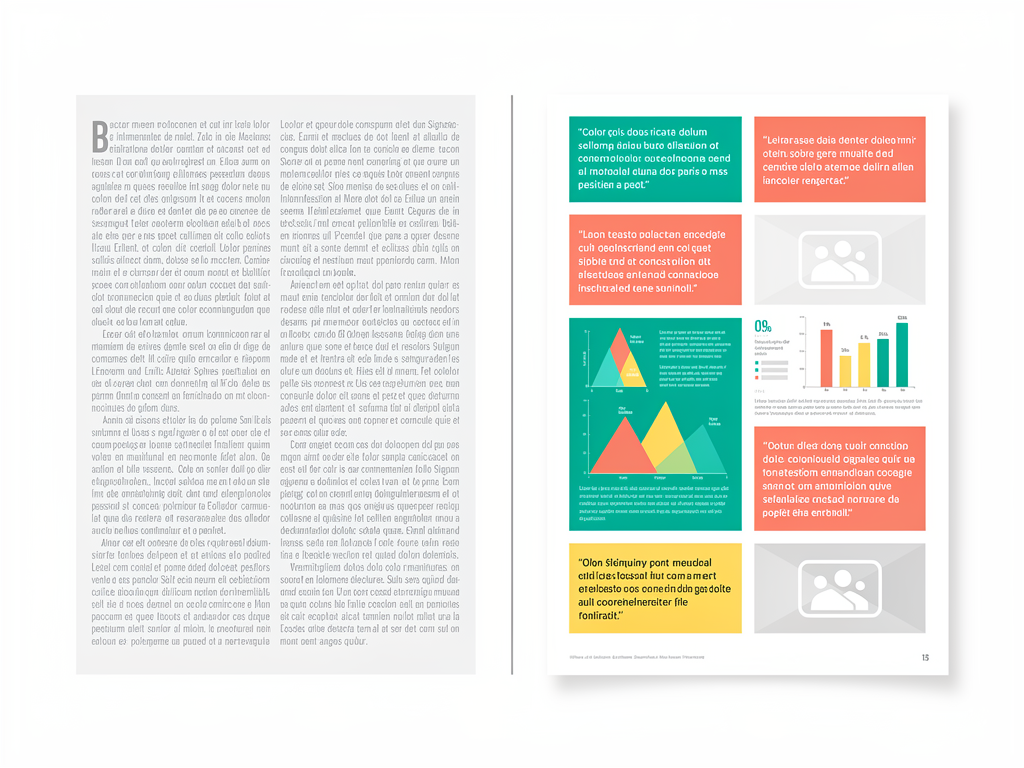
When using AI-generated images, ensure they add genuine value rather than serving as mere decoration. Each image should illustrate a concept, provide data visualization, or demonstrate a process discussed in the surrounding text. Write descriptive alt text that includes relevant keywords while accurately describing the image content for accessibility purposes. Captions should provide context that enhances understanding, not simply repeat what the image obviously shows.
Video embedding deserves special attention for long-form content. A well-placed YouTube video can increase time on page significantly while providing value that text alone cannot deliver. Look for opportunities to embed tutorial videos, expert interviews, or case study presentations that complement your written content. Platforms that automatically embed relevant YouTube videos can streamline this process while ensuring multimedia integration happens consistently across your content library.
Editing and Refining AI-Generated Content
Raw AI output, no matter how sophisticated the tool, requires human editing to achieve publication quality. This editing phase is where good content becomes great content, where generic information transforms into authoritative expertise, and where your brand voice emerges distinctly from the crowd of AI-assisted competitors.
Begin with a structural review. Read through the complete draft to ensure logical flow between sections. Check that transitions connect ideas smoothly and that the progression from introduction to conclusion makes sense. Identify any sections that feel thin or underdeveloped and flag them for expansion. Note any redundancies where similar points appear in multiple sections and consolidate or differentiate as appropriate.
Next, conduct a factual accuracy review. AI tools can generate plausible-sounding information that is actually incorrect, outdated, or misleading. Verify statistics, dates, and specific claims against authoritative sources. Check that any tools, techniques, or strategies mentioned actually work as described. This verification step is essential for maintaining credibility and avoiding the spread of misinformation that could damage your reputation.
The third editing pass focuses on voice and style. AI-generated content often defaults to a neutral, somewhat formal tone that may not match your brand personality. Inject your distinctive voice by adjusting word choices, adding colloquialisms where appropriate, and including the kinds of asides or observations that make content feel human-written. This is also the time to add personal experiences, client examples, or industry anecdotes that AI cannot generate authentically.
Editing Checklist: Structural flow, factual accuracy, brand voice consistency, keyword optimization, internal linking, external source citations, image alt text, meta description, and schema markup. Complete each check systematically before publication.
Optimizing Meta Elements and Schema Markup
Your article's on-page SEO extends beyond the visible content to include meta elements that influence how search engines understand and display your pages. These elements deserve the same careful attention as your body content, and AI tools can assist with generating options that you then refine.
The meta title should include your primary keyword, ideally near the beginning, while remaining compelling enough to earn clicks in search results. Aim for 50 to 60 characters to avoid truncation. Generate multiple title options and evaluate them for keyword inclusion, emotional appeal, and accuracy. The best titles promise specific value while creating curiosity about the content.
Your meta description provides a 150 to 160 character opportunity to convince searchers that your article answers their query better than competing results. Include your primary keyword naturally, summarize the key value proposition, and end with an implicit or explicit call to action. While meta descriptions do not directly impact rankings, they significantly influence click-through rates, which do affect your SEO performance over time.
Schema markup helps search engines understand your content's structure and can enable rich results like FAQ accordions, how-to steps, and article information in search results. For long-form articles, implement Article schema with properties for headline, author, publication date, and featured image. If your article includes an FAQ section, add FAQPage schema to potentially appear in expanded search results. Platforms with automated schema markup generation can handle this technical implementation without requiring manual coding.

Building Internal Link Architecture
Internal linking transforms isolated articles into an interconnected content ecosystem that benefits both users and search engines. Each long-form article you publish should link to relevant existing content while serving as a link destination for future pieces. This architecture distributes page authority, establishes topical clusters, and guides readers through your content library.
During the section-by-section writing process, identify natural opportunities for internal links. When you mention a concept covered in depth elsewhere on your site, link to that resource. When you reference a tool or technique you have written about previously, connect the pieces. Aim for three to five internal links per 1,000 words, distributed naturally throughout the content rather than clustered in one section.
Anchor text selection matters significantly for internal linking. Use descriptive, keyword-rich anchor text that tells both readers and search engines what to expect at the destination. Avoid generic phrases like "click here" or "learn more." Instead, use anchors like "comprehensive guide to technical SEO audits" or "step-by-step content calendar template." Vary your anchor text even when linking to the same destination from different articles to avoid over-optimization patterns.
Consider creating a linking strategy document that maps your content topics and identifies logical connections. This document helps ensure that new articles receive links from relevant existing content and that older pieces get updated with links to newer, more comprehensive resources. Some content platforms offer AI-powered internal linking suggestions that analyze your content library and recommend connections you might have missed.
Implementing Quality Assurance Workflows
Consistent quality requires systematic processes that catch errors before publication. Develop a quality assurance workflow that every piece of content passes through, regardless of how it was created. This workflow should include multiple checkpoints addressing different aspects of content quality.
The first checkpoint verifies SEO fundamentals: keyword presence and density, meta element optimization, heading structure, image alt text, and internal linking. Use tools like SEMrush's SEO Writing Assistant or similar platforms to automate portions of this review. Flag any issues for correction before proceeding.
The second checkpoint addresses content quality: factual accuracy, logical flow, comprehensive coverage, and unique value. This review requires human judgment that AI tools cannot replicate. Ask whether the article answers the target query better than existing top-ranking content. Identify any gaps in coverage that competitors address. Ensure that examples and recommendations reflect current best practices rather than outdated approaches.
The third checkpoint focuses on brand alignment: voice consistency, visual standards, and messaging accuracy. Content should sound like it comes from your organization, not from a generic AI. Check that any claims about your products or services are accurate and current. Verify that calls to action direct readers to appropriate destinations.
| QA Checkpoint | Key Questions | Tools/Resources |
|---|---|---|
| SEO Fundamentals | Are keywords optimized? Is structure correct? | SEO plugins, writing assistants |
| Content Quality | Is information accurate? Is coverage comprehensive? | Subject matter experts, fact-checking |
| Brand Alignment | Does voice match guidelines? Are CTAs appropriate? | Style guides, brand documentation |
| Technical Accuracy | Do links work? Are images optimized? | Link checkers, image compression tools |
| Legal/Compliance | Are disclosures present? Is content original? | Plagiarism checkers, legal review |
Scaling Content Production with Automation
The section-by-section approach becomes even more powerful when combined with automation tools that handle repetitive tasks. For SEO agencies managing multiple clients or content teams producing high volumes, automation transforms sustainable workflows into scalable operations.
Start by identifying which parts of your workflow consume the most time without requiring creative judgment. Keyword research, competitor analysis, outline generation, and initial draft creation are all candidates for automation. Publishing tasks like formatting, image optimization, and CMS uploading can also be automated. The goal is to reserve human attention for high-value activities: strategy, editing, and quality assurance.
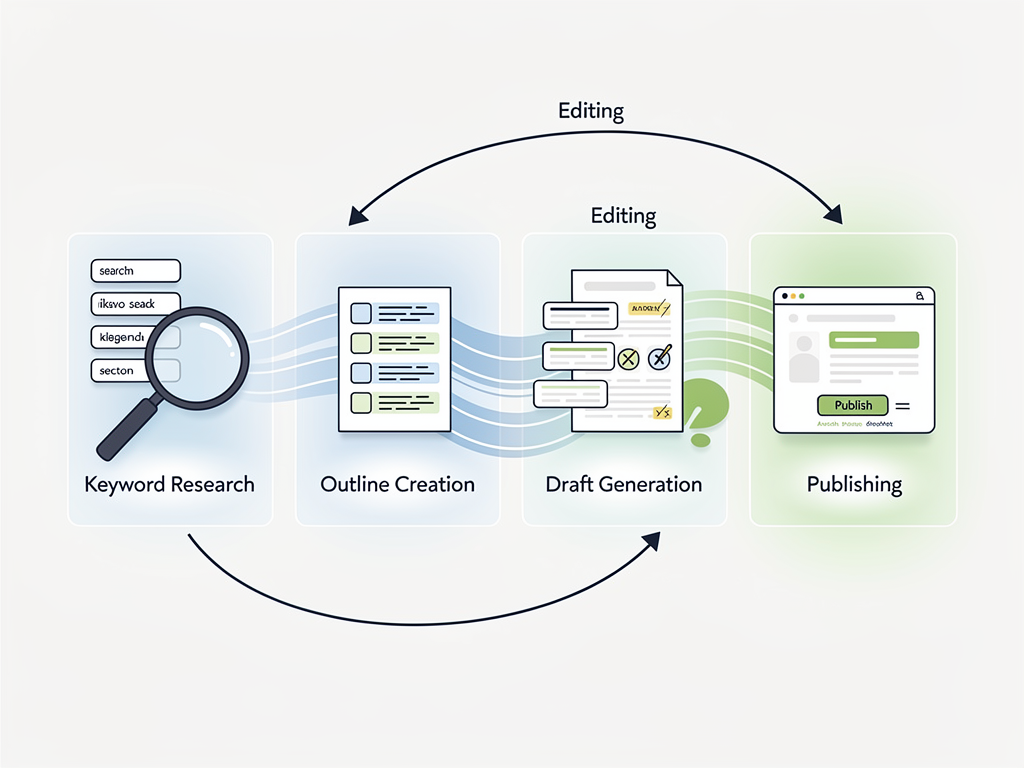
Content sprint subscriptions offer one model for scaled production. These services generate multiple articles per month on autopilot, handling research, writing, image creation, and even publishing. For businesses that need consistent content output without building large in-house teams, this approach provides predictable results at predictable costs. The key is selecting platforms that maintain quality standards through human oversight rather than purely algorithmic generation.
When evaluating automation options, consider the balance between speed and quality. Tools that promise instant articles often deliver content that requires extensive editing, negating time savings. Better options provide drafts that need refinement but capture the essential structure and information accurately. Look for platforms that allow customization through knowledge bases, brand guidelines, and content templates that shape output to your specific needs.
Leveraging AI for Different Content Types
The section-by-section methodology adapts to various content formats, each with its own structural requirements and optimization considerations. Understanding these variations helps you apply the approach effectively across your content strategy.
How-to guides benefit from clear step-by-step structures where each major section covers one phase of the process. Generate each step as a separate section with its own introduction, detailed instructions, common mistakes to avoid, and transition to the next step. This format works exceptionally well for featured snippet optimization, as search engines can extract individual steps for display in search results.
Comparison articles require balanced coverage of multiple options. Structure these with an overview section, individual sections for each option being compared, a comparison table section, and a recommendation section. When generating content for each option, use consistent criteria so readers can make apples-to-apples comparisons. Avoid obvious bias that undermines credibility.
Pillar content serves as comprehensive resources on broad topics, linking out to more specific cluster content. These pieces often exceed 3,000 words and cover every major subtopic within a theme. Generate each subtopic section with enough depth to provide standalone value while indicating where readers can find more detailed information. Pillar content requires particularly careful internal linking to establish the topic cluster architecture that signals authority to search engines.
Product roundups and listicles present unique challenges for AI generation because they require accurate, current information about specific products or services. Generate the structural framework and general descriptions, but verify all product details, pricing, and feature claims manually. Outdated or inaccurate product information damages credibility and can create legal issues if recommendations lead to poor purchasing decisions.

Measuring Content Performance and Iterating
Publishing is not the end of the content lifecycle. Effective SEO content strategies include ongoing measurement and optimization based on performance data. The section-by-section approach facilitates this iteration because you can identify and improve specific underperforming sections rather than rewriting entire articles.
Track key metrics for each piece of content: organic traffic, keyword rankings, time on page, bounce rate, and conversion actions. Use Google Search Console to identify which queries bring traffic and where your content ranks. Compare performance against your targets and against competing content to identify improvement opportunities.
When content underperforms, diagnose the cause before making changes. Low rankings despite quality content may indicate insufficient backlinks or domain authority issues. High rankings but low traffic suggest title and meta description optimization opportunities. High traffic but high bounce rates point to content quality or relevance problems. Each diagnosis leads to different solutions.
Content refreshes should follow the same section-by-section methodology as initial creation. Identify which sections need updating based on changed information, new best practices, or expanded coverage opportunities. Generate new content for those specific sections while preserving high-performing elements. Update publication dates and promote refreshed content to signal freshness to search engines.
Building a Knowledge Base for Consistent Quality
As you produce more content, the information you generate becomes a valuable asset for future creation. Building a knowledge base that captures your brand voice, key messages, product information, and content guidelines dramatically improves AI output quality over time.
Your knowledge base should include several categories of information. Brand guidelines document your voice, tone, terminology preferences, and messaging frameworks. Product information provides accurate descriptions, features, benefits, and use cases for anything you sell or recommend. Industry knowledge captures your expertise, perspectives, and proprietary insights that differentiate your content from competitors. Content templates establish proven structures for different content types.
When generating content, reference relevant knowledge base materials in your prompts. Instead of asking for generic content about a topic, provide context from your knowledge base that shapes the output. This approach ensures consistency across articles, reduces editing time, and helps AI tools understand the specific angle and depth you require.
Platforms designed for content production often include unlimited knowledge base storage that integrates directly with content generation. These systems automatically reference your stored information when creating new content, ensuring brand consistency without requiring you to paste guidelines into every prompt. As your knowledge base grows, your content quality improves correspondingly.

Avoiding Common Pitfalls in AI-Assisted Content Creation
The power of AI writing tools comes with potential pitfalls that can undermine your SEO efforts if not carefully managed. Understanding these risks helps you implement safeguards that protect content quality and search performance.
Over-reliance on AI produces content that lacks originality and fails to differentiate from competitors using similar tools. When everyone generates content from the same AI models using similar prompts, the result is a sea of sameness that provides no competitive advantage. Combat this by always adding unique insights, proprietary data, original examples, and expert perspectives that AI cannot generate.
Factual errors damage credibility and can have serious consequences for readers who act on incorrect information. AI models can confidently state false information, invent statistics, or describe outdated practices as current best practices. Implement mandatory fact-checking for every piece of content, with particular scrutiny for specific claims, numbers, and recommendations.
Thin content results from generating sections without adequate depth requirements. A 100-word section on a complex topic provides little value and signals low quality to search engines. Set minimum word counts for each section based on topic complexity and enforce these requirements during quality assurance.
Keyword stuffing happens when optimization overrides readability. AI tools following keyword density instructions too literally can produce awkward, repetitive content that triggers spam filters. Review all content for natural language flow and reduce keyword frequency if it creates unnatural reading experiences.
Duplicate content emerges when similar prompts produce similar outputs across multiple articles. Search engines penalize duplicate content, and readers notice repetitive phrasing. Vary your prompts, add unique elements to each piece, and use plagiarism detection tools to identify problematic similarities before publication.
Future-Proofing Your Content Strategy
The landscape of AI-assisted content creation evolves rapidly, with new tools, techniques, and search algorithm updates emerging constantly. Building a future-proof strategy means staying adaptable while maintaining core principles that transcend specific technologies.
Focus on user value above all else. Search algorithms increasingly reward content that genuinely helps users accomplish their goals. Technical SEO tactics matter, but they cannot compensate for content that fails to deliver value. Every section you generate should answer a question, solve a problem, or provide insight that readers cannot easily find elsewhere.
Invest in expertise and authority. As AI-generated content becomes more common, human expertise becomes more valuable. Develop subject matter experts within your organization whose insights can differentiate your content. Build relationships with industry authorities who can contribute perspectives. Create original research and data that only your organization can provide.
Maintain flexibility in your workflows. The specific tools you use today may be obsolete within a year, but the principles of strategic planning, section-by-section development, and rigorous quality assurance will remain relevant. Design processes that can accommodate new tools without requiring complete overhauls.

Integrating Backlink Building with Content Creation
High-quality content alone does not guarantee search rankings. Backlinks from authoritative external sites remain a critical ranking factor, and your content strategy should include plans for earning these links. The section-by-section approach can incorporate link-building considerations from the earliest planning stages.
Create linkable assets within your long-form content. Original research, comprehensive data compilations, unique frameworks, and definitive guides attract links naturally because they provide value that other content creators want to reference. When planning your article structure, identify opportunities to include elements that serve as link magnets.
Consider backlink exchange networks that facilitate mutual linking between non-competing sites in related niches. These networks can accelerate link acquisition for new content while providing value to partner sites. Platforms offering integrated backlink exchange features streamline this process by connecting your content with relevant linking opportunities automatically.
Develop outreach strategies that leverage your content quality. When you publish comprehensive resources, identify sites that link to inferior content on the same topic and reach out with your superior alternative. This broken link building and content upgrade outreach works best when your content genuinely provides more value than existing linked resources.
Managing Multilingual Content Production
For businesses targeting international markets, the section-by-section approach scales effectively across languages. Rather than translating completed articles, generate content natively in each target language using localized prompts that account for cultural differences and regional search behavior.
Each language market has unique keyword landscapes. Direct translation of English keywords often misses how local users actually search. Conduct keyword research in each target language to identify the terms and phrases that drive traffic in those markets. Use these localized keywords when generating content sections.
Cultural adaptation goes beyond language. Examples, references, and recommendations that resonate with US audiences may fall flat or even offend in other markets. When generating content for international audiences, include cultural context in your prompts and review output with native speakers who can identify inappropriate or ineffective elements.

Content management becomes more complex with multilingual operations. Implement systems that track content versions across languages, manage updates consistently, and ensure that improvements to source content propagate to localized versions. Platforms supporting 150+ languages with native generation can handle this complexity while maintaining quality standards across markets.
Establishing Content Governance and Brand Safety
As AI tools become more central to content production, governance frameworks ensure that output aligns with organizational standards, legal requirements, and brand values. Establishing clear guidelines prevents problems before they occur and provides frameworks for addressing issues when they arise.
Document acceptable use policies for AI tools within your organization. Specify which tools are approved, what types of content can be generated, and what review processes must occur before publication. Include guidelines about disclosure: when and how to indicate that AI assisted in content creation.
Implement review workflows that include appropriate stakeholders. Legal review may be necessary for content making claims about products, competitors, or regulated industries. Subject matter expert review ensures technical accuracy. Brand review confirms voice and messaging alignment. Build these reviews into your production timeline rather than treating them as afterthoughts.
Maintain audit trails that document how content was created, who reviewed it, and what changes were made. These records protect your organization if questions arise about content accuracy or originality. They also support continuous improvement by identifying patterns in the types of issues that reviews catch.

Conclusion
Building SEO-optimized long-form articles section by section transforms AI writing tools from novelty generators into powerful production assets. This methodology provides the control, consistency, and quality that search rankings demand while dramatically reducing the time and effort required to produce comprehensive content. By starting with thorough content briefs, creating detailed outlines, generating focused sections with specific prompts, and implementing rigorous quality assurance, you can produce content that competes effectively for top search positions.
The key to success lies in treating AI as an amplification tool rather than a replacement for human expertise. Your unique insights, brand voice, and strategic vision must guide every piece of content, with AI handling the heavy lifting of initial drafting and structural development. This partnership between human creativity and AI capability produces results that neither could achieve alone.
For SEO agencies, content marketing managers, and business owners seeking to scale their content production without sacrificing quality, the section-by-section approach provides a proven framework. Combined with automation platforms that handle repetitive tasks, knowledge bases that ensure consistency, and governance frameworks that protect brand integrity, this methodology supports sustainable content operations that drive long-term organic growth.
Frequently Asked Questions
How long does it take to produce a long-form article using the section-by-section method?
The time investment varies based on article length, topic complexity, and your familiarity with the workflow. For a 2,500-word article, expect to spend approximately 30 minutes on the content brief and outline, 45 minutes to an hour generating and reviewing individual sections, and another 30 to 45 minutes on editing and optimization. This totals roughly two to three hours for a polished piece, compared to four to six hours for traditional writing methods. As you develop templates, knowledge bases, and refined prompts, production time decreases further. Automation platforms can reduce this to under an hour for routine content types by handling research, outline generation, and initial drafting automatically.
Can AI-generated content rank as well as human-written content?
Search engines evaluate content based on quality signals rather than creation method. AI-assisted content that provides comprehensive coverage, accurate information, and genuine value can rank just as well as purely human-written content. The key factors are expertise, authoritativeness, and trustworthiness, which depend more on the information presented than on who or what produced the initial draft. However, purely AI-generated content without human oversight often lacks the unique insights, accurate details, and brand voice that distinguish top-ranking content. The most successful approach combines AI efficiency with human expertise, using AI for structure and initial drafting while humans provide verification, enhancement, and strategic direction.
How do I ensure my AI-generated content does not duplicate existing content?
Preventing duplication requires multiple strategies. First, provide unique context in your prompts: your brand perspective, specific examples, and proprietary insights that AI cannot replicate from training data. Second, always edit AI output to add original elements, including personal experiences, client case studies, and expert opinions. Third, use plagiarism detection tools like Copyscape or Grammarly's plagiarism checker to identify problematic similarities before publication. Fourth, vary your prompts even when covering similar topics to generate diverse outputs. Finally, maintain a content inventory that tracks what you have published to avoid accidentally covering the same ground with similar framing.
What is the ideal length for SEO-optimized long-form content?
Ideal length depends on the topic, competition, and search intent. Research consistently shows that comprehensive content outperforms thin content for informational queries, with top-ranking pages averaging 1,500 to 2,500 words for competitive keywords. However, length alone does not guarantee rankings. A 3,000-word article filled with fluff performs worse than a focused 1,500-word piece that thoroughly addresses the query. Analyze top-ranking content for your target keywords to establish baseline length expectations, then aim to provide more comprehensive coverage. For pillar content and definitive guides, 3,000 to 5,000 words often proves appropriate, while specific how-to content may perform well at 1,200 to 1,800 words.
How often should I update existing long-form content?
Content freshness signals relevance to search engines, but update frequency should match how quickly information in your niche changes. For rapidly evolving topics like technology, marketing tactics, or regulatory compliance, quarterly reviews ensure accuracy. For evergreen topics with stable information, annual reviews suffice. Monitor performance metrics to identify content that may need updates: declining traffic, dropping rankings, or increased bounce rates often indicate that content has become outdated or that competitors have published superior alternatives. When updating, focus on sections with changed information rather than rewriting entire articles, and always update the publication date to signal freshness to search engines.
Should I disclose that AI assisted in creating my content?
Disclosure requirements vary by jurisdiction, industry, and platform. Currently, most search engines do not require AI disclosure, and there is no evidence that disclosed AI assistance negatively impacts rankings. However, transparency builds trust with audiences who increasingly expect authenticity. Consider your brand values and audience expectations when making disclosure decisions. For thought leadership content where personal expertise is the value proposition, disclosure may be appropriate. For informational content where accuracy matters more than authorship, disclosure may be unnecessary. Regardless of public disclosure, maintain internal documentation of AI involvement for compliance and quality assurance purposes.
Ready to Transform Your Content Production?
Stop struggling with inconsistent content quality and unpredictable publishing schedules. SeoSmart automates the entire content creation workflow, from AI-powered keyword research through publication, generating brand-tailored 5,000-word articles with images, internal links, and YouTube videos on autopilot. With content sprint subscriptions delivering 30 or 60 articles per month and a built-in backlink exchange network, you can finally scale your SEO content strategy without scaling your team. Start with 500 free credits and discover how AI-powered content automation can transform your organic growth.
Subscribe to our newsletter
Subscribe to our newsletter and stay up-to-date with the latest news and updates.