Mastering AI Visibility: Optimize Content for Search & AI
Discover how to adapt your content strategy for the evolving digital landscape where AI systems like ChatGPT and Google AI Overviews shape information discovery. Learn the importance of dual optimization for traditional search engines and AI, and how to establish authority and credibility to enhance visibility in AI-generated responses.

Zakariae

The rules of digital discovery are changing faster than most marketers can adapt. For years, ranking on page one of Google was the ultimate goal, the north star that guided every SEO strategy and content decision. But now, a parallel universe of search has emerged, one where AI systems like ChatGPT, Google's AI Overviews, Perplexity, and Microsoft Copilot are becoming the primary way millions of people find information, evaluate brands, and make purchasing decisions. This shift demands a fundamental rethinking of how we create, structure, and distribute content.
The concept of ai visibility represents this new frontier, where success means being discovered not just by traditional search engine crawlers but also by large language models that synthesize information and deliver direct answers to user queries. ChatGPT alone processes 2.5 billion prompts daily from users worldwide, and roughly 80% of consumers now rely on AI-generated results for at least 40% of their searches. If your content isn't optimized for both traditional search engines and AI discovery systems, you're potentially invisible to a massive and growing segment of your target audience.
Key Takeaways
- Dual optimization is now essential: Content must satisfy both traditional search engine algorithms and AI language models to maximize discovery potential.
- Authority and credibility matter more than ever: AI systems prioritize sources they perceive as trustworthy, making E-E-A-T signals critical for inclusion in AI-generated responses.
- Structured content wins: Clear formatting, logical organization, and semantic markup help AI systems parse and cite your content accurately.
- Zero-click behavior is accelerating: Many users now get answers directly from AI without visiting websites, making brand mentions and citations the new currency of visibility.
- GEO complements SEO: Generative Engine Optimization builds upon traditional SEO foundations rather than replacing them entirely.
- Consistency across platforms strengthens AI recognition: Unified brand messaging across all digital touchpoints helps AI models associate your brand with relevant topics.
- Technical accessibility remains foundational: AI crawlers need access to your content, making proper robots.txt configuration and crawlability essential.
Understanding the New Search Landscape
The search ecosystem has fragmented in ways that would have seemed impossible just a few years ago. Traditional search engines like Google still command enormous traffic, but they're now competing with conversational AI interfaces that offer a fundamentally different user experience. Instead of presenting a list of links for users to evaluate and click through, AI search tools synthesize information from multiple sources and deliver direct, conversational answers.
This transformation has profound implications for content creators and marketers. A twelve-month comparison from February 2025 to February 2026 shows that Google AI Overviews coverage grew by 58%, indicating that even traditional search is becoming increasingly AI-mediated. When users ask questions, they're increasingly receiving AI-generated summaries at the top of search results, often satisfying their information needs without requiring them to click through to any website.
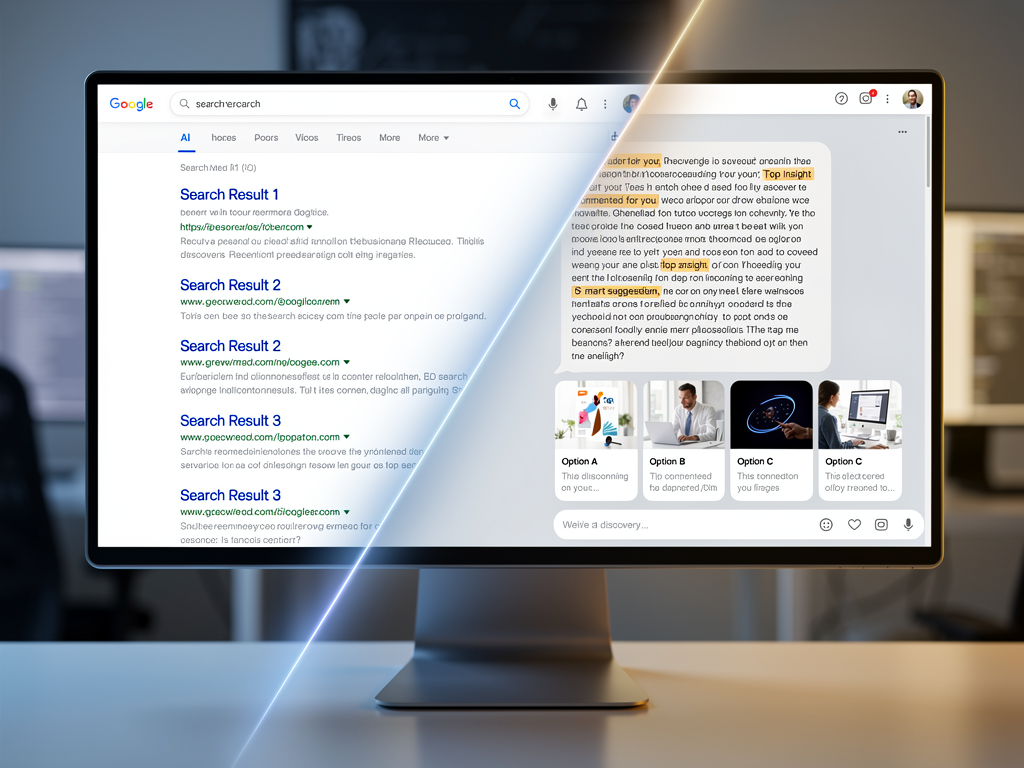
For marketers and content creators, this shift creates both challenges and opportunities. The challenge is that traditional metrics like click-through rates and organic traffic may decline even as your content becomes more influential. The opportunity is that brands who master this new landscape can achieve unprecedented authority by becoming the sources that AI systems trust and cite. Understanding this dual nature of modern search is the first step toward developing an effective visibility strategy.
The rise of zero-click searches, where users get their answers without visiting any website, has accelerated dramatically. Reports indicate that approximately 60% of searches now end without the user progressing to a website. This doesn't mean websites are becoming irrelevant; rather, it means that visibility within AI-generated answers has become a crucial new dimension of digital presence that exists alongside traditional search rankings.
How AI Search Engines Discover and Evaluate Content
Understanding how AI search systems work is essential for optimizing your content to appear in their responses. Unlike traditional search engines that rely on crawling, indexing, and ranking based on relevance signals and backlinks, AI-powered search tools use a combination of selective crawling, curated indices, and real-time retrieval to generate answers. This process, known as retrieval-augmented generation (RAG), allows AI systems to pull relevant information dynamically before synthesizing a response.
Different AI platforms approach content discovery in distinct ways. Perplexity AI uses its own crawler called PerplexityBot to index selected sources while also performing live retrieval at query time. Microsoft Copilot relies primarily on Bing's standard index, meaning your visibility in Copilot depends largely on how well your site performs in Bing search. Google's AI Overviews and AI Mode build directly on Google's traditional index combined with real-time AI analysis. ChatGPT uses OpenAI crawlers, specifically GPTBot for training-related crawling and OAI-SearchBot for search indexing.
The key insight here is that AI systems don't simply regurgitate information from a single source. Instead, they analyze patterns across massive datasets, learning which brands and sources are associated with certain topics and which appear most credible. They recognize entities, understand relationships between concepts, and evaluate the authority of different sources before deciding what information to include in their responses.
This means that earning visibility in AI search requires more than just having content that mentions relevant keywords. Your content must demonstrate expertise, provide clear and accurate information, and be structured in ways that make it easy for AI systems to parse and understand. The sources that AI models cite tend to share common characteristics: they're authoritative, well-structured, frequently referenced by other credible sources, and provide comprehensive coverage of their topics.
The Relationship Between SEO and Generative Engine Optimization
One of the most common misconceptions about AI search optimization is that it represents a complete departure from traditional SEO. In reality, Generative Engine Optimization (GEO) builds upon and extends traditional SEO principles rather than replacing them. The foundational elements that make content rank well in traditional search, including quality content, technical optimization, and authoritative backlinks, also contribute to visibility in AI-generated responses.
However, GEO adds an additional layer focused specifically on how AI systems select and cite sources. While traditional SEO aims to rank pages in search results and capture clicks through visibility, GEO aims to get your content cited or referenced directly in AI answers and position your brand as a trusted source when AI systems summarize topics. These goals are complementary, not competing.

The practical implication is that you shouldn't abandon your existing SEO strategy to pursue AI visibility. Instead, you should enhance your current approach with additional considerations that improve your chances of being selected by AI systems. This includes focusing more heavily on demonstrating expertise and authority, structuring content for easy parsing, and ensuring consistency across all your digital properties.
Think of it as building a house: traditional SEO provides the foundation and structural framework, while GEO adds the finishing touches that make the house attractive to a specific type of visitor. Without the foundation, the finishing touches won't matter. But without the finishing touches, you might not appeal to the growing segment of visitors who arrive through AI-mediated channels.
Building Authority and Credibility for AI Recognition
AI systems are designed to provide accurate, helpful information to users, which means they prioritize sources they perceive as authoritative and trustworthy. This makes the concept of E-E-A-T (Experience, Expertise, Authoritativeness, and Trustworthiness) more important than ever. While E-E-A-T has been a factor in traditional search for years, AI systems take these signals even more seriously when deciding which sources to cite.
Building authority for AI recognition starts with demonstrating genuine expertise in your field. This means creating content that goes beyond surface-level information to provide unique insights, original research, and practical guidance that users can't easily find elsewhere. AI systems are sophisticated enough to recognize when content is merely rehashing common knowledge versus when it's providing genuinely valuable perspectives.
Author credentials and brand reputation play significant roles in AI source selection. When your content is written by recognized experts in their fields, and when your brand is frequently mentioned in authoritative contexts across the web, AI systems are more likely to view your content as citation-worthy. This is why building a strong author bio program and encouraging your subject matter experts to establish their own thought leadership presence can have significant impacts on AI visibility.
Third-party validation also matters enormously. When other credible sources link to your content, mention your brand, or cite your research, these signals help AI systems understand that you're a trusted authority in your space. This creates a virtuous cycle where increased authority leads to more AI citations, which in turn leads to more third-party mentions and even greater authority.
Pro Tip: Audit your existing content to identify opportunities for adding expert quotes, original data, case studies, and other elements that demonstrate genuine expertise. AI systems are increasingly sophisticated at distinguishing between authoritative content and generic information.
Structuring Content for AI Comprehension
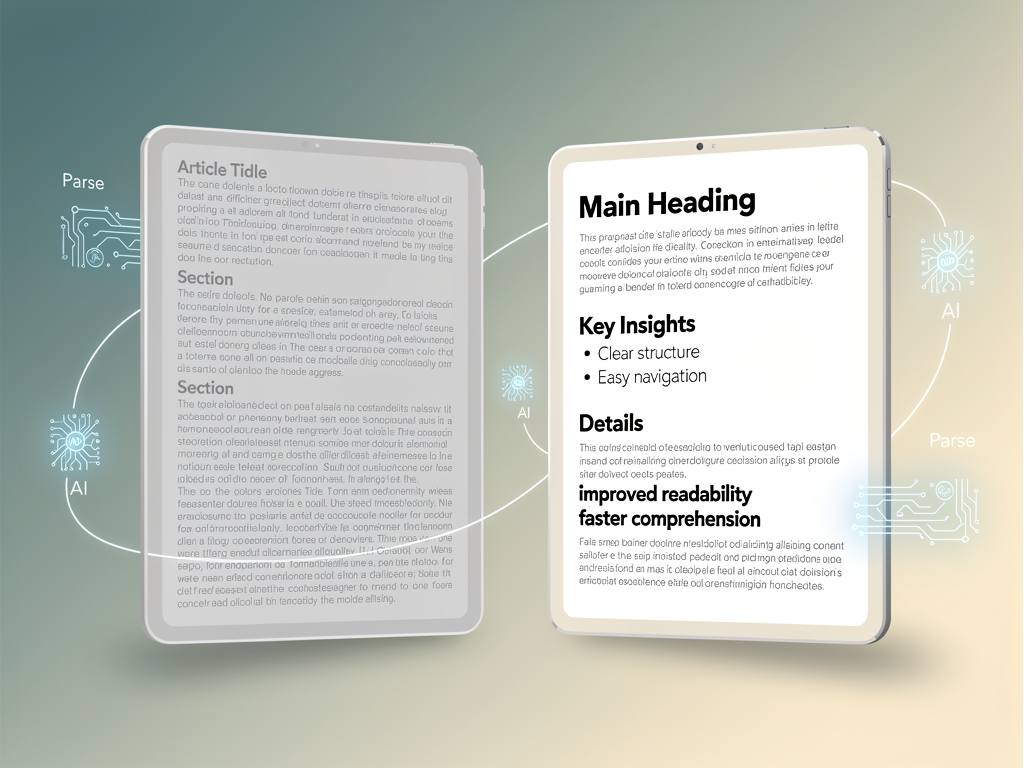
The way you structure your content has a direct impact on whether AI systems can effectively parse, understand, and cite it. AI models process information differently than human readers, often breaking content into chunks and analyzing the relationships between different sections. Content that's well-organized with clear hierarchies and logical flow is much easier for AI systems to work with.
Start with clear, descriptive headings that accurately reflect the content of each section. AI systems use headings as signals to understand what topics are covered and how they relate to each other. Avoid clever or ambiguous headings in favor of straightforward descriptions that leave no doubt about what information follows. This helps AI systems match your content to relevant queries.
Use formatting elements strategically to highlight key information. Bullet points and numbered lists are particularly effective because they break complex information into discrete, easily digestible pieces. Tables work well for comparisons and data presentation. Bold and italic text can emphasize important terms and concepts. These formatting choices don't just improve readability for humans; they also help AI systems identify the most important information in your content.
Write in a conversational tone that mirrors how people actually communicate and search. AI systems are trained on natural language, so content that sounds natural and addresses questions directly tends to perform better than overly formal or keyword-stuffed writing. Think about the questions your audience is asking and structure your content to provide clear, direct answers to those questions.
Consider implementing FAQ sections within your content, as these directly match the question-and-answer format that AI systems use to generate responses. When your content explicitly answers common questions in a clear, concise format, AI systems can easily extract and cite those answers in response to user queries.
Technical Requirements for AI Crawler Access
Before any optimization strategy can work, you need to ensure that AI crawlers can actually access your content. This might seem obvious, but many websites inadvertently block AI crawlers through their robots.txt configuration or technical setup, making their content invisible to AI search systems regardless of its quality.
Different AI platforms use different crawlers, and you need to understand which ones to allow access to your content. OpenAI uses GPTBot for training-related crawling and OAI-SearchBot for search indexing. Perplexity uses PerplexityBot. Microsoft Copilot relies on Bingbot. Google's AI features use the standard Googlebot. Check your robots.txt file to ensure you're not blocking these crawlers unless you have specific reasons to do so.
| AI Platform | Crawler Name | Primary Function | Respects robots.txt |
|---|---|---|---|
| ChatGPT | GPTBot, OAI-SearchBot | Training and search indexing | Yes |
| Perplexity | PerplexityBot | Selective crawling and live retrieval | Varies |
| Microsoft Copilot | Bingbot | Standard Bing indexing | Yes |
| Google AI | Googlebot | Standard Google indexing | Yes |
JavaScript-heavy websites present particular challenges for AI crawlers. Many AI systems struggle to render and process JavaScript content effectively, meaning that entire sections of your website might be invisible to them. If your site relies heavily on JavaScript for content rendering, consider implementing server-side rendering or pre-rendering to ensure that AI crawlers can access all your content.
Page speed and technical performance also matter. AI crawlers, like traditional search engine crawlers, have limited time and resources to spend on each website. If your pages load slowly or have technical issues that impede crawling, AI systems may not fully index your content. Regular technical audits using tools that simulate crawler behavior can help identify and resolve these issues.
Creating Content That AI Systems Want to Cite
Not all content is equally likely to be cited by AI systems. Understanding what makes content citation-worthy can help you create material that's more likely to appear in AI-generated responses. AI systems tend to favor content that provides clear, definitive answers to specific questions, offers unique data or insights, and comes from sources they perceive as authoritative.
Original research and data are particularly valuable for AI citations. When you publish unique statistics, survey results, case studies, or other original information, you become the primary source for that data. AI systems recognize this and are more likely to cite your content when users ask questions related to your research. Consider investing in original research projects that can establish your brand as the go-to source for specific types of information.
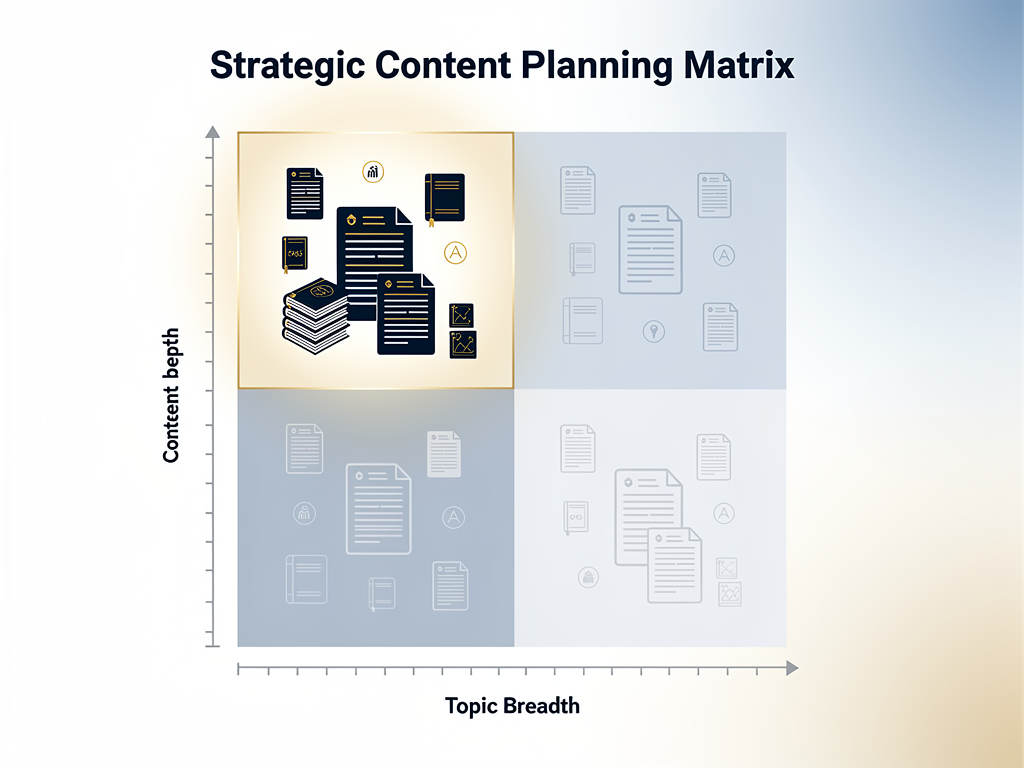
Comprehensive coverage of topics also increases citation likelihood. AI systems often need to synthesize information from multiple angles to provide complete answers, and content that thoroughly addresses a topic from multiple perspectives is more useful for this purpose. This doesn't mean every piece of content needs to be exhaustive, but your content library as a whole should demonstrate deep expertise across your subject areas.

The format of your content matters too. Content that directly answers questions in a clear, concise format is easier for AI systems to extract and cite. Consider including summary sections, key takeaways, and direct answers to common questions within your longer content pieces. These elements give AI systems ready-made responses they can use or adapt when generating answers to user queries.
Accuracy and currency are non-negotiable. AI systems are increasingly sophisticated at evaluating the accuracy of information and the recency of content. Outdated information or factual errors can damage your credibility with AI systems and reduce your chances of being cited. Implement regular content audits to ensure your information remains accurate and up-to-date.
Establishing Consistent Brand Identity Across Platforms
AI models recognize brands, people, and products and associate them with specific topics. If your brand positioning is vague or inconsistent across different platforms, you become harder for AI systems to categorize and less likely to be referenced in relevant contexts. Consistency is key to building the kind of clear brand identity that AI systems can recognize and recommend.
Start by auditing your brand presence across all digital touchpoints. Your website, social media profiles, directory listings, third-party mentions, and any other places where your brand appears should all communicate a consistent message about who you are, what you do, and what makes you distinctive. Inconsistencies in naming, messaging, or positioning can confuse AI systems and dilute your brand's association with relevant topics.
Structured data and schema markup play important roles in helping AI systems understand your brand. Implementing Organization schema, Author schema, and other relevant markup types provides AI systems with explicit information about your brand that they can use when generating responses. This is particularly important for local businesses, where LocalBusiness schema can help AI systems provide accurate information about your location, hours, and services.
Your brand's presence in knowledge graphs and authoritative databases also influences AI recognition. Ensure your brand is accurately represented in Wikipedia (if notable enough), Wikidata, Google Business Profile, and industry-specific directories. These sources often serve as reference points for AI systems when they need to verify information about brands and organizations.
Strategic Insight: Think of every digital touchpoint as a training signal for AI systems. The more consistent and authoritative your brand presence across the web, the more likely AI systems are to recognize your brand as a trusted authority in your space.
Leveraging Semantic Search and Entity Optimization
AI systems don't just match keywords; they understand concepts, relationships, and context. This semantic understanding means that optimizing for AI visibility requires thinking beyond individual keywords to consider the broader conceptual landscape around your topics. Entity optimization, which focuses on helping AI systems understand and associate your brand with relevant concepts, is becoming increasingly important.
Entities in the context of AI search are distinct, well-defined concepts that AI systems can recognize and track. These include people, places, organizations, products, and abstract concepts. When your content clearly establishes relationships between entities, AI systems can better understand what your content is about and when it's relevant to user queries.
To optimize for semantic search, focus on covering topics comprehensively rather than targeting individual keywords. Think about all the related concepts, questions, and subtopics that someone interested in your main topic might want to understand. Creating content that addresses this broader conceptual space signals to AI systems that you have deep expertise in the area.

Internal linking plays a crucial role in establishing semantic relationships within your content. When you link between related pieces of content using descriptive anchor text, you help AI systems understand how different topics on your site relate to each other. This creates a web of semantic connections that strengthens your overall topical authority.
Consider creating content hubs or pillar pages that serve as comprehensive resources on your core topics, with supporting content that addresses specific subtopics in depth. This hub-and-spoke model helps AI systems understand your content architecture and recognize your site as an authoritative resource on specific subject areas.
Monitoring and Measuring AI Search Performance
One of the biggest challenges in AI search optimization is measurement. Traditional SEO metrics like rankings, traffic, and click-through rates don't fully capture your performance in AI-generated responses. Developing new measurement approaches is essential for understanding whether your optimization efforts are working and where to focus future improvements.
Start by manually monitoring how your brand appears in AI search responses. Regularly query AI systems like ChatGPT, Perplexity, and Google's AI features with questions relevant to your business and note whether your brand is mentioned, cited, or recommended. While this manual approach doesn't scale perfectly, it provides valuable qualitative insights into your AI visibility.
Track brand mentions and citations across the web, as these often correlate with AI visibility. Tools that monitor brand mentions, backlinks, and citations can help you understand how your brand is being discussed and referenced online. Increases in authoritative mentions often precede improvements in AI visibility.
| Metric Category | Traditional SEO Metrics | AI Visibility Metrics |
|---|---|---|
| Discovery | Search rankings, impressions | AI mentions, citations, recommendations |
| Engagement | Click-through rate, time on page | Citation frequency, recommendation context |
| Authority | Domain authority, backlinks | Source credibility signals, entity recognition |
| Conversion | Organic conversions, goal completions | Brand awareness lift, consideration set inclusion |
Emerging tools specifically designed for AI visibility monitoring are beginning to enter the market. These tools track how often your brand appears in AI-generated responses, what context it appears in, and how your visibility compares to competitors. As the AI search landscape matures, expect more sophisticated measurement solutions to become available.
Don't neglect traditional SEO metrics entirely, as they still provide valuable signals about your overall content performance. Strong traditional SEO performance often correlates with better AI visibility, since many of the same factors influence both. Use a combination of traditional and AI-specific metrics to get a complete picture of your search performance.
Content Strategy Adaptations for the AI Era
The rise of AI search requires strategic adaptations to how you plan, create, and distribute content. While the fundamental principles of creating valuable, audience-focused content remain unchanged, the tactical execution needs to evolve to account for how AI systems discover and use content.
Prioritize depth over breadth in your content strategy. Rather than creating large volumes of shallow content, focus on creating fewer pieces that demonstrate genuine expertise and provide comprehensive value. AI systems are increasingly sophisticated at distinguishing between authoritative content and generic filler, and they favor sources that demonstrate deep knowledge.
Develop content that answers specific questions directly. AI systems are designed to provide answers to user queries, so content that explicitly addresses common questions is more likely to be cited. Research the questions your target audience is asking using tools like keyword research platforms, social listening, and customer feedback analysis, then create content that provides clear, authoritative answers.
Consider the full customer journey when planning content. AI systems often help users at different stages of their decision-making process, from initial awareness through consideration and decision. Creating content that addresses needs at each stage increases your chances of being cited across a wider range of queries.
Invest in content formats that AI systems can easily process and cite. While AI can work with various content types, certain formats are particularly well-suited for AI citation. These include comprehensive guides, FAQ pages, glossaries, comparison articles, and data-driven research reports. Incorporating these formats into your content mix can improve your AI visibility.
Building a Sustainable AI Visibility Strategy
AI search is not a passing trend; it represents a fundamental shift in how people discover and consume information. Building a sustainable strategy for AI visibility requires long-term thinking and ongoing adaptation as the technology and landscape continue to evolve.
Start by integrating AI visibility considerations into your existing content workflows rather than treating it as a separate initiative. Every piece of content you create should be evaluated for both traditional SEO potential and AI citation potential. This integrated approach ensures that AI visibility becomes a natural part of your content strategy rather than an afterthought.
Invest in building genuine authority in your space. The brands that will win in AI search are those that are genuinely recognized as experts and leaders in their fields. This means going beyond content marketing to build real expertise, contribute to industry conversations, and establish your brand as a trusted voice. Shortcuts and manipulation tactics are unlikely to work with AI systems that are designed to identify and prioritize authentic authority.
Stay informed about developments in AI search technology. The landscape is evolving rapidly, with new AI search tools emerging and existing tools constantly improving their capabilities. Following industry news, participating in professional communities, and experimenting with new tools and techniques will help you stay ahead of changes and adapt your strategy accordingly.
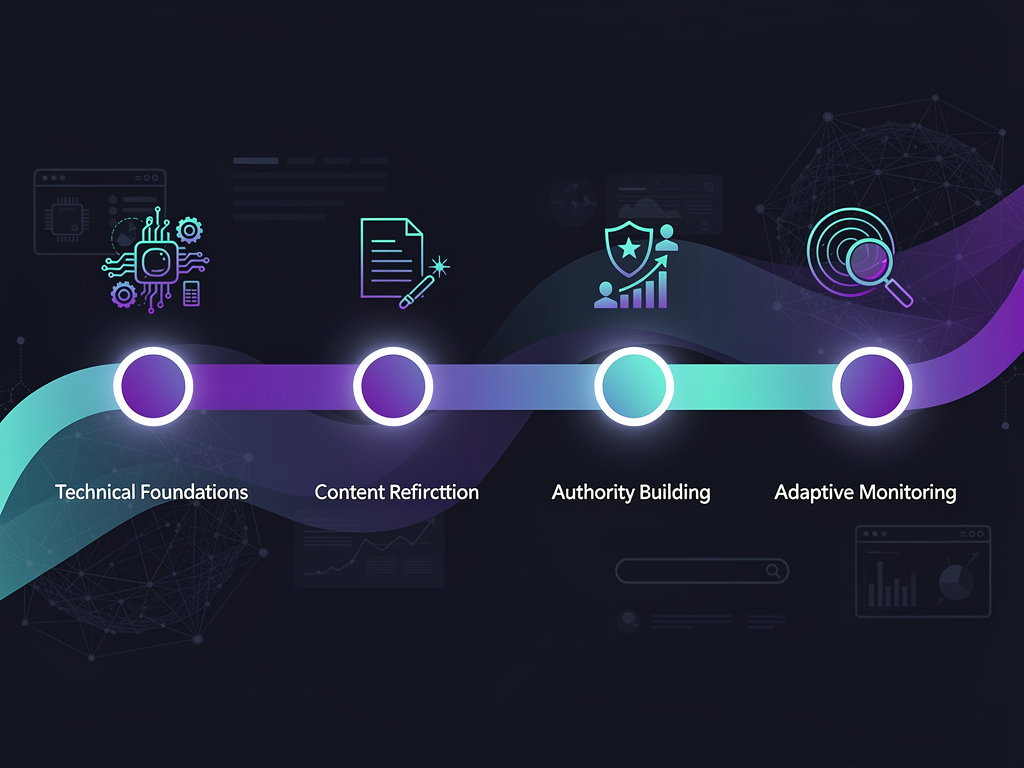
Build flexibility into your strategy to accommodate future changes. The specific tactics that work today may need to evolve as AI systems become more sophisticated. Focus on building foundational elements like authority, quality content, and technical excellence that will remain valuable regardless of how AI search technology evolves.
Common Mistakes to Avoid in AI Search Optimization
As marketers rush to adapt to the AI search landscape, certain mistakes have become common. Understanding these pitfalls can help you avoid wasting resources on ineffective tactics and focus your efforts on strategies that actually work.
One of the most common mistakes is treating AI optimization as completely separate from traditional SEO. As discussed earlier, GEO builds on SEO foundations rather than replacing them. Neglecting traditional SEO in favor of AI-specific tactics will likely hurt your performance in both areas. Maintain a balanced approach that addresses both traditional and AI search considerations.
Another frequent error is focusing too heavily on gaming AI systems rather than creating genuinely valuable content. AI systems are designed to identify and reward authentic expertise, and they're becoming increasingly sophisticated at detecting manipulation attempts. Tactics like keyword stuffing, thin content, and artificial authority signals are unlikely to work and may even harm your visibility over time.

Many organizations make the mistake of ignoring technical requirements. No amount of content optimization will help if AI crawlers can't access your content. Ensure that your technical foundation is solid before investing heavily in content optimization. Regular technical audits should be part of your ongoing maintenance routine.
Failing to monitor and measure AI visibility is another common oversight. Without measurement, you can't know whether your efforts are working or where to focus improvements. Develop a measurement framework that includes both manual monitoring and automated tracking where available, and use these insights to continuously refine your strategy.
Finally, many organizations underestimate the importance of consistency across platforms. Fragmented or inconsistent brand presence makes it harder for AI systems to recognize and recommend your brand. Invest in auditing and aligning your brand presence across all digital touchpoints to maximize AI recognition.
The Future of Search and Content Discovery
The transformation of search is still in its early stages, and the landscape will continue to evolve in ways that are difficult to predict with certainty. However, certain trends seem likely to shape the future of content discovery and should inform your long-term strategy.
AI-mediated search will likely become the dominant mode of information discovery for many use cases. While traditional search won't disappear entirely, an increasing proportion of queries will be handled through AI interfaces that provide direct answers rather than lists of links. Preparing for this future means optimizing for citation and recommendation rather than just clicks.

Personalization and context will play increasingly important roles in AI search. AI systems are becoming better at understanding individual user preferences, contexts, and needs, and tailoring their responses accordingly. This means that your content may need to address diverse audience segments and use cases to be relevant across different personalized search experiences.
The boundaries between search, recommendation, and conversation will continue to blur. AI assistants are becoming more integrated into daily workflows, providing recommendations and information proactively rather than just in response to explicit queries. Brands that establish strong AI visibility will benefit from these proactive recommendations.
Trust and authenticity will become even more important as AI systems become better at evaluating source credibility. The arms race between manipulation tactics and detection capabilities will continue, but the long-term winners will be brands that build genuine authority rather than trying to game the system. Investing in authentic expertise and authority building is the most sustainable path forward.
Practical Implementation Checklist
Transforming your content strategy for AI visibility can seem overwhelming, but breaking it down into manageable steps makes the process more approachable. Use this checklist to guide your implementation efforts and ensure you're covering all the essential bases.
Begin with a technical audit to ensure AI crawlers can access your content. Review your robots.txt file to confirm you're not blocking important AI crawlers. Test your site's JavaScript rendering to ensure content is accessible to crawlers that may not fully execute JavaScript. Check page speed and resolve any technical issues that might impede crawling.
Next, audit your brand presence across digital platforms. Ensure consistent naming, messaging, and positioning across your website, social profiles, directory listings, and third-party mentions. Implement relevant schema markup to provide AI systems with structured information about your brand. Verify your presence in knowledge graphs and authoritative databases.

Review and optimize your existing content for AI comprehension. Improve content structure with clear headings, logical organization, and strategic formatting. Add FAQ sections that directly answer common questions. Update outdated information and fill gaps in topic coverage. Enhance content with original data, expert insights, and authoritative sources.
Develop a content strategy that prioritizes depth and expertise. Identify your core topics and create comprehensive content hubs. Plan content that addresses questions at each stage of the customer journey. Invest in original research and thought leadership that establishes your brand as an authority.
Establish monitoring and measurement processes. Set up regular manual monitoring of AI search responses for relevant queries. Track brand mentions and citations across the web. Implement available AI visibility tracking tools. Create reporting dashboards that combine traditional SEO metrics with AI visibility indicators.
Conclusion
The emergence of AI-powered search represents one of the most significant shifts in digital marketing since the rise of search engines themselves. For content creators, marketers, and business owners, adapting to this new reality isn't optional; it's essential for maintaining visibility and relevance in an increasingly AI-mediated digital landscape.
The good news is that the fundamentals of good content marketing remain valuable. Creating high-quality, authoritative content that genuinely serves your audience's needs is still the foundation of success. What's changing is the need to structure, format, and distribute that content in ways that AI systems can effectively discover, understand, and cite.
Success in this new landscape requires a dual optimization approach that addresses both traditional search engines and AI systems. This means maintaining strong technical foundations, building genuine authority and expertise, structuring content for AI comprehension, and establishing consistent brand presence across all digital touchpoints. It also requires ongoing monitoring and adaptation as the technology and landscape continue to evolve.
The brands that thrive in the AI search era will be those that embrace this transformation as an opportunity rather than viewing it as a threat. By positioning yourself as a trusted, authoritative source that AI systems want to cite and recommend, you can achieve unprecedented visibility and influence in the places where your audience is increasingly looking for information and guidance.
Frequently Asked Questions
How Is AI Search Different From Traditional Search?
Traditional search engines like Google present users with a list of links ranked by relevance, requiring users to click through and evaluate multiple sources to find the information they need. AI search, in contrast, synthesizes information from multiple sources and delivers direct, conversational answers to user queries. Instead of showing you ten blue links, AI search tools like ChatGPT, Perplexity, and Google's AI Overviews provide a single, comprehensive response that may cite or reference various sources. This fundamental difference means that visibility in AI search is about being included in the answer itself, not just ranking on a results page. For marketers, this shift requires focusing on citation-worthiness and authority rather than just click-through optimization. The goal becomes being the source that AI systems trust and reference when generating responses to relevant queries.
Do I Need to Choose Between SEO and GEO?
No, you don't need to choose between SEO and GEO because they're complementary rather than competing strategies. Generative Engine Optimization builds upon traditional SEO foundations rather than replacing them. The technical elements that make content rank well in traditional search, including quality content, proper technical setup, and authoritative backlinks, also contribute to visibility in AI-generated responses. GEO adds an additional layer focused on how AI systems select and cite sources, including factors like content structure, semantic clarity, and citation-worthiness. The most effective approach is to maintain strong traditional SEO practices while enhancing your strategy with GEO-specific considerations. Think of GEO as an extension of your SEO strategy rather than a replacement, ensuring your content is optimized for both traditional search rankings and AI citations.
How Can I Tell If My Content Is Being Cited by AI Systems?
Monitoring AI citations requires a combination of manual research and emerging automated tools. Start by regularly querying AI systems like ChatGPT, Perplexity, Google's AI Overviews, and Microsoft Copilot with questions relevant to your business and noting whether your brand or content is mentioned, cited, or recommended. Pay attention to the context of these mentions and whether you're being positioned positively. Track brand mentions and citations across the web using social listening and backlink monitoring tools, as increases in authoritative mentions often correlate with improved AI visibility. Several specialized AI visibility monitoring tools are emerging that can track your brand's appearance in AI-generated responses across multiple platforms. While measurement in this space is still evolving, combining manual monitoring with available automated tracking provides valuable insights into your AI visibility performance.
What Technical Changes Do I Need to Make for AI Visibility?
The most critical technical change is ensuring that AI crawlers can access your content. Review your robots.txt file to confirm you're not blocking important AI crawlers like GPTBot, OAI-SearchBot, PerplexityBot, or Bingbot. If your site relies heavily on JavaScript for content rendering, implement server-side rendering or pre-rendering to ensure AI crawlers can access all your content, as many AI systems struggle with JavaScript-heavy websites. Implement relevant schema markup, including Organization, Author, Article, and FAQ schema, to provide AI systems with structured information about your content. Ensure fast page load times and resolve any technical issues that might impede crawling. Regular technical audits that simulate crawler behavior can help identify and resolve accessibility issues before they impact your AI visibility.
How Long Does It Take to See Results From AI Visibility Optimization?
The timeline for seeing results from AI visibility optimization varies depending on your starting point, the competitiveness of your space, and the scope of changes you implement. Technical changes like updating robots.txt and implementing schema markup can have relatively quick effects once AI systems recrawl your content. Content optimization and authority building typically take longer, often three to six months or more, as AI systems need time to recognize and trust new or updated content. Building genuine authority in your space is a long-term endeavor that may take a year or more to fully manifest in improved AI visibility. The key is to view AI visibility optimization as an ongoing process rather than a one-time project. Start with foundational technical changes, then progressively enhance your content and authority while continuously monitoring results and refining your approach based on what you learn.
Can Small Businesses Compete With Large Brands in AI Search?
Yes, small businesses can absolutely compete with larger brands in AI search, and in some ways, the AI search landscape may actually level the playing field. AI systems prioritize authority and expertise within specific topics rather than overall brand size or marketing budget. A small business that establishes genuine expertise in a focused niche can be recognized as the authoritative source for that topic, even competing against much larger competitors. The key is to focus on depth rather than breadth, becoming the definitive resource for specific topics relevant to your business rather than trying to compete across broad categories. Small businesses can also leverage their agility to adapt quickly to changes in the AI search landscape and implement optimization strategies faster than larger organizations with more complex approval processes. Consistent, high-quality content creation combined with strong technical foundations can help small businesses build meaningful AI visibility over time.
Ready to Transform Your Content Strategy for the AI Era?
Adapting to the AI search landscape doesn't have to be overwhelming. SeoSmart helps you create brand-tailored, comprehensive articles that are optimized for both traditional search engines and AI discovery systems. With AI-powered content generation that produces 5,000-word articles complete with images, internal links, and YouTube videos, plus automatic publishing and backlink building through our exchange network, you can scale your content production while maintaining the quality and authority that AI systems reward. Start your free trial today and discover how automated content creation can help you achieve visibility in both traditional and AI-powered search environments.
Subscribe to our newsletter
Subscribe to our newsletter and stay up-to-date with the latest news and updates.