Master AI Writing Generators for 5,000-Word Blog Success
Discover how AI writing tools can transform your content strategy by producing high-quality, SEO-optimized long-form articles efficiently. Learn to leverage AI for keyword research, content planning, and seamless integration with your existing workflows to boost your blog's search ranking and audience engagement.

Zakariae

Producing long-form blog content that ranks on search engines has traditionally required significant time investment, subject matter expertise, and a deep understanding of SEO principles. For many businesses and marketers, creating a single 5,000-word article could consume an entire workweek of research, writing, editing, and optimization. The emergence of sophisticated AI writing tools has fundamentally changed this equation, enabling content creators to produce comprehensive, search-optimized articles in a fraction of the time while maintaining quality standards that satisfy both readers and search algorithms.
Whether you manage content for a B2B company, run an affiliate marketing operation, or handle SEO for multiple clients, understanding how to leverage these powerful tools effectively can transform your content production capabilities. This guide explores the complete workflow for using an ai writing generator to create substantial articles that not only meet word count requirements but genuinely compete for top search positions.
Key Takeaways
- Strategic planning precedes generation: The most successful AI-produced articles begin with thorough keyword research, competitor analysis, and detailed content briefs that guide the AI toward producing relevant, comprehensive content.
- Quality depends on input quality: AI tools produce dramatically better results when provided with specific instructions about tone, audience, structure, and key points to cover rather than simple topic prompts.
- Human editing remains essential: Even the best AI-generated content requires human review for factual accuracy, brand voice consistency, and the addition of unique insights that differentiate your content from competitors.
- SEO optimization extends beyond keywords: Successful long-form content incorporates internal linking strategies, schema markup, multimedia elements, and user experience considerations that AI can assist with but humans must orchestrate.
- Consistency and scale drive results: The true power of AI content tools emerges when used systematically to maintain regular publishing schedules that build topical authority over time.
- Integration with existing workflows matters: Tools that connect directly with your CMS, keyword research platforms, and analytics systems deliver significantly more value than standalone writing assistants.
Understanding the Modern AI Content Landscape
The AI content generation market has matured considerably since the initial wave of GPT-based writing tools emerged several years ago. Today's platforms offer far more than simple text completion; they provide integrated ecosystems that handle everything from keyword research and competitor analysis to image generation and direct CMS publishing. Understanding this landscape helps you select tools that match your specific needs and workflow requirements.
Current AI writing platforms generally fall into three categories. First, there are general-purpose writing assistants like ChatGPT and Claude that excel at producing text based on prompts but require significant manual work for SEO optimization. Second, specialized SEO content platforms combine AI writing capabilities with built-in optimization features, keyword tracking, and publishing automation. Third, enterprise solutions offer team collaboration features, brand voice training, and compliance controls suited for larger organizations.
For content marketers focused on producing articles that rank, the second category typically delivers the most value. These platforms understand that creating content is only part of the equation; getting that content indexed, ranked, and driving traffic requires additional capabilities that pure writing tools lack. Features like automated internal linking, schema markup generation, and direct publishing to WordPress or other CMS platforms eliminate friction in the content workflow and ensure consistency across large content libraries.

The competitive dynamics in this space continue to evolve rapidly. According to recent industry analysis, over 90% of content creators now use AI tools in some capacity, making the differentiator not whether you use AI but how effectively you deploy it. Organizations that treat AI as a complete replacement for human creativity typically produce generic content that struggles to rank, while those who use AI to augment human expertise and accelerate production often see substantial improvements in both output volume and search performance.
Building a Keyword Strategy for Long-Form Content
Before generating a single word of content, successful long-form articles require comprehensive keyword research that identifies not just primary targets but the full semantic landscape surrounding your topic. This research phase determines whether your 5,000-word article will capture a single search query or dozens of related terms that collectively drive significant traffic.
Start by identifying your primary keyword target, which should represent a topic with sufficient search volume to justify the investment in long-form content. Tools like Ahrefs, SEMrush, or dedicated AI keyword research platforms can reveal monthly search volumes, keyword difficulty scores, and competitive landscapes. For long-form content, targeting keywords with difficulty scores in the moderate range often yields better results than pursuing highly competitive head terms where established authorities dominate.
Beyond the primary keyword, map out the semantic cluster surrounding your topic. This includes related questions people ask, long-tail variations, and subtopics that a comprehensive article should address. Google's "People Also Ask" section, Answer the Public, and competitor content analysis all provide valuable inputs here. A 5,000-word article has room to address numerous related queries, and structuring your content to capture these secondary terms significantly increases its ranking potential.
| Keyword Type | Example | Role in Article | Typical Search Volume |
|---|---|---|---|
| Primary Target | "AI content marketing strategy" | Main H1 focus, appears in title and introduction | 1,000-10,000/month |
| Secondary Keywords | "AI blog writing tools" | H2 section headings, body paragraphs | 500-2,000/month |
| Long-tail Variations | "how to use AI for blog posts" | H3 subheadings, FAQ sections | 100-500/month |
| Related Questions | "does AI content rank on Google" | Dedicated answer sections, FAQ | 50-200/month |
| LSI Terms | "natural language processing," "content optimization" | Natural inclusion throughout body | Varies widely |
Document your keyword research in a content brief that will guide the AI generation process. This brief should include the primary keyword, secondary targets, questions to answer, competitor URLs to reference, and any specific points or data you want included. The more detailed this brief, the more likely your AI-generated content will hit the mark on the first pass, reducing editing time and improving overall quality.
Crafting Effective Prompts for Comprehensive Articles
The quality of AI-generated content correlates directly with the quality of instructions provided. Vague prompts like "write an article about content marketing" produce generic results that require extensive revision. Detailed, structured prompts that specify audience, tone, structure, and key points yield content that often needs only light editing before publication.
Effective prompts for long-form content should include several essential elements. First, specify your target audience with enough detail that the AI can adjust vocabulary, examples, and depth of explanation appropriately. Writing for SEO agency professionals differs substantially from writing for small business owners managing their own marketing. Second, define the tone and voice you want, whether that's authoritative and data-driven, conversational and accessible, or somewhere in between.
Pro Tip: Include 2-3 example sentences or paragraphs that represent your desired writing style. Many AI platforms can analyze these samples and match the tone throughout the generated content, creating more consistent brand voice across your content library.
Structure specifications dramatically improve output quality for long-form content. Rather than asking for "a 5,000-word article," provide an outline with specific H2 and H3 headings, approximate word counts for each section, and notes about what each section should cover. This approach ensures comprehensive coverage of your topic and prevents the AI from spending too many words on introductory material while rushing through more valuable detailed sections.
Include specific instructions about elements you want incorporated: statistics and data points, examples and case studies, comparisons and contrasts, step-by-step processes, and common objections or questions to address. The more specific your requirements, the more useful the generated content becomes. Some platforms allow you to upload reference documents or URLs that the AI can use as source material, further improving relevance and accuracy.
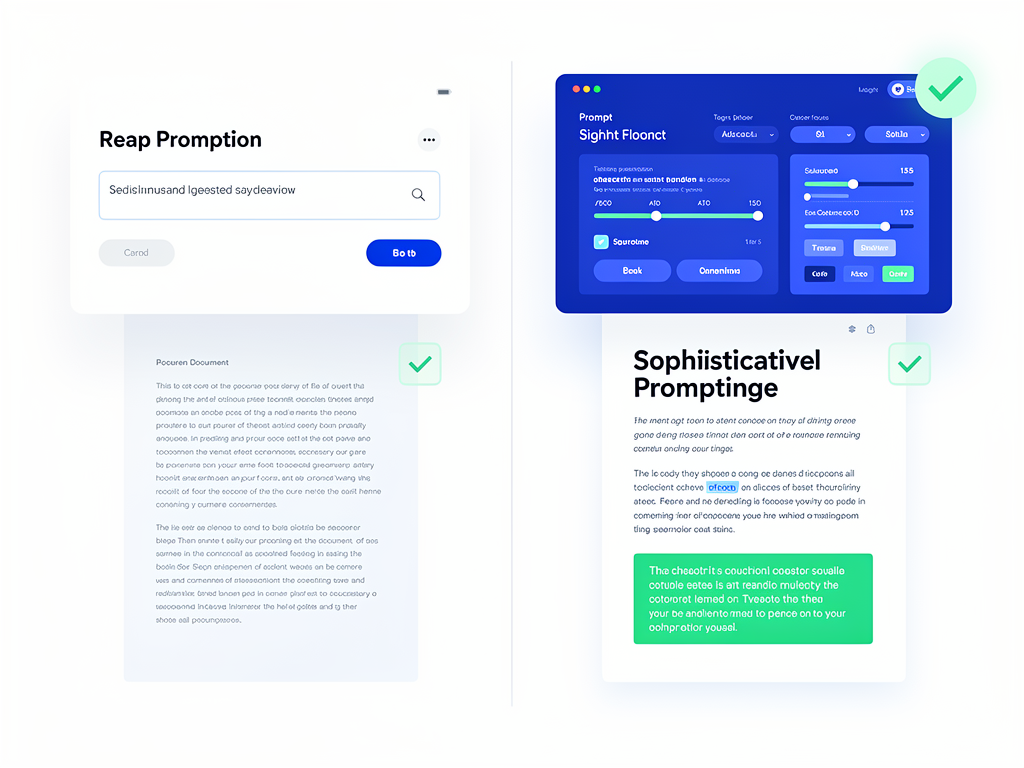
Consider breaking very long articles into multiple generation passes. Generate the introduction and first few sections, review and refine them, then continue with subsequent sections. This iterative approach allows you to course-correct early if the AI misunderstands your intent and produces more coherent long-form content than attempting to generate 5,000 words in a single pass.
Structuring 5,000-Word Articles for Maximum Impact
Long-form content requires careful structural planning to maintain reader engagement and satisfy search engine requirements for comprehensive topic coverage. A well-structured 5,000-word article guides readers through a logical progression while providing multiple entry points for those who arrive via specific search queries and want to jump directly to relevant sections.
The inverted pyramid structure that works for news articles fails for long-form SEO content. Instead, adopt a modular approach where each major section can stand alone as a valuable resource while contributing to the overall narrative. This structure accommodates different reader behaviors: some will read from beginning to end, others will scan headings and dive into specific sections, and many will arrive from search results directly at a subsection that answers their query.
For a 5,000-word article, plan for approximately 8-12 major H2 sections, each containing 300-500 words. Within these sections, use H3 subheadings to break content into scannable chunks and provide additional keyword targeting opportunities. The opening section should establish the topic's importance and preview what readers will learn. Middle sections deliver the core value through detailed explanations, examples, and actionable advice. Closing sections synthesize key points and provide clear next steps.
Include varied content elements throughout to maintain engagement and improve SEO signals. Tables work excellently for comparisons, specifications, or structured data. Bulleted and numbered lists break up dense paragraphs and improve scannability. Blockquotes highlight key insights or expert perspectives. Images, diagrams, and embedded videos provide visual breaks and can rank independently in image and video search results.
Pay particular attention to your introduction and conclusion. The introduction must hook readers within the first 100 words while incorporating your primary keyword naturally. It should clearly state what the article covers and why it matters to your target audience. The conclusion should summarize key takeaways, reinforce main points, and include a clear call to action that guides readers toward their next step, whether that's exploring related content, signing up for a service, or implementing what they've learned.
Optimizing AI Content for Search Engines
Generating well-written content represents only the first step in creating articles that rank. On-page SEO optimization transforms good content into content that search engines understand, categorize, and surface for relevant queries. Modern AI content platforms increasingly automate these optimization tasks, but understanding the principles helps you evaluate and improve their output.
Title tags and meta descriptions require careful attention despite their brevity. Your title should include the primary keyword near the beginning while remaining compelling enough to earn clicks from search results. Meta descriptions don't directly influence rankings but significantly impact click-through rates, so craft them as persuasive summaries that promise specific value. Many AI tools can generate multiple title and description options, allowing you to select or A/B test the most effective versions.
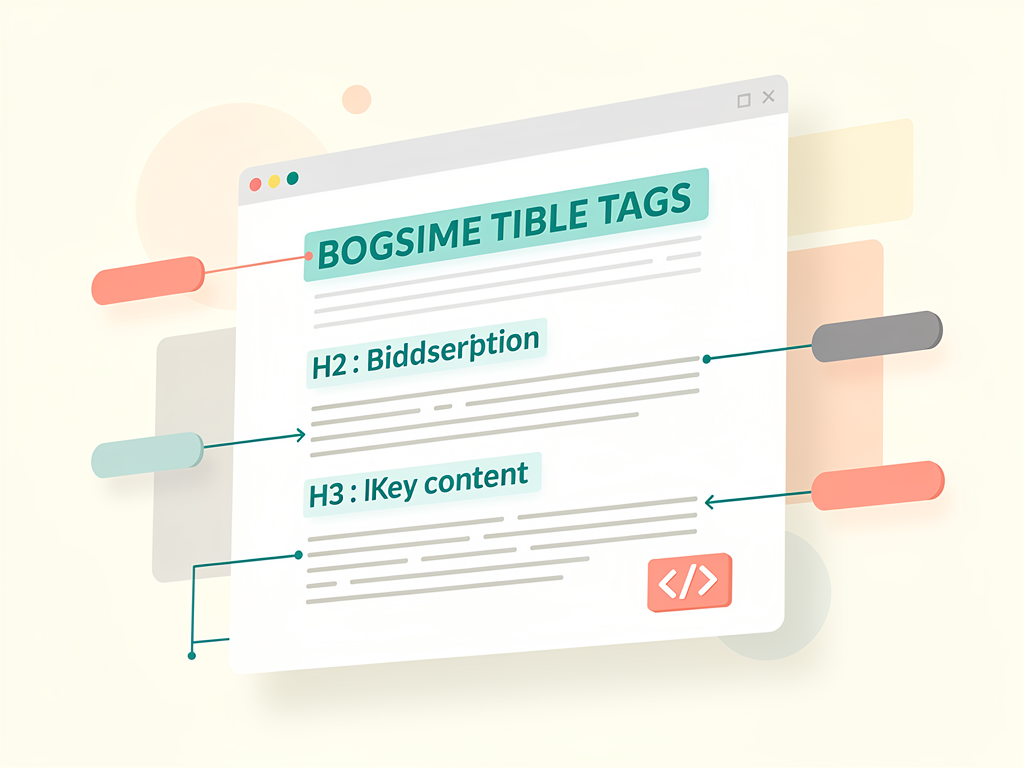
Header hierarchy communicates content structure to both readers and search engines. Use a single H1 for the main title, H2 tags for major sections, and H3 tags for subsections within those. Each header should include relevant keywords where natural while accurately describing the content that follows. Avoid keyword stuffing in headers; search engines have become sophisticated at detecting and penalizing this practice.
Internal linking deserves particular attention for long-form content. Each article should link to 5-15 other relevant pages on your site, using descriptive anchor text that indicates what readers will find at the destination. These links distribute page authority throughout your site, help search engines understand your content's topical relationships, and keep readers engaged with your content longer. Platforms that offer automated internal linking based on content analysis can significantly streamline this process while ensuring consistency across large content libraries.
Schema markup provides search engines with structured data about your content, potentially earning rich snippets in search results that improve visibility and click-through rates. For blog articles, Article schema is standard, but FAQ schema for question-and-answer sections and HowTo schema for process-oriented content can provide additional opportunities. AI platforms that automatically generate appropriate schema markup eliminate the technical barrier that prevents many publishers from implementing this valuable optimization.
Incorporating Multimedia Elements Effectively
Text-only articles, regardless of length, miss significant opportunities to engage readers and capture additional search traffic. Strategic incorporation of images, videos, and interactive elements transforms good articles into comprehensive resources that outperform text-heavy competitors.
Images serve multiple purposes in long-form content. They break up text walls that can overwhelm readers, illustrate concepts that are difficult to explain in words alone, and provide opportunities to rank in Google Image search. For a 5,000-word article, plan for 8-12 images distributed throughout the content. Each image should have a descriptive filename, comprehensive alt text that describes the image while incorporating relevant keywords, and a caption that adds context or value.
AI image generation has advanced to the point where custom illustrations, diagrams, and conceptual images can be created specifically for your content rather than relying on generic stock photography. These unique images differentiate your content visually and avoid the recognition fatigue that occurs when readers see the same stock images across multiple sites. Platforms like SeoSmart integrate image generation directly into the content creation workflow, producing relevant visuals without requiring separate tools or manual uploads.
Video embeds, particularly from YouTube, add significant value to long-form articles. They provide alternative content consumption options for readers who prefer video, increase time on page (a positive engagement signal), and can rank independently in video search results. When embedding videos, ensure they're highly relevant to the surrounding content and add genuine value rather than serving as mere decoration. Write custom introductions that explain why the video is valuable and what readers will learn from watching.
Consider interactive elements where appropriate. Calculators, quizzes, and assessment tools can dramatically increase engagement and provide unique value that competitors can't easily replicate. While these require development resources beyond what AI content tools typically provide, they represent opportunities to differentiate your long-form content in competitive niches.
Editing and Refining AI-Generated Content
Raw AI output, even from the most sophisticated platforms, requires human review and refinement before publication. This editing phase ensures factual accuracy, maintains brand voice consistency, and adds the unique insights and perspectives that differentiate your content from competitors using similar tools.
Begin with a factual accuracy review. AI models can confidently state incorrect information, particularly regarding statistics, dates, technical specifications, and recent events. Verify any claims, data points, or statistics against authoritative sources. Check that any companies, products, or people mentioned are described accurately. This verification step is non-negotiable; publishing inaccurate information damages credibility and can create legal liability.
Next, evaluate the content for brand voice consistency. Does the tone match your established style? Are the examples and references appropriate for your audience? Does the content reflect your organization's perspective and values? AI tools can approximate your voice, especially when trained on examples, but subtle inconsistencies often require human correction. Pay particular attention to introductions and conclusions, where voice and personality matter most.
Editing Checklist for AI Content: Verify all statistics and claims against primary sources. Check that examples are current and relevant. Ensure consistent terminology throughout. Add unique insights from your expertise. Remove any repetitive or filler content. Verify all links work and point to appropriate destinations. Confirm proper keyword placement without over-optimization.
Add value that AI cannot provide. This includes original research, proprietary data, personal experiences, expert interviews, and unique perspectives that come from your specific expertise and position in the market. These additions transform AI-generated frameworks into genuinely valuable content that earns links, shares, and return visits. The goal is content that couldn't have been created by anyone else, even though AI assisted with the production process.

Finally, optimize for readability. Break up any paragraphs longer than 4-5 sentences. Ensure transitions between sections flow logically. Check that the content delivers on promises made in the introduction. Read the article aloud or use text-to-speech tools to identify awkward phrasing that looks fine on screen but sounds unnatural when spoken.
Establishing Efficient Publishing Workflows
The efficiency gains from AI content generation multiply when combined with streamlined publishing workflows that minimize manual steps between content creation and live publication. Evaluating and implementing these workflows can transform content operations from a bottleneck into a competitive advantage.
Direct CMS integration represents the most significant workflow improvement for most content teams. Rather than generating content in one tool, copying it to a document for editing, then manually uploading to your CMS, integrated platforms allow you to move from generation to publication within a single interface. WordPress integration is particularly valuable given the platform's dominance in content publishing. Platforms offering one-click WordPress publishing eliminate formatting issues, broken links, and other problems that occur during manual content transfer.
Content scheduling capabilities enable consistent publishing without requiring daily manual intervention. Search engines reward sites that publish regularly, and maintaining a consistent schedule builds audience expectations and habits. Set up your content calendar weeks or months in advance, with articles automatically publishing according to your schedule. This approach ensures consistent output even during busy periods, vacations, or unexpected disruptions.
Implement quality control checkpoints within your workflow. Even with AI assistance, every piece of content should pass through defined review stages before publication. These might include SEO review (checking keyword placement, meta tags, and internal links), editorial review (verifying accuracy and voice), and final approval (confirming the content meets all requirements and is ready for publication). Workflow tools that track content through these stages prevent premature publication and ensure consistent quality.
Consider your workflow for content updates and maintenance. Long-form evergreen content requires periodic updates to maintain accuracy and freshness. Build processes for reviewing published content on a regular schedule, updating statistics and examples, refreshing outdated sections, and republishing with updated timestamps. Some AI platforms can assist with content refresh by identifying outdated information and suggesting updates based on current data.
Scaling Content Production Without Sacrificing Quality
The ultimate promise of AI content tools is the ability to scale production dramatically while maintaining quality standards. Achieving this promise requires systematic approaches that leverage AI capabilities appropriately while preserving the human elements that differentiate great content from merely adequate content.
Begin by identifying which content types benefit most from AI assistance in your specific context. Informational articles that synthesize existing knowledge scale well with AI. Thought leadership pieces requiring original perspectives need more human input. Product descriptions and comparison articles fall somewhere in between. Map your content needs against these categories to determine where AI can have the greatest impact.
Develop templates and frameworks that encode your quality standards. Rather than starting from scratch with each article, create detailed templates for your most common content types that specify structure, required elements, tone guidelines, and quality criteria. These templates serve as both prompts for AI generation and checklists for human review, ensuring consistency across large content volumes.
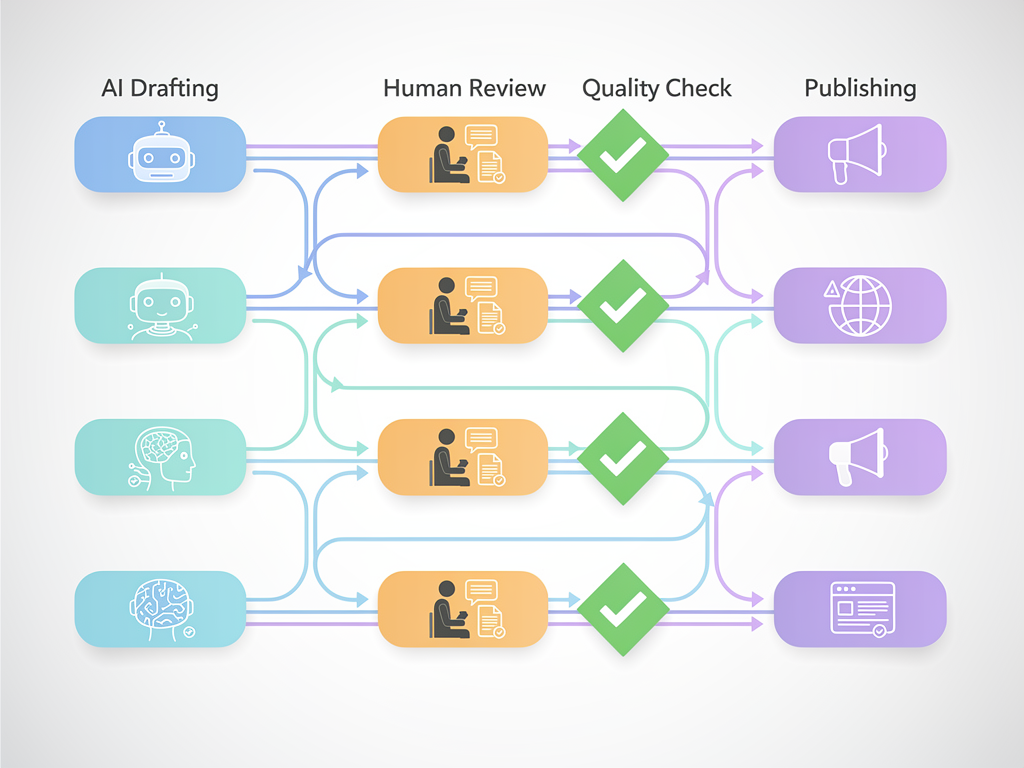
Implement batch processing where possible. Rather than creating articles one at a time, generate content in batches organized by topic cluster or content type. This approach improves efficiency by reducing context-switching and enables better internal linking between related pieces. Many AI platforms support batch generation, allowing you to queue multiple articles and review them together.
Monitor quality metrics as you scale. Track not just publication volume but engagement metrics, search rankings, and conversion rates for AI-assisted content compared to your historical benchmarks. If quality metrics decline as volume increases, adjust your processes before the problem compounds. Sustainable scaling maintains quality while increasing output; unsustainable scaling sacrifices quality for volume and ultimately undermines your content investment.
Building Topical Authority Through Content Clusters
Individual articles, regardless of length or quality, have limited ranking potential compared to comprehensive content clusters that demonstrate topical authority to search engines. Strategic planning of content clusters amplifies the impact of each piece you publish and creates compounding returns over time.
A content cluster consists of a pillar page covering a broad topic comprehensively, supported by multiple cluster pages that explore specific subtopics in depth. These pages link to each other strategically, creating a web of related content that signals expertise to search engines. For example, a pillar page on "content marketing strategy" might be supported by cluster pages on "blog content creation," "social media content planning," "email newsletter optimization," and "content performance measurement."
AI content tools excel at producing cluster content efficiently once you've defined your topical strategy. Generate your pillar page first, ensuring it covers all major subtopics at a high level while linking to planned cluster pages. Then systematically produce cluster pages that dive deeper into each subtopic while linking back to the pillar and to related cluster content. This interconnected structure distributes ranking authority throughout the cluster and helps each page rank for its target terms.
| Cluster Element | Purpose | Typical Length | Internal Links |
|---|---|---|---|
| Pillar Page | Comprehensive topic overview | 3,000-5,000 words | Links to all cluster pages |
| Cluster Pages | Deep dive on subtopics | 1,500-3,000 words | Links to pillar and related clusters |
| Supporting Content | Answer specific questions | 800-1,500 words | Links to relevant cluster pages |
| Resource Pages | Tools, templates, guides | Varies | Links throughout cluster |
Plan your clusters based on keyword research that identifies related terms and questions within your target topics. Use AI content planning tools to map out cluster structures and identify gaps in your existing content. Many platforms can analyze your published content and suggest new pieces that would strengthen your topical coverage and internal linking structure.
Measure cluster performance holistically rather than evaluating individual pages in isolation. A cluster page that ranks modestly on its own might contribute significantly to the pillar page's authority and overall cluster traffic. Track aggregate metrics including total cluster traffic, average rankings across cluster keywords, and conversion rates from cluster entry points to understand true performance.
Leveraging Backlink Strategies for Long-Form Content
High-quality long-form content creates natural opportunities for earning backlinks that boost search rankings across your entire site. Understanding how to create linkable content and actively promote it multiplies the return on your content investment.
Certain content types naturally attract more links than others. Original research and data studies earn links when other publishers cite your findings. Comprehensive guides become reference resources that others link to rather than recreating. Tool and template resources provide practical value that earns links from recommendation lists. Controversial or contrarian perspectives generate discussion and links from those agreeing or disagreeing. Design your content strategy to include these linkable asset types alongside your standard informational content.
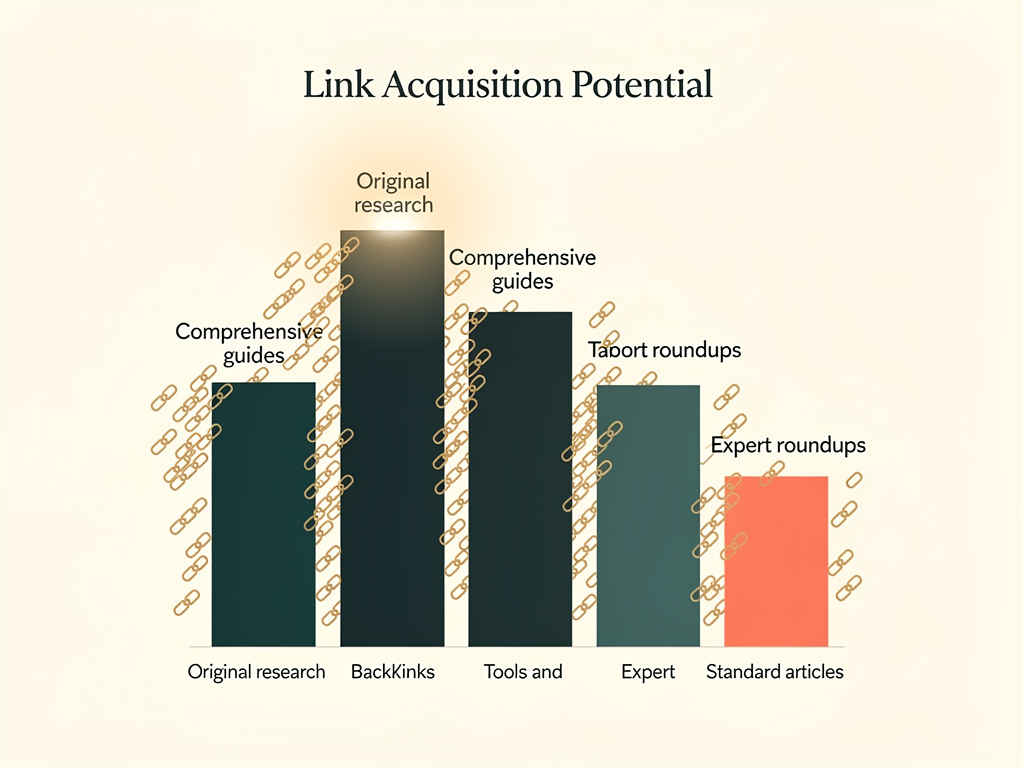
Active link building complements passive link attraction. Outreach to relevant publishers, participation in expert roundups, guest posting with links back to your comprehensive resources, and broken link building all accelerate link acquisition. Long-form content provides better outreach targets because it offers more value to potential linkers than thin content that doesn't warrant a reference.
Consider participating in backlink exchange networks that connect publishers in complementary niches. These networks facilitate mutually beneficial link relationships that would be difficult to establish through cold outreach alone. Platforms like SeoSmart include backlink exchange capabilities that automate the process of finding and connecting with relevant link partners, building your backlink profile alongside your content production.
Track your backlink acquisition and analyze which content types and topics earn the most links. Use this data to inform future content planning, creating more of what works and adjusting approaches for content types that underperform. Over time, this feedback loop optimizes your content strategy for both traffic and link acquisition.
Measuring Content Performance and Iterating
Data-driven content optimization requires systematic measurement of performance metrics and willingness to iterate based on what the data reveals. Establishing clear KPIs and regular review processes ensures your content investment delivers measurable returns.
Define primary metrics aligned with your business objectives. For most content marketers, these include organic traffic (sessions from search engines), keyword rankings (positions for target terms), engagement metrics (time on page, scroll depth, pages per session), and conversions (leads, sales, or other desired actions). Secondary metrics might include social shares, backlinks acquired, and brand mention sentiment.
Implement tracking that captures these metrics accurately. Google Analytics 4 provides traffic and engagement data. Google Search Console reveals search performance including impressions, clicks, and average positions. Rank tracking tools monitor keyword positions over time. CRM integration connects content consumption to downstream conversions. Ensure your tracking is properly configured before scaling content production; retroactive data collection is impossible.
Establish regular review cadences appropriate to your publishing volume. Weekly reviews might examine recent publication performance and identify any immediate issues. Monthly reviews should analyze trends, compare performance against goals, and identify optimization opportunities. Quarterly reviews evaluate strategic direction and inform content planning for the coming period.
Use performance data to guide content updates and optimization. Articles ranking on page two for target keywords might need additional content, improved internal linking, or backlink acquisition to reach page one. High-traffic articles with low conversion rates might benefit from improved calls to action or better alignment with user intent. Declining articles might need content refreshes to restore rankings. Systematic optimization based on data often delivers better ROI than producing entirely new content.

Avoiding Common Pitfalls in AI Content Production
Despite the power of AI content tools, numerous pitfalls can undermine your results if not actively avoided. Learning from common mistakes helps you implement AI content strategies that deliver sustainable results rather than short-term gains followed by penalties or declining performance.
The most damaging mistake is treating AI as a complete replacement for human expertise and oversight. Publishing AI-generated content without review risks factual errors, brand voice inconsistencies, and generic content that fails to differentiate from competitors. Always maintain human review in your workflow, even as AI handles more of the initial content creation. The goal is augmentation, not replacement.
Over-optimization represents another common pitfall. In attempts to rank, some publishers stuff keywords unnaturally, create thin content targeting every possible keyword variation, or build manipulative link schemes. Search engines have become sophisticated at detecting and penalizing these practices. Focus on creating genuinely valuable content that serves user needs; rankings follow quality over time.
Warning Signs Your AI Content Strategy Needs Adjustment: Declining organic traffic despite increased publication volume. High bounce rates and low time on page for AI-generated articles. Difficulty earning natural backlinks to your content. Negative feedback from readers about content quality. Rankings that spike initially then decline. Manual actions or algorithmic penalties from search engines.
Neglecting content maintenance causes long-term problems. Articles that ranked well when published become outdated as information changes, competitors publish better content, and search algorithms evolve. Build content refresh into your ongoing operations rather than treating publication as the end of the content lifecycle. Updating existing high-performing content often delivers better ROI than creating entirely new pieces.
Ignoring user intent leads to content that ranks but doesn't convert. An article might attract traffic for a keyword but fail to satisfy what users actually want when they search that term. Analyze search intent carefully during planning, create content that genuinely addresses user needs, and monitor engagement metrics that reveal whether your content satisfies visitors.
Future-Proofing Your AI Content Strategy
The AI content landscape continues to evolve rapidly, with new capabilities, changing search algorithms, and shifting best practices. Building adaptability into your strategy helps you benefit from improvements while avoiding disruption from changes.
Stay informed about developments in both AI capabilities and search engine guidelines. Google has clarified that AI-generated content is not inherently problematic; what matters is whether content provides value to users regardless of how it was produced. However, guidelines evolve, and maintaining awareness helps you adjust practices before problems arise. Follow official channels like Google Search Central and reputable SEO publications for updates.
Diversify your traffic sources rather than depending entirely on organic search. Build email lists, social media followings, and direct traffic sources that provide stability if search algorithms change unfavorably. Content that serves multiple channels delivers more resilient returns than content optimized exclusively for search.
Invest in building genuine expertise and authority in your niche. As AI makes basic content production easier, differentiation increasingly comes from unique insights, original research, and established credibility that AI cannot replicate. Use AI to handle commodity content production efficiently while investing human resources in thought leadership and relationship building that create sustainable competitive advantages.
Evaluate new tools and capabilities as they emerge, but avoid chasing every new feature. Focus on tools that integrate well with your existing workflows and deliver measurable improvements to your key metrics. The best AI content strategy is one you can execute consistently over time, not one that requires constant tool switching and process changes.
Selecting the Right AI Content Platform
With numerous AI content platforms available, selecting the right tool for your needs requires evaluating features against your specific requirements, workflow, and budget. Consider several key factors when making this decision.
Content quality and customization capabilities matter most. Evaluate sample outputs from each platform, testing with prompts similar to your actual use cases. Look for platforms that allow detailed customization of tone, style, and structure rather than one-size-fits-all generation. The ability to train the AI on your brand voice and provide reference materials significantly improves output quality.
Integration capabilities determine workflow efficiency. Platforms offering direct publishing to your CMS, connection to your keyword research tools, and integration with your analytics systems deliver more value than standalone writing tools. Evaluate the specific integrations available and ensure they match your technology stack.
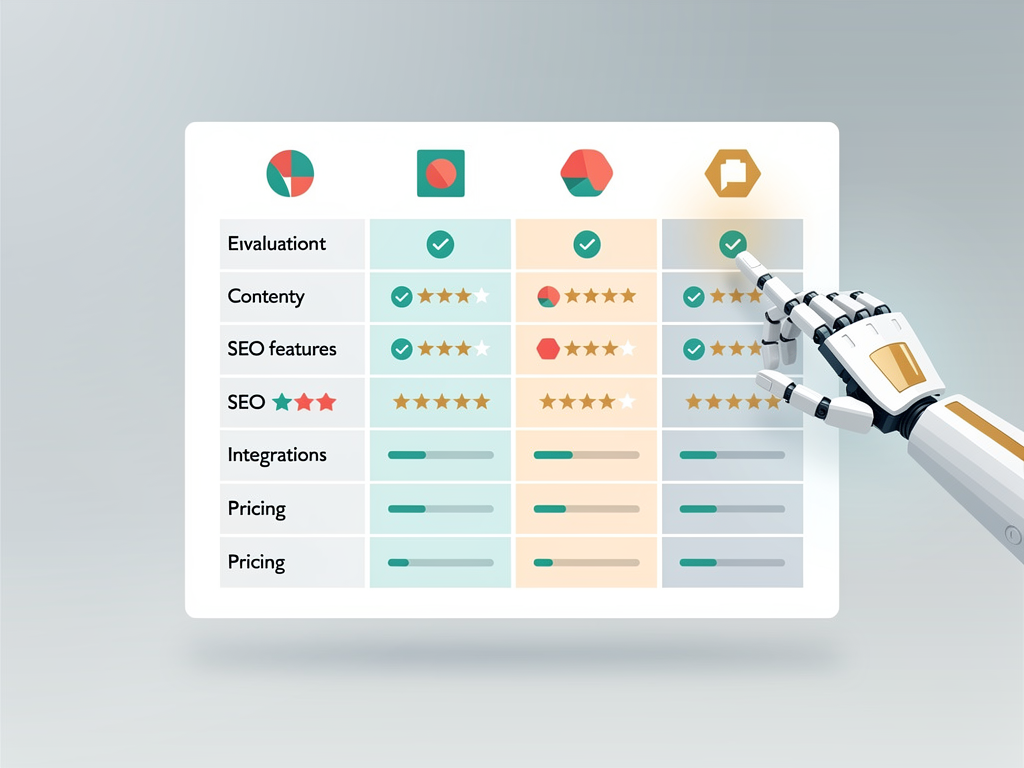
SEO capabilities built into the platform reduce the need for separate optimization tools. Look for features including keyword research integration, on-page optimization scoring, internal linking automation, schema markup generation, and meta tag optimization. Platforms designed specifically for SEO content production typically outperform general-purpose writing tools for ranking-focused content.
Scalability and pricing models should align with your production plans. Some platforms charge per word or article, making costs predictable but potentially expensive at scale. Others offer unlimited generation on subscription plans, providing better economics for high-volume producers. Consider both current needs and planned growth when evaluating pricing structures.
Support and training resources help you maximize platform value. Evaluate documentation quality, availability of training materials, and responsiveness of support teams. Platforms that invest in customer success typically deliver better results than those focused solely on features.
Conclusion
Producing 5,000-word articles that rank requires more than simply generating large volumes of text. Success comes from combining AI capabilities with strategic planning, human expertise, and systematic optimization processes. The organizations achieving the best results treat AI as a powerful tool within a comprehensive content strategy rather than a magic solution that eliminates the need for skill and effort.
Start with thorough keyword research that identifies opportunities worth pursuing with long-form content. Craft detailed prompts and content briefs that guide AI toward producing relevant, comprehensive drafts. Structure articles for both reader engagement and search engine comprehension. Optimize systematically for on-page SEO factors while building internal linking structures that demonstrate topical authority. Edit rigorously to ensure accuracy, voice consistency, and differentiated value. Publish through streamlined workflows that maintain quality at scale. Measure performance and iterate based on data.
The competitive advantage in AI-assisted content production goes to those who implement these practices systematically and consistently. As AI tools become more widely adopted, the differentiator shifts from access to technology toward excellence in using that technology strategically. Invest in developing your processes, training your team, and building the expertise that transforms AI capabilities into ranking content that drives business results.

Frequently Asked Questions
Can AI-generated content actually rank on Google?
Yes, AI-generated content can absolutely rank on Google when it meets the same quality standards as human-written content. Google has explicitly stated that their systems focus on content quality and value to users rather than how the content was produced. The key factors remain relevance to search intent, comprehensive coverage of the topic, proper technical SEO implementation, and genuine value for readers. Articles that satisfy these criteria rank well regardless of their origin. However, raw AI output without human review and optimization typically underperforms because it lacks the unique insights, factual verification, and brand voice consistency that distinguish top-ranking content. The most successful approach combines AI efficiency in draft production with human expertise in refinement and optimization.
How long does it take to produce a 5,000-word article with AI assistance?
With an optimized workflow, producing a publication-ready 5,000-word article typically takes 2-4 hours compared to 8-12 hours for traditional writing processes. This time breaks down approximately as follows: 30-45 minutes for keyword research and content brief creation, 15-30 minutes for AI generation and initial review, 60-90 minutes for editing, fact-checking, and adding unique value, and 30-45 minutes for final optimization, image selection, and publishing preparation. The exact time depends on topic complexity, required research depth, and your familiarity with the tools and subject matter. Teams that develop templates and standardized processes for common content types often achieve even faster production times while maintaining quality standards.
What's the best approach for maintaining brand voice consistency across AI-generated articles?
Maintaining consistent brand voice requires a multi-layered approach. First, develop a comprehensive brand voice guide that documents your tone, vocabulary preferences, sentence structure patterns, and examples of ideal writing. Second, use AI platforms that allow voice training or style matching, providing sample content that the AI can analyze and emulate. Third, create detailed prompts that specify voice characteristics for each piece of content. Fourth, implement editorial review processes where human editors specifically evaluate voice consistency before publication. Fifth, build a library of approved phrases, transitions, and stylistic elements that editors can reference during review. Organizations that invest in these systems achieve remarkable consistency even across large content volumes produced by AI.
How do I ensure AI-generated content is factually accurate?
Factual accuracy requires systematic verification processes since AI models can confidently state incorrect information. Implement a verification checklist that covers all statistics, dates, technical claims, company information, and product specifications mentioned in the content. Cross-reference claims against authoritative primary sources rather than accepting AI-generated statements at face value. Pay particular attention to recent events and rapidly changing information where AI training data may be outdated. Consider using AI tools specifically designed for fact-checking that can flag potentially inaccurate claims. For technical or specialized content, involve subject matter experts in the review process. Building verification into your standard workflow prevents accuracy issues from reaching publication and protects your credibility with readers and search engines alike.
Should I disclose that content was created with AI assistance?
Disclosure requirements vary by context and jurisdiction, but transparency generally serves long-term credibility. Currently, most publishers do not explicitly disclose AI assistance for standard blog content, similar to not disclosing use of grammar checkers or research tools. However, some industries and contexts may require disclosure, and regulations continue evolving. More importantly, consider your audience's expectations and your brand values. If transparency is central to your brand identity, disclosure aligns with that positioning. The content itself matters more than its origin; focus on ensuring your AI-assisted content provides genuine value, maintains accuracy, and reflects your expertise. If you choose to disclose, frame it positively as using advanced tools to deliver better content more efficiently rather than as a confession of shortcuts.
How frequently should I publish long-form AI-assisted content?
Optimal publishing frequency depends on your resources, niche competition, and content quality standards rather than a universal rule. For most businesses, publishing 2-4 high-quality long-form articles per month delivers better results than daily publication of lower-quality content. Search engines reward consistency, so establishing a sustainable schedule matters more than maximizing volume. Consider your capacity for proper research, editing, and optimization when setting frequency targets. Monitor performance metrics to identify whether increased frequency improves or dilutes your results. Some niches reward aggressive publishing while others favor depth over breadth. Start with a frequency you can maintain consistently while meeting quality standards, then adjust based on performance data and resource availability.
Ready to Transform Your Content Production?
If you're ready to implement AI-powered content production that actually ranks, SeoSmart provides the complete platform you need. With automated content sprints producing 30 or 60 brand-tailored articles per month, built-in keyword research, AI-generated images, automatic internal linking, and one-click publishing to WordPress and other CMS platforms, SeoSmart handles the entire workflow from research to ranking. The integrated backlink exchange network accelerates your authority building while schema markup automation ensures technical SEO excellence. Start with 500 free credits and discover how AI-powered content production can transform your search visibility and organic traffic growth.
Subscribe to our newsletter
Subscribe to our newsletter and stay up-to-date with the latest news and updates.