Jasper AI Review 2026: Is It Worth the Investment for SEO?
Explore the pros and cons of Jasper AI for SEO content in 2026. Discover its strengths in marketing copy, limitations in SEO, and alternatives for better value.

Zakariae

The AI content creation landscape has transformed dramatically since the early days of automated writing tools. For marketing teams, SEO agencies, and content strategists seeking efficient solutions, understanding which platforms deliver genuine value has become essential. This comprehensive review examines one of the original players in the AI writing space, analyzing its current capabilities, limitations, and whether it remains a competitive choice for SEO-focused content production in 2026.
Key Takeaways
- Jasper AI excels at producing fluent, brand-consistent marketing copy but lacks built-in SEO optimization features that modern content teams require.
- Pricing starts at $59 per seat monthly (billed annually), making it one of the more expensive options in the AI writing tool category.
- The platform offers 100+ specialized templates and strong brand voice training through its Brand IQ feature.
- Critical limitations include no native keyword research, missing SERP analysis, and absence of automated publishing workflows.
- Teams focused on search performance typically need 2-3 additional tools alongside this platform to complete their content stack.
- Alternatives offering end-to-end SEO content workflows, automated publishing, and backlink building provide better value for search-focused teams.
- Enterprise security features (SOC 2 compliance, SSO) make it suitable for large organizations with strict compliance requirements.

What Is This AI Marketing Platform and How Did It Evolve?
Originally launched in 2021 under the name "Jarvis," this AI writing platform quickly established itself as a pioneer in the marketing-focused content generation space. After a strategic rebrand in 2022 and a substantial $125 million Series B funding round that pushed its valuation to $1.5 billion, the company became the reference point for AI-powered content creation among marketing professionals worldwide.
The platform's evolution reflects broader shifts in the AI content industry. What began as a straightforward writing assistant has transformed into what the company describes as "the agent workspace built for modern marketing teams." This repositioning came in response to significant market pressures between 2023 and 2024, as foundational AI models like GPT-4 and Claude became increasingly commoditized and competitive alternatives multiplied rapidly.
Today, the platform serves major enterprise brands including Wayfair, Boeing, L'Oréal, Mars, Accenture, and Harper Collins. According to industry reports, it maintains a 4.7 out of 5 rating on G2 from thousands of verified user reviews, though ratings on other platforms like Trustpilot run noticeably lower due to billing and cancellation complaints from some users.
The core value proposition remains focused on enabling marketing teams to create more content faster. However, as we will explore throughout this review, the critical question for SEO-focused professionals is whether speed of creation translates into search performance results. The platform's strengths in content fluency do not automatically address the strategic requirements of ranking content in competitive search landscapes.
Core Features and Capabilities Breakdown
Understanding what this platform actually delivers requires examining its feature set through the lens of practical marketing workflows. The company has invested heavily in expanding beyond basic text generation into a more comprehensive marketing toolkit, though significant gaps remain for search-focused teams.
Template Library and Specialized Agents
The platform offers over 100 specialized AI agents designed for different marketing tasks. These cover blog posts, social media content, advertising copy, email sequences, product descriptions, video scripts, and numerous other content formats. Each agent is optimized for its specific use case, theoretically delivering better results than generic AI prompting through ChatGPT or similar tools.
This template approach provides genuine value for teams producing diverse content types. Rather than crafting detailed prompts from scratch for each project, users can select purpose-built templates that understand the conventions and requirements of specific content formats. For advertising copy in particular, the platform's templates consistently produce usable first drafts that meet character limits and follow platform-specific best practices.
Brand Voice Training (Brand IQ)
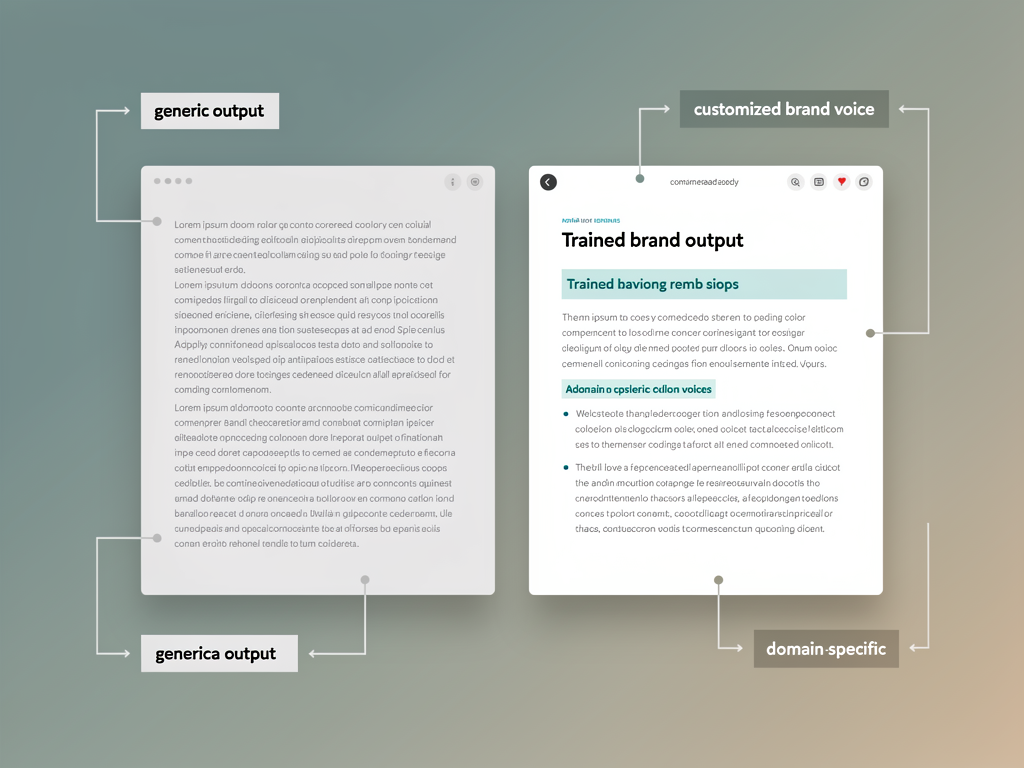
One of the platform's standout features is its Brand IQ system, which allows teams to train the AI on their specific brand voice, style guidelines, and messaging frameworks. Combined with Marketing IQ (product and industry knowledge training), this ensures generated content maintains consistency with established brand identity across all outputs.
For agencies managing multiple client brands or enterprise teams with strict brand guidelines, this feature delivers meaningful differentiation from generic AI tools. The ability to upload style guides, example content, and brand vocabulary creates outputs that require less editing to match established brand standards.
Canvas Workspace
The Canvas feature provides a visual workspace for campaign planning and content collaboration. Teams can organize content projects, collaborate on drafts, and manage multi-asset campaigns within a unified interface. This addresses workflow challenges that arise when using disconnected tools for different aspects of content production.
However, Canvas functions primarily as a planning and collaboration space rather than a production automation system. Content still requires manual creation, review, and publication through separate processes. For teams seeking hands-free content workflows, this represents a significant limitation compared to platforms offering automated scheduling and publishing capabilities.
Content Pipelines
Content Pipelines attempt to automate portions of the content lifecycle from planning through publication. Users can set up workflows that generate, review, and schedule content with reduced manual intervention. This feature moves toward the automation that high-volume teams require, though implementation remains less comprehensive than dedicated content automation platforms.
The pipeline functionality works best for repetitive content types with established templates. Complex content requiring research, strategic keyword targeting, or competitive analysis still demands significant manual input at each stage. Teams producing SEO-focused blog content will find these pipelines insufficient for their optimization requirements.
Pricing Structure and Value Analysis
Understanding the true cost of implementing this platform requires examining both the direct pricing and the additional tools teams typically need to complete their content workflows. The per-seat pricing model creates particular challenges for growing teams and agencies managing multiple accounts.
| Plan | Monthly Price (Annual Billing) | Monthly Price (Monthly Billing) | Key Features |
|---|---|---|---|
| Pro | $59 per seat | $69 per seat | Canvas workspace, essential agents, 2 brand voices, image generation, browser extension |
| Business | Custom pricing | Custom pricing | Everything in Pro plus unlimited brand voices, advanced admin controls, dedicated support |
At $59 per seat monthly with annual billing, this platform positions itself at the premium end of the AI writing tool market. For comparison, ChatGPT Plus costs $20 monthly, Copy.ai starts at $36 monthly, and Writesonic begins at $29 monthly. The higher price point reflects the platform's enterprise positioning and specialized marketing features, but teams must evaluate whether those features justify the premium.
The per-seat model creates scaling challenges for agencies and growing teams. A five-person content team would face monthly costs of $295 (annual billing) or $345 (monthly billing) before accounting for any additional tools needed for SEO optimization, keyword research, or content publishing. These auxiliary costs often double or triple the effective platform expense.
Cost Reality Check: Most teams using this platform for SEO content also need separate subscriptions for keyword research tools, SERP analysis platforms, and content management systems. The true monthly cost often exceeds $500-800 when accounting for the complete toolstack required for competitive search performance.
SEO Capabilities: The Critical Gap
For teams prioritizing search engine optimization, this platform's limitations become most apparent when examining its SEO-specific capabilities. While the content quality is generally strong, the platform operates largely blind to the strategic requirements of ranking content in competitive search landscapes.
Missing Keyword Research Integration
The platform provides no native keyword research functionality. Users cannot discover target keywords, analyze search volume, assess keyword difficulty, or identify content opportunities within the platform itself. This fundamental gap means teams must conduct keyword research in separate tools before bringing topics to the content creation stage.
This disconnection creates workflow inefficiencies and increases the risk of producing content that fails to target valuable search opportunities. Without integrated keyword data, writers cannot optimize for specific terms during the creation process, leading to content that requires substantial post-production optimization.
No SERP Analysis or Competitive Intelligence
Understanding what currently ranks for target keywords is essential for creating competitive content. This platform offers no visibility into search engine results pages, competitor content analysis, or content gap identification. Teams must rely entirely on external tools for competitive intelligence, then manually incorporate those insights into their content briefs.
The absence of SERP analysis means content is created without awareness of the depth, structure, or topical coverage that ranking content demonstrates. Writers produce content based on general best practices rather than specific competitive requirements, often resulting in pieces that fail to match the comprehensiveness of top-ranking results.

Limited On-Page Optimization Guidance
While the platform produces fluent content, it provides minimal guidance on on-page SEO optimization. There is no real-time SEO scoring, no suggestions for keyword placement, no heading structure optimization, and no internal linking recommendations. Content emerges from the platform requiring manual SEO optimization before publication.
This limitation particularly impacts teams without dedicated SEO expertise. Writers may produce excellent prose that fails to incorporate the technical optimization elements that influence search rankings. The disconnect between content creation and SEO optimization creates additional workflow steps and increases the expertise required to produce search-competitive content.
Content Quality Assessment: Real-World Testing Results
Independent testing of the platform across various marketing tasks reveals consistent patterns in both strengths and limitations. Understanding these patterns helps teams set appropriate expectations and identify use cases where the platform delivers genuine value.
Long-Form Blog Writing Performance
When tasked with producing 1,500-word blog posts on marketing topics, the platform consistently delivers well-structured drafts with logical flow and professional tone. The output typically includes appropriate introduction, body sections, and conclusions without requiring extensive structural editing. For teams measuring content production velocity, this represents meaningful time savings compared to manual writing.
However, the content emerges strategically blind. There is no awareness of which keywords to include, what competing content covers, or how to structure the piece to compete with existing rankings. The draft represents high-quality prose that requires substantial SEO optimization before it becomes search-competitive content. Teams report spending 30-60 minutes on post-production optimization for each piece, partially offsetting the time savings from AI generation.
Advertising Copy Generation
The platform performs strongly for advertising copy tasks, particularly Google Ads and social media advertising. Templates produce multiple headline and description variants quickly, typically meeting character limits accurately. The copy tends toward clear, benefit-focused messaging that requires minimal editing for campaign deployment.
The limitation here involves performance feedback. The platform cannot access campaign data to understand which copy variants perform well, what Quality Scores look like, or how competitors are positioning their ads. Writers create copy without feedback loops to actual performance data, relying on general best practices rather than data-driven optimization.
Email Sequence Creation
Email marketing templates produce functional sequences with appropriate pacing and calls to action. The platform handles various email types including welcome sequences, promotional campaigns, and nurture sequences with reasonable quality. Brand voice training particularly improves email output, creating messages that sound consistent with established brand communications.
Integration limitations affect email workflows significantly. Content must be manually transferred to email marketing platforms, with no direct publishing or automation capabilities. Teams managing high-volume email programs find this manual transfer process creates bottlenecks that offset time savings from AI generation.
Integration Capabilities and Workflow Considerations
Modern content teams operate within complex technology ecosystems. Evaluating any content platform requires understanding how it connects with existing tools and where integration gaps create workflow friction.
Available Integrations
The platform offers integrations with common marketing tools including Google Docs, Webflow, and various project management systems. The browser extension (Jasper Everywhere) allows users to access AI writing capabilities across different web applications, providing flexibility for teams working in diverse environments.
However, the integration depth varies significantly. Most connections facilitate content export rather than true workflow automation. Teams cannot automatically publish content to their CMS, schedule posts across platforms, or trigger content creation based on external events. The integrations support manual workflows rather than enabling the automation that high-volume teams require.
CMS Publishing Limitations
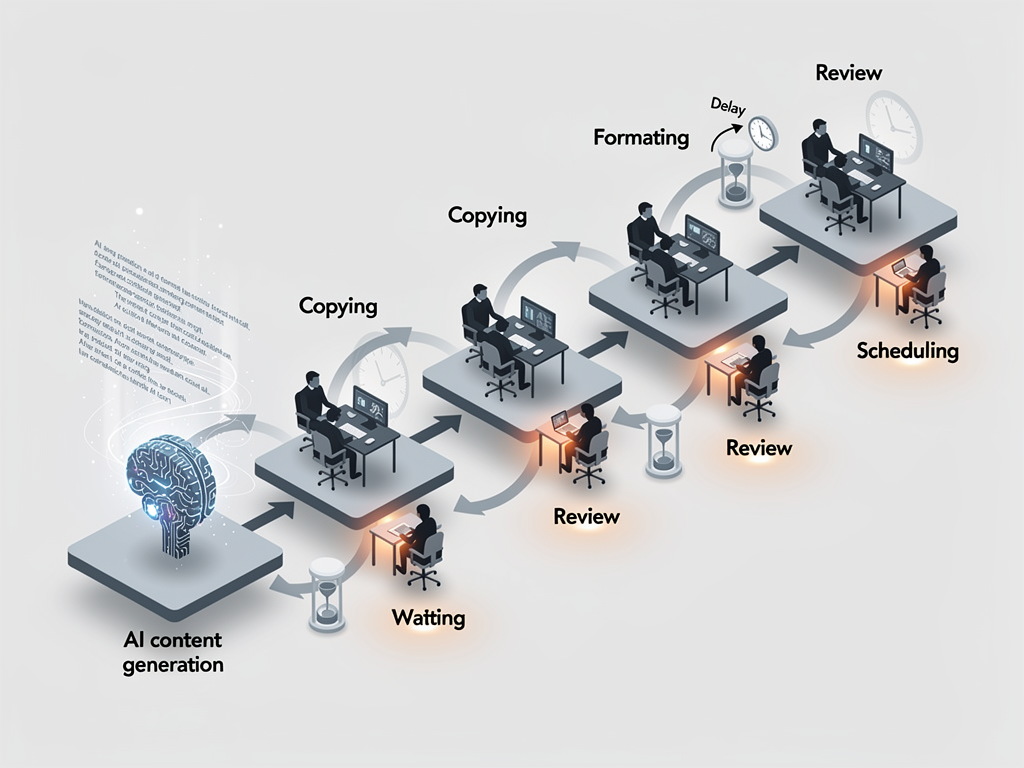
Direct publishing to content management systems remains a significant gap. While content can be exported in various formats, there is no one-click publishing to WordPress, Shopify, Ghost, or other popular platforms. Teams must manually copy content, format it within their CMS, add images, configure metadata, and schedule publication through separate processes.
This limitation particularly impacts teams seeking to scale content production. The manual publishing process creates a bottleneck that limits how much content teams can realistically produce and deploy, regardless of how quickly the AI generates initial drafts. For teams publishing 30 or more articles monthly, this manual overhead becomes substantial.
Missing Automation Features
True content automation requires capabilities beyond what this platform currently offers. There is no automated content scheduling, no bulk content creation workflows, no automatic internal linking, and no integration with backlink building systems. Teams seeking hands-free content production must supplement with additional tools or accept significant manual overhead.
The Content Pipelines feature attempts to address some automation needs but falls short of comprehensive workflow automation. Complex content requiring research, optimization, and strategic distribution still demands substantial manual intervention at each stage. Teams cannot configure the platform to research topics, generate optimized content, and publish automatically based on defined schedules.
User Experience and Learning Curve
Adopting any new platform involves training time and workflow adjustment. Understanding the user experience helps teams estimate implementation timelines and identify potential adoption challenges.
Interface Design and Navigation
The platform features a clean, modern interface that most users find intuitive after initial orientation. The template library is well-organized, and the Canvas workspace provides visual clarity for project management. New users can typically produce their first content pieces within 30-60 minutes of account creation.
However, accessing the platform's more advanced features requires deeper learning. Brand voice training, workflow configuration, and effective prompt engineering all demand investment in understanding platform capabilities. Teams report 2-4 weeks before reaching optimal productivity with the full feature set.
Output Quality Consistency
Content quality varies based on prompt quality and template selection. Users who invest in learning effective prompting techniques and properly configure brand voice settings achieve notably better results than those using default settings with minimal customization. This creates a skill gap where experienced users dramatically outperform new adopters.
The platform's reliance on user skill for quality output differs from platforms that provide more structured guidance. Teams without AI content experience may struggle to achieve consistent quality without dedicated training and process development. This learning curve affects time-to-value calculations when evaluating platform ROI.
Enterprise Features and Security Considerations
For larger organizations, security and compliance features often determine platform viability regardless of content capabilities. This platform has invested significantly in enterprise-grade features that address common corporate requirements.
Security and Compliance
The Business tier offers SOC 2 compliance, SSO integration, SCIM provisioning, and administrative controls that enterprise IT teams typically require. These features enable deployment in organizations with strict security policies that might otherwise prohibit AI tool adoption. For regulated industries or companies with sensitive data, these compliance features provide necessary assurance.
Data handling policies allow organizations to opt out of having their content used for model training, addressing common concerns about proprietary information exposure. Admin controls enable centralized management of user access, brand voice settings, and usage monitoring across large teams.
Team Collaboration Features
The Canvas workspace supports team collaboration with shared projects, commenting, and version tracking. Multiple team members can work on campaigns simultaneously, with visibility into each other's contributions. For distributed teams, these collaboration features reduce coordination overhead and improve content consistency.
However, collaboration features focus primarily on the content creation stage. There is limited support for collaborative optimization, review workflows, or approval processes that enterprise content teams typically require. Teams often supplement with external project management tools to handle the full content lifecycle.

Honest Assessment: Strengths and Weaknesses
After comprehensive evaluation, clear patterns emerge regarding where this platform excels and where it falls short. Understanding these patterns helps teams make informed decisions about platform fit for their specific needs.
Genuine Strengths
Content fluency and quality: The platform consistently produces well-written, grammatically correct content that reads naturally. For teams prioritizing content quality over SEO optimization, this represents genuine value.
Brand voice consistency: The Brand IQ feature delivers meaningful differentiation from generic AI tools. Teams with established brand guidelines can train the platform to maintain voice consistency across all outputs.
Template variety: The 100+ template library covers diverse marketing content types, reducing the prompt engineering burden for common content formats.
Enterprise security: SOC 2 compliance and administrative controls enable deployment in organizations with strict security requirements.
Advertising copy performance: The platform performs particularly well for short-form advertising copy, producing usable variants quickly.
Significant Weaknesses
No SEO optimization: The complete absence of keyword research, SERP analysis, and on-page optimization guidance makes the platform poorly suited for search-focused content strategies.
Manual publishing workflows: Lack of direct CMS publishing creates bottlenecks that limit content scaling potential.
High per-seat pricing: At $59-69 per seat monthly, costs escalate quickly for growing teams, particularly when additional SEO tools are required.
Missing automation: Content pipelines fall short of true automation, requiring significant manual intervention for research, optimization, and distribution.
No backlink capabilities: The platform provides no support for link building, a critical component of SEO success.
Competitive Landscape: How Alternatives Compare
The AI content market has matured significantly, with numerous alternatives offering different capability combinations. Understanding the competitive landscape helps teams identify platforms better aligned with their specific requirements.
General AI Writing Tools
ChatGPT Plus at $20 monthly provides comparable raw writing capability for users skilled in prompt engineering. While lacking the marketing-specific templates and brand voice features, the cost savings are substantial for teams comfortable with manual prompt development. Many users report achieving 80% of this platform's output quality at less than a third of the cost.
Copy.ai and Writesonic offer similar template-based approaches at lower price points, though with less sophisticated brand voice training. For teams with simpler brand requirements, these alternatives provide adequate functionality at reduced cost.
SEO-Focused Content Platforms
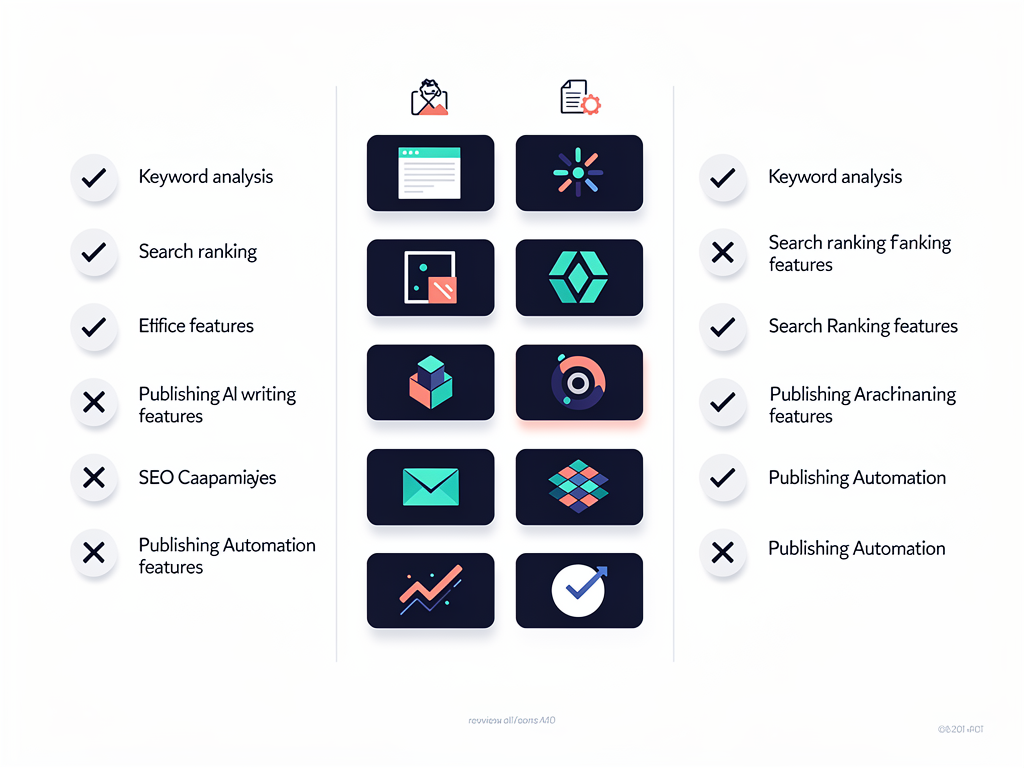
Platforms designed specifically for SEO content production offer integrated capabilities that address this platform's primary limitations. These alternatives typically combine AI writing with keyword research, SERP analysis, content optimization, and automated publishing in unified workflows.
For teams where search performance is the primary success metric, SEO-focused platforms eliminate the need for multiple tool subscriptions while providing more relevant features. The total cost of ownership often favors these specialized platforms despite potentially higher base pricing, because they eliminate the need for supplementary SEO tools.
End-to-End Content Automation Platforms
A newer category of platforms offers comprehensive content automation from topic research through publication and link building. These platforms address the complete content lifecycle rather than focusing solely on the writing stage. For teams seeking to maximize content output with minimal manual intervention, these end-to-end solutions provide superior workflow efficiency.
Features like automated content scheduling, one-click CMS publishing, integrated backlink exchange networks, and AI-generated images eliminate the manual steps that create bottlenecks in traditional content workflows. Teams using these platforms report producing 3-5x more published content with equivalent resources compared to template-based AI writing tools.
Who Should Consider This Platform?
Despite its limitations for SEO-focused work, this platform delivers genuine value for specific use cases and team profiles. Understanding ideal fit helps teams avoid misaligned investments.
Good Fit Scenarios
Enterprise marketing teams with strict compliance requirements: Organizations needing SOC 2 compliance and administrative controls have limited options in the AI content space. This platform's enterprise features address requirements that many alternatives cannot meet.
Agencies managing multiple brand voices: The Brand IQ feature provides meaningful value for agencies producing content across numerous client brands. The ability to maintain distinct voice profiles reduces editing time and improves client satisfaction.
Teams focused on advertising copy: For organizations primarily producing short-form advertising content rather than SEO-focused blog posts, the platform's strengths align well with their needs.
Organizations with existing SEO tool stacks: Teams already invested in comprehensive SEO platforms may find value in adding this platform specifically for content generation, accepting the workflow integration overhead.
Poor Fit Scenarios
SEO agencies and consultants: Teams where search rankings are the primary success metric will find the platform's SEO limitations frustrating and will need substantial supplementary tools.
Small businesses managing their own SEO: Budget constraints make the per-seat pricing challenging, and the need for additional SEO tools compounds cost concerns.
Affiliate marketers and niche site builders: These users typically prioritize search performance and content volume, both areas where the platform underperforms alternatives.
Teams seeking content automation: Organizations wanting hands-free content workflows will find the manual publishing requirements incompatible with their goals.
Better Alternatives for SEO-Focused Content Production
For teams prioritizing search engine performance, several alternative approaches offer superior value propositions. Understanding these options helps teams identify solutions better aligned with their actual requirements.
Integrated SEO Content Platforms
Platforms combining AI writing with native SEO capabilities eliminate the tool fragmentation that undermines efficiency. These solutions typically include keyword research, competitive analysis, content optimization scoring, and SERP tracking within unified interfaces. Content creators can research, write, optimize, and track performance without switching between applications.
The workflow efficiency gains from integration often justify higher base pricing. Teams report 40-60% reductions in time-to-publish when using integrated platforms compared to assembling capabilities from multiple tools. For high-volume content operations, these efficiency gains translate directly to increased output and reduced cost per article.

Automated Content Sprint Solutions
For teams seeking maximum content output with minimal ongoing effort, automated content sprint platforms offer compelling alternatives. These solutions handle the complete content lifecycle from topic research through publication, often including features like automated internal linking, AI-generated images, and embedded video content.
Sprint-based models where platforms deliver 30 or 60 articles monthly on autopilot address the scaling challenges that manual workflows create. Rather than paying per seat for content creation tools, teams subscribe to content output, with the platform handling research, writing, optimization, and publishing automatically. This model particularly suits teams with limited content resources seeking to compete with larger organizations.
Platforms with Backlink Capabilities
Content creation represents only part of the SEO equation. Link building remains essential for ranking competitive keywords, yet most AI writing tools provide no support for this critical activity. Platforms incorporating backlink exchange networks or link building automation address this gap, providing more complete SEO solutions.
Teams using platforms with integrated link building report faster ranking improvements compared to those handling link acquisition separately. The coordination between content production and link building creates synergies that improve overall SEO performance while reducing the management overhead of separate tool subscriptions.
Making the Right Platform Decision
Selecting the optimal content platform requires honest assessment of team priorities, technical requirements, and budget constraints. The following framework helps teams evaluate options systematically.
Priority Assessment Questions
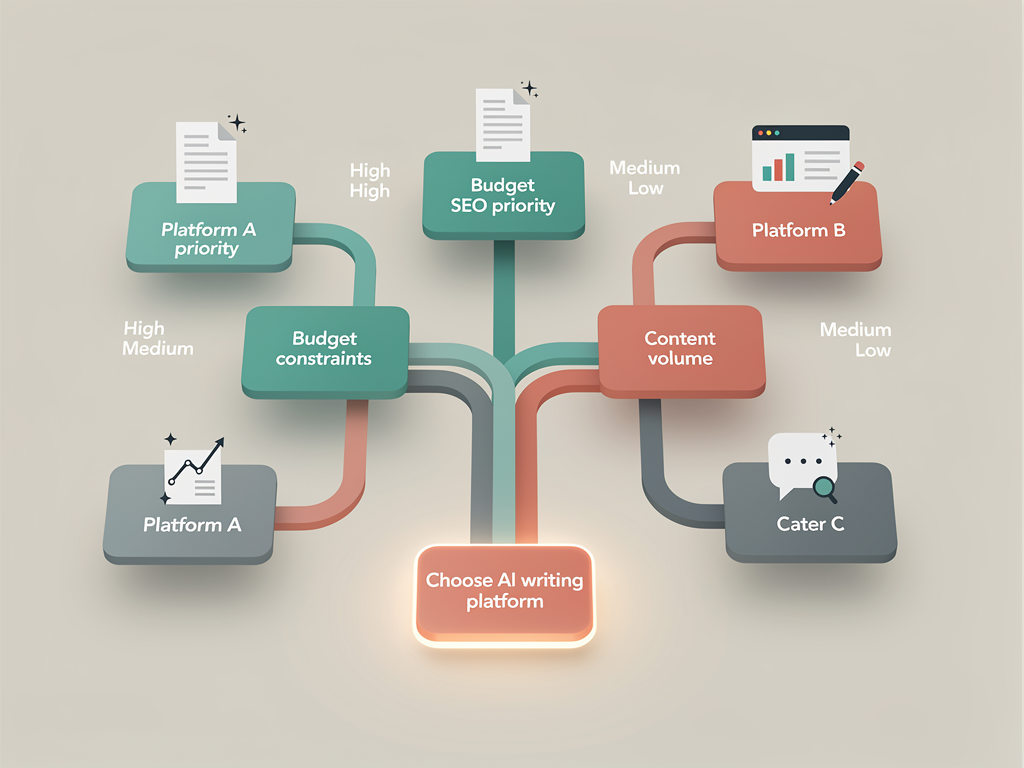
Teams should begin by clarifying their primary success metrics. If search rankings and organic traffic are the dominant concerns, platforms with native SEO capabilities deserve priority consideration regardless of other features. If brand consistency across diverse content types matters more than search performance, brand voice training features become more relevant.
Budget evaluation should account for total cost of ownership rather than base platform pricing alone. A $59 monthly platform requiring $200 in supplementary SEO tools costs more than a $150 monthly platform with integrated capabilities. Teams frequently underestimate these auxiliary costs when making initial platform decisions.
Workflow Compatibility Evaluation
Understanding current workflows and desired future states helps identify platforms that support rather than disrupt team operations. Teams seeking to maintain existing processes may prefer platforms that integrate with current tools, while teams open to workflow transformation may benefit from more opinionated platforms that enforce efficient processes.
Publishing volume targets significantly influence platform selection. Teams producing fewer than 10 articles monthly may find manual workflows acceptable, while teams targeting 30+ articles monthly require automation capabilities that many platforms lack. Matching platform capabilities to volume requirements prevents bottlenecks that undermine content strategies.
Trial and Evaluation Approach
Most platforms offer trial periods or limited free tiers that enable hands-on evaluation before commitment. Teams should use these trials to test actual workflows rather than simply exploring features. Creating representative content pieces, attempting to optimize for target keywords, and simulating publishing workflows reveals practical limitations that feature lists obscure.
Involving actual content creators in evaluations provides insights that decision-makers might miss. Writers and editors who will use platforms daily often identify usability issues and workflow friction that brief executive demos fail to reveal. Their input improves platform selection and accelerates adoption when decisions are made.
Future Outlook and Market Trends
The AI content market continues evolving rapidly, with implications for platform selection and long-term strategy. Understanding emerging trends helps teams make decisions that remain relevant as the market matures.
Consolidation Toward Integrated Platforms
Market pressure increasingly favors platforms offering complete workflows over point solutions requiring integration. Teams tire of managing multiple subscriptions, coordinating data between tools, and maintaining complex technology stacks. Platforms that consolidate capabilities while maintaining quality will likely capture market share from fragmented alternatives.
This consolidation trend suggests that platforms currently lacking SEO capabilities face pressure to either develop them or accept narrower market positioning. Teams selecting platforms today should consider vendor roadmaps and development trajectories alongside current capabilities.
Automation Expectations Rising
User expectations for automation continue increasing as AI capabilities advance. Manual workflows that seemed acceptable in 2023 now appear inefficient compared to automated alternatives. Platforms that fail to automate routine tasks risk losing users to competitors offering hands-free operation.
The shift toward automation particularly impacts content-heavy strategies where manual processes create scaling constraints. Teams planning significant content volume increases should prioritize platforms with strong automation capabilities, even if current volumes do not yet require them.
Conclusion
This comprehensive review reveals a platform that excels at producing fluent, brand-consistent marketing content but falls significantly short for teams prioritizing search engine optimization. The strong brand voice training, extensive template library, and enterprise security features deliver genuine value for specific use cases. However, the complete absence of SEO capabilities, manual publishing workflows, and high per-seat pricing create substantial limitations for search-focused content strategies.
For SEO agencies, content marketing managers, affiliate marketers, and teams where organic search performance drives business results, the platform's limitations likely outweigh its strengths. The need for supplementary SEO tools, manual optimization processes, and separate publishing workflows creates inefficiencies that undermine content scaling efforts. These teams will typically find better value in platforms designed specifically for search-optimized content production.
Teams with strong existing SEO tool stacks, enterprise compliance requirements, or primary focus on advertising copy may still find value in this platform's specialized capabilities. However, they should enter with clear understanding of the platform's limitations and realistic expectations about the additional tools and workflows required to achieve search performance goals.
The AI content market offers increasingly sophisticated alternatives that address the complete content lifecycle from research through publication and link building. Teams evaluating options should prioritize platforms that align with their actual success metrics rather than being swayed by brand recognition or feature lists that do not address their core requirements.

Frequently Asked Questions
Is Jasper AI Worth the Price for Small Business SEO?
For small businesses managing their own SEO, the platform's pricing structure presents significant challenges. At $59-69 per seat monthly, the base cost alone strains limited marketing budgets. More importantly, the platform's lack of SEO features means small businesses must also invest in separate keyword research tools, SERP analysis platforms, and potentially content optimization software. This combined cost often exceeds $150-200 monthly for a complete content stack. Small businesses typically achieve better value from integrated platforms that combine AI writing with native SEO capabilities, eliminating the need for multiple subscriptions while providing more relevant features for search-focused content strategies. The time savings from integrated workflows also matter more for small teams with limited resources.
Can This Platform Replace My Current SEO Content Workflow?
The platform cannot fully replace established SEO content workflows because it lacks critical capabilities that search-focused strategies require. Teams currently using keyword research tools, SERP analysis platforms, and content optimization software will need to maintain those subscriptions alongside this platform. The content creation stage may become faster, but the research, optimization, and publishing stages remain unchanged. Teams report that the platform addresses approximately 30-40% of their content workflow, with the remaining steps requiring existing tools or manual processes. For teams seeking workflow consolidation, platforms designed specifically for SEO content production offer more comprehensive replacement potential.
How Does Content Quality Compare to Human Writers?
Content quality from the platform approaches human writer output for straightforward marketing content, particularly when brand voice training is properly configured. The prose is fluent, grammatically correct, and maintains consistent tone across outputs. However, the content lacks the strategic thinking, original research, and competitive awareness that skilled human writers provide. AI-generated content requires human review for factual accuracy, brand alignment, and strategic optimization. Most teams find the platform works best as a first-draft generator that accelerates human writers rather than replacing them entirely. The efficiency gain comes from reducing time spent on initial drafting, allowing human expertise to focus on optimization and strategic refinement.
What Happens to My Content if I Cancel My Subscription?
Content created within the platform remains accessible for export before subscription cancellation, but users lose access to the platform interface and any stored projects after cancellation takes effect. Teams should export all content, brand voice configurations, and project documentation before ending their subscription. The platform does not claim ownership of generated content, so exported materials can be used freely after cancellation. However, any workflows, templates, or configurations built within the platform cannot be transferred to other tools. Teams planning to switch platforms should document their processes and brand voice guidelines in portable formats before cancellation to preserve institutional knowledge.
Does the Platform Support Multilingual Content Creation?
The platform supports content creation in over 30 languages, making it suitable for global marketing teams producing content across multiple markets. Language support includes major European languages, Asian languages, and numerous others. However, content quality varies by language, with English outputs generally achieving the highest quality. Teams producing content in less common languages should test output quality carefully before committing to high-volume production. Brand voice training works across supported languages, though teams report that voice consistency is stronger in English than in other languages. For multilingual content strategies, testing specific language combinations during trial periods helps set realistic quality expectations.
How Long Does It Take to See ROI from This Platform?
Return on investment timelines depend heavily on use case and existing workflows. Teams using the platform primarily for advertising copy often see immediate efficiency gains, with ROI achievable within the first month of use. However, teams attempting to use the platform for SEO content face longer timelines because the content requires substantial post-production optimization before it can compete in search results. Most SEO-focused teams report 3-6 months before achieving positive ROI, accounting for the learning curve, workflow development, and time required for optimized content to gain search traction. Teams should factor in the cost of supplementary SEO tools when calculating ROI, as these additional expenses significantly impact break-even timelines.
Ready to Scale Your SEO Content Production?
If you are seeking a comprehensive solution that combines AI content creation with native SEO optimization, automated publishing, and integrated backlink building, consider exploring platforms designed specifically for search-focused content strategies. SeoSmart offers automated content sprints that deliver 30 or 60 brand-tailored articles monthly, complete with AI-generated images, internal links, YouTube video embeds, and automatic backlink building through an exchange network. With one-click publishing to WordPress, Webflow, Shopify, and Ghost, plus support for 150+ languages, you can scale your content production while maintaining the SEO optimization that drives organic traffic growth. Start with 500 free credits and discover how automated content workflows can transform your search performance.
Subscribe to our newsletter
Subscribe to our newsletter and stay up-to-date with the latest news and updates.