GEO vs SEO: Navigating the Future of Search in 2026
Discover how generative AI search engines are transforming online visibility. Learn the differences between GEO and traditional SEO, and how to optimize for both to thrive in the evolving digital landscape.

Zakariae

Search is undergoing its most significant transformation since the rise of mobile. When a potential customer asks ChatGPT for the best project management software or requests Perplexity to compare email marketing platforms, they no longer receive a traditional list of blue links. Instead, they receive a synthesized answer that pulls information from multiple sources, cites specific brands, and delivers recommendations directly. This fundamental shift is forcing marketers, SEO professionals, and business owners to rethink everything they know about online visibility.
The emergence of generative AI search engines has created an entirely new optimization discipline that sits alongside traditional search engine optimization. Understanding the distinction between these approaches, and knowing how to excel at both, will determine which brands thrive in 2026 and beyond. This comprehensive guide breaks down the critical differences, practical strategies, and implementation frameworks you need to stay visible across both traditional and AI-powered search experiences.
Key Takeaways
- Traditional SEO focuses on ranking web pages in search engine results, while Generative Engine Optimization focuses on getting your content cited within AI-generated answers.
- AI search engines use retrieval-augmented generation (RAG) to pull specific passages from web content and synthesize them into coherent responses, creating new visibility opportunities.
- Success in GEO requires structured, authoritative content that AI systems can easily understand, trust, and reference when generating answers to user queries.
- Both disciplines share foundational elements including quality content, technical excellence, and authority building, but they differ significantly in execution and measurement.
- Brands that optimize for both SEO and GEO will capture visibility across the entire search ecosystem, from traditional results pages to AI-powered answer experiences.
- Measurement approaches must evolve from tracking rankings and clicks to monitoring citation frequency, brand mention rates, and AI visibility scores.
What Is Generative Engine Optimization?
Generative Engine Optimization represents the practice of structuring your content so that AI systems can find it, understand it, and cite it in their responses. Unlike traditional search where users receive a list of links to explore, generative search delivers synthesized answers that combine information from multiple sources into a single, coherent response. Your goal with GEO is to become one of those cited sources.
The terminology in this space remains fluid. You may encounter terms like AI SEO, answer engine optimization (AEO), or large language model optimization (LLMO). These all describe the same fundamental objective: getting your content referenced by AI systems when they generate answers to user questions. The industry has not yet settled on a single term, but the strategic imperative remains consistent regardless of what you call it.
When someone asks an AI assistant a question, the system does not simply paste the query into a search engine and return results. Instead, it breaks the question into smaller sub-queries, searches for relevant information across multiple sources, retrieves specific passages using retrieval-augmented generation, and then synthesizes everything into a unified response. Understanding this process is essential for optimizing your content effectively.
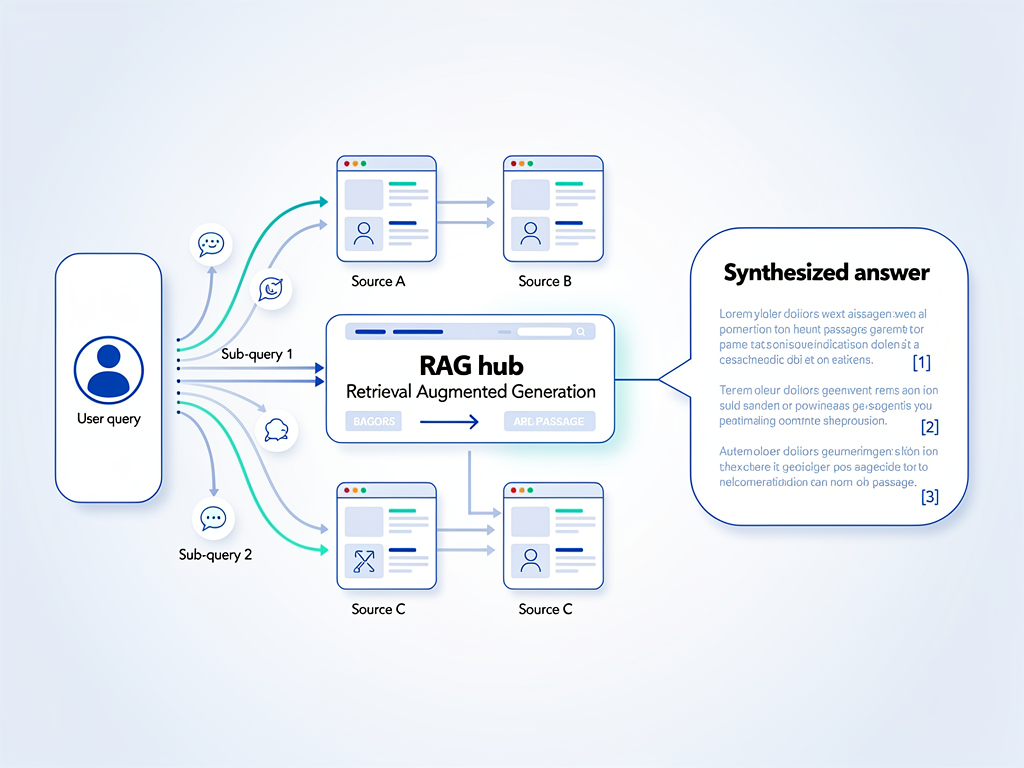
One critical distinction separates GEO from traditional SEO: large language models are non-deterministic. Ask the same question five times, and you will receive five different responses. This means there is no fixed "position one" in AI search. Instead of tracking rankings, you must think about citation frequency and mention rates across many different responses to many different prompts. The higher your frequency, the more AI impressions your brand accumulates.
How Traditional SEO Continues to Operate
Search engine optimization has been the cornerstone of digital marketing for over two decades. The fundamental premise remains straightforward: optimize your web pages so they rank higher in search engine results pages for relevant queries. When someone searches for "best CRM software for small business," traditional SEO determines which pages appear in those coveted top positions.
Traditional SEO operates through several interconnected mechanisms. On-page optimization involves crafting content that targets specific keywords, structuring pages with proper heading hierarchies, optimizing meta titles and descriptions, and ensuring content comprehensively addresses user intent. Technical SEO focuses on site speed, mobile responsiveness, crawlability, and proper indexation. Off-page SEO builds authority through backlinks from reputable sources.
The success metrics for traditional SEO are well-established. You track keyword rankings, organic traffic, click-through rates, bounce rates, and conversions. Tools like Google Search Console, Ahrefs, and SEMrush provide detailed visibility into performance. When your rankings improve, your traffic typically follows, creating a direct relationship between optimization efforts and business outcomes.
Traditional SEO rewards content that satisfies user intent, demonstrates expertise, and earns trust signals from other authoritative sources. Google's algorithms have grown increasingly sophisticated at evaluating content quality, making it harder to game the system with thin content or manipulative tactics. The brands that succeed in traditional SEO are those that genuinely provide value to their audiences.
The Critical Differences Between GEO and SEO
While generative engine optimization and traditional SEO share foundational principles, they diverge in several important ways. Understanding these differences helps you allocate resources appropriately and develop strategies that succeed in both environments. The comparison between geo vs seo reveals distinct optimization requirements and success metrics.
| Aspect | Traditional SEO | Generative Engine Optimization |
|---|---|---|
| Output Format | List of clickable links | Synthesized narrative response |
| User Behavior | User clicks through to find information | User receives the answer directly |
| Query Length | Short keywords (average 4 words) | Conversational questions (average 23 words) |
| Success Metrics | Rankings, click-through rate, traffic | Citation frequency, mention rate, AI visibility |
| Content Focus | Keyword targeting and density | Semantic clarity and definitions |
| Authority Signals | Backlinks and domain authority | Entity strength and third-party validation |
| Technical Requirements | Page speed and technical SEO | Structured data and machine readability |
The most significant difference lies in what constitutes success. In traditional SEO, you aim to rank pages and drive clicks. In GEO, you aim to be included inside AI-generated answers, often without receiving a direct click at all. This shift requires marketers to think about brand visibility and influence rather than just traffic acquisition.
Query patterns also differ substantially. Traditional search queries tend to be short and keyword-focused. Someone might type "project management software" into Google. But when interacting with an AI assistant, users ask complete questions: "What project management software would work best for a remote marketing team of 15 people with a limited budget?" This conversational nature means your content must anticipate and address these more nuanced queries.
Why Generative Engine Optimization Matters in 2026
The importance of GEO has accelerated dramatically as AI-powered search experiences have moved from novelty to mainstream. ChatGPT, Perplexity, Claude, Gemini, and Google's AI Overviews now influence how millions of users discover information, evaluate options, and make purchasing decisions. Ignoring this channel means accepting invisibility to a growing segment of your potential audience.
User behavior is shifting rapidly. People have become comfortable asking full questions instead of typing abbreviated keywords. They expect direct answers, concise explanations, brand comparisons, product recommendations, and actionable next steps. This creates a new visibility layer where brands can win attention without traditional clicks, which is both an opportunity and a risk.

Consider this scenario: a brand might rank well on Google for competitive keywords but remain completely invisible in AI-generated answers. A competitor with clearer content, stronger reviews, better third-party mentions, and more structured product information could appear instead. In 2026, your search visibility depends on three interconnected factors: Can search engines crawl and understand your content? Can answer engines extract direct, useful responses? Can generative engines trust your brand enough to mention or cite it?
The stakes are particularly high for B2B companies, SaaS providers, and e-commerce businesses where purchase decisions involve research and comparison. When a potential customer asks an AI assistant to recommend solutions, being cited in that response can accelerate the buyer journey significantly. Conversely, being absent from AI-generated recommendations means missing opportunities you may never even know existed.
How AI Search Engines Process and Generate Answers
Understanding the mechanics behind AI search engines helps you optimize more effectively. When a user submits a query to a generative search system, a sophisticated process unfolds that differs fundamentally from traditional search indexing and ranking.
The first stage involves query fan-out. The AI does not simply paste the user's full question into a search engine. Instead, it breaks the question into smaller, more targeted sub-queries. If someone asks "What is the best VPN for streaming Netflix in Europe?" the AI might generate separate searches for "best VPN 2026," "VPN Netflix streaming compatibility," and "VPN servers Europe locations." Your content needs to rank for these sub-queries, not just the long-form question.
Next comes information retrieval. The AI searches the web and its own knowledge base for relevant sources. Most systems use retrieval-augmented generation (RAG), a technique that pulls specific passages from web pages and feeds them to the language model as context. This means your content must contain clear, extractable passages that directly answer likely questions. Buried information or convoluted explanations are less likely to be retrieved.
The synthesis stage is where the magic happens. The AI combines information from multiple sources into a single, coherent response. It does not copy and paste content verbatim. Instead, it rewrites and merges information from several pages into one unified answer. This means your content contributes to the response alongside other sources, making differentiation and authority crucial.
Finally, the AI includes citations that reference the original sources. These citations drive referral traffic back to the websites that were used. Your goal with GEO is to be one of the sources the AI retrieves and cites, which requires content that is authoritative, clearly structured, and directly relevant to the queries being asked.
Eight Essential GEO Best Practices for 2026
Implementing effective generative engine optimization requires a systematic approach that addresses content quality, technical structure, and authority signals. These eight practices form the foundation of a successful GEO strategy that complements your existing SEO efforts.
1. Create Clear, Definitive Content
AI systems favor content that provides clear definitions, direct answers, and unambiguous explanations. When writing about your products, services, or industry topics, avoid vague language and hedging. State facts confidently and structure information so key points are easy to extract. Lead paragraphs should contain the most important information, following the inverted pyramid style that journalists use.
2. Structure Content for Machine Readability
Proper heading hierarchies, bulleted lists, tables, and clear paragraph breaks help AI systems parse your content effectively. Use descriptive headings that signal what each section contains. Implement schema markup to provide explicit context about your content type, organization, products, and relationships. The more structured your content, the easier it is for AI systems to understand and cite.
3. Build Entity Authority
AI systems recognize and trust established entities. Ensure your brand, products, and key personnel are represented consistently across the web. Claim and optimize your presence on Wikipedia, Wikidata, knowledge bases, and industry directories. The stronger your entity recognition, the more likely AI systems are to mention you when generating relevant answers.
4. Earn Third-Party Validation
Reviews, testimonials, industry awards, media mentions, and expert endorsements all contribute to how AI systems evaluate your authority. Actively pursue opportunities for third-party validation. Encourage satisfied customers to leave reviews on relevant platforms. Seek media coverage and industry recognition. These signals influence whether AI systems trust your brand enough to recommend it.

5. Optimize for Conversational Queries
Traditional keyword research focuses on short, high-volume terms. GEO requires understanding the conversational questions your audience asks. Research the natural language queries people use when seeking information in your space. Create content that directly addresses these questions with clear, comprehensive answers. FAQ sections, how-to guides, and comparison content perform particularly well.
6. Maintain Technical Excellence
AI systems still rely on web crawling to gather information. Ensure your site is technically sound with fast load times, proper indexation, clean URL structures, and mobile optimization. Implement comprehensive schema markup including Organization, Product, Article, FAQ, and HowTo schemas where appropriate. Technical issues that prevent crawling will also prevent AI citation.
7. Ensure Consistent Brand Messaging
Inconsistent information across different web properties confuses AI systems and reduces trust. Audit your brand presence across your website, social profiles, directories, and third-party mentions. Ensure product names, descriptions, pricing, and key details are consistent everywhere. Centralized product information management becomes increasingly important for GEO success.
8. Measure and Iterate
Develop measurement frameworks that track AI visibility alongside traditional SEO metrics. Monitor brand mentions in AI-generated responses, track citation frequency across different platforms, and analyze which content gets referenced most often. Use these insights to refine your content strategy and double down on what works.
Optimizing for Different AI Search Platforms
Not all AI search engines work identically. Understanding the nuances of major platforms helps you tailor your optimization approach for maximum visibility across the ecosystem.
ChatGPT draws from its training data and, with browsing enabled, retrieves current web information. Content that ranks well in traditional search often gets retrieved by ChatGPT's browsing feature. Focus on creating comprehensive, authoritative content that addresses topics thoroughly. ChatGPT tends to favor sources that provide clear, well-organized information.
Perplexity operates more like a traditional search engine with AI synthesis. It explicitly shows sources and provides citations for its answers. Perplexity tends to pull from multiple sources for each response, making it important to rank for relevant sub-queries. Content with clear, extractable facts and statistics performs well on Perplexity.
Google AI Overviews integrate directly into Google search results. Google has stated that optimizing for AI Overviews aligns closely with traditional SEO best practices. Content that ranks well organically has a better chance of being featured in AI Overviews. However, clear, direct answers to common questions increase your likelihood of inclusion.
Claude emphasizes accuracy and nuance in its responses. Claude tends to be more cautious about making definitive recommendations without strong supporting evidence. Content backed by data, research, and authoritative sources performs better with Claude. Ensure your claims are well-supported and your expertise is clearly demonstrated.
Gemini integrates with Google's broader ecosystem and draws from diverse sources. Gemini responses often include multimedia elements and tend to favor comprehensive content. Ensure your content is well-structured with clear sections that can be extracted and referenced independently.
Content Strategies That Excel in Both SEO and GEO
The good news for marketers is that many content strategies benefit both traditional SEO and generative engine optimization. By focusing on these overlapping areas, you can maximize the return on your content investments while building visibility across the entire search ecosystem.
Comprehensive pillar content serves both disciplines well. Long-form articles that thoroughly cover a topic from multiple angles provide the depth that traditional search engines reward while also giving AI systems rich material to extract and cite. When creating pillar content, structure it with clear sections, each addressing a specific aspect of the topic that could stand alone as an answer to a related query.
FAQ content is particularly powerful for GEO. AI systems frequently encounter questions that match FAQ entries directly. Create comprehensive FAQ sections that address the questions your audience actually asks, using natural language that mirrors how people phrase queries when talking to AI assistants. Each answer should be self-contained and directly useful.

Comparison and versus content performs exceptionally well in AI search. When users ask AI assistants to compare options, the system looks for content that directly addresses those comparisons. Create detailed comparison guides that evaluate options fairly, provide clear recommendations, and help users make informed decisions. Include comparison tables that AI systems can easily parse and reference.
How-to guides and tutorials address the instructional queries that AI assistants frequently receive. Step-by-step content with clear instructions, numbered lists, and practical examples gets cited when users ask how to accomplish specific tasks. Ensure each step is clearly explained and the overall process is easy to follow.
Data-driven content with original research, statistics, and insights earns citations in both traditional and AI search. When you publish original data, other sources reference it, building backlinks for SEO while also creating the authoritative citations that AI systems trust. Invest in original research, surveys, and data analysis that provides unique value to your industry.
Technical Implementation for GEO Success
Technical optimization for GEO extends beyond traditional technical SEO, though it builds on the same foundation. Implementing these technical elements ensures AI systems can effectively crawl, understand, and cite your content.
Schema markup provides explicit context that helps AI systems understand your content. Implement comprehensive schema including Organization schema for your company, Product schema for offerings, Article schema for blog content, FAQ schema for question-and-answer content, and HowTo schema for instructional guides. The more context you provide through structured data, the better AI systems can interpret and use your content.
Platforms like SeoSmart automate schema markup implementation, ensuring your content is properly structured for both traditional search engines and AI systems. This automation removes the technical complexity that often prevents businesses from implementing comprehensive structured data.
Content accessibility matters for AI crawling just as it does for traditional search. Ensure your content is not hidden behind JavaScript that crawlers cannot execute, login walls, or other barriers. AI systems need to access your content to include it in their training data and retrieval systems. Test your pages with tools that show how crawlers see your content.
Clear URL structures and internal linking help AI systems understand the relationships between your content pieces. Use descriptive URLs that indicate content topics. Link related content together with descriptive anchor text that helps both users and AI systems understand what each page covers. A well-organized site architecture improves crawlability and content discovery.
Page speed and performance affect whether your content gets crawled and indexed effectively. Slow-loading pages may be deprioritized by crawlers, reducing your visibility in both traditional and AI search. Optimize images, minimize code, use caching, and ensure your hosting infrastructure can handle traffic efficiently.
Measuring GEO Performance and AI Visibility
Traditional SEO metrics like rankings, traffic, and click-through rates do not fully capture GEO performance. Developing new measurement frameworks helps you understand your visibility in AI-generated responses and optimize accordingly.
Citation tracking involves monitoring when and how often your brand or content gets mentioned in AI-generated responses. While this is more challenging than tracking search rankings, several approaches can help. Manually test relevant queries across different AI platforms and document when your brand appears. Use tools that monitor AI mentions and citations systematically.

Brand mention monitoring across AI platforms provides insight into your GEO performance. Track how often your brand appears in responses to relevant queries, which competitors get mentioned alongside you, and whether mentions are positive, neutral, or negative. This qualitative analysis complements quantitative citation tracking.
Referral traffic analysis from AI platforms shows when citations translate into actual visits. Monitor traffic from ChatGPT, Perplexity, and other AI sources in your analytics. While not all AI citations generate clicks, tracking those that do helps you understand which content drives engagement from AI-referred users.
Content performance correlation helps identify what works. Analyze which content pieces get cited most frequently and look for patterns. Do longer articles perform better? Does content with more structured data earn more citations? Do certain topics or formats outperform others? Use these insights to guide future content creation.
Competitive benchmarking provides context for your performance. Monitor how often competitors appear in AI-generated responses to queries relevant to your business. Understanding your relative visibility helps you identify gaps and opportunities in your GEO strategy.
Common GEO Mistakes to Avoid
As brands rush to optimize for AI search, several common mistakes can undermine their efforts. Avoiding these pitfalls helps you build a sustainable GEO strategy that delivers long-term results.
Neglecting traditional SEO in favor of GEO is a significant error. AI systems still rely heavily on traditional search signals to identify authoritative sources. Content that ranks well organically is more likely to be retrieved and cited by AI systems. GEO should complement your SEO efforts, not replace them.
Creating content solely for AI rather than human readers backfires. AI systems are designed to identify and surface content that genuinely helps users. Thin, keyword-stuffed content that lacks real value will not earn citations regardless of how well it is technically optimized. Focus on creating genuinely useful content that serves your audience.
Ignoring entity development limits your GEO potential. If AI systems do not recognize your brand as a legitimate entity, they are less likely to mention or recommend you. Invest in building your entity presence across Wikipedia, Wikidata, industry directories, and other knowledge bases that AI systems reference.
Inconsistent information across web properties confuses AI systems and reduces trust. When your product descriptions, pricing, or company details differ across your website, social profiles, and third-party listings, AI systems may avoid citing you to prevent spreading inaccurate information. Audit and standardize your information everywhere it appears.
Failing to measure and iterate prevents improvement. GEO is still an emerging discipline, and best practices continue to evolve. Without measurement frameworks in place, you cannot identify what works and what does not. Establish baseline metrics, track performance over time, and continuously refine your approach based on data.
Building an Integrated SEO and GEO Strategy
The most effective approach treats SEO and GEO as complementary disciplines within a unified search visibility strategy. Building an integrated approach maximizes your visibility across the entire search ecosystem while efficiently allocating resources.
Start by auditing your current content through both SEO and GEO lenses. Identify content that ranks well but may not be optimized for AI citation. Look for opportunities to add clearer definitions, better structure, and more comprehensive coverage. Also identify content that addresses conversational queries well but may lack the authority signals needed for traditional ranking.
Develop content briefs that address both SEO and GEO requirements. When planning new content, consider both the keywords you want to rank for and the conversational questions you want to answer. Structure content to serve both purposes, with clear sections that can be extracted for AI responses while also providing the depth and comprehensiveness that traditional search rewards.

Prioritize content types that serve both disciplines. FAQ content, comprehensive guides, comparison articles, and data-driven research all perform well in both traditional and AI search. Focus your content creation efforts on these high-value formats that deliver returns across multiple channels.
Implement technical foundations that support both SEO and GEO. Comprehensive schema markup, clean site architecture, fast page speeds, and proper indexation benefit both disciplines. Investing in technical excellence provides compounding returns as you optimize for multiple search experiences.
Establish measurement dashboards that track both SEO and GEO metrics. Monitor traditional metrics like rankings, traffic, and conversions alongside AI visibility metrics like citation frequency and brand mentions. Understanding performance across both dimensions helps you make informed resource allocation decisions.
The Role of AI Content Tools in Modern Optimization
AI-powered content tools have become essential for executing effective SEO and GEO strategies at scale. These tools help marketers create, optimize, and publish content more efficiently while maintaining the quality standards that both traditional and AI search engines reward.
Modern AI content platforms can generate comprehensive, long-form articles that address topics thoroughly while incorporating proper structure, schema markup, and optimization elements. This capability is particularly valuable for businesses that need to produce content at scale without sacrificing quality or strategic alignment.
Keyword research tools powered by AI help identify both traditional search keywords and conversational query patterns. Understanding how your audience searches, whether through short keywords or natural language questions, informs content strategy for both SEO and GEO. Look for tools that provide insights into both query types.
Content optimization tools analyze your content against both SEO and GEO best practices. They can identify opportunities to improve structure, add schema markup, enhance clarity, and address gaps in topic coverage. Using these tools during the content creation process helps ensure your content is optimized from the start.

Publishing automation ensures your optimized content reaches your audience efficiently. Platforms that integrate with WordPress, Webflow, Shopify, and other content management systems eliminate manual publishing steps and reduce the time between content creation and indexation. Faster publishing means faster visibility in both traditional and AI search.
The automated content sprint approach offered by advanced platforms enables businesses to maintain consistent publishing schedules without overwhelming their teams. Regular content publication builds topical authority that benefits both SEO rankings and AI citation likelihood.
Future Trends in Search Optimization
The search landscape continues to evolve rapidly, and staying ahead requires understanding emerging trends that will shape optimization strategies in the coming years.
Multimodal search is expanding beyond text. AI systems increasingly process images, video, and audio alongside text content. Optimizing visual and multimedia content will become more important as AI assistants can analyze and reference these formats. Ensure your images have descriptive alt text, your videos have transcripts, and your multimedia content is accessible to AI systems.
Personalized AI responses will create new optimization challenges. As AI assistants learn user preferences and tailor responses accordingly, brands will need to optimize for diverse audience segments rather than generic queries. Understanding your specific audience personas and creating content that resonates with their needs becomes even more critical.
Real-time information is gaining importance in AI responses. AI systems are increasingly incorporating current information rather than relying solely on training data. Keeping your content updated, publishing timely information, and maintaining accuracy will influence whether AI systems cite your content for queries requiring current information.
Voice and conversational interfaces are expanding AI search beyond traditional screens. Smart speakers, automotive systems, and wearable devices all use AI assistants that generate spoken responses. Optimizing for these interfaces requires content that can be easily summarized and spoken aloud, with clear, concise answers that work in audio format.
Vertical AI search is emerging in specific industries. Healthcare, legal, financial, and other specialized domains are developing AI search experiences tailored to their unique requirements. Brands in these verticals should monitor industry-specific AI tools and optimize for the platforms their audiences use.
Practical Implementation Roadmap
Translating GEO strategy into action requires a structured implementation approach. This roadmap provides a practical framework for integrating GEO into your existing marketing operations.
Phase 1: Assessment (Weeks 1-2)
- Audit current content for GEO readiness
- Evaluate technical infrastructure and schema implementation
- Benchmark current AI visibility across major platforms
- Identify gaps between current state and GEO best practices
- Assess competitor AI visibility and citation patterns
Phase 2: Foundation (Weeks 3-4)
- Implement comprehensive schema markup across key pages
- Standardize brand information across all web properties
- Establish entity presence on knowledge bases and directories
- Set up measurement frameworks for AI visibility tracking
- Train team members on GEO principles and practices
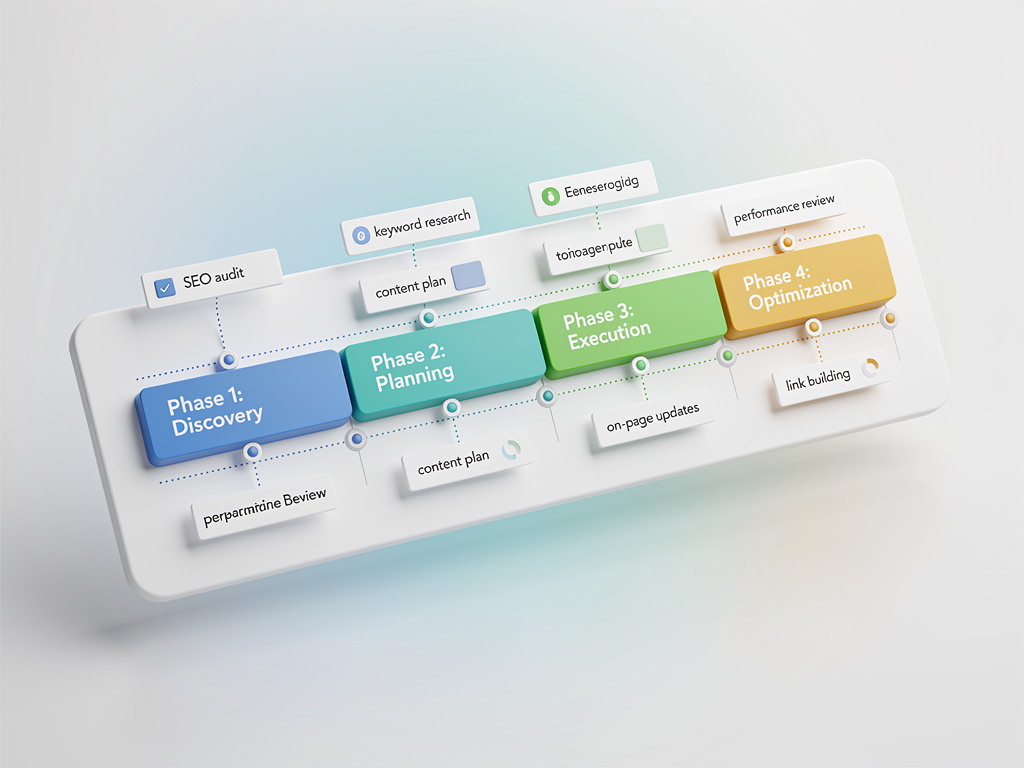
Phase 3: Content Optimization (Weeks 5-8)
- Update existing high-value content for GEO best practices
- Create new content targeting conversational queries
- Develop FAQ content addressing common audience questions
- Build comparison and versus content for key topics
- Implement internal linking improvements
Phase 4: Ongoing Optimization (Continuous)
- Monitor AI visibility metrics and citation patterns
- Analyze performance data and identify improvement opportunities
- Update content based on emerging queries and trends
- Expand entity presence and third-party validation
- Refine strategy based on platform algorithm changes
Industry-Specific GEO Considerations
Different industries face unique GEO challenges and opportunities. Understanding these nuances helps you tailor your approach for maximum impact in your specific market.
E-commerce businesses must optimize product information for AI shopping assistants. Ensure product descriptions are clear, specifications are accurate, and pricing is consistent across platforms. AI systems increasingly help users compare products and make purchasing decisions, making structured product data essential for visibility.
SaaS companies benefit from comprehensive feature documentation and comparison content. When users ask AI assistants to recommend software solutions, the AI draws from content that clearly explains capabilities, use cases, and differentiators. Create detailed feature pages, use case guides, and competitive comparisons that AI systems can reference.

B2B service providers should focus on thought leadership and expertise demonstration. AI systems evaluate authority signals when deciding which sources to cite for business advice. Publishing original research, expert insights, and comprehensive guides builds the authority that earns AI citations in your industry.
Local businesses face unique GEO considerations as AI assistants increasingly handle local search queries. Ensure your business information is accurate across Google Business Profile, Yelp, and other local directories. AI systems pull from these sources when recommending local services, making consistent local SEO essential for AI visibility.
Affiliate marketers and niche site builders must create genuinely valuable comparison and review content. AI systems are designed to identify and surface helpful content while filtering out thin affiliate pages. Focus on comprehensive, honest reviews that genuinely help users make decisions rather than content designed primarily to generate affiliate clicks.
Conclusion
The emergence of generative AI search represents the most significant shift in online discovery since the mobile revolution. Brands that understand and adapt to this new reality will capture visibility across the entire search ecosystem, while those who ignore it risk becoming invisible to a growing segment of their audience.
Success in 2026 and beyond requires a dual approach that optimizes for both traditional search engines and AI-powered answer experiences. The foundational principles remain consistent: create high-quality, authoritative content that genuinely serves your audience. But the execution must evolve to include structured data, entity development, conversational optimization, and new measurement frameworks.
The good news is that many optimization efforts benefit both SEO and GEO. Investing in comprehensive content, technical excellence, and authority building delivers returns across multiple channels. By treating these disciplines as complementary rather than competing, you can build sustainable visibility that adapts as the search landscape continues to evolve.
Start by assessing your current GEO readiness, implementing foundational technical elements, and gradually optimizing your content for AI citation. Monitor your performance, learn from the data, and continuously refine your approach. The brands that begin this journey now will establish the authority and visibility that compounds over time, creating competitive advantages that become increasingly difficult to overcome.
Frequently Asked Questions
Is GEO replacing traditional SEO?
No, Generative Engine Optimization is not replacing traditional SEO but rather expanding the search optimization landscape. Both disciplines will coexist for the foreseeable future, serving different but overlapping purposes. Traditional SEO remains essential for driving organic traffic through search engine results pages, which still account for the majority of search interactions. GEO adds a new visibility layer for AI-generated responses. The most effective strategy treats both as complementary, recognizing that strong traditional SEO performance often correlates with better AI citation rates. Google has explicitly stated that optimizing for AI Overviews aligns closely with traditional SEO best practices, reinforcing this complementary relationship.
How do I measure my brand's visibility in AI search?
Measuring AI visibility requires new approaches beyond traditional ranking tracking. Start by manually testing relevant queries across major AI platforms like ChatGPT, Perplexity, Claude, and Google AI Overviews, documenting when and how your brand appears. Track referral traffic from AI platforms in your analytics to understand which citations drive engagement. Several emerging tools offer AI visibility monitoring, tracking brand mentions and citations across platforms systematically. Establish baseline measurements and track changes over time. Also monitor competitor mentions to understand your relative visibility. While measurement in this space is still evolving, consistent tracking provides valuable insights for strategy refinement.
What content types perform best for GEO?
Several content types consistently earn AI citations. FAQ content performs exceptionally well because AI systems frequently encounter questions that match FAQ entries directly. Comprehensive guides that thoroughly cover topics provide rich material for AI extraction. Comparison and versus content gets cited when users ask AI assistants to evaluate options. How-to guides with clear step-by-step instructions address instructional queries effectively. Data-driven content with original research and statistics earns citations as authoritative sources. The common thread is content that directly answers questions, provides clear information, and demonstrates genuine expertise. Content should be well-structured with clear headings, bulleted lists, and extractable passages.
How long does it take to see results from GEO efforts?
GEO results typically emerge over a timeline similar to traditional SEO, though the specific factors differ. Technical improvements like schema markup implementation can influence AI crawling within weeks. Content optimization efforts may take one to three months to impact citation patterns as AI systems recrawl and reindex your content. Entity development and authority building are longer-term investments that compound over six to twelve months. The non-deterministic nature of AI responses means visibility fluctuates more than traditional rankings, so focus on trends over time rather than individual query results. Consistent effort in content quality, technical optimization, and authority building produces sustainable improvements.
Should small businesses invest in GEO or focus on traditional SEO first?
Small businesses should prioritize traditional SEO fundamentals while incorporating GEO best practices that require minimal additional effort. Many GEO optimizations, like clear content structure, comprehensive schema markup, and consistent business information, also benefit traditional SEO. Start with these overlapping areas to maximize return on limited resources. As your traditional SEO foundation strengthens, gradually expand GEO-specific efforts like conversational content optimization and AI visibility monitoring. The good news is that content ranking well in traditional search is more likely to be cited by AI systems, so building SEO strength naturally improves GEO performance. Focus on quality over quantity, creating genuinely valuable content that serves both disciplines.
How do AI systems decide which sources to cite?
AI systems evaluate sources based on multiple factors when deciding what to cite. Authority signals including domain reputation, backlink profiles, and entity recognition influence source selection. Content quality factors like clarity, comprehensiveness, and accuracy determine whether passages are useful for generating responses. Recency matters for time-sensitive queries, with AI systems preferring current information. Consistency across web properties builds trust, while conflicting information may cause AI systems to avoid citing a source. Third-party validation through reviews, media mentions, and expert endorsements strengthens perceived authority. Technical factors like proper indexation, schema markup, and crawlability affect whether AI systems can access and understand your content. Optimizing across all these dimensions improves your citation likelihood.
Ready to Optimize Your Content for Both SEO and GEO?
Building visibility across traditional and AI-powered search requires consistent, high-quality content production at scale. SeoSmart creates brand-tailored, 5,000-word articles with images, internal links, and YouTube videos, then publishes them automatically to your CMS. With built-in schema markup, AI-powered keyword research, and a backlink exchange network, SeoSmart helps you build the authority and content depth that both search engines and AI systems reward. Start your free trial with 500 credits and discover how automated content sprints can transform your search visibility strategy.

Subscribe to our newsletter
Subscribe to our newsletter and stay up-to-date with the latest news and updates.