Free AI SEO Tools in 2026: What You Gain & Miss
Explore the reality of free AI SEO tools in 2026. Discover their benefits, limitations, and when upgrading to paid versions becomes essential for serious SEO work.

Zakariae

The promise of free AI SEO tools is seductive: enterprise-level optimization without the enterprise-level price tag. In 2026, that promise has never been closer to reality, with dozens of platforms offering generous free tiers, permanent free plans, and no-credit-card trials that deliver genuine value. But here's what the marketing pages won't tell you: the gap between free and paid has widened in ways that matter enormously for serious SEO practitioners.
Whether you're a freelance content strategist bootstrapping your first agency, a small business owner handling your own optimization, or an e-commerce store owner trying to compete with well-funded competitors, understanding exactly what free tools deliver (and where they fall short) is the difference between strategic frugality and false economy. This guide cuts through the hype to show you precisely what's available at no cost, what limitations you'll encounter, and when upgrading becomes a mathematical necessity rather than a luxury.
Key Takeaways
Free AI SEO tools can deliver approximately 80% of premium tool output at 5% of the cost when combined strategically, according to recent industry analysis.
Google Search Console remains the most valuable free SEO tool because it provides first-party data directly from Google that no third-party tool can replicate.
The biggest gap in free tools is AI visibility tracking: monitoring how ChatGPT, Perplexity, and Google AI Overviews mention your brand requires paid subscriptions.
Usage caps, not feature limitations, are the primary constraint on free tiers in 2026, meaning you can access powerful features but only in limited quantities.
Free tools excel at research and ideation but struggle with execution, automation, and scale, which is where paid platforms justify their cost.
Combining multiple free tools creates workflow friction that costs time, and time has a price that often exceeds subscription fees.
AI content generation has democratized through free tiers of ChatGPT and Claude, but optimization and publishing automation remain premium features.
The Current Landscape of Free AI SEO Software
The AI SEO market has matured dramatically since the ChatGPT explosion of late 2022. What once required expensive enterprise subscriptions is now accessible through multiple channels: generous free tiers from venture-funded startups competing for market share, open-source AI models that democratize content creation, Google's own free tools enhanced with AI capabilities, and freemium models where basic users help train algorithms for premium offerings.
This democratization isn't altruistic. Startups offer free tiers to build user bases that attract investors. Established players like Google provide free tools to keep users in their ecosystem. AI companies offer free access to gather training data and usage patterns. Understanding these motivations helps you evaluate what's genuinely free versus what's a gateway to paid conversion.

Comparing interfaces across leading free AI SEO platforms reveals varying approaches to data presentation and feature accessibility.
The tools available today fall into distinct categories: general-purpose AI assistants (ChatGPT, Claude, Perplexity), traditional SEO platforms with AI enhancements (Google Search Console, Ahrefs Webmaster Tools), dedicated AI SEO platforms with free tiers (SE Ranking, Frase), and specialized tools addressing specific SEO functions (keyword research, content optimization, technical audits). Each category offers different value propositions and limitations.
For SEO agencies and digital marketing consultants, the strategic question isn't whether to use free tools but how to combine them effectively. A thoughtful stack of free tools can handle research, ideation, and basic optimization, freeing budget for the paid tools that deliver genuine competitive advantage in execution and scale.
Google Search Console: The Foundation You Cannot Replace
Before exploring any third-party tool, free or paid, you need to understand why Google Search Console remains the most important free SEO tool in existence. The reason is simple: GSC provides first-party data directly from Google. No third-party tool, regardless of price, can replicate this accuracy because no third party has access to Google's actual search data.
The free features in GSC are substantial. You get complete query and page performance data showing exactly which searches bring visitors to your site. Core Web Vitals monitoring reveals how Google perceives your page experience. Index coverage and crawl stats show what Google can and cannot access. Manual action notifications alert you to penalties. Mobile usability reports identify issues affecting the majority of searches.
While GSC itself isn't AI-powered in the traditional sense, it becomes dramatically more useful when combined with AI tools. You can export GSC data to ChatGPT or Claude for advanced analysis, trend identification, and content recommendations. This combination, entirely free, delivers insights that would have cost thousands of dollars in consultant fees just a few years ago.
Pro Tip: Export your GSC data monthly and create a running prompt template in ChatGPT that analyzes trends, identifies declining pages, and suggests content refresh priorities. This free workflow replaces much of what basic paid analytics tools offer.
The limitations of GSC are real but manageable. Historical data is limited to 16 months, so you'll want to archive exports for long-term trend analysis. There's no competitor analysis or keyword research capability, which is where other free tools fill gaps. And the interface, while improved, still requires SEO knowledge to interpret effectively.
Free AI Content Generation: ChatGPT, Claude, and Perplexity
The democratization of AI content generation represents the most significant shift in SEO accessibility since Google made search free. ChatGPT's free tier (GPT-4o Mini), Claude's free tier (Sonnet 3.7), and Perplexity AI's free search all offer legitimate SEO value despite their limitations.
ChatGPT's free tier excels at content ideation, outlines, and basic optimization. You can generate content outlines based on SERP-informed prompts, create title and meta description variations, expand and edit existing content, conduct basic keyword research assistance, and generate FAQ sections for target topics. The key limitation is no real-time web access, a limited context window, and usage caps during peak times.
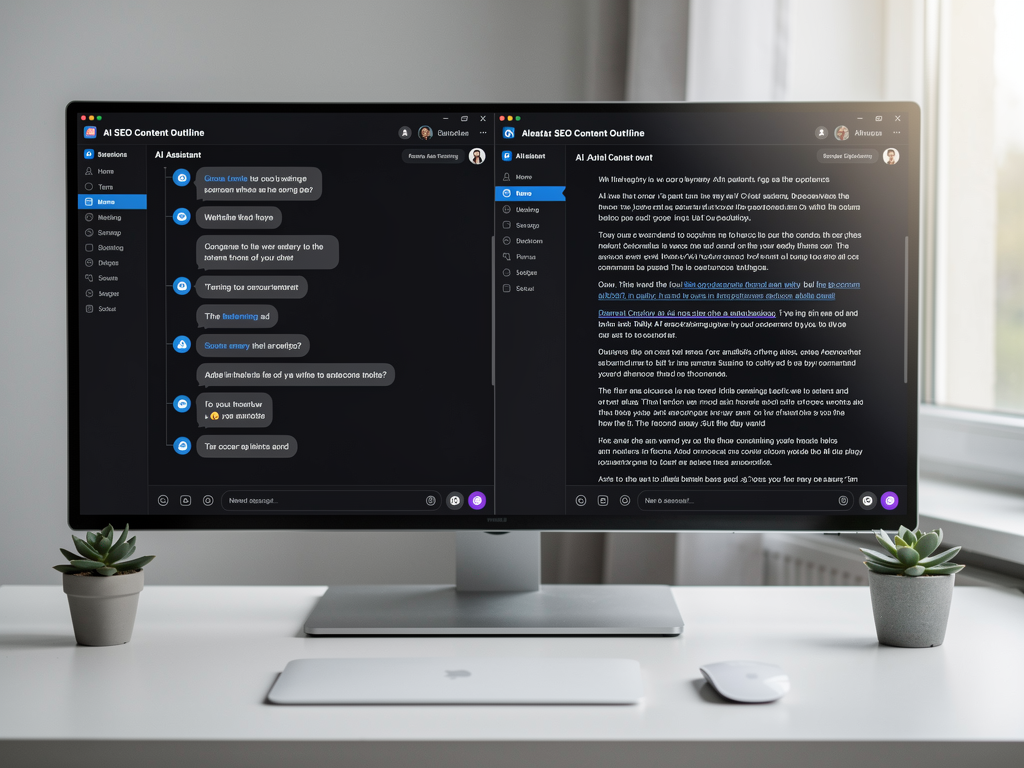
ChatGPT and Claude serve complementary roles in free AI content workflows.
Claude's free tier offers superior long-form content generation, which matters enormously for SEO. Industry comparisons consistently rate Claude as the leading AI content writing tool, noting it writes better across different languages than ChatGPT and offers larger context windows for long posts. This makes Claude ideal for creating the comprehensive, 2,000+ word articles that tend to rank well for competitive keywords.
Perplexity AI's free tier includes unlimited quick searches with real-time source citations, making it the go-to tool for building E-E-A-T-grounded content. Unlike ChatGPT's free tier, Perplexity pulls live sources and displays them inline, meaning every fact you use in a draft is immediately verifiable. This is particularly valuable for content briefs: ask Perplexity to summarize what top-ranking pages cover on a target keyword, and you get a sourced outline in seconds.
The strategic approach is combining all three. Use Perplexity for research and source gathering, ChatGPT for structural planning and ideation, and Claude for long-form content generation. This free stack can produce publication-ready content, though it requires manual effort to integrate the outputs.
Keyword Research Tools With Meaningful Free Access
Keyword research traditionally required expensive subscriptions to tools like Ahrefs or Semrush. In 2026, several platforms offer free tiers with genuine utility, though each comes with specific limitations that affect different use cases.
Ahrefs Webmaster Tools provides free access to your own site's data, including backlink analysis, keyword rankings, and site audit features. The limitation is that you can only analyze sites you own and verify, so competitor research requires paid access. For small business owners managing their own SEO, this limitation is less significant than it might seem, since understanding your own performance is the foundation of any strategy.
| Tool | Free Tier Limit | Best For | Key Limitation |
|---|---|---|---|
| Ahrefs Webmaster Tools | Own sites only | Site audits, backlink analysis | No competitor research |
| Ubersuggest | 3 searches/day | Quick keyword ideas | Severe usage cap |
| Keyword Surfer | Unlimited | Search volume in SERPs | Basic data only |
| AnswerThePublic | 1 search/day | Question-based keywords | Extremely limited |
| Google Keyword Planner | Unlimited with account | Search volume ranges | Requires Ads account |
Google Keyword Planner remains underutilized by SEOs despite being completely free. Yes, it requires a Google Ads account, but you don't need to run ads to access the tool. The data shows search volume ranges rather than exact numbers unless you're spending on ads, but ranges are sufficient for most keyword prioritization decisions.
Keyword Surfer, a free Chrome extension, displays search volume data directly in Google search results. This is invaluable for quick research and ideation, though the data depth doesn't match paid tools. For affiliate marketers and niche site builders doing initial research, this free tool can identify opportunities before committing to deeper paid analysis.
The pattern across free keyword tools is consistent: you can access the data, but in limited quantities or with reduced granularity. For content marketing managers at B2B companies who need to research dozens of keywords monthly, these limitations become constraining. For small business owners targeting a handful of local keywords, free tools may be entirely sufficient.
Content Optimization: Where Free Tools Show Their Limits
Content optimization tools analyze your content against top-ranking pages and provide recommendations for improvement. This category reveals the starkest divide between free and paid offerings, because the underlying technology (NLP analysis, entity extraction, semantic scoring) requires significant computational resources.
Frase offers a free trial that demonstrates the full platform's capabilities, including content research, brief generation, and optimization scoring. The free tier after trial is limited but functional for understanding what content optimization tools provide. The interface is intuitive, making it accessible for freelance content strategists who may not have technical backgrounds.
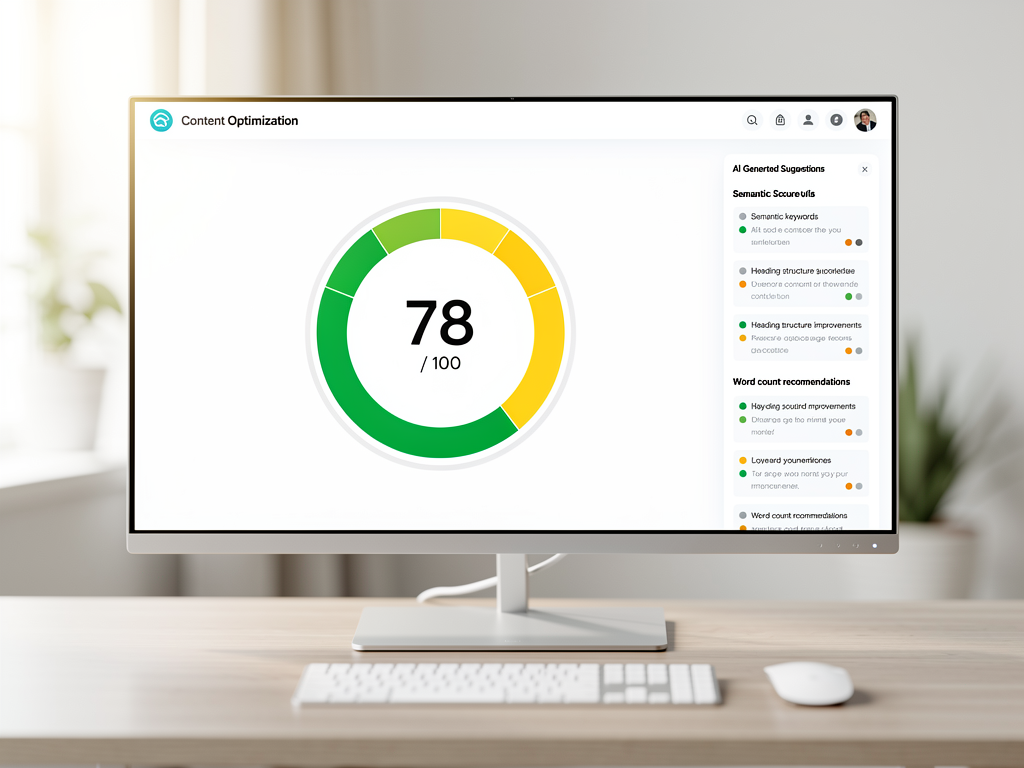
Content optimization tools score your content against competitors and suggest specific improvements.
Surfer SEO's free tools are limited to their Chrome extension and basic SERP analyzer. The full Content Editor, which is where Surfer delivers most value, requires a paid subscription. This is frustrating because the free tools demonstrate capability without delivering the core workflow that makes Surfer valuable for content teams.
Clearscope, widely regarded as the premium option for editorial content quality, offers no meaningful free tier. This is common among tools targeting enterprise content teams: the audience can afford subscriptions, so there's no business case for free access.
The workaround for free content optimization involves manual SERP analysis combined with AI tools. Search your target keyword, analyze the top 10 results manually (noting word count, heading structure, topics covered, questions answered), then use ChatGPT or Claude to compare your draft against these findings. This process takes 30 to 45 minutes versus 5 minutes with a paid tool, but it's entirely free and often more thorough because you're developing genuine understanding rather than following automated suggestions.
Technical SEO Auditing Without Paid Subscriptions
Technical SEO auditing is where free tools have made the most progress, largely because Google itself provides substantial free resources and because technical issues are often binary (present or absent) rather than requiring nuanced analysis.
Google's free technical SEO tools form a comprehensive stack. PageSpeed Insights analyzes Core Web Vitals with specific recommendations. Mobile-Friendly Test confirms responsive design. Rich Results Test validates structured data. The URL Inspection tool in GSC shows exactly how Google sees any page on your verified site.
Screaming Frog offers a free version limited to 500 URLs. For small business websites and many niche sites, 500 URLs covers the entire site. The free version includes full crawl analysis, broken link detection, redirect chain identification, duplicate content flagging, and meta data analysis. Only sites exceeding 500 pages need the paid version for complete coverage.
Ahrefs Webmaster Tools includes site audit functionality for verified sites. This free audit identifies technical issues, prioritizes them by impact, and provides remediation guidance. Combined with GSC's index coverage reports, you have comprehensive technical SEO monitoring at no cost.
Agency Tip: For client sites under 500 pages, you can deliver professional technical audits using only free tools. The time investment is higher than with paid platforms, but the output quality is comparable. This is particularly valuable when onboarding new clients before committing to paid tool access.
The limitation in free technical SEO tools is automation and monitoring. Paid platforms run scheduled crawls and alert you to new issues. Free tools require manual execution, meaning issues can persist until your next audit. For e-commerce store owners with frequently changing inventory, this gap matters more than for static content sites.
The AI Visibility Gap: What Free Tools Cannot Provide
Here's the uncomfortable truth about free AI SEO tools in 2026: the most important emerging capability, tracking your brand's visibility in AI-generated answers, is almost entirely locked behind paid subscriptions. This gap represents the most significant limitation of free tools for forward-thinking SEO practitioners.
AI visibility tracking monitors whether ChatGPT, Perplexity, Google AI Overviews, and other AI systems mention your brand when users ask relevant questions. As more searches terminate in AI answers rather than clicks to websites, this visibility becomes increasingly important. Industry data suggests AI answer engines now influence a substantial portion of informational queries.
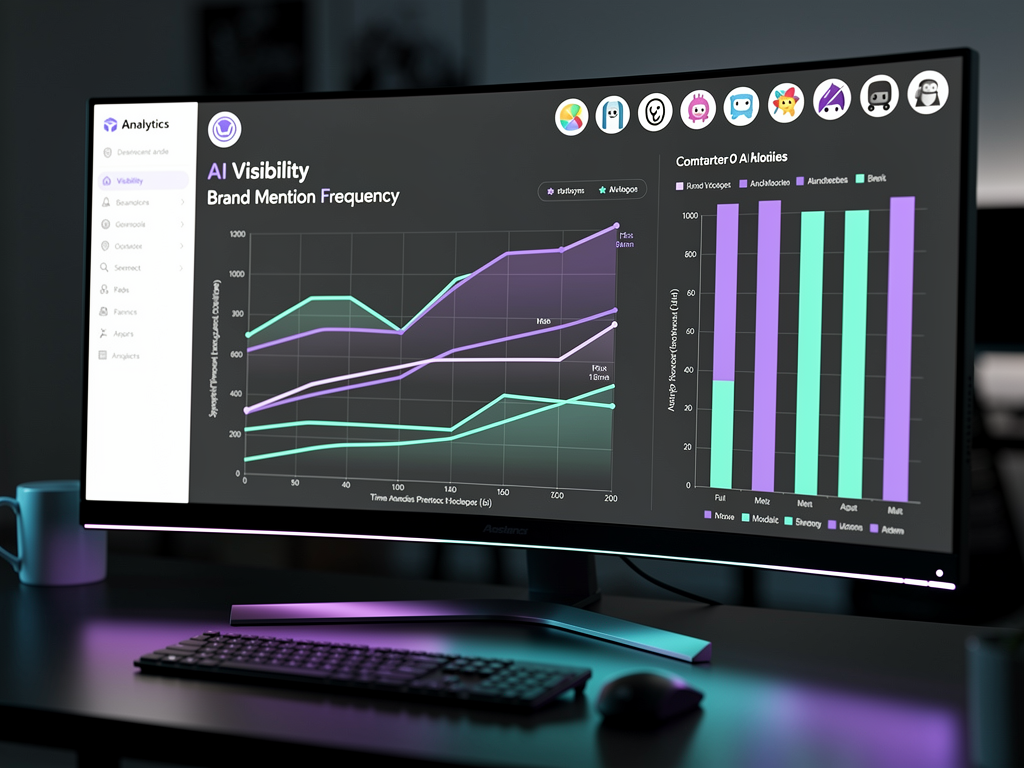
AI visibility tracking reveals how often AI systems mention your brand in response to relevant queries.
Semrush's AI Visibility Toolkit, Ahrefs' Brand Radar (tracking 243 million+ monthly prompts), and dedicated platforms like Goodie all require paid subscriptions. There is no free alternative that provides comprehensive AI visibility monitoring. You can manually query AI systems about your brand, but this doesn't scale and provides no historical data or competitive comparison.
For SEO agencies and digital marketing consultants, this gap creates a strategic decision point. You can continue optimizing for traditional search using free tools, but you'll be blind to an increasingly important visibility channel. The agencies investing in AI visibility tracking now are building competitive advantages that will compound as AI answer engines grow in usage.
The partial workaround involves manual monitoring. Set calendar reminders to query ChatGPT and Perplexity about your brand and key topics monthly. Document responses in a spreadsheet. This provides directional insight without the scale or precision of paid tools, but it's better than complete blindness to AI visibility.
Backlink Analysis and Link Building Support
Backlink analysis has historically been the most expensive SEO function because it requires massive crawling infrastructure to maintain current link databases. Free options exist but with significant limitations that affect different users differently.
Ahrefs Webmaster Tools provides free backlink analysis for verified sites. You can see who links to you, identify toxic links, and monitor new and lost links over time. The limitation is that you cannot analyze competitor backlinks, which is essential for link building strategy. For small business owners focused on their own site health, this limitation is acceptable. For agencies building link strategies, it's disqualifying.
Moz Link Explorer offers 10 free queries per month with a free account. This is enough for occasional competitor analysis but insufficient for systematic link building campaigns. The data quality is good, though the database is smaller than Ahrefs or Semrush.
Ubersuggest's free tier includes basic backlink data, though the severe daily search limits (3 searches) make it impractical for regular use. It's useful for one-off checks rather than ongoing strategy.
| Tool | Free Backlink Queries | Competitor Analysis | Link Monitoring |
|---|---|---|---|
| Ahrefs Webmaster Tools | Unlimited (own sites) | No | Yes |
| Moz Link Explorer | 10/month | Limited | No |
| Ubersuggest | 3/day | Very limited | No |
| Google Search Console | Unlimited (own sites) | No | Yes |
The practical reality for link building is that free tools support monitoring but not strategy development. You can track links to your own site effectively at no cost. Identifying link opportunities through competitor analysis requires either paid tools or manual research methods that consume significant time.
One underutilized free approach involves using Google search operators to find link opportunities manually. Searching for "keyword + resources," "keyword + links," or "keyword + recommended" surfaces pages that link to relevant content. This is time-intensive but free and often surfaces opportunities that automated tools miss because they're not in standard backlink databases.
Automation and Publishing: The Premium Frontier
Perhaps the most significant gap between free and paid AI SEO tools lies in automation and publishing capabilities. Free tools help you research, write, and optimize content. Paid tools help you do all of that and then publish, schedule, monitor, and iterate at scale.
Consider the workflow difference. With free tools, you research keywords in one platform, write content in another, optimize in a third, then manually log into your CMS to publish. Each step requires context switching, copy-pasting, and manual quality checks. With integrated paid platforms, you can move from keyword to published article in a single interface with automated quality gates.
For content marketing managers at B2B companies producing multiple articles weekly, this workflow friction compounds. An hour saved per article across 20 monthly articles is 20 hours, which at consultant rates easily exceeds the cost of paid tools that eliminate that friction.

The workflow complexity of free tools versus integrated paid platforms represents hidden costs in time and cognitive load.
WordPress integration is a key differentiator. Free tools require manual content transfer to WordPress. Paid platforms like SeoSmart's automated content publishing system offer one-click publishing that maintains formatting, adds images, embeds videos, and handles internal linking automatically. This automation is impossible to replicate with free tools.
Scheduling and content calendars are similarly locked behind paid tiers. Free tools help you create content for today. Paid tools help you plan, create, and schedule content for the next quarter. For SaaS companies requiring regular content production, this planning capability justifies subscription costs through improved consistency and reduced last-minute scrambling.
Building a Strategic Free Tool Stack
Given the limitations outlined above, how should you approach building a free AI SEO tool stack? The answer depends on your specific situation, but certain principles apply universally.
Start with Google's free tools as your foundation. Google Search Console, Google Analytics 4, Google Keyword Planner, PageSpeed Insights, and the various testing tools provide substantial capability at no cost. These tools should be configured and monitored regardless of what else you use.
Layer AI assistants for content work. Use Perplexity for research, ChatGPT for ideation and structure, and Claude for long-form writing. Develop prompt templates that produce consistent outputs, reducing the time required for each piece of content. Save successful prompts in a document for reuse.
Add specialized free tools for specific functions. Screaming Frog (free version) for technical audits under 500 pages. Keyword Surfer for quick search volume checks. Ahrefs Webmaster Tools for backlink monitoring on your own sites. Each tool addresses a specific need without overlap.
Stack Recommendation for Small Business Owners: Google Search Console + Google Analytics 4 + ChatGPT Free + Screaming Frog Free + Keyword Surfer. This combination covers 80% of SEO needs for sites under 500 pages at zero cost.
Document your workflows. Free tools don't integrate automatically, so you need to create integration through process. Document the steps for keyword research, content creation, technical audits, and performance monitoring. This documentation becomes your operating system for SEO, ensuring consistency even when using disconnected tools.
Track time spent on SEO tasks. After a month of using free tools, calculate the hours invested. Multiply by your hourly rate or opportunity cost. Compare this to the cost of paid tools that would reduce that time. This calculation often reveals that "free" tools are actually expensive when time is valued appropriately.
When Free Tools Are Genuinely Sufficient
Free AI SEO tools aren't always a compromise. For certain situations, they're genuinely sufficient and paying for premium tools would be wasteful. Understanding when free is enough helps you allocate budget more effectively.
New websites in their first six months rarely need paid tools. You're building foundational content, establishing technical health, and waiting for Google to recognize your site. Free tools handle all of this. Paid tools provide data you can't act on yet because you lack the authority and content depth to compete for valuable keywords.

Tool needs evolve as your site matures and your SEO requirements become more sophisticated.
Local businesses targeting geographic keywords often find free tools sufficient. Competition is lower, keyword volumes are smaller, and the SEO work required is less intensive. A local plumber doesn't need enterprise SEO tools; they need basic optimization and consistent content, which free tools support adequately.
Hobby sites and passion projects don't justify paid subscriptions unless they generate revenue. If you're blogging for enjoyment rather than income, free tools let you optimize without financial pressure. The time investment is higher, but time spent on hobbies isn't a cost in the same way as time spent on business activities.
Learning SEO is best done with free tools initially. Paid tools abstract away processes that you need to understand. Using free tools forces you to learn what's actually happening, building knowledge that makes you more effective with paid tools later. SEO agencies should consider requiring new team members to use free tools during training for this reason.
When Upgrading Becomes Necessary
The transition from free to paid tools typically happens when one of several thresholds is crossed. Recognizing these thresholds helps you upgrade strategically rather than reactively.
Volume is the most common trigger. When you're producing more than four to five pieces of content monthly, the time savings from paid tools typically exceed their cost. When your site exceeds 500 pages, Screaming Frog's free version no longer covers full audits. When you're researching more than 20 keywords monthly, free tool limits become constraining.
Competition intensity matters significantly. If you're competing against well-funded competitors using premium tools, free tools put you at a disadvantage. You're making decisions with less data, slower workflows, and no visibility into competitor strategies. In competitive niches, this disadvantage compounds over time.
Revenue justification simplifies the decision. When your SEO efforts generate revenue exceeding the cost of paid tools by a meaningful margin, upgrading is straightforward. If a $100/month tool helps you rank for keywords generating $500/month in revenue, the ROI is obvious. Free tools make sense when revenue doesn't yet justify the investment.
Team size affects the calculation. Solo practitioners can manage free tool workflows because they're not coordinating with others. Teams need shared dashboards, collaborative features, and consistent data sources that free tools don't provide. The first hire often triggers the transition to paid tools.
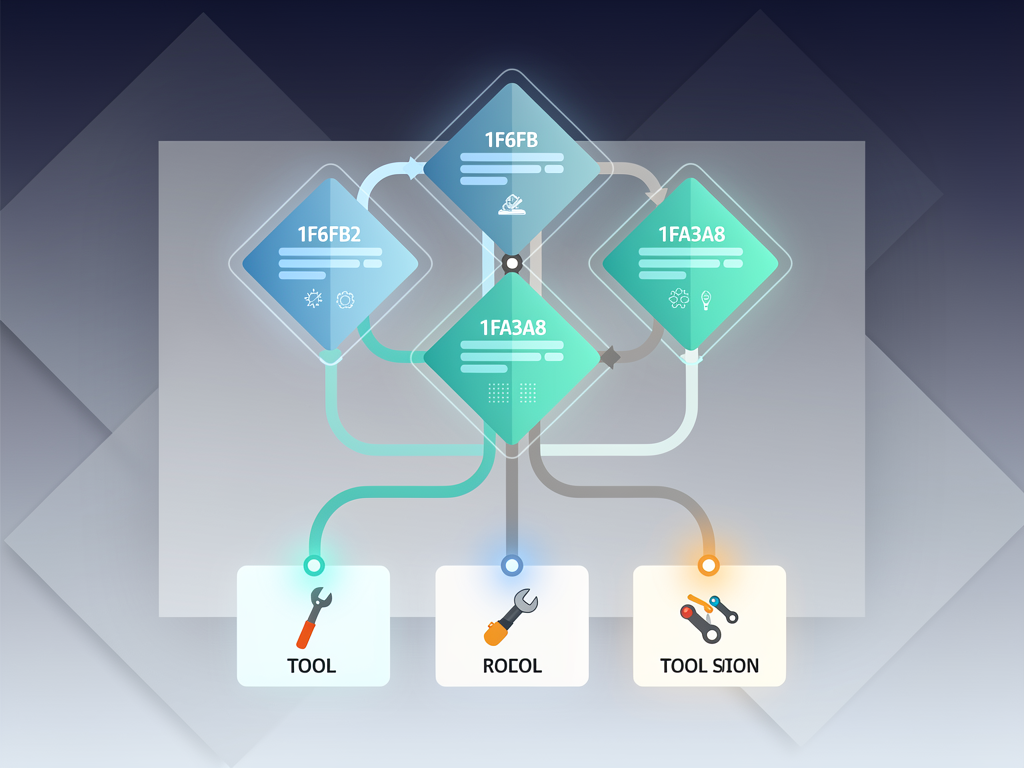
A systematic decision framework helps determine when free tools remain appropriate versus when upgrading delivers positive ROI.
For affiliate marketers and niche site builders, the threshold often correlates with traffic. Sites under 10,000 monthly visitors rarely generate enough revenue to justify paid tools. Sites exceeding 50,000 monthly visitors almost always benefit from paid optimization. The middle range requires individual calculation based on monetization effectiveness.
The Hidden Costs of Free Tools
Free tools carry costs that don't appear on invoices but affect your bottom line nonetheless. Understanding these hidden costs helps you make more accurate comparisons between free and paid options.
Time is the obvious hidden cost. Every minute spent switching between tools, copying data, and manually executing tasks that paid tools automate is time not spent on higher-value activities. For freelance content strategists billing hourly, this time has direct monetary value. For business owners, it has opportunity cost.
Data fragmentation creates analytical blind spots. When your keyword data lives in one tool, content performance in another, and backlink data in a third, identifying correlations becomes difficult. Paid platforms with integrated data reveal insights that fragmented free tools obscure.
Learning curves multiply with each tool. Every free tool has its own interface, terminology, and workflow. Learning five free tools takes more time than learning one comprehensive paid platform. This learning investment is often overlooked when comparing options.
Inconsistent data between tools creates confusion. Different tools use different data sources, methodologies, and update frequencies. Keyword volume in Ubersuggest won't match Keyword Planner won't match Ahrefs. Reconciling these differences requires expertise and time that integrated platforms eliminate.
Missing features force workarounds that introduce error. When a free tool lacks a feature you need, you either skip that analysis or create a manual workaround. Manual workarounds are time-consuming and error-prone. Paid tools include features specifically because users need them.
Maximizing Value From Free Tiers of Paid Platforms
Many premium SEO platforms offer free tiers or trials that provide substantial value when used strategically. Understanding how to maximize these offerings extends your free tool capabilities significantly.
SE Ranking offers a free trial with full feature access. Use this trial strategically: prepare a list of analyses you need, execute them efficiently during the trial period, and export all data before the trial ends. This approach gives you paid-tool data at no cost, though only as a snapshot rather than ongoing monitoring.
Semrush's free account provides limited daily queries. Rather than using these queries randomly, plan your research to maximize value. Batch competitor analyses, prioritize high-value keywords, and document everything for future reference. Ten queries used strategically provide more value than 50 queries used casually.
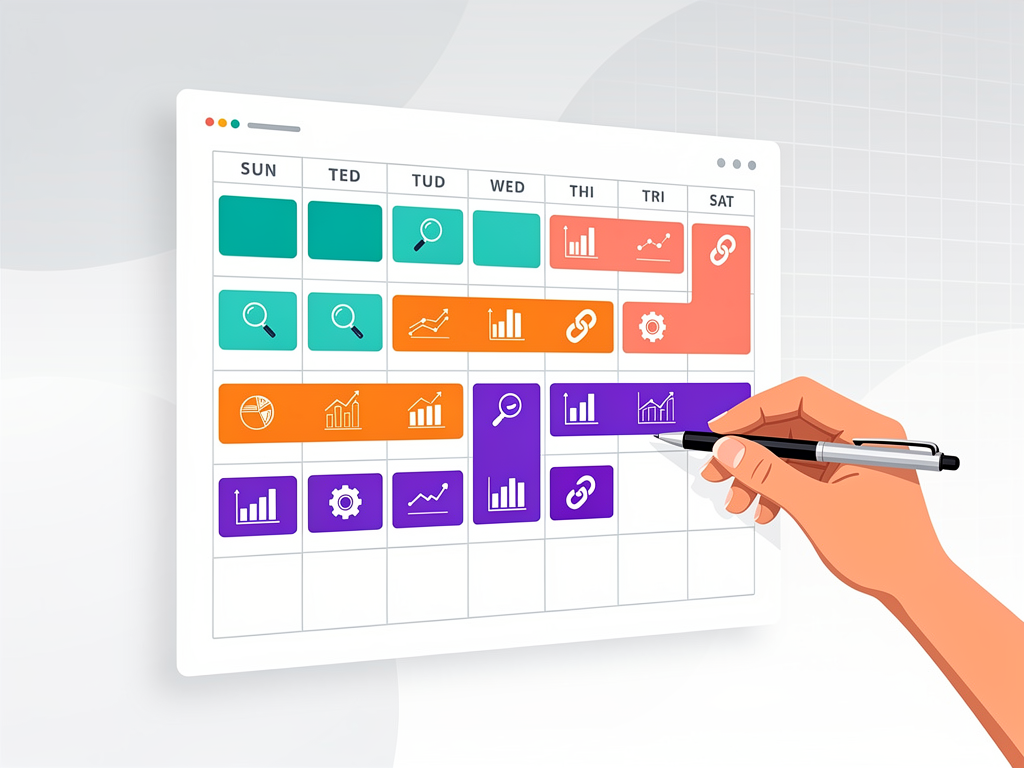
Strategic scheduling of free trials across platforms maximizes the data you can gather at no cost.
Frase's free trial demonstrates content optimization capabilities. Use it to optimize your most important pages during the trial, learning the methodology so you can approximate it manually afterward. The optimization suggestions you receive during the trial continue to provide value after the trial ends.
Create multiple accounts only if the terms of service permit. Some platforms allow multiple free accounts for different projects; others prohibit this practice. Violating terms of service risks account termination and data loss, so verify policies before attempting this approach.
Combine trial periods strategically. Don't start all trials simultaneously. Stagger them so you always have at least one premium tool available. This approach provides continuous premium access across a multi-month period using only free trials.
The Future of Free AI SEO Tools
The trajectory of free AI SEO tools points toward both expansion and contraction. Understanding where the market is heading helps you plan your tool strategy for the coming years.
AI capabilities will continue democratizing. As AI models become more efficient, the computational cost of providing AI features decreases. This suggests free tiers will include more AI functionality over time. Features that require paid subscriptions today may become free within two to three years.
Data moats will remain premium. While AI processing becomes cheaper, proprietary data remains expensive to collect and maintain. Backlink databases, keyword databases, and AI visibility tracking all require massive ongoing investment. These data-dependent features will likely remain behind paywalls.
Consolidation will affect free offerings. As the SEO tool market consolidates, acquired companies often reduce or eliminate free tiers. The generous free offerings from venture-funded startups may disappear as those companies are acquired or need to demonstrate profitability.
Integration will become a key differentiator. Standalone free tools will remain available, but integrated platforms that combine research, creation, optimization, and publishing will capture increasing market share. The value of integration justifies paid subscriptions even when individual components are available free elsewhere.
For marketing teams with limited content resources, the strategic implication is clear: build expertise with free tools now, but plan for eventual transition to paid platforms as your needs grow and as free offerings potentially contract.
Practical Recommendations by User Type
Different users have different needs, and the optimal free tool strategy varies accordingly. Here are specific recommendations based on common user profiles.
SEO Agencies and Digital Marketing Consultants: Use free tools for initial client research and proposals. Upgrade to paid tools once clients are signed and generating revenue. The professional appearance and efficiency of paid tools justifies their cost when billing clients. Consider platforms offering automated content sprints that reduce production time while maintaining quality.
Content Marketing Managers at B2B Companies: Free tools work for ideation and research, but content production at scale requires paid optimization and publishing tools. Budget for at least one comprehensive platform (Semrush or Ahrefs) plus a content optimization tool (Surfer or Clearscope).
Small Business Owners Managing Their Own SEO: Free tools are likely sufficient unless you're in a highly competitive niche. Focus on Google's free tools plus one AI assistant (ChatGPT or Claude). Invest time in learning rather than money in tools.
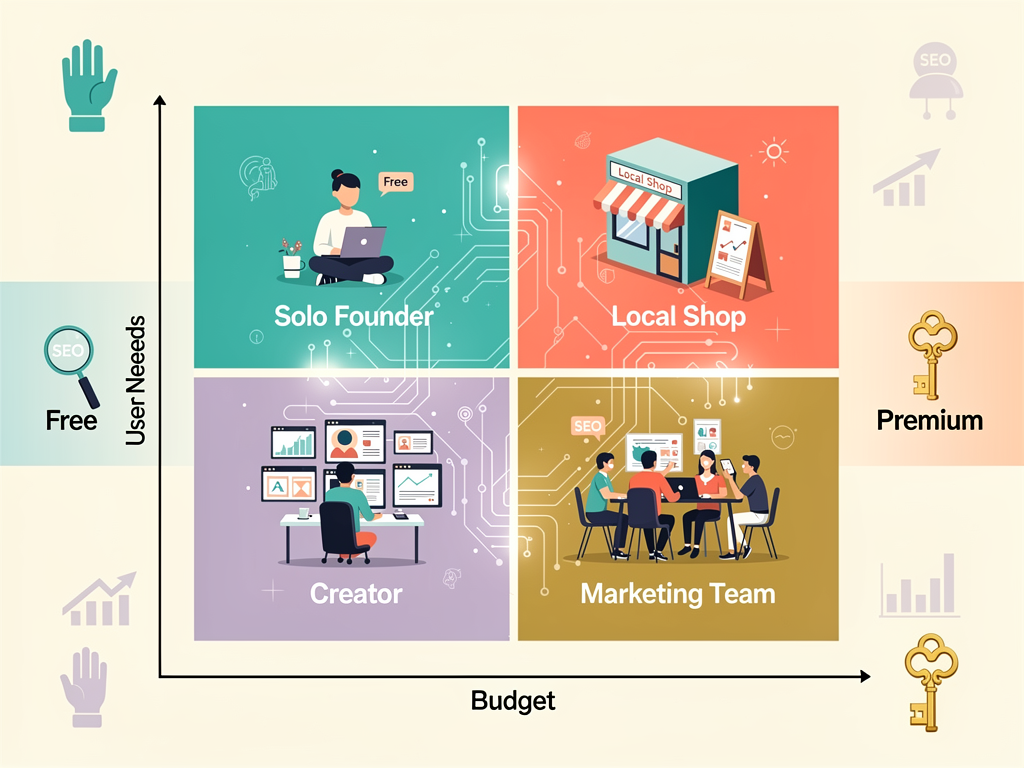
Tool recommendations vary significantly based on user type and available budget.
Affiliate Marketers and Niche Site Builders: Start with free tools until sites generate consistent revenue. Upgrade keyword research tools first (they have the highest ROI for affiliate content). Add content optimization tools as content volume increases.
E-commerce Store Owners Needing Blog Content: Product page optimization often requires paid tools due to technical complexity. Blog content can start with free tools. Prioritize technical SEO tools for product pages and use free AI tools for blog content creation.
SaaS Companies Requiring Regular Content Production: The volume and consistency requirements typically justify paid tools from the start. Free tools create bottlenecks that slow growth. Budget for comprehensive platforms that support your content velocity requirements.
Freelance Content Strategists and SEO Specialists: Maintain proficiency with both free and paid tools. Use free tools for personal projects and learning. Recommend paid tools to clients when justified, potentially including your tool costs in project pricing.
Conclusion
Free AI SEO tools in 2026 offer genuine value that would have seemed impossible just a few years ago. You can conduct keyword research, create optimized content, audit technical issues, and monitor your own backlinks without spending a dollar. For many users, particularly those early in their SEO journey or working on smaller projects, free tools are not just adequate but optimal.
However, the gaps in free offerings are real and significant. AI visibility tracking, competitor analysis at scale, workflow automation, and integrated publishing remain premium features. As AI-generated answers capture an increasing share of search behavior, the inability to monitor AI visibility becomes an increasingly serious limitation.
The strategic approach is neither to avoid free tools nor to rely on them exclusively. Instead, build a foundation with free tools, understand their limitations through direct experience, and upgrade strategically when the ROI calculation clearly favors paid alternatives. Track your time, measure your results, and make decisions based on data rather than assumptions about what "serious" SEO requires.
The best free ai seo tools provide 80% of premium capability at a fraction of the cost. The question is whether that remaining 20% matters for your specific situation. For some users, it doesn't. For others, that 20% represents the difference between ranking and not ranking, between visibility and obscurity, between growth and stagnation. Only you can make that determination, but now you have the information to make it wisely.
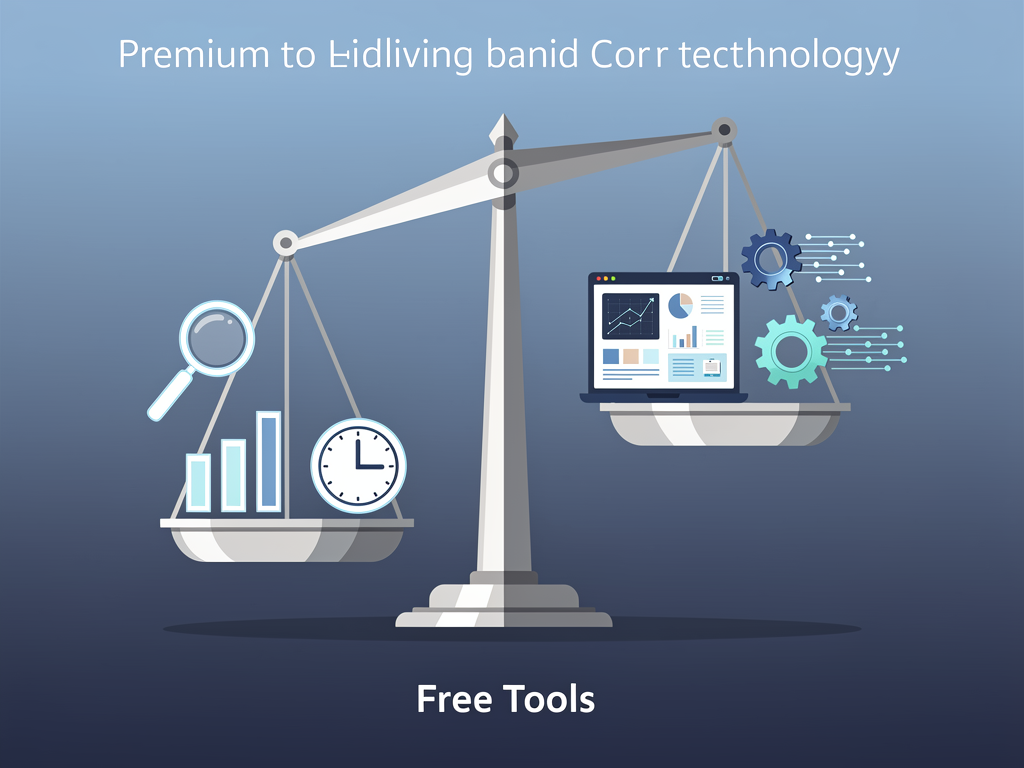
The free versus paid decision ultimately comes down to weighing multiple factors specific to your situation.
Frequently Asked Questions
Can I run a successful SEO campaign using only free tools?
Yes, but with important caveats. Free tools support successful SEO campaigns for sites in low to moderate competition niches, particularly during the first 6 to 12 months of a site's life. Google Search Console, free AI assistants like ChatGPT and Claude, and tools like Screaming Frog's free version provide substantial capability. However, as your site grows and competition intensifies, the limitations of free tools become more constraining. Sites generating significant revenue typically find that the time savings from paid tools exceed their subscription costs. The key is matching your tool investment to your actual needs rather than either overspending on unnecessary features or underinvesting when paid tools would accelerate growth.
Which free AI SEO tool should I start with if I can only choose one?
Google Search Console, without question. It's not technically an AI tool, but it provides first-party data from Google that no other tool can replicate. You'll see exactly which queries bring visitors, how your pages perform, and what technical issues Google detects. Combine GSC with ChatGPT's free tier for content work, and you have a powerful foundation at zero cost. If you're asking specifically about AI tools, ChatGPT's free tier offers the broadest utility, supporting keyword ideation, content creation, meta description writing, and basic analysis. Perplexity is the better choice if your primary need is research with cited sources for E-E-A-T compliance.
How do free AI SEO tools compare to paid options like Semrush or Ahrefs?
Free tools can replicate approximately 60 to 80 percent of what paid platforms offer, but with significant trade-offs. The main differences are data depth (paid tools have larger, more current databases), automation (paid tools schedule and monitor automatically), integration (paid tools combine functions that require multiple free tools), and support (paid tools include customer service and training). Semrush's 25.4 billion keyword database dwarfs what free tools access. Ahrefs' backlink database updates more frequently than free alternatives. However, for users who don't need comprehensive competitor analysis or who can invest time instead of money, free tools deliver meaningful results.
Are there any completely free tools for tracking AI visibility in ChatGPT and Perplexity?
Unfortunately, no comprehensive free tools exist for AI visibility tracking in 2026. This is the most significant gap in free SEO offerings. Platforms like Semrush's AI Visibility Toolkit and Ahrefs' Brand Radar (tracking 243 million+ monthly prompts) require paid subscriptions. The workaround is manual monitoring: periodically query ChatGPT and Perplexity about your brand and key topics, document the responses, and track changes over time. This provides directional insight but lacks the scale, historical data, and competitive comparison that paid tools offer. As AI-generated answers become more prevalent, this gap becomes increasingly important for serious SEO practitioners.
How much time should I expect to spend managing a free tool stack versus using paid platforms?
Expect free tool workflows to take two to three times longer than equivalent paid platform workflows. A keyword research session that takes 15 minutes in Semrush might take 45 minutes using free tools due to query limits, data export requirements, and manual compilation. Content optimization that takes 10 minutes in Surfer might take 30 to 40 minutes with manual SERP analysis and ChatGPT prompting. For occasional use, this time difference is acceptable. For regular production (more than four to five pieces of content monthly), the accumulated time cost often exceeds paid subscription fees. Track your actual time for a month before concluding that free tools are more economical.
What's the best strategy for transitioning from free tools to paid platforms?
Transition incrementally based on specific pain points rather than upgrading everything simultaneously. Start by identifying which free tool limitation costs you the most time or capability. If keyword research limits constrain you, upgrade that first. If content optimization is your bottleneck, prioritize Surfer or Clearscope. If competitor analysis is impossible with free tools, consider Ahrefs or Semrush. Many practitioners maintain a hybrid approach indefinitely, using free tools for functions where they're adequate and paid tools only where the premium features deliver clear value. This targeted approach maximizes ROI while avoiding unnecessary spending on features you won't use.
Ready to Move Beyond Free Tool Limitations?
If you're spending more time managing disconnected free tools than actually creating content that ranks, it might be time to explore integrated solutions. SeoSmart combines AI-powered content creation, automatic image generation, YouTube video embedding, and one-click publishing to WordPress, Webflow, Shopify, and Ghost. With content sprint subscriptions delivering 30 or 60 articles monthly on autopilot and a built-in backlink exchange network, you can focus on strategy while the platform handles execution. Start with 500 free credits to experience what automated SEO content production feels like when everything works together.
Subscribe to our newsletter
Subscribe to our newsletter and stay up-to-date with the latest news and updates.