Explore Top AI SEO Tools to Boost Your Search Rankings
Discover how AI SEO tools are transforming search engine optimization. Learn about platforms that automate tasks, enhance content creation, and track AI search visibility to elevate your business's online presence.

Zakariae

The search engine optimization landscape has undergone a seismic transformation. What once required teams of specialists working around the clock can now be accomplished in minutes through intelligent automation. The emergence of sophisticated ai seo tools has fundamentally altered how businesses approach organic search visibility, content creation, and competitive analysis. Whether you run a boutique digital marketing consultancy or manage content operations for a Fortune 500 company, understanding which platforms deliver genuine results versus empty promises has become essential for survival in an increasingly competitive digital ecosystem.
The global AI SEO software market reached $1.8 billion in 2024 and is accelerating toward an estimated $6.2 billion by 2030, according to industry research. This explosive growth reflects a fundamental shift in how search engines evaluate content. Google's sophisticated algorithms, including RankBrain, BERT, and MUM, now rely heavily on artificial intelligence to understand search intent and content quality. Traditional keyword stuffing and link schemes have given way to nuanced content strategies that require equally sophisticated tools to execute effectively.
This comprehensive guide examines the fifteen most powerful AI-driven SEO platforms available today, organized by their primary strengths and use cases. We have evaluated each tool based on implementation depth, accuracy, speed to measurable results, integration capabilities, and overall value for different business types. Whether you need autonomous technical optimization, content generation at scale, or visibility tracking across emerging AI search engines like ChatGPT and Perplexity, you will find actionable recommendations tailored to your specific needs and budget.
Key Takeaways
- AI SEO tools now divide into two categories: those that automate traditional SEO tasks and those that track brand visibility across AI search engines like ChatGPT and Perplexity.
- Implementation depth matters more than feature lists: tools that actually fix issues outperform those that only generate reports requiring manual action.
- Content optimization platforms like Surfer SEO and Clearscope use natural language processing to analyze top-ranking pages and provide real-time optimization guidance.
- All-in-one platforms such as Semrush and Ahrefs offer comprehensive functionality but require higher investment and steeper learning curves.
- Autonomous SEO agents represent the newest evolution, finding technical issues and implementing fixes without manual intervention.
- Budget considerations vary dramatically: effective solutions exist from free tiers through enterprise pricing exceeding $1,000 monthly.
- Integration capabilities with WordPress, Shopify, and other CMS platforms significantly impact practical utility and time savings.
- AI content generation requires human oversight to prevent hallucinations and ensure brand voice consistency.

Understanding the AI SEO Tool Landscape in 2026
The artificial intelligence revolution in search engine optimization has created distinct categories of tools, each serving different aspects of the optimization process. Understanding these categories helps you build a technology stack that addresses your specific challenges without redundant spending or capability gaps. The most successful SEO practitioners combine tools from multiple categories to create comprehensive workflows that maximize efficiency and results.
The first category encompasses traditional SEO platforms enhanced with AI capabilities. These include established names like Semrush, Ahrefs, and Moz, which have integrated machine learning into their existing feature sets. These platforms excel at keyword research, backlink analysis, rank tracking, and competitive intelligence. Their AI enhancements typically focus on surfacing insights from massive datasets and automating routine analysis tasks that previously required significant manual effort.
The second category includes content optimization and generation platforms. Tools like Surfer SEO, Clearscope, and Jasper specialize in helping you create content that aligns with search engine expectations. They analyze top-ranking pages for specific keywords and provide real-time guidance on structure, keyword usage, readability, and semantic relevance. Some platforms in this category also generate draft content using large language models, though human editing remains essential for quality assurance.
The third and newest category comprises AI visibility and citation tracking tools. As more users obtain information directly from ChatGPT, Perplexity, Claude, and Google's AI Overviews, a new challenge has emerged: ensuring your brand appears in AI-generated answers. Tools in this category monitor how AI systems respond to queries related to your industry and track whether your brand receives mentions and citations. This represents the frontier of SEO, where traditional ranking positions matter less than appearing in conversational AI responses.
How We Evaluated These Platforms
Our evaluation methodology prioritized practical utility over marketing claims. We assessed each tool across five equally weighted dimensions. Implementation depth measured whether the tool actually fixes SEO issues or merely reports them. A platform that writes optimized meta descriptions directly into your CMS delivers fundamentally different value than one that simply suggests improvements you must implement manually. AI accuracy tracked hallucination rates in generated content and the validity of technical recommendations against actual site configurations and current best practices.
Speed to impact measured elapsed time from account creation to visible changes in search performance, including setup friction from discovery calls, sales gates, and required developer work. Cross-platform integration tested read and write capabilities with WordPress, Shopify, and other major content management systems. Finally, organic traffic lift compared performance against each test site's prior 90-day baseline to measure real-world effectiveness rather than theoretical capabilities.
All-in-One SEO Platforms: Comprehensive Solutions for Serious Practitioners
All-in-one SEO platforms provide the broadest functionality, combining keyword research, rank tracking, backlink analysis, technical auditing, and competitive intelligence in unified interfaces. These platforms suit agencies managing multiple clients, in-house teams requiring diverse capabilities, and serious practitioners who want consolidated data sources. The tradeoff involves higher costs and steeper learning curves compared to specialized tools.
Semrush consistently ranks among the most comprehensive SEO platforms available. Its database includes over 25 billion keywords across 130 countries, providing unmatched depth for international campaigns. The platform's AI enhancements include automated site audits that prioritize issues by impact, content optimization suggestions based on top-ranking competitors, and predictive analytics for keyword difficulty. Semrush excels at competitive analysis, allowing you to reverse-engineer competitor strategies and identify content gaps. Pricing starts at $129 monthly for the Pro plan, with Agency and Business tiers offering additional features for larger operations.
Ahrefs has evolved from its origins as a backlink analysis tool into a full-featured SEO suite with significant AI capabilities. The platform's 110 billion keyword database and 15 years of search data provide a foundation for sophisticated AI features. Ahrefs' Brand Radar represents a significant innovation, monitoring brand visibility across 243 million monthly prompts derived from real "People Also Ask" data. This feature tracks mentions across ChatGPT, Perplexity, Gemini, Copilot, Google AI Overviews, and Google AI Mode, plus YouTube, TikTok, and Reddit. The AI Content Helper grades content against top-ranking pages while detecting multiple search intents behind single keywords. Pricing begins at $99 monthly for the Lite plan.

Moz Pro offers a more accessible entry point into comprehensive SEO tools, with particular strengths in local SEO and domain authority metrics. The platform's AI features focus on prioritizing recommendations and simplifying complex data for less technical users. While Moz's keyword database is smaller than competitors, its user interface and educational resources make it popular among small business owners and SEO beginners. Pricing starts at $99 monthly for the Standard plan.
Content Optimization Platforms: Creating Search-Aligned Content at Scale
Content optimization platforms use natural language processing to analyze what makes top-ranking content successful and provide real-time guidance as you write. These tools have become essential for content marketing managers, freelance writers, and anyone producing SEO-focused content at scale. They bridge the gap between keyword research and content creation, ensuring your articles meet search engine expectations without sacrificing readability or engagement.
Surfer SEO leads this category with its AI-powered content editor that provides instant recommendations while you write. The platform analyzes top-ranking pages for your target keyword and suggests ideal word count, keyword density, heading structure, and semantically related terms. Its content score provides a clear metric for optimization, highlighting weak areas and opportunities for improvement. Surfer's SERP analyzer helps you understand what top-performing pages are doing differently, while its AI writing assistant can generate draft content that you refine and personalize. Pricing starts at $89 monthly for the Essential plan.
Clearscope focuses on content intelligence, helping writers create comprehensive articles that cover topics thoroughly. The platform's AI analyzes search intent and identifies the concepts and terms that authoritative content includes. Clearscope integrates with Google Docs and WordPress, allowing writers to optimize content within their existing workflows. The platform excels at identifying content gaps and suggesting improvements that increase topical authority. While pricing starts higher at $170 monthly, many enterprise content teams consider it essential for maintaining quality at scale.
MarketMuse takes a strategic approach to content optimization, using AI to analyze your entire site and identify opportunities for building topical authority. The platform creates content briefs based on competitive analysis and tracks how well your content covers important subtopics. MarketMuse particularly suits B2B companies and publishers with large content libraries who need to prioritize updates and new content creation strategically. Pricing is available upon request, with plans typically starting around $149 monthly.
Practical Content Optimization Workflows
Effective use of content optimization platforms requires integrating them into your existing content production workflow. Begin by using the platform's keyword analysis features to understand search intent and competitive landscape before writing. Create an outline based on the platform's recommendations for structure and subtopics. As you write, monitor the optimization score and adjust content to improve coverage of important concepts. After completing your draft, use the platform's suggestions to refine keyword usage and add missing elements. Finally, track performance after publication and update content based on ranking results.
AI Content Generation Tools: Accelerating Production Without Sacrificing Quality
AI content generation tools use large language models to produce draft content that human editors refine and publish. These platforms have matured significantly, producing increasingly sophisticated output that requires less editing. However, they remain tools for acceleration rather than replacement of human creativity and expertise. The most successful implementations use AI to handle initial drafts and research synthesis while humans provide strategic direction, brand voice, and factual verification.
ChatGPT (GPT-4) remains the most versatile AI writing assistant, capable of producing everything from meta descriptions to long-form articles. Its strength lies in flexibility and conversational interaction, allowing you to refine output through iterative prompting. For SEO applications, ChatGPT excels at generating content outlines, drafting sections based on specific guidelines, and creating variations of existing content. The Plus subscription at $20 monthly provides access to GPT-4 and additional features, while the free tier offers GPT-3.5 for basic tasks.

Claude from Anthropic has gained popularity for longer-form content generation due to its larger context window and tendency toward more nuanced, thoughtful output. Many content professionals prefer Claude for research-heavy articles where maintaining coherence across thousands of words matters. The platform also exhibits lower hallucination rates on factual content compared to some alternatives. Pricing matches ChatGPT at $20 monthly for the Pro tier.
Jasper specifically targets marketing and SEO content creation with templates and workflows designed for common use cases. The platform includes brand voice training, allowing it to generate content that matches your established style. Jasper's SEO mode integrates with Surfer SEO to provide optimization guidance during content generation. This integration makes it particularly valuable for teams producing large volumes of SEO-focused content. Pricing starts at $49 monthly for the Creator plan, with higher tiers offering additional features and team collaboration tools.
Technical SEO and Site Auditing Tools: Finding and Fixing Issues Automatically
Technical SEO tools identify issues that prevent search engines from properly crawling, indexing, and ranking your content. The best platforms in this category go beyond diagnosis to provide prioritized recommendations and, increasingly, automated fixes. Technical SEO often represents the highest-leverage optimization opportunity, as fixing fundamental issues can unlock significant ranking improvements across your entire site.
Screaming Frog SEO Spider remains the industry standard for technical site audits, capable of crawling websites of any size and identifying issues with remarkable thoroughness. Recent updates have added AI-powered analysis that prioritizes issues by impact and suggests fixes. The desktop application integrates with Google Analytics, Search Console, and other data sources to provide comprehensive technical insights. The free version crawls up to 500 URLs, while the paid license at $259 annually removes limitations and adds advanced features.
Sitebulb differentiates itself through visualization and prioritization, using AI to surface the most impactful issues from complex technical audits. The platform generates visual reports that communicate technical problems to non-technical stakeholders, making it valuable for agencies presenting findings to clients. Sitebulb's hints system explains why each issue matters and how to fix it, reducing the expertise required to act on audit findings. Pricing starts at $35 monthly for the Lite plan.
Lumar (formerly DeepCrawl) serves enterprise clients with massive websites requiring sophisticated crawl management and monitoring. The platform's AI capabilities focus on change detection and impact prediction, helping large organizations prioritize technical work across millions of pages. Lumar integrates with development workflows to catch issues before they reach production. Enterprise pricing is available upon request.
Keyword Research and SERP Analysis: Finding Opportunities Others Miss
Keyword research remains foundational to SEO success, but AI has transformed how we identify and evaluate opportunities. Modern keyword tools go beyond search volume and difficulty scores to analyze intent, predict trends, and identify semantic relationships that inform content strategy. The best platforms help you find not just what people search for, but why they search and what content will satisfy their needs.
Ahrefs Keywords Explorer provides the deepest keyword database with over 110 billion keywords across 243 countries. The platform's AI enhancements include parent topic identification, which groups related keywords to prevent content cannibalization, and traffic potential estimates that account for SERP features and click-through rates. Ahrefs excels at competitive keyword analysis, showing exactly which keywords drive traffic to competitor sites and how difficult they would be to rank for.
Semrush Keyword Magic Tool offers similar depth with particular strengths in question-based keywords and topic clustering. The platform's AI suggests keyword groups based on semantic relationships, helping you plan content that builds topical authority systematically. Semrush also provides keyword difficulty trends over time, helping you identify opportunities where competition is decreasing.
| Tool | Database Size | Unique Strength | Starting Price |
|---|---|---|---|
| Ahrefs Keywords Explorer | 110B+ keywords | Traffic potential estimates | $99/month |
| Semrush Keyword Magic | 25B+ keywords | Topic clustering | $129/month |
| Mangools KWFinder | 2.5B+ keywords | Beginner-friendly interface | $29/month |
| SE Ranking | 4B+ keywords | Modular pricing | $44/month |
Mangools KWFinder offers an accessible entry point for small businesses and individual practitioners who find enterprise tools overwhelming. The platform provides essential keyword metrics in a clean interface, with AI-powered suggestions for related keywords and questions. At $29 monthly for the basic plan, KWFinder delivers strong value for those with simpler needs.
AI Visibility and Citation Tracking: The New Frontier of Search Optimization
As conversational AI platforms capture an increasing share of information-seeking behavior, a new category of tools has emerged to track brand visibility in AI-generated responses. This represents perhaps the most significant shift in SEO since mobile-first indexing. If your brand does not appear when someone asks ChatGPT or Perplexity about your industry, you are invisible to a growing audience that may never see traditional search results.

Ahrefs Brand Radar leads this emerging category by monitoring brand visibility across six major AI platforms plus social channels. The tool tracks mentions, citations, impressions, and AI Share of Voice across 243 million monthly prompts. Crucially, Brand Radar allows you to research any brand, not just your own, enabling competitive analysis of AI visibility. Custom filters let you identify specific opportunities, such as queries where competitors receive citations but you do not.
Writesonic combines content generation with GEO (Generative Engine Optimization) tracking, monitoring how AI search engines respond to queries in your industry. The platform helps you create content specifically optimized for AI citation, focusing on the structured, authoritative formats that AI systems prefer to reference. This dual capability makes Writesonic particularly valuable for teams that need both content production and visibility monitoring.
SE Ranking AI Overview Tracker focuses specifically on Google's AI Overviews, monitoring when and how your content appears in these prominent SERP features. As AI Overviews capture clicks that previously went to traditional organic results, tracking your visibility in these features has become essential for understanding true search performance.
Link Building and Outreach Tools: Building Authority at Scale
Backlinks remain a crucial ranking factor, but AI has transformed how we identify opportunities, personalize outreach, and track results. Modern link building tools use machine learning to find relevant prospects, predict response likelihood, and automate follow-up sequences while maintaining personalization that drives results.
Pitchbox combines prospecting, outreach, and relationship management in a platform designed for agencies and in-house teams running link building campaigns at scale. The platform's AI personalizes outreach templates based on prospect data and optimizes send times for maximum response rates. Pitchbox integrates with major SEO platforms to import link targets and track acquired links automatically. Pricing is available upon request, with plans typically starting around $495 monthly for agencies.
Hunter.io focuses on finding and verifying email addresses for outreach campaigns. The platform's AI helps identify the right contacts at target websites and verifies email deliverability before you send. Hunter integrates with CRM and outreach tools to streamline the prospecting workflow. Pricing starts at $49 monthly for the Starter plan, with a limited free tier available.
Respona uses AI to automate the entire outreach process, from finding relevant opportunities to personalizing messages and managing follow-ups. The platform analyzes prospect content to generate personalized pitches that reference specific articles or topics. Respona particularly suits content-driven link building strategies like guest posting and resource page outreach. Pricing starts at $99 monthly.
Pro Tip: The most effective link building strategies in 2026 combine AI-powered prospecting with genuine relationship building. Use automation for research and initial outreach, but invest time in building real connections with key publishers in your industry. Quality relationships generate ongoing link opportunities that no tool can replicate.
Local SEO Tools: Dominating Geographic Search Results
Local SEO requires specialized tools that manage business listings, track local rankings, and monitor reviews across multiple platforms. AI enhancements in this category focus on automating listing management, analyzing local competitor strategies, and identifying opportunities to improve local visibility.

BrightLocal provides comprehensive local SEO management including citation building, rank tracking, and review monitoring. The platform's AI identifies citation inconsistencies across directories and prioritizes fixes by impact. BrightLocal's local search grid shows exactly where you rank for target keywords across different locations within your service area. Pricing starts at $39 monthly for the Track plan.
Whitespark specializes in local citation building and Google Business Profile optimization. The platform's AI identifies the most impactful citation opportunities based on your industry and location. Whitespark also offers managed citation building services for businesses that prefer to outsource this time-intensive work. Pricing varies by service, with software plans starting at $33 monthly.
Semrush Local integrates local SEO capabilities into the broader Semrush platform, allowing you to manage local and traditional SEO from a single interface. The tool distributes business information across 70+ directories and monitors local rankings across multiple locations. This integration particularly suits agencies managing both local and national SEO for clients.
Rank Tracking and Reporting Tools: Measuring What Matters
Rank tracking has evolved beyond simple position monitoring to include SERP feature tracking, share of voice analysis, and predictive ranking insights. Modern tools use AI to identify ranking patterns, predict future performance, and surface actionable insights from complex datasets.
AccuRanker offers the fastest rank updates in the industry, with on-demand refreshes that show ranking changes within minutes. The platform's AI analyzes ranking patterns to identify opportunities and threats before they significantly impact traffic. AccuRanker's share of voice metrics help you understand competitive positioning beyond individual keyword rankings. Pricing starts at $129 monthly for 1,000 keywords.
Advanced Web Ranking provides flexible reporting with white-label capabilities that suit agencies. The platform tracks rankings across multiple search engines and locations while monitoring SERP features that impact click-through rates. AWR's AI generates automated insights that highlight significant changes and opportunities. Pricing starts at $99 monthly for the Pro plan.
SE Ranking offers modular pricing that allows you to pay only for the features you need. The platform's rank tracking includes AI-powered forecasting that predicts ranking changes based on historical patterns and competitive movements. SE Ranking particularly suits small businesses and freelancers who want comprehensive capabilities without enterprise pricing. Plans start at $44 monthly.
Autonomous SEO Agents: The Future of Hands-Free Optimization
The newest evolution in SEO technology involves autonomous agents that not only identify issues but implement fixes without manual intervention. These platforms represent a fundamental shift from tools that generate reports to systems that actively manage your SEO. While still emerging, autonomous agents offer compelling value for businesses that lack dedicated SEO resources or want to maximize efficiency.

Ryze AI positions itself as a fully autonomous SEO platform that finds and fixes issues across on-page SEO, technical SEO, content optimization, and link building. Unlike traditional tools that diagnose problems, Ryze AI implements solutions directly through CMS integrations. The platform operates continuously, monitoring for issues and addressing them as they arise. This approach particularly suits small businesses and content sites that cannot justify dedicated SEO staff. Pricing varies based on site size and requirements.
AirOps focuses on scaling content operations through AI-powered workflows. The platform automates content research, generation, optimization, and publishing across multiple sites. AirOps suits publishers and agencies managing large content portfolios who need to maintain quality while increasing production velocity. The platform integrates with major CMS platforms for automated publishing.
Automated content platforms like SeoSmart's AI-powered publishing system take automation further by handling the entire content lifecycle from keyword research through publication and backlink building. These platforms generate brand-tailored articles with images, internal links, and embedded videos, then publish automatically to connected CMS platforms. For businesses seeking truly hands-free content production, such comprehensive automation offers compelling efficiency gains.
Budget Considerations: Building Your Optimal Tool Stack
SEO tool costs can quickly escalate, making strategic selection essential for maximizing return on investment. Your optimal stack depends on your specific needs, existing capabilities, and budget constraints. Rather than subscribing to every promising platform, focus on tools that address your most significant gaps and provide capabilities you will actually use regularly.
| Budget Level | Recommended Stack | Monthly Cost |
|---|---|---|
| Starter ($100-200) | Mangools + ChatGPT Plus + Screaming Frog Free | $49-69 |
| Growth ($200-400) | SE Ranking + Surfer SEO + Hunter.io | $222-282 |
| Professional ($400-700) | Ahrefs + Surfer SEO + Jasper | $337-437 |
| Agency ($700+) | Semrush + Clearscope + Pitchbox + AccuRanker | $900+ |
For small business owners managing their own SEO, start with a single all-in-one platform like SE Ranking or Mangools that provides essential capabilities at accessible price points. Add ChatGPT Plus for content assistance and use free tools like Screaming Frog and Google Search Console to round out your capabilities. This approach provides comprehensive functionality for under $100 monthly.

For agencies and consultants, invest in enterprise-tier platforms that support multiple clients and provide white-label reporting. The higher costs justify themselves through efficiency gains and professional deliverables that support premium pricing. Consider negotiating annual contracts for significant discounts, often 20% or more compared to monthly billing.
For content marketing managers at B2B companies, prioritize content optimization and generation tools that integrate with your existing workflows. Surfer SEO or Clearscope combined with an AI writing assistant provides the core capabilities needed for consistent content production. Add an all-in-one platform for keyword research and competitive analysis as budget allows.
Integration Capabilities: Connecting Your SEO Ecosystem
The practical value of any SEO tool depends significantly on how well it integrates with your existing technology stack. Tools that require manual data export and import create friction that reduces adoption and limits effectiveness. Prioritize platforms that offer native integrations with your CMS, analytics platforms, and other marketing tools.
WordPress integration remains the most common requirement, with most major SEO tools offering plugins or API connections. Look for tools that can both read data from your WordPress site and write changes back, such as updating meta descriptions or publishing optimized content directly. Read-only integrations provide less value than bidirectional connections that enable automated implementation.
Shopify integration matters increasingly as e-commerce SEO grows in importance. Tools like Semrush, Ahrefs, and specialized e-commerce platforms offer Shopify apps that simplify technical auditing and content optimization for product pages. Ensure any tool you select can handle the unique challenges of e-commerce SEO, including product schema, category page optimization, and inventory-driven content.
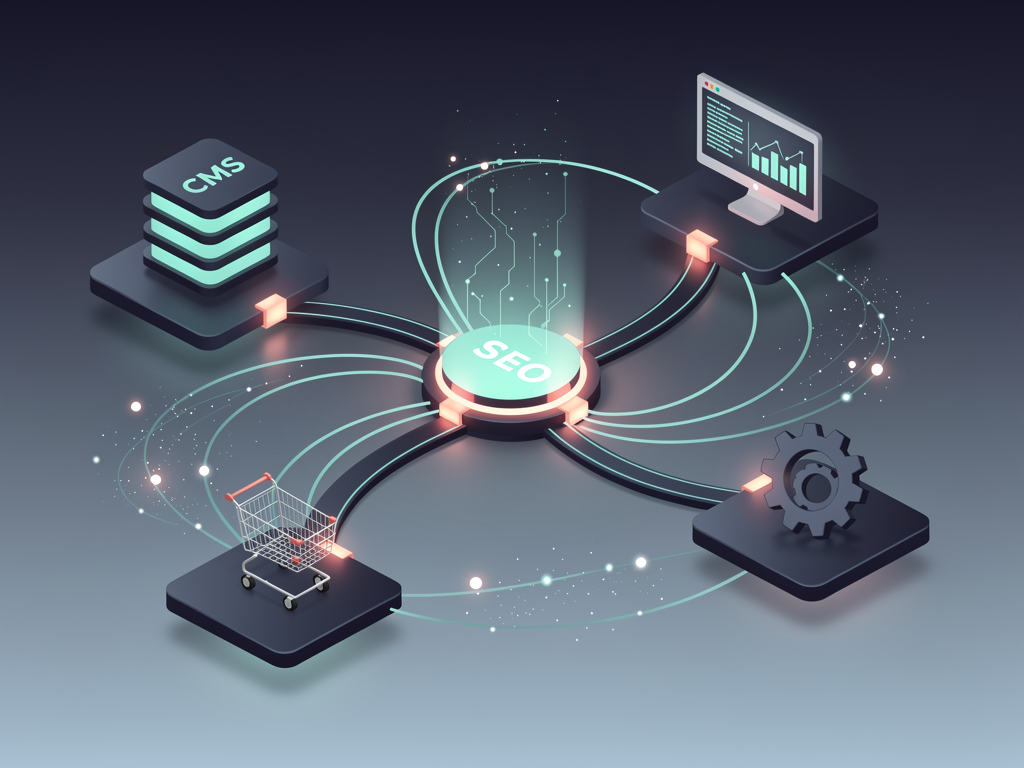
Google Search Console and Analytics integration should be considered mandatory for any serious SEO tool. These connections provide the ground truth data needed to validate tool recommendations and measure actual performance impact. Tools that cannot import Search Console data operate with incomplete information that limits their effectiveness.
Common Pitfalls and How to Avoid Them
Even the best AI SEO tools can lead you astray if used incorrectly. Understanding common pitfalls helps you extract maximum value while avoiding costly mistakes that can harm your search performance.
Over-reliance on AI-generated content remains the most significant risk. While AI writing tools have improved dramatically, they still produce content that requires human review and editing. AI can hallucinate facts, miss nuances in your brand voice, and produce generic content that fails to differentiate you from competitors. Always treat AI output as a first draft that requires human refinement, not finished content ready for publication.
Chasing metrics instead of outcomes leads many practitioners to optimize for tool scores rather than actual search performance. A perfect Surfer SEO score means nothing if your content fails to engage readers or convert visitors. Use optimization scores as guides, not absolutes, and always prioritize user experience and business outcomes over arbitrary metrics.
Tool hopping without mastery wastes budget and prevents you from extracting full value from any platform. Most SEO tools require weeks or months of consistent use to master their capabilities and integrate them effectively into your workflows. Resist the temptation to switch tools frequently based on marketing hype. Instead, commit to learning your chosen platforms deeply before evaluating alternatives.
Warning: AI SEO tools can amplify bad strategies as easily as good ones. If your fundamental approach is flawed, automation will simply help you execute that flawed approach more efficiently. Ensure your SEO strategy is sound before investing heavily in tools to scale it.
Future Trends: What to Expect in 2027 and Beyond
The AI SEO landscape continues evolving rapidly, with several trends likely to shape tool development in the coming years. Understanding these trends helps you make investment decisions that remain relevant as the industry changes.

Deeper AI search integration will become essential as ChatGPT, Perplexity, and similar platforms capture more search traffic. Tools that track and optimize for AI visibility will move from nice-to-have to must-have status. Expect major platforms to add AI visibility features and specialized tools in this category to mature rapidly.
Increased automation and autonomy will continue as AI capabilities improve. The distinction between tools that diagnose issues and those that fix them will become more pronounced, with autonomous platforms gaining market share from traditional diagnostic tools. Businesses will increasingly expect their SEO tools to take action, not just generate reports.
Multimodal optimization will grow in importance as search engines better understand images, video, and audio content. Tools that help optimize visual and multimedia content for search will become more valuable as these formats gain prominence in search results and AI-generated answers.
Privacy and compliance features will become standard as regulations evolve and users demand greater control over their data. SEO tools will need to balance data collection for optimization with privacy requirements, potentially limiting some capabilities while opening new approaches to privacy-first optimization.
Conclusion
The AI SEO tool landscape in 2026 offers unprecedented capabilities for businesses of all sizes to compete effectively in organic search. From comprehensive all-in-one platforms like Semrush and Ahrefs to specialized content optimization tools like Surfer SEO and Clearscope, practitioners have access to sophisticated technology that was unimaginable just a few years ago. The emergence of AI visibility tracking represents a particularly significant development, as conversational AI platforms capture an increasing share of information-seeking behavior.
Success with these tools requires strategic selection based on your specific needs and budget, combined with commitment to learning and integrating chosen platforms into your workflows. Avoid the temptation to subscribe to every promising tool, instead focusing on building a coherent stack that addresses your most significant gaps. Remember that tools amplify strategy rather than replace it, so ensure your fundamental SEO approach is sound before investing heavily in automation.
The most important trend to watch involves the shift from diagnostic tools to autonomous agents that implement fixes without manual intervention. As these platforms mature, they will fundamentally change how businesses approach SEO, making sophisticated optimization accessible to organizations that previously lacked the expertise or resources to compete effectively. Whether you choose traditional tools enhanced with AI or embrace fully autonomous platforms, the key is taking action now to build capabilities that will define competitive advantage in the years ahead.

Frequently Asked Questions
What is the best AI SEO tool for beginners with limited budgets?
For beginners working with limited budgets, SE Ranking offers the best combination of comprehensive features and accessible pricing, starting at $44 monthly with modular options that let you pay only for capabilities you need. The platform includes keyword research, rank tracking, site auditing, and content optimization in an interface designed for users without extensive SEO experience. Complement SE Ranking with ChatGPT Plus at $20 monthly for content assistance, and use free tools like Google Search Console and Screaming Frog's free tier for additional capabilities. This combination provides professional-grade functionality for under $75 monthly, making it accessible for small business owners and freelancers. As your skills and budget grow, you can upgrade to more powerful platforms like Ahrefs or Semrush that offer deeper data and more sophisticated features.
How do AI SEO tools compare to hiring an SEO agency or consultant?
AI SEO tools and human expertise serve complementary rather than competing roles. Tools excel at data processing, pattern recognition, and automating repetitive tasks that would take humans hours or days to complete manually. They can crawl thousands of pages, analyze millions of keywords, and monitor rankings continuously without fatigue. However, tools cannot replace strategic thinking, creative problem-solving, and the nuanced judgment that experienced SEO professionals bring. The most effective approach combines both: use AI tools to handle data-intensive tasks and surface insights, while relying on human expertise for strategy development, content creation oversight, and complex technical decisions. For businesses with limited budgets, tools can reduce the hours required from consultants, making professional SEO guidance more affordable. Agencies increasingly use AI tools to deliver better results more efficiently, passing some savings to clients while improving outcomes.
Are AI-generated articles effective for SEO in 2026?
AI-generated articles can be effective for SEO when used correctly, but they require significant human oversight to achieve optimal results. Search engines have become sophisticated at identifying low-quality AI content that lacks originality, depth, or genuine expertise. The most successful approach treats AI as a drafting assistant rather than a replacement for human writers. Use AI to generate initial drafts, research synthesis, and structural suggestions, then invest human effort in adding unique insights, verifying facts, refining voice, and ensuring the content genuinely serves reader needs. Google's helpful content guidelines emphasize expertise, experience, authoritativeness, and trustworthiness, qualities that AI alone struggles to demonstrate. Articles that combine AI efficiency with human expertise consistently outperform both purely AI-generated content and purely human-written content that lacks AI-assisted optimization. The key is finding the right balance for your specific situation and audience expectations.
How important is AI visibility tracking compared to traditional SEO?
AI visibility tracking has become increasingly important but does not replace traditional SEO. Current estimates suggest that conversational AI platforms like ChatGPT and Perplexity handle a growing but still minority share of information-seeking queries, with traditional search engines remaining dominant for most commercial and transactional searches. However, AI search usage is growing rapidly, particularly among younger demographics and for certain query types like research, comparisons, and recommendations. The strategic approach is to maintain strong traditional SEO while building AI visibility capabilities. Content that ranks well in traditional search often performs well in AI citations because both reward authoritative, comprehensive, well-structured content. Tools like Ahrefs Brand Radar help you understand where you stand in AI search and identify opportunities to improve visibility. For most businesses, allocate 80% of SEO effort to traditional optimization and 20% to AI visibility, adjusting as the landscape evolves.
What integrations should I prioritize when selecting AI SEO tools?
Prioritize integrations based on your specific technology stack and workflow requirements. At minimum, ensure any SEO tool integrates with Google Search Console and Google Analytics, as these provide the ground truth data needed to validate recommendations and measure results. If you use WordPress, Shopify, Webflow, or another CMS, verify that your chosen tools offer native integrations that support both reading site data and writing changes back. Bidirectional integrations that can publish optimized content or update meta tags directly provide significantly more value than read-only connections. For agencies, look for integrations with project management tools, reporting platforms, and client communication systems. Consider API availability for custom integrations if you have development resources. Finally, evaluate how tools integrate with each other, as many practitioners use multiple specialized tools that need to share data. Platforms like Surfer SEO integrating with Jasper, or Semrush connecting with Google Data Studio, create workflows that multiply the value of individual tools.
How often should I audit and potentially change my AI SEO tool stack?
Conduct a comprehensive tool stack audit annually, with lighter quarterly reviews to ensure tools continue meeting your needs. The annual audit should evaluate whether each tool delivers value proportional to its cost, whether your needs have changed since initial selection, and whether new tools have emerged that better address your requirements. Quarterly reviews focus on usage patterns, identifying tools that have fallen out of regular use and might be candidates for elimination. Avoid changing tools impulsively based on marketing or competitor recommendations. Most SEO tools require months of consistent use to master, and frequent switching prevents you from extracting full value from any platform. When you do identify a need to change tools, plan the transition carefully, including data export, team training, and workflow adjustment. Consider running old and new tools in parallel during transition periods to ensure continuity and validate that the new tool actually delivers promised improvements before fully committing.
Ready to Transform Your Content Strategy?
If you are looking for a comprehensive solution that handles the entire content lifecycle from keyword research through publication and backlink building, explore SeoSmart's AI-powered content platform. The platform creates brand-tailored articles up to 5,000 words with images, internal links, and YouTube videos, publishes them automatically to your CMS, and builds backlinks through an integrated exchange network. With Content Sprint subscriptions offering 30 or 60 articles monthly on autopilot, you can focus on strategy while AI handles execution. Start with 500 free credits to experience how automated content production can accelerate your SEO results.
Subscribe to our newsletter
Subscribe to our newsletter and stay up-to-date with the latest news and updates.