Discover the Best SEO Tools for Automated Content in 2026
Explore how AI-powered SEO tools in 2026 transform content creation, offering end-to-end automation from keyword research to publishing. Learn how these platforms can help you scale your digital presence efficiently and cost-effectively.

Zakariae

The search engine optimization landscape has transformed dramatically over the past few years, with artificial intelligence reshaping how content creators, marketers, and business owners approach organic visibility. Finding the best search engine optimization tool for automated content creation has become essential for anyone serious about scaling their digital presence without sacrificing quality or burning through budgets on manual production. Whether you manage SEO for multiple clients, run an e-commerce store requiring constant blog updates, or build niche affiliate sites, the right automation platform can mean the difference between struggling to publish consistently and dominating your target keywords with a steady stream of optimized articles.
Key Takeaways
- AI-powered SEO tools in 2026 can generate comprehensive, long-form articles with images, internal links, and embedded videos, dramatically reducing production time from days to minutes.
- Automation platforms now offer end-to-end workflows that handle everything from keyword research and content planning to publishing and backlink building without manual intervention.
- Content quality has improved significantly with advanced language models like Claude Opus producing human-quality writing that passes both reader scrutiny and search engine evaluation.
- Integration capabilities matter more than ever, with top platforms connecting directly to WordPress, Webflow, Shopify, and other content management systems for one-click publishing.
- Backlink exchange networks built into modern SEO platforms provide sustainable link-building opportunities that would otherwise require extensive outreach efforts.
- Multilingual support has expanded to 150+ languages, enabling businesses to scale content globally without hiring native speakers for each market.
- Sprint subscription models offering 30-60 articles per month have emerged as cost-effective alternatives to per-article pricing for high-volume content needs.
The Evolution of SEO Content Automation
The journey from basic article spinners to sophisticated AI content platforms represents one of the most significant shifts in digital marketing history. Early automation tools produced barely readable content that search engines quickly learned to identify and penalize. Today's platforms leverage advanced neural networks trained on billions of high-quality documents, producing articles that often surpass what average human writers create in terms of comprehensiveness, accuracy, and optimization.
According to recent industry analysis, the best AI SEO tools in 2026 combine multiple capabilities that previously required separate subscriptions and manual coordination. Platforms like Semrush One have expanded beyond traditional keyword research into AI-powered content generation, while specialized tools focus exclusively on creating and publishing optimized articles at scale. This consolidation means marketers can now manage entire content operations from single dashboards rather than juggling dozens of disconnected applications.
The shift toward automation has been driven by several converging factors. Content velocity requirements have increased as search engines favor fresh, regularly updated websites. Competition for organic visibility has intensified across virtually every niche. Meanwhile, the cost of hiring skilled human writers has risen while their availability has decreased. These pressures have made automation not just attractive but necessary for businesses serious about SEO success.

Understanding What Modern SEO Tools Actually Deliver
Before diving into specific platforms and features, it helps to understand what distinguishes truly useful SEO automation from marketing hype. The most effective tools address the complete content lifecycle rather than just one piece of the puzzle. This means handling topic ideation, keyword research, content creation, image generation, internal linking, publishing, and even promotion through backlink building.
Content quality remains the primary differentiator between platforms. While nearly every tool claims to produce "human-quality" writing, the reality varies dramatically. The best platforms use premium language models like Claude Opus or GPT-4 variants that understand context, maintain consistent tone throughout long-form pieces, and naturally incorporate keywords without awkward stuffing. Lesser tools still produce content that reads mechanically, fails to address search intent properly, or contains factual errors that damage credibility.
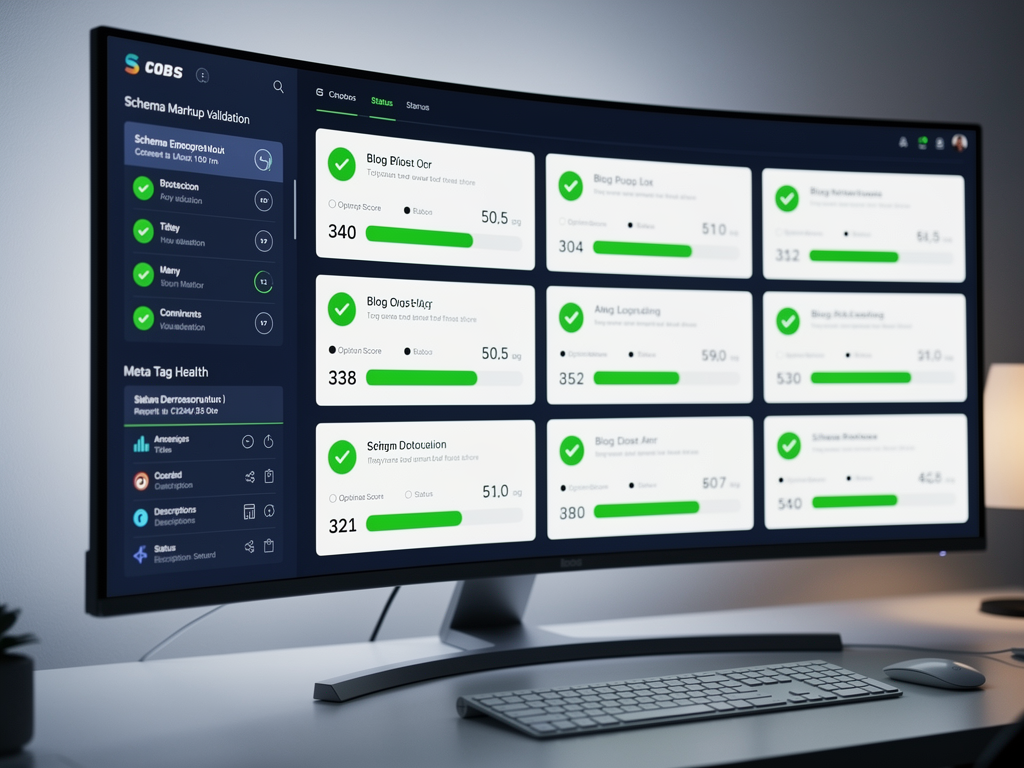
Technical SEO integration represents another crucial capability. Top-tier platforms automatically generate schema markup, optimize meta titles and descriptions, create proper heading hierarchies, and ensure content meets Core Web Vitals requirements. This behind-the-scenes optimization saves hours of manual work while ensuring articles are fully prepared for search engine crawling from the moment they publish.
The publishing workflow itself has become increasingly sophisticated. Rather than generating content that requires manual copying and formatting, leading platforms connect directly to content management systems. SeoSmart's automated publishing features exemplify this approach, offering one-click deployment to WordPress, Webflow, Shopify, and other popular platforms while maintaining proper formatting, images, and internal links throughout the transfer process.
Sprint Subscriptions Versus Credit-Based Pricing Models
The pricing structure of SEO automation tools significantly impacts their practical value for different user types. Two primary models have emerged: sprint subscriptions that provide fixed monthly article allotments, and credit-based systems where users purchase credits consumed by various actions like keyword research, content generation, or image creation.
Sprint subscriptions work exceptionally well for businesses with predictable, high-volume content needs. A 30-article monthly plan suits most small to medium businesses maintaining active blogs, while 60-article plans serve agencies managing multiple client accounts or large e-commerce operations requiring extensive product-related content. The predictability of fixed monthly costs simplifies budgeting and eliminates the anxiety of watching credit balances deplete unexpectedly.
Credit-based systems offer flexibility for users with variable content needs. Freelance SEO consultants might need heavy keyword research one month and minimal content production the next. Seasonal businesses may require content bursts before peak periods followed by maintenance-level activity. Credits accommodate these patterns without forcing payment for unused capacity during slow periods.
Pro Tip: Many platforms offer hybrid approaches. Look for tools that provide sprint subscriptions for core content production while including credit allocations for supplementary features like keyword research and competitor analysis. This combination delivers the best of both worlds for most users.
The economics become particularly compelling when comparing automated content costs against traditional alternatives. Hiring freelance writers for 5,000-word SEO articles typically costs $200-500 per piece, with additional expenses for editing, image sourcing, and publishing. Automated platforms can produce equivalent content for a fraction of this cost while eliminating turnaround delays and quality inconsistencies.
Critical Features That Separate Leaders From Laggards
Not all SEO automation platforms deliver equal value, and understanding which features actually matter helps avoid expensive mistakes. Based on extensive testing across dozens of tools, certain capabilities consistently separate genuinely useful platforms from those that overpromise and underdeliver.
Knowledge Base Integration
The ability to train AI on your specific business, products, and brand voice transforms generic content into material that genuinely represents your organization. Platforms offering unlimited knowledge base storage allow you to upload existing content, product documentation, style guides, and competitor research that the AI references when generating new articles. This context awareness produces content that sounds like your brand rather than generic AI output.
Deduplication and Topic Management
Sophisticated platforms analyze your existing content library before generating new articles, preventing the common problem of creating pieces that compete with or cannibalize your own rankings. This deduplication extends to suggested topics, ensuring content plans focus on gaps in your coverage rather than redundant material.
Image Generation and Embedding
Visual content significantly impacts both user engagement and search performance. Leading platforms integrate AI image generation directly into the content workflow, producing relevant visuals that complement articles without requiring separate subscriptions to image tools or time-consuming stock photo searches. The best implementations, like those using FLUX.2 Pro, create images that look professionally produced rather than obviously AI-generated.

Video Integration
YouTube video embedding has become standard practice for comprehensive content, improving dwell time and providing additional value to readers. Automated platforms that intelligently identify and embed relevant videos save considerable research time while enriching articles with multimedia elements that search engines increasingly favor.
Internal Linking Automation
Building proper internal link structures manually becomes impractical at scale. The best platforms analyze your content library and automatically insert relevant internal links throughout new articles, strengthening site architecture and distributing link equity without requiring manual link insertion for every piece.
The Backlink Challenge and Automated Solutions
Content creation represents only half the SEO equation. Without backlinks from authoritative external sources, even perfectly optimized articles struggle to rank for competitive keywords. Traditional link building requires extensive outreach, relationship development, and often significant financial investment in guest posting or sponsored content opportunities.
Modern SEO platforms have begun addressing this challenge through backlink exchange networks that connect users with complementary websites. These systems facilitate reciprocal linking arrangements where participants provide links to each other's content, creating win-win scenarios that would otherwise require individual negotiation with each potential link partner.
The backlink exchange network available through SeoSmart exemplifies this approach, offering unlimited participation on paid plans without consuming credits. Users submit their content to the network, receive links from relevant sites within the ecosystem, and reciprocate by linking to appropriate content from other participants. This automated matching and management eliminates the manual outreach that traditionally consumes enormous time and energy.
Quality controls within these networks matter significantly. The best implementations verify participant site quality, ensure topical relevance between linked content, and prevent spam-like patterns that could trigger search engine penalties. Look for networks that maintain editorial standards rather than simply connecting any willing participants regardless of site quality.
Comparing Top SEO Automation Platforms
The market offers numerous options for automated SEO content, each with distinct strengths and limitations. Understanding how leading platforms compare helps identify the best fit for specific use cases and requirements.
| Platform | Best For | Article Length | Key Differentiator | Starting Price |
|---|---|---|---|---|
| SeoSmart | Hands-free publishing at scale | Up to 5,000 words | Sprint subscriptions with backlink exchange | Free tier available |
| Surfer AI | Content optimization | Varies | Real-time SERP analysis | $89/month |
| Semrush One | Enterprise SEO teams | Varies | Comprehensive SEO suite integration | $139/month |
| Koala AI | Budget-conscious bloggers | Up to 3,000 words | Affordable per-article pricing | Pay per article |
| Search Atlas | Agencies seeking alternatives | Varies | OTTO AI automation agent | $99/month |
Each platform targets slightly different user profiles. Agencies managing multiple client websites benefit from platforms offering white-label capabilities and bulk management features. Solo entrepreneurs and small business owners often prioritize ease of use and all-inclusive pricing over advanced customization. E-commerce operations need strong product content capabilities and direct integration with shopping platforms.
The trend toward comprehensive platforms that handle the entire content workflow continues accelerating. Rather than cobbling together separate tools for keyword research, content creation, image generation, and publishing, users increasingly prefer unified solutions that manage everything from a single interface. This consolidation reduces complexity, eliminates integration headaches, and typically costs less than maintaining multiple specialized subscriptions.
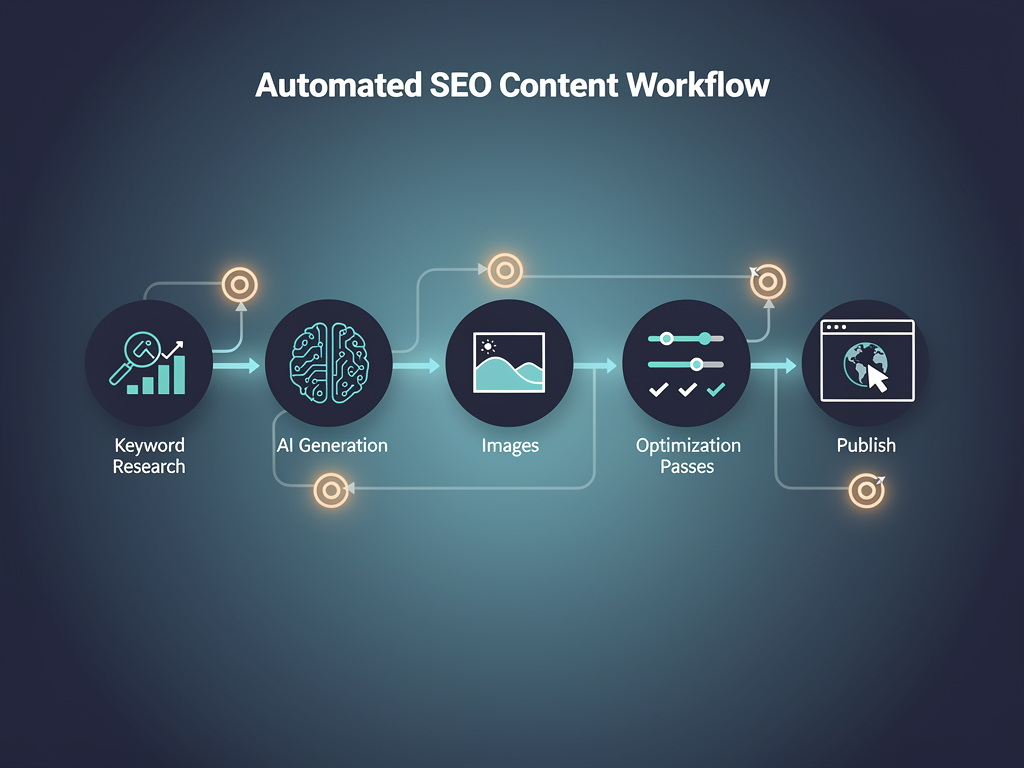
Workflow Automation: From Keyword to Published Article
Understanding how automated workflows actually function helps set realistic expectations and identify platforms that genuinely deliver on automation promises. The most sophisticated systems require minimal human intervention once configured, though strategic oversight remains important for maintaining quality and relevance.
Step One: Content Planning
Automated content planning begins with analyzing your website, existing content, and competitive landscape. AI systems identify keyword opportunities, suggest topics that fill gaps in your coverage, and prioritize based on search volume, competition levels, and relevance to your business objectives. The best platforms deduplicate suggestions against your existing content to prevent cannibalization.
Step Two: Article Generation
Once topics are approved, AI generates comprehensive articles following your specified parameters. This includes target word count, tone of voice, keyword integration requirements, and structural preferences. Advanced platforms reference your knowledge base to ensure content accurately represents your products, services, and brand positioning.
Step Three: Enhancement and Optimization
Generated articles receive automatic enhancement including AI image generation, YouTube video embedding, internal link insertion, schema markup application, and meta description creation. These elements would require significant manual effort to add individually but happen automatically in well-designed platforms.
Step Four: Review and Approval
Quality-focused platforms include human review stages before publishing. This allows editors to verify accuracy, adjust tone where needed, and ensure content meets brand standards. While automation handles the heavy lifting, human oversight catches edge cases and maintains quality consistency.
Step Five: Publishing and Promotion
Approved content publishes directly to connected CMS platforms with proper formatting preserved. Scheduling capabilities allow spreading publication across optimal times rather than dumping all content simultaneously. Backlink exchange participation begins automatically for platforms offering this feature, initiating the off-page SEO process without additional manual effort.
Multilingual Content at Scale
Global businesses face particular challenges scaling content across multiple languages and markets. Traditional approaches require either hiring native speakers for each target language or relying on translation services that often miss cultural nuances and SEO optimization requirements specific to each market.
Modern AI platforms have dramatically improved multilingual capabilities, with leading tools supporting 150+ languages while maintaining natural-sounding output that resonates with native speakers. This goes beyond simple translation to include localization of examples, cultural references, and keyword optimization for each target market's search behavior.
The economic impact of multilingual automation proves substantial for international businesses. Creating content in 10 languages traditionally required either 10 separate writing teams or extensive translation and localization budgets. Automated platforms can generate optimized content in all target languages simultaneously, reducing costs by 80-90% while accelerating time-to-market from weeks to hours.
Quality verification remains important for multilingual content. While AI has improved dramatically, having native speakers review content before publication in high-stakes markets protects against embarrassing errors. Many businesses adopt a hybrid approach: automated generation for volume content with human review for flagship pieces and sensitive markets.
Technical SEO Features That Matter
Beyond content creation, the best SEO automation platforms address technical optimization requirements that significantly impact search performance. These features often receive less marketing attention than content generation but deliver substantial value for users serious about ranking improvement.
Schema Markup Automation
Structured data helps search engines understand content context and can enable rich snippets that improve click-through rates. Manually implementing schema markup requires technical knowledge and significant time investment. Automated platforms generate appropriate schema for articles, FAQs, how-to content, and other formats without requiring user intervention.
Meta Title and Description Generation
Compelling meta titles and descriptions directly impact organic click-through rates, yet many content creators treat them as afterthoughts. AI-powered generation creates optimized meta content that incorporates target keywords while remaining engaging and within character limits. A/B testing capabilities in advanced platforms allow comparing different meta approaches to identify what resonates with specific audiences.
Content Freshness Management
Search engines favor regularly updated content, but manually reviewing and refreshing existing articles consumes enormous time. Some platforms now offer content monitoring that identifies pieces losing rankings or becoming outdated, then either alerts users or automatically generates updates to maintain relevance and performance.
Site Architecture Optimization
Internal linking patterns and content organization significantly influence how search engines understand and rank websites. Advanced platforms analyze site structure and suggest or implement improvements including hub-and-spoke content organization, proper anchor text distribution, and orphan page identification.
Content Quality: Separating Hype From Reality
Perhaps no aspect of SEO automation generates more skepticism than content quality claims. Years of experience with low-quality article spinners and early AI tools have rightfully made marketers cautious about automated content. Understanding what modern platforms actually produce helps set appropriate expectations.
The latest language models represent a genuine leap forward in AI writing capability. Claude from Anthropic and similar advanced models produce content that professional editors often cannot distinguish from skilled human writing. These models understand context, maintain consistent arguments throughout long-form pieces, and naturally vary sentence structure and vocabulary in ways that earlier AI could not achieve.
However, AI content still has limitations worth acknowledging. Original research, personal anecdotes, and unique insights remain human domains. AI excels at synthesizing existing information, explaining concepts clearly, and creating comprehensive coverage of topics, but cannot conduct interviews, share genuine experiences, or provide truly novel perspectives. The best content strategies combine AI efficiency for foundational content with human creativity for thought leadership pieces.
Search engines have become increasingly sophisticated at evaluating content quality. Google's helpful content updates specifically target low-value, mass-produced material regardless of whether humans or AI created it. This means quality thresholds apply equally to all content, making the choice of AI platform and proper configuration crucial for avoiding penalties.
Important: The goal is not to create content that "tricks" search engines into thinking AI wrote it. The goal is creating genuinely valuable content that serves user needs, with AI handling the production efficiency. This mindset shift separates successful AI content strategies from those that eventually face algorithmic penalties.
Use Cases: Who Benefits Most From SEO Automation
While SEO automation offers value across many contexts, certain user profiles benefit disproportionately from these tools. Understanding where automation delivers the greatest impact helps prioritize adoption and set appropriate expectations.
SEO Agencies and Consultants
Agencies managing content for multiple clients face constant pressure to deliver volume without sacrificing quality or profitability. Automated platforms allow scaling content production without proportionally increasing headcount. Client-specific knowledge bases ensure each account receives appropriately branded content while centralized management simplifies oversight across the portfolio.
E-commerce Operations
Online stores require extensive content including product descriptions, category pages, buying guides, and blog posts targeting informational queries. The sheer volume needed makes manual creation impractical for most operations. Automation handles this volume while maintaining consistency across thousands of pages and integrating directly with e-commerce platforms like Shopify.

Affiliate and Niche Site Builders
Affiliate marketers building content sites around specific niches need to establish topical authority quickly. This requires publishing comprehensive content coverage faster than competitors while maintaining quality standards that earn both rankings and reader trust. Automation enables the publication velocity needed to compete while keeping costs manageable during the pre-revenue growth phase.
B2B Content Marketing Teams
B2B companies often struggle with content production bottlenecks as subject matter experts lack time to write and marketing teams lack technical depth. AI platforms can generate technically accurate content when properly configured with knowledge bases containing product documentation, industry terminology, and brand guidelines. This frees experts to review and refine rather than create from scratch.
SaaS Companies
Software companies require constant content production to support SEO, customer education, and thought leadership objectives. Documentation, tutorials, feature announcements, and industry commentary all compete for limited content resources. Automation handles routine content needs while human writers focus on strategic pieces requiring original insight.
Implementation Best Practices
Successfully deploying SEO automation requires more than simply subscribing to a platform and clicking generate. Following proven implementation practices maximizes value while avoiding common pitfalls that undermine results.
Start With Knowledge Base Development
Before generating any content, invest time building comprehensive knowledge bases that teach the AI about your business. Upload existing high-performing content, product documentation, competitor analysis, brand guidelines, and any other material that helps the AI understand your context. This upfront investment pays dividends through every subsequent piece of content.
Establish Quality Standards and Review Processes
Define clear quality criteria before beginning production. What tone should content maintain? What accuracy standards apply? What topics require human review versus automatic publishing? Documenting these standards ensures consistency as production scales and provides clear guidance for anyone reviewing automated content.
Begin With Lower-Stakes Content
Test automation on content categories where mistakes carry limited consequences before deploying for high-visibility pieces. Blog posts targeting long-tail keywords make excellent starting points, allowing you to evaluate quality and refine processes before automating content for competitive head terms or critical conversion pages.

Monitor Performance and Iterate
Track how automated content performs compared to manually created pieces. Monitor rankings, traffic, engagement metrics, and conversion rates. Use this data to refine prompts, adjust knowledge bases, and identify content types where automation excels versus those requiring more human involvement.
Maintain Human Oversight
Even the best automation benefits from human oversight. Establish review workflows appropriate to your risk tolerance and content volume. Some organizations review every piece before publication while others spot-check samples and rely on performance monitoring to catch issues. Find the balance that works for your situation.
Common Mistakes to Avoid
Learning from others' mistakes accelerates success with SEO automation. Several pitfalls consistently trap new users, and awareness helps avoid these common errors.
Prioritizing Quantity Over Quality
The ability to generate content quickly tempts many users into publishing everything the AI produces without adequate quality control. This approach inevitably leads to thin content, factual errors, and eventually algorithmic penalties. Maintain quality standards even when production capacity exceeds review capacity.
Ignoring Brand Voice Consistency
Generic AI content sounds generic. Without proper knowledge base configuration and prompt engineering, automated content lacks the distinctive voice that builds brand recognition and reader loyalty. Invest in teaching the AI your brand's personality rather than accepting default output.
Neglecting Internal Linking Strategy
Automated internal linking features work best when guided by intentional site architecture plans. Random linking between topically related content provides some value, but strategic hub-and-spoke structures with planned linking patterns deliver significantly better results. Define your content architecture before relying on automated linking.
Failing to Update Knowledge Bases
Initial knowledge base setup is not a one-time task. As your business evolves, products change, and industry developments occur, knowledge bases require updates to keep AI-generated content accurate and relevant. Schedule regular knowledge base reviews as part of your content operations.

Expecting Immediate Results
SEO remains a long-term game regardless of how content is produced. Automated platforms accelerate content production but cannot accelerate the time search engines need to crawl, index, and rank new pages. Set realistic timeline expectations and measure success over months rather than days.
Future Trends in SEO Automation
The SEO automation landscape continues evolving rapidly, with several emerging trends likely to shape capabilities over the coming years. Understanding these directions helps make platform choices that remain relevant as the market develops.
AI Search Visibility Optimization
As AI-powered search interfaces like Perplexity and Google's AI Overviews gain usage share, optimizing for AI citation becomes increasingly important. Forward-looking platforms are beginning to track how content appears in AI search results and optimize specifically for this emerging channel alongside traditional SERP rankings.
Deeper CMS Integration
Current one-click publishing represents just the beginning of CMS integration possibilities. Future platforms will likely offer deeper connections including automatic A/B testing of headlines, dynamic content personalization, and real-time optimization based on user engagement signals.
Predictive Content Planning
AI analysis of search trends, competitor movements, and industry developments will enable increasingly sophisticated content planning that anticipates opportunities before they become obvious. Platforms offering predictive capabilities will help users capture emerging keywords before competition intensifies.
Enhanced Multimedia Generation
Current image generation capabilities will expand to include video creation, interactive elements, and other rich media formats. As search engines increasingly favor multimedia content, automation platforms that generate complete multimedia packages will deliver significant advantages.
Measuring ROI From SEO Automation
Justifying investment in SEO automation requires clear ROI measurement frameworks. Several metrics help quantify the value these platforms deliver beyond simple content production efficiency.
Content Production Cost Comparison
Calculate your current cost per published article including writer fees, editing, image sourcing, formatting, and publishing time. Compare this against automated content costs including platform subscription, review time, and any necessary revisions. Most organizations see 60-80% cost reductions while maintaining or improving quality.
Time to Publication
Measure how long content takes from topic identification to live publication under manual versus automated workflows. Automation typically reduces this timeline from weeks to hours, enabling faster response to trending topics and competitive movements.

Ranking Velocity
Track how quickly new content achieves target rankings under automated versus manual production. Higher publication velocity often translates to faster topical authority development and improved ranking performance across entire content clusters.
Traffic and Conversion Impact
Ultimately, SEO automation should drive business results. Monitor organic traffic growth, lead generation, and revenue attribution to content produced through automated platforms. This bottom-line measurement provides the clearest picture of automation value.
Getting Started With SEO Automation
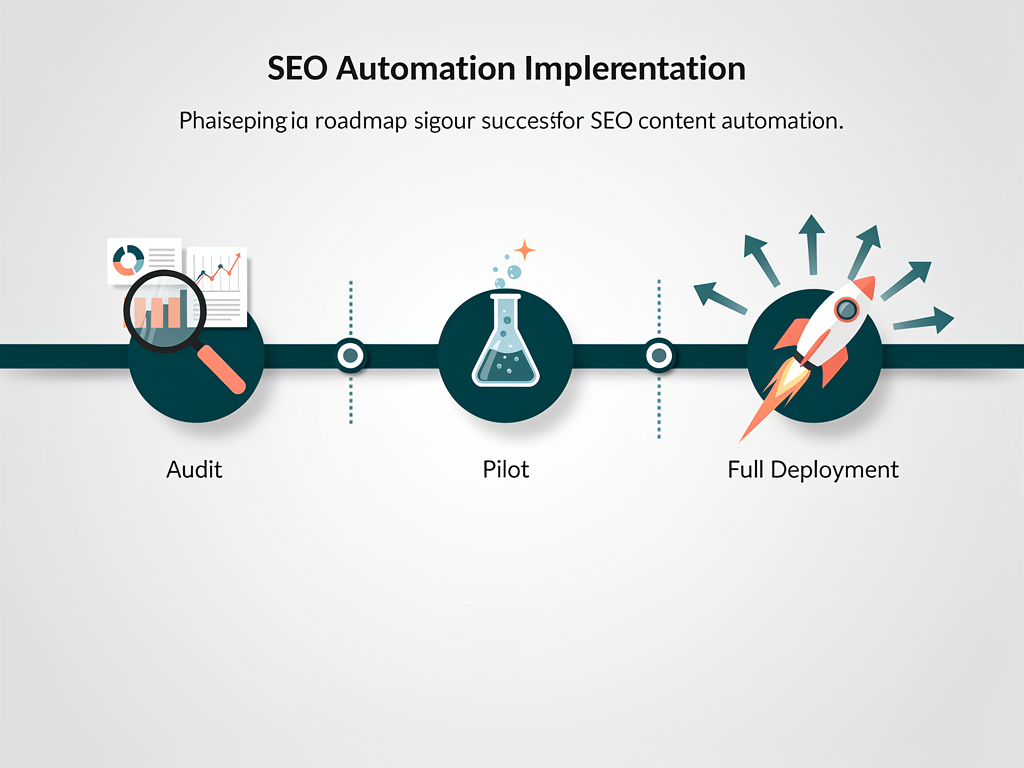
For those ready to explore SEO automation, a structured approach maximizes chances of success while minimizing risk. Follow this progression to build automation capabilities systematically.
Audit Current Content Operations
Document your existing content production workflow including all steps, tools, people involved, and time requirements. Identify bottlenecks, quality issues, and capacity constraints. This baseline enables meaningful comparison after implementing automation.
Define Automation Objectives
Clarify what you want automation to achieve. Are you primarily seeking cost reduction, increased publication velocity, quality improvement, or some combination? Clear objectives guide platform selection and implementation priorities.
Evaluate Platform Options
Test multiple platforms using free trials or starter tiers before committing to subscriptions. Generate sample content across your typical topic range and evaluate quality, ease of use, and feature completeness against your requirements.
Pilot With Limited Scope
Begin with a defined pilot project rather than attempting to automate everything immediately. A single content cluster or specific content type provides manageable scope for learning and refinement before broader rollout.
Scale Based on Results
Expand automation scope based on pilot results. Successful pilots justify broader deployment while disappointing results indicate need for platform changes, configuration adjustments, or revised expectations before proceeding.
Conclusion
The SEO automation landscape in 2026 offers unprecedented capabilities for businesses serious about organic visibility. Platforms like SeoSmart demonstrate how far the technology has advanced, delivering comprehensive 5,000-word articles with images, internal links, and video embeds while handling publishing and backlink building automatically. For SEO agencies, content marketers, e-commerce operators, and anyone else requiring consistent content production, these tools have moved from nice-to-have to essential infrastructure.
Success with SEO automation requires more than simply subscribing to a platform. Building comprehensive knowledge bases, establishing quality standards, implementing appropriate review processes, and maintaining realistic expectations all contribute to positive outcomes. The technology handles production efficiency brilliantly, but human strategy and oversight remain essential for directing that capability toward business objectives.
The competitive advantage available to early adopters of sophisticated SEO automation is significant but temporary. As these tools become standard practice, the advantage shifts from having automation to using it more effectively than competitors. Organizations that invest now in building automation capabilities and refining their approaches will be better positioned as the market matures and competition intensifies.

Frequently Asked Questions
Can AI-generated content actually rank well in search engines?
Yes, AI-generated content can rank exceptionally well when produced by quality platforms and properly optimized. Google has clarified that their guidelines focus on content quality and helpfulness rather than production method. Content that genuinely serves user needs, provides accurate information, and demonstrates expertise can rank regardless of whether humans or AI created it. The key factors are quality, relevance, and value to readers. Low-quality AI content faces the same penalties as low-quality human content. Platforms using advanced language models like Claude Opus produce content that consistently achieves strong rankings when targeting appropriate keywords and following SEO best practices. Many successful websites now rely heavily on AI content for their organic traffic.
How much does SEO content automation typically cost compared to hiring writers?
SEO automation platforms typically cost between $99-300 per month for plans producing 30-60 articles, translating to roughly $2-10 per article depending on the platform and plan selected. Comparable human-written content from skilled SEO writers costs $100-500 per 5,000-word article, plus additional expenses for editing, image sourcing, and publishing. This represents cost savings of 80-95% for most organizations. Beyond direct cost comparison, automation eliminates delays waiting for writer availability, inconsistency between different writers, and management overhead coordinating content production. The total cost of ownership strongly favors automation for organizations with consistent content volume requirements.
What happens if search engines penalize AI content in the future?
Search engines have consistently indicated they evaluate content quality rather than production method. Google's helpful content guidelines specifically state that AI assistance is acceptable when the result serves users well. The risk lies in low-quality content, not AI content specifically. Platforms producing genuinely valuable, accurate, well-optimized content face minimal penalty risk regardless of future algorithm changes. Organizations can mitigate concerns by maintaining human oversight, ensuring factual accuracy, adding unique insights where possible, and focusing on user value rather than pure volume. The content quality bar applies equally to all content, making quality-focused automation a sustainable long-term strategy.
How long does it take to see results from automated SEO content?
Timeline expectations for automated content mirror those for manually produced content since search engines treat both equally. New content typically begins appearing in search results within days to weeks after publication, with meaningful ranking positions developing over 2-6 months depending on keyword competition and domain authority. Automation accelerates content production but cannot accelerate search engine indexing and ranking processes. The advantage comes from publishing more content faster, building topical authority more quickly, and capturing opportunities before competitors. Organizations should plan for 3-6 months before expecting significant traffic impact from new automated content programs, though individual pieces may rank faster for lower-competition keywords.
Do I still need human writers if I use SEO automation?
Most organizations benefit from combining AI automation with selective human writing rather than choosing one exclusively. AI excels at comprehensive topic coverage, consistent production velocity, and handling high-volume content needs efficiently. Human writers remain valuable for thought leadership pieces requiring original insights, content based on personal experience or interviews, highly sensitive topics requiring nuanced judgment, and creative content where distinctive voice matters most. The optimal balance depends on your content strategy, budget, and quality requirements. Many successful organizations use automation for 70-80% of content volume while reserving human writers for strategic pieces that benefit from unique human perspectives and creativity.
What technical requirements do I need to use SEO automation platforms?
Modern SEO automation platforms operate as cloud-based software requiring only a web browser and internet connection. No special technical infrastructure, coding knowledge, or software installation is necessary for basic usage. Integration with content management systems like WordPress, Webflow, or Shopify requires administrator access to those platforms and typically involves installing a plugin or connecting via API keys, processes that most platforms guide users through step-by-step. More advanced customization may benefit from technical knowledge, but is not required for standard usage. Organizations with existing content workflows may need to adjust processes to incorporate automation, but this involves operational rather than technical changes. Most users can begin producing content within hours of signing up.
Ready to Transform Your Content Production?
If you are ready to experience the power of automated SEO content that actually ranks, SeoSmart offers 500 free credits to get started. Explore how sprint subscriptions can deliver 30-60 brand-tailored articles per month complete with AI-generated images, internal links, YouTube embeds, and automatic publishing to your CMS. Join the backlink exchange network to accelerate your off-page SEO without the manual outreach grind. Whether you manage content for clients, run an e-commerce operation, or build niche sites, discover why forward-thinking marketers are making SeoSmart their content automation platform of choice.
Subscribe to our newsletter
Subscribe to our newsletter and stay up-to-date with the latest news and updates.