Discover 10 AI Tools for SEO Content Beyond ChatGPT
Explore AI tools specifically designed for SEO content creation. Learn how they integrate keyword data, competitor analysis, and publishing automation for better rankings.

Zakariae

The search landscape has fundamentally changed. According to recent industry research, approximately 21% of Google keywords now trigger AI Overviews, and roughly 60% of searches end without a click to any website. Your audience is no longer just typing queries into traditional search engines. They are asking ChatGPT, Perplexity, Gemini, and Claude for recommendations before they ever visit your website. This shift demands a new approach to content creation, one that goes beyond basic text generation and addresses the complex requirements of modern SEO.
While ChatGPT revolutionized how we think about AI-assisted writing, it was never specifically designed for search engine optimization. The tool excels at general conversation and creative tasks, but it lacks the specialized features that SEO professionals need: real-time keyword data, competitor analysis, content optimization scoring, and integration with publishing platforms. For marketers serious about rankings, exploring chatgpt alternatives built specifically for SEO workflows has become essential to maintaining competitive advantage in an increasingly AI-driven search environment.
This comprehensive guide examines ten AI tools engineered specifically for SEO content creation. Whether you manage content for a B2B SaaS company, run an affiliate marketing operation, or handle SEO for e-commerce clients, you will find solutions tailored to your specific workflow requirements. We have evaluated each tool based on accuracy, pricing, integrations, ease of use, and most importantly, their ability to produce content that actually ranks.
Key Takeaways
Specialized SEO AI tools outperform general-purpose chatbots because they integrate real-time keyword data, competitor analysis, and optimization scoring directly into the content creation workflow.
The best tools combine content generation with publishing automation, allowing you to research, write, optimize, and publish without switching between multiple platforms.
AI visibility tracking has become essential as more searches occur through ChatGPT, Perplexity, and Google AI Overviews, requiring tools that monitor brand mentions across these new surfaces.
Content optimization features vary significantly between tools, with some focusing on NLP-based scoring while others emphasize topical authority and semantic relevance.
Pricing models range from credit-based systems to unlimited subscriptions, making it crucial to match your content volume needs with the right pricing structure.
Integration capabilities with WordPress, Webflow, and other CMS platforms dramatically reduce publishing friction and enable true content automation at scale.
Backlink building features are emerging in newer platforms, addressing the critical off-page SEO component that most AI writing tools ignore entirely.
Why General-Purpose AI Falls Short for SEO Content
ChatGPT and similar conversational AI tools were designed for broad applicability, not specialized SEO workflows. When you ask ChatGPT to write a blog post, it generates text based on its training data without any awareness of current search trends, keyword difficulty, or competitive content analysis. The output might read well, but it lacks the strategic foundation necessary for ranking success.
Consider the typical SEO content workflow. You need to identify target keywords with appropriate search volume and difficulty metrics. You must analyze competing content to understand what Google currently rewards for specific queries. You have to structure your content with proper heading hierarchies, internal linking strategies, and semantic keyword variations. Finally, you need to optimize meta titles, descriptions, and schema markup before publishing. General-purpose AI handles none of these tasks natively.
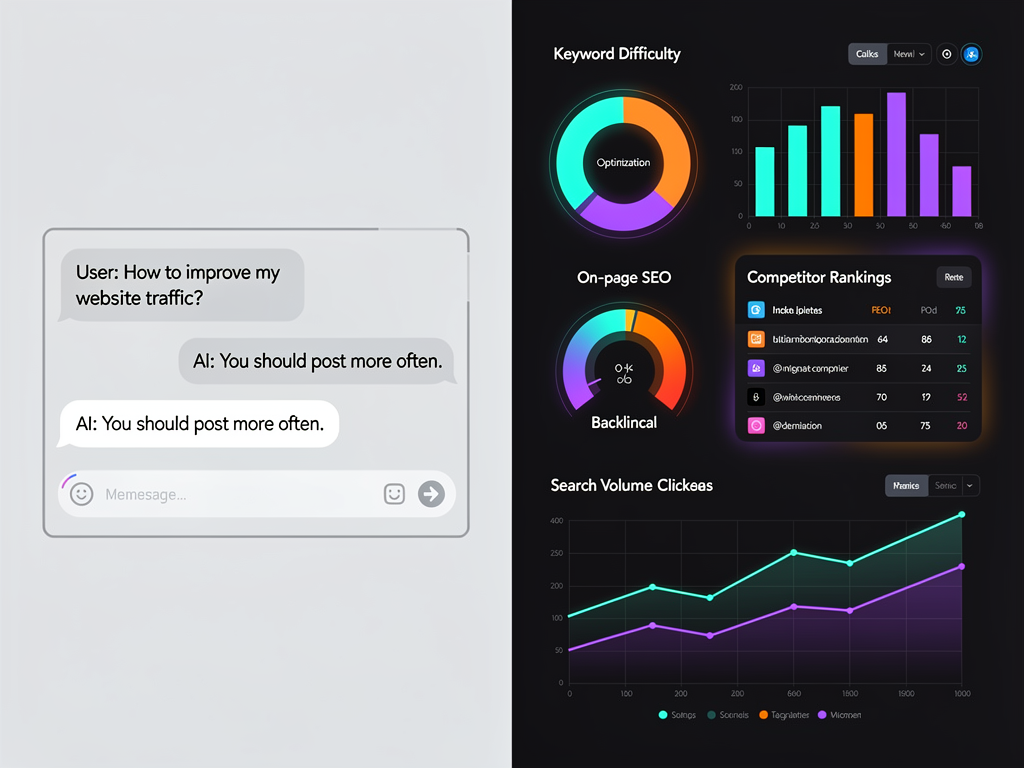
General AI tools versus specialized SEO platforms: the difference in actionable data
The knowledge cutoff problem compounds these limitations. ChatGPT's training data has a specific end date, meaning it cannot provide insights about recent algorithm updates, trending topics, or current competitive landscapes. SEO is inherently dynamic, with Google making thousands of algorithm adjustments annually. Tools built specifically for SEO connect to live data sources, ensuring your content strategy reflects current realities rather than outdated patterns.
Furthermore, general AI tools lack the ability to analyze your existing content, identify cannibalization issues, or suggest internal linking opportunities. They cannot audit your site's technical health or track how your content performs over time. For professionals managing multiple clients or large content operations, these gaps translate directly into inefficiency and missed opportunities.
Evaluation Criteria for SEO AI Tools
Before diving into specific tool recommendations, understanding the evaluation framework helps you make informed decisions aligned with your specific needs. We assessed each platform across five weighted categories that reflect real-world SEO workflow requirements.
AI-Native Functionality measures how deeply artificial intelligence integrates into the tool's core features. Does the AI simply generate text, or does it also power keyword research, content optimization, and competitive analysis? Tools scoring highest in this category use AI throughout the entire content lifecycle rather than bolting it onto existing functionality as an afterthought.
Data Accuracy and Freshness evaluates whether the tool provides reliable, current information. SEO decisions based on outdated or hallucinated data lead to wasted effort and poor results. We tested each tool's keyword metrics against known benchmarks and verified that competitive analysis reflected actual search results.
Workflow Integration considers how well the tool fits into existing processes. Can it publish directly to your CMS? Does it integrate with Google Search Console and Analytics? Tools that require manual export and import steps create friction that compounds across hundreds of content pieces.
Pricing Transparency and Value assesses whether the cost structure makes sense for different use cases. Some tools charge per word, others per article, and some offer unlimited plans. The right pricing model depends entirely on your content volume and team size.
Specialization Depth examines whether the tool truly understands SEO or merely generates content with keywords inserted. The best platforms incorporate entity optimization, topical authority building, and semantic relevance into their core algorithms.
SeoSmart: The Autopilot Content Platform
SeoSmart represents a new category of AI SEO tools that handle the entire content lifecycle from research through publication and link building. Unlike tools that stop at content generation, SeoSmart automates the complete workflow that typically requires multiple platforms and significant manual coordination.
The platform's Sprint subscription model sets it apart from credit-based competitors. With 30 or 60 articles per month on autopilot, content teams can establish consistent publishing cadences without worrying about credit depletion or per-article costs. The AI researches your niche, deduplicates topics against your existing content, and publishes according to your schedule.

SeoSmart's Sprint subscription automates monthly content planning and publication
Each article generated through SeoSmart reaches up to 5,000 words and includes AI-generated images, embedded YouTube videos, and internal linking suggestions. The platform supports over 150 languages, making it particularly valuable for businesses targeting international markets or managing multilingual content operations.
What truly differentiates SeoSmart is its integrated backlink exchange network. Most AI writing tools ignore off-page SEO entirely, leaving users to handle link building separately. SeoSmart's exchange network provides unlimited backlink opportunities on paid plans, addressing the critical ranking factor that content alone cannot solve.
The platform integrates directly with WordPress, Webflow, Shopify, and Ghost CMS through one-click publishing. Custom API access enables integration with proprietary systems. Schema markup automation ensures proper structured data without manual implementation, while daily article backups protect against content loss.
Best For: Content marketing managers, SEO agencies managing multiple clients, and SaaS companies requiring consistent content production with minimal manual intervention. For indie founders still validating their product idea, an AI-powered waitlist and survey tool for indie SaaS founders can help gather early signups before scaling content efforts.
Semrush One: Enterprise-Grade AI Visibility
Semrush has long dominated the traditional SEO tools market, and their One platform extends that leadership into the AI search era. The platform merges conventional keyword and backlink data with prompt-level AI search insights, allowing you to track brand visibility across Google, AI Overviews, ChatGPT, Gemini, and Perplexity from a single dashboard.
The AI Visibility Toolkit within Semrush One addresses a critical gap in most SEO strategies. With a database of over 261 million prompts across 32 countries, it provides the largest commercial dataset for understanding how AI engines discuss and recommend brands. Daily prompt tracking shows visibility shifts over time, while competitor share of voice benchmarking reveals where you stand relative to your category.
For content creation specifically, Semrush's Content Toolkit combines AI writing capabilities with their extensive SEO data. Unlike standalone AI writers, content generated through Semrush benefits from real-time keyword difficulty scores, search intent analysis, and competitive content gaps. The integration means you never leave the platform to gather the data necessary for strategic content decisions.
The Semrush MCP server inclusion deserves special mention. This feature allows users to pull live Semrush data directly into Claude, ChatGPT, or Cursor, enabling AI-assisted workflows that leverage Semrush's proprietary datasets. For agencies and enterprise teams, this capability transforms how AI tools interact with authoritative SEO data.
Feature | Semrush One | Standard Semrush |
|---|---|---|
Traditional SEO Toolkit | Included | Included |
AI Visibility Tracking | Included | Not Available |
Prompt Database Access | 261M+ prompts | Not Available |
MCP Server Integration | Included | Not Available |
Starting Price | $99/month add-on | $129.95/month |
Surfer SEO: Content Optimization Excellence
Surfer SEO has established itself as the industry standard for on-page content optimization. While many tools generate content, Surfer excels at ensuring that content meets the specific requirements Google rewards for any given keyword. The platform analyzes top-ranking pages and provides actionable recommendations for word count, heading structure, keyword density, and semantic terms.
The Content Editor serves as Surfer's flagship feature. As you write or paste content, real-time scoring shows how well your piece aligns with ranking factors for your target keyword. The interface highlights missing terms, suggests structural improvements, and tracks optimization progress. For teams producing content at scale, this immediate feedback loop dramatically reduces revision cycles.
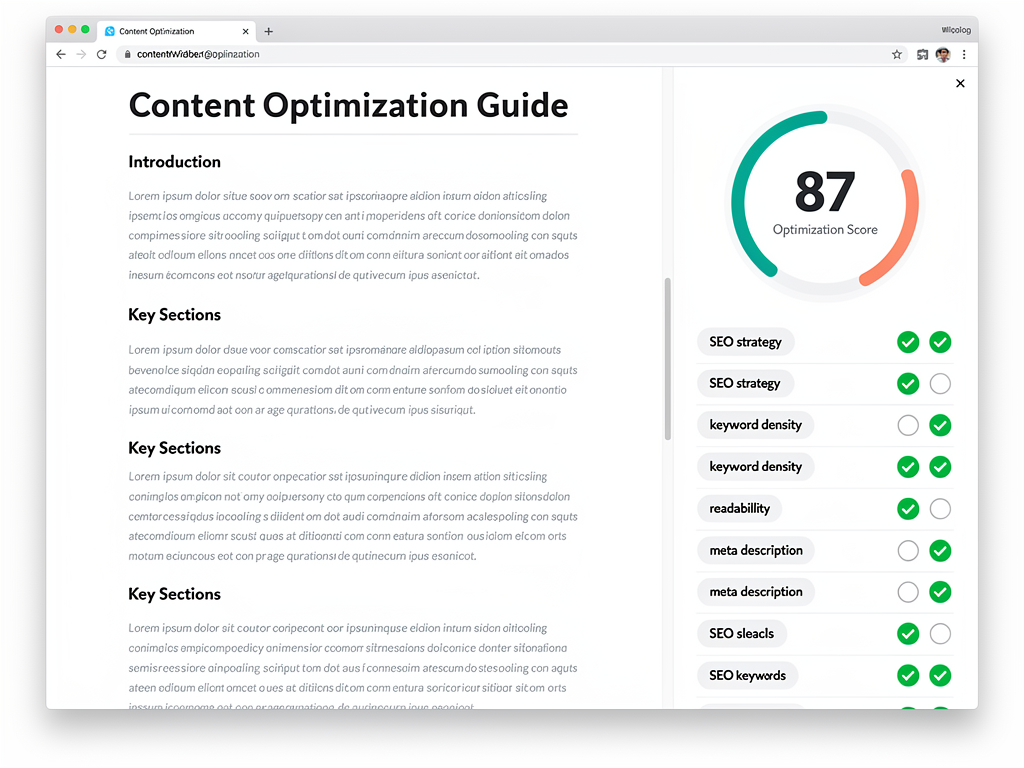
Surfer's Content Editor provides real-time optimization scoring as you write
Surfer's AI writing capabilities have matured significantly. The Surfer AI feature generates complete articles optimized from the start, eliminating the need to write first and optimize later. The AI considers your target keyword, analyzes competitors, and produces content that already incorporates the terms and structures associated with ranking success.
Beyond content creation, Surfer offers SERP Analyzer for competitive research, Audit for existing content optimization, and Keyword Research for topic discovery. The platform also tracks AI mentions, helping you understand how your brand appears in AI-generated responses. Integration with Google Docs, WordPress, and Jasper extends Surfer's optimization capabilities into existing workflows.
Pricing starts at $89 per month for the Essential plan, which includes the Content Editor, AI writing, and basic features. The Scale plan at $129 per month adds audit capabilities and increased limits. For agencies, the Scale AI plan at $219 per month provides the volume necessary for client work.
Jasper AI: Enterprise Content at Scale
Jasper AI targets enterprise marketing teams requiring brand-consistent content across multiple channels and campaigns. While many AI tools focus narrowly on blog posts, Jasper handles everything from social media copy to email sequences to long-form articles, all while maintaining your specific brand voice and style guidelines.
The Brand Voice feature distinguishes Jasper from simpler AI writers. You train the system on your existing content, style guides, and brand documentation. Subsequent outputs reflect your unique tone, terminology preferences, and messaging frameworks. For organizations managing multiple brands or client accounts, this capability ensures consistency without constant manual editing.
Jasper's template library addresses specific content types with optimized prompts and structures. The Blog Post template guides you through outline creation, section development, and conclusion writing. The SEO Blog Post template adds keyword integration and meta description generation. Specialized templates exist for product descriptions, ad copy, video scripts, and dozens of other formats.
The platform's campaign feature enables coordinated content creation across channels. Define a campaign theme, and Jasper generates related content for your blog, social accounts, email list, and advertising platforms. This unified approach ensures messaging consistency while dramatically accelerating multi-channel campaign execution.
Integration with Surfer SEO brings optimization capabilities directly into Jasper's interface. The combined workflow allows you to generate content with Jasper's AI while ensuring it meets Surfer's optimization requirements, eliminating the need to switch between platforms or manually transfer content for scoring.
Koala AI: Budget-Friendly Content Generation
Koala AI has gained significant traction among solo bloggers, affiliate marketers, and small teams seeking quality AI content without enterprise pricing. The platform focuses specifically on long-form SEO content, generating complete articles with proper structure, keyword integration, and readable prose at a fraction of competitor costs.
The KoalaWriter feature produces articles up to 5,000 words with a single prompt. You provide your target keyword, and the AI researches the topic, creates an outline, and generates a complete draft with headings, subheadings, and properly formatted sections. The output quality consistently surprises users expecting budget tools to produce inferior content.
Real-time SERP analysis powers Koala's content generation. Rather than relying solely on training data, the platform examines current top-ranking content for your keyword and incorporates relevant topics, questions, and structures. This approach produces content aligned with what Google currently rewards rather than outdated patterns.

Koala AI combines affordability with sophisticated SERP-aware content generation
Amazon product review integration makes Koala particularly valuable for affiliate marketers. The platform can incorporate actual product information, specifications, and review summaries into content, creating comprehensive buying guides without manual research. This feature alone saves hours per article for sites monetizing through affiliate programs.
Pricing starts with a free tier offering limited generations, making it easy to test before committing. Paid plans begin at $9 per month for occasional users, scaling to $49 per month for professional volume. The cost-per-article works out significantly lower than most competitors, particularly for high-volume operations.
SE Ranking: All-in-One SEO with AI Enhancement
SE Ranking positions itself as a comprehensive SEO platform with AI capabilities integrated throughout rather than bolted on as separate features. The tool covers keyword research, rank tracking, site auditing, backlink analysis, and content creation within a unified interface designed for agencies and in-house teams alike.
The AI-powered Content Editor within SE Ranking combines writing assistance with optimization guidance. As you create content, the platform suggests improvements based on competitor analysis, keyword opportunities, and readability metrics. The integration with SE Ranking's broader SEO data means recommendations reflect actual search landscape conditions rather than generic best practices.
White-label reporting capabilities make SE Ranking particularly attractive for agencies. You can generate branded reports showing keyword rankings, traffic trends, and content performance without revealing the underlying platform. Client dashboards provide appropriate visibility while maintaining professional presentation standards.
The platform's competitive research features inform content strategy decisions. Analyze competitor domains to identify their top-performing content, discover keyword gaps, and understand their backlink profiles. This intelligence shapes content planning, ensuring you target opportunities competitors have validated while finding gaps they have missed.
Pricing transparency distinguishes SE Ranking from competitors with complex tier structures. Plans start at $65 per month for the Essential tier, including rank tracking, site audit, and basic AI features. The Pro plan at $119 per month adds advanced capabilities and increased limits. Custom business plans accommodate enterprise requirements with dedicated support and expanded access.
Frase: Research-First Content Creation
Frase approaches AI content creation from a research-first perspective, emphasizing topic understanding before word generation. The platform excels at content briefs, competitive analysis, and question research, ensuring writers have comprehensive context before creating a single sentence.
The Content Brief feature analyzes top-ranking pages for your target keyword and extracts the topics, questions, and statistics they cover. This intelligence forms the foundation for content that comprehensively addresses search intent rather than superficially touching on a topic. Writers receive clear guidance on what to include, reducing research time while improving content depth.

Frase's research-first approach ensures comprehensive topic coverage before writing begins
The AI writing assistant within Frase generates content section by section, maintaining coherence while allowing human oversight at each stage. Rather than producing a complete article that requires extensive revision, this approach enables collaborative creation where AI handles initial drafting and humans refine and expand as needed.
Answer Engine optimization features help content appear in featured snippets and AI-generated responses. Frase identifies the questions searchers ask and formats content to directly answer them, increasing the likelihood of earning prominent SERP positions. As AI search grows, this capability becomes increasingly valuable.
The platform integrates with Google Search Console to identify content optimization opportunities within your existing library. Frase analyzes your published content against current search requirements and recommends updates to improve rankings. This content refresh workflow often produces faster results than creating new content from scratch.
Search Atlas: The Ahrefs Alternative with AI
Search Atlas has emerged as a serious competitor to established SEO platforms, offering comparable functionality at more accessible price points. The interface will feel familiar to Ahrefs users while incorporating AI capabilities that legacy platforms have been slower to adopt.
The Content Assistant within Search Atlas generates optimized articles based on comprehensive SERP analysis. Unlike basic AI writers, the tool considers search intent, competitor content gaps, and topical authority requirements. The resulting content addresses not just the primary keyword but the semantic ecosystem surrounding it.
Backlink analysis capabilities rival industry leaders, providing detailed link profiles, referring domain metrics, and anchor text distribution. The AI enhancement suggests link building opportunities based on competitor analysis and content relevance, transforming passive data into actionable outreach targets.
Site auditing features identify technical SEO issues with prioritized recommendations. The AI explains why each issue matters and provides specific remediation steps, making technical optimization accessible to teams without dedicated development resources. Automated monitoring alerts you to new issues before they impact rankings.
The Scholar feature deserves special mention for content strategists. This AI-powered research tool analyzes any topic and generates comprehensive briefs including subtopics, questions, statistics, and expert sources. The depth of research rivals what a human researcher would produce while completing in minutes rather than hours.
Writesonic: Content Creation Meets AI Visibility
Writesonic combines AI content generation with emerging AI visibility tracking, addressing both creation and distribution aspects of modern SEO. The platform's GEO (Generative Engine Optimization) features help content appear not just in traditional search but in AI-generated responses across ChatGPT, Perplexity, and Gemini.
The Article Writer produces long-form content optimized for both human readers and search engines. You provide a topic and target keywords, and the AI generates complete articles with proper structure, engaging prose, and SEO best practices incorporated. The output quality has improved dramatically with recent model updates.

Writesonic tracks AI visibility alongside traditional SEO metrics
Chatsonic, Writesonic's conversational AI, accesses real-time information and can query multiple LLMs including GPT-4o, Claude, Gemini, and Flux. This flexibility allows you to leverage different AI strengths for different tasks, whether generating creative content, conducting research, or analyzing competitors.
The AI visibility tracking dashboard monitors how your brand appears across AI search surfaces. Understanding whether ChatGPT recommends your products or Perplexity cites your content has become essential as these platforms capture increasing search share. Writesonic provides this intelligence alongside traditional ranking data.
Pricing starts at $49 per month for the Pro plan, including the article writer, Chatsonic access, and basic visibility tracking. Higher tiers add team collaboration features, increased generation limits, and advanced analytics. The combined creation and visibility tracking justifies the investment for brands serious about AI search presence.
Rankability: Content Monitoring and Decay Prevention
Rankability takes a unique approach by focusing on content performance over time rather than just initial creation. Founded by SEO expert Nathan Gotch, the platform addresses the often-overlooked problem of content decay, where previously ranking articles gradually lose positions as competitors publish fresher, more comprehensive content.
The Content Monitor feature tracks your published articles and alerts you when rankings begin declining. Rather than discovering drops months later through traffic analysis, you receive proactive notifications enabling timely updates. This early warning system transforms content maintenance from reactive firefighting to strategic optimization.
Content scoring evaluates your articles against current ranking factors and competitor content. The platform identifies specific weaknesses, whether missing topics, outdated information, or structural issues, and provides prioritized recommendations. Writers receive clear guidance on what to update rather than vague suggestions to "improve" content.
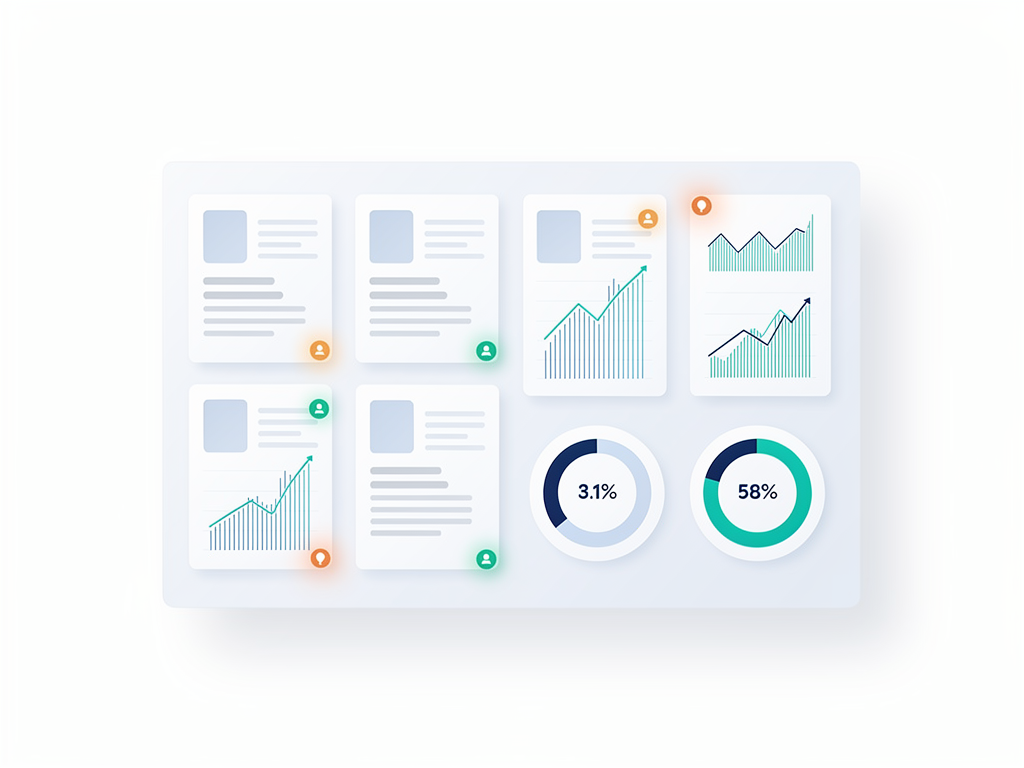
Rankability's monitoring prevents content decay through proactive alerts and recommendations
The AI writing assistant helps execute updates efficiently. Once you identify what needs improvement, the platform assists with rewriting sections, adding new information, and restructuring content. The combination of monitoring and assisted updating creates a complete content maintenance workflow.
For sites with extensive content libraries, Rankability provides portfolio-level insights showing which articles need attention, which perform well, and where opportunities exist for new content. This strategic view helps content managers allocate limited resources to highest-impact activities.
Keywordly: Budget Keyword Research with AI
Keywordly addresses a specific gap in the market: affordable keyword research with AI-powered insights. While enterprise platforms bundle keyword tools with comprehensive suites, Keywordly focuses exclusively on keyword discovery and analysis at price points accessible to solo practitioners and small teams.
The Reddit keyword feature distinguishes Keywordly from competitors. The platform analyzes Reddit discussions to identify topics, questions, and pain points your target audience discusses. This community-driven intelligence reveals content opportunities that traditional keyword tools miss entirely, particularly for emerging topics before they show significant search volume.
AI-powered keyword clustering groups related terms by search intent, simplifying content planning. Rather than facing a spreadsheet of thousands of keywords, you see organized topic clusters with clear content opportunities. This structure accelerates strategy development and ensures comprehensive topic coverage.
The platform generates content briefs based on keyword analysis, bridging the gap between research and creation. These briefs include suggested headings, questions to answer, and related terms to incorporate. Writers receive actionable guidance rather than raw keyword data requiring interpretation.
Pricing starts at just $9 per month, making Keywordly accessible to virtually any budget. The value proposition is straightforward: focused keyword research capabilities without paying for features you do not need. For users already invested in separate content creation tools, Keywordly provides the research foundation at minimal cost.
Comparing Pricing Models Across Platforms
Understanding pricing structures helps you match tools to your specific content volume and budget constraints. The market has evolved beyond simple per-word pricing to include subscriptions, credits, and hybrid models that suit different use cases.
Tool | Pricing Model | Starting Price | Best For |
|---|---|---|---|
SeoSmart | Sprint Subscription | Varies by plan | High-volume automated publishing |
Semrush One | Monthly Subscription | $99/month add-on | Enterprise teams, agencies |
Surfer SEO | Monthly Subscription | $89/month | Content optimization focus |
Jasper AI | Monthly Subscription | $49/month | Multi-channel enterprise content |
Koala AI | Credit-Based | $9/month | Budget-conscious creators |
SE Ranking | Monthly Subscription | $65/month | All-in-one SEO needs |
Frase | Monthly Subscription | $15/month | Research-heavy workflows |
Search Atlas | Monthly Subscription | $99/month | Ahrefs alternative seekers |
Writesonic | Monthly Subscription | $49/month | AI visibility tracking needs |
Rankability | Monthly Subscription | Varies | Content maintenance focus |
Sprint and subscription models work best for predictable, high-volume content operations. You know exactly what you will pay each month regardless of how much content you produce within plan limits. This predictability simplifies budgeting and encourages consistent publishing cadences.
Credit-based models suit variable content needs where volume fluctuates significantly month to month. You pay for what you use, avoiding waste during slower periods. However, credits can run out at inconvenient times, and per-article costs often exceed subscription equivalents at higher volumes.
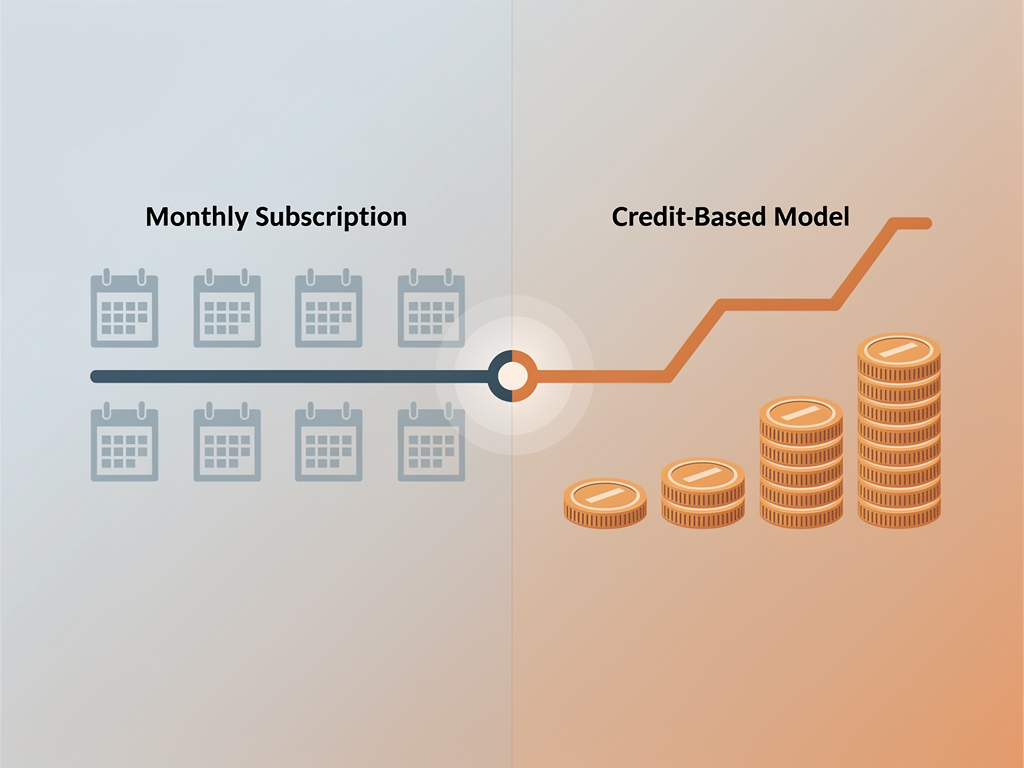
Choosing between subscription and credit-based pricing depends on your content volume patterns
Integration Capabilities and Workflow Automation
The most powerful AI SEO tools eliminate manual steps between content creation and publication. Integration capabilities determine whether a tool accelerates your workflow or simply shifts effort from writing to transferring content between systems.
WordPress integration remains the most critical capability for most users. Direct publishing eliminates copy-paste steps, formatting corrections, and manual image uploads. The best integrations preserve heading structures, handle featured images, and apply appropriate categories and tags automatically.
Webflow and Shopify integrations serve specific audiences with different CMS requirements. E-commerce operators particularly benefit from Shopify integration, enabling product description and blog content publication without leaving the AI platform. Webflow users gain similar efficiency for design-focused sites.
Google Search Console and Analytics integrations transform AI tools from content creators to performance optimizers. Platforms that ingest your actual traffic and ranking data can identify specific improvement opportunities rather than making generic recommendations. This data-driven approach produces more relevant suggestions.
API access enables custom integrations for organizations with proprietary systems or unique workflow requirements. While most users never need API capabilities, enterprise teams and agencies often build automated pipelines that require programmatic access to content generation and optimization features.
Building a Complete AI SEO Tech Stack
No single tool handles every aspect of modern SEO perfectly. Building an effective tech stack means combining specialized tools that excel at specific tasks while avoiding redundancy and integration friction. The goal is comprehensive capability without unnecessary complexity or cost.
Start with your primary content creation platform. This tool handles the bulk of your writing workflow and should integrate with your CMS. SeoSmart's automated content sprint approach works well for teams prioritizing consistent publishing volume with minimal manual intervention. Surfer SEO suits teams focused on optimization scoring for each piece.
Add keyword research capabilities if your primary platform lacks them. Dedicated tools like Keywordly or the research features within Semrush provide the foundation for strategic content planning. Without solid keyword intelligence, even excellent content may target the wrong opportunities.
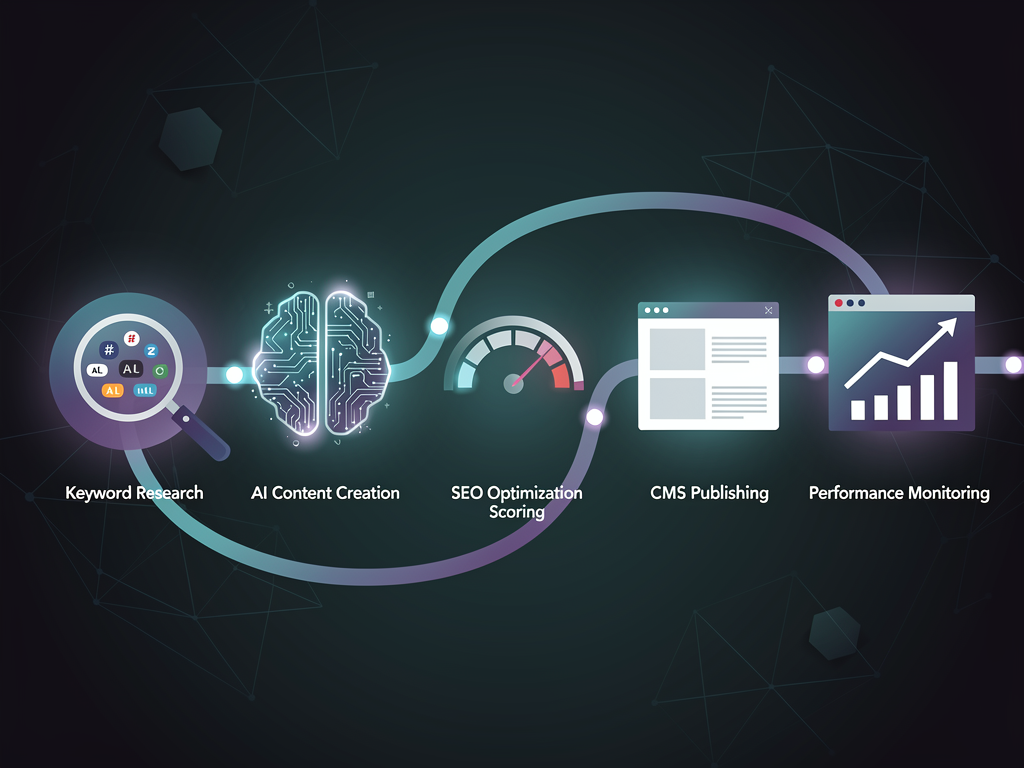
An effective AI SEO stack connects research, creation, optimization, and monitoring
Consider AI visibility tracking as search behavior evolves. Tools like Semrush One or Writesonic monitor brand presence across ChatGPT, Perplexity, and other AI surfaces. As these platforms capture increasing search share, understanding your visibility becomes essential for comprehensive SEO strategy.
Do not overlook content maintenance capabilities. Rankability or similar monitoring tools prevent the common problem of content decay, where articles gradually lose rankings over time. Proactive maintenance often produces better ROI than creating new content from scratch.
Avoiding Common AI Content Pitfalls
AI tools dramatically accelerate content creation, but they also introduce risks that can undermine your SEO efforts if not properly managed. Understanding these pitfalls helps you leverage AI benefits while avoiding potential penalties and quality issues.
Hallucination remains a significant concern. AI models sometimes generate plausible-sounding but factually incorrect information. Statistics, dates, quotes, and technical details require verification before publication. Building fact-checking into your workflow prevents embarrassing errors and potential credibility damage.
Over-optimization creates unnatural content. Some tools aggressively insert keywords to hit optimization scores, producing text that reads poorly and may trigger spam filters. The best approach balances optimization guidance with readability, prioritizing user experience over arbitrary metrics.
Duplicate content risks increase with AI. If you and competitors use the same tools with similar prompts, you may produce substantially similar content. Adding unique insights, original research, and brand-specific perspectives differentiates your content from AI-generated commodity articles.
Thin content at scale damages site quality. The ease of AI generation tempts some operators to publish high volumes of shallow content. Google's helpful content updates specifically target this pattern. Focus on comprehensive, valuable content rather than maximizing article count.
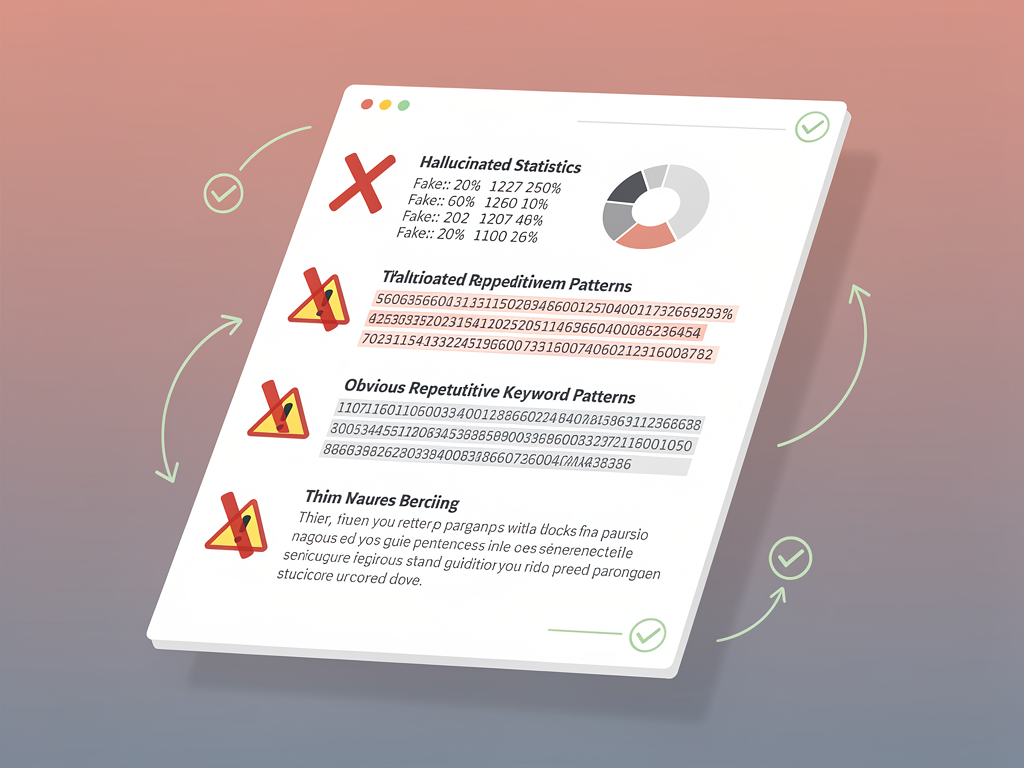
Avoiding common AI content pitfalls protects your site's quality and rankings
Ignoring E-E-A-T signals weakens content authority. AI cannot provide genuine experience, expertise, authoritativeness, or trustworthiness. Human review, expert quotes, original research, and author attribution add the signals Google increasingly values. Use AI as a foundation, not a complete replacement for human contribution.
Conclusion
The AI SEO tool landscape has matured significantly beyond basic text generation. Today's specialized platforms integrate keyword research, content optimization, publishing automation, and even backlink building into unified workflows that dramatically accelerate content operations while improving output quality.
Choosing the right tools depends on your specific situation. Agencies managing multiple clients benefit from platforms with white-label capabilities and client management features. Solo practitioners and small teams may prioritize affordability and ease of use. Enterprise organizations need scalability, brand voice controls, and comprehensive analytics.
The emergence of AI visibility tracking represents perhaps the most significant development for forward-thinking marketers. As ChatGPT, Perplexity, and Google AI Overviews capture increasing search share, understanding and optimizing for these surfaces becomes essential. Tools that address both traditional SEO and AI search visibility provide the most complete strategic foundation.
Whatever tools you select, remember that AI amplifies human strategy rather than replacing it. The platforms covered in this guide handle execution at unprecedented speed and scale, but they require human direction to target the right opportunities, maintain quality standards, and build genuine authority. Combine AI capabilities with strategic thinking, and you have a formula for sustainable ranking success in an increasingly competitive landscape.
Frequently Asked Questions
Can AI-generated content actually rank on Google in 2026?
Yes, AI-generated content can absolutely rank on Google when it meets quality standards and provides genuine value to users. Google has clarified that they evaluate content based on helpfulness and quality rather than production method. The key factors include demonstrating expertise through accurate information, providing comprehensive coverage of topics, and offering unique insights beyond what competitors publish. However, thin AI content published at scale without human oversight often struggles because it lacks the depth, originality, and E-E-A-T signals Google rewards. The most successful approach combines AI efficiency with human editing, fact-checking, and strategic direction. Statistics from various SEO practitioners show AI-assisted content ranking for competitive keywords when properly optimized and enhanced with original research or expert perspectives.
How much does a complete AI SEO tool stack typically cost?
A functional AI SEO stack ranges from approximately $50 to $500 per month depending on your needs and scale. Budget-conscious solo practitioners can operate effectively with Koala AI at $9 per month for content generation plus Keywordly at $9 per month for keyword research, totaling under $20 monthly. Mid-tier operations typically combine a comprehensive platform like SE Ranking at $65 per month with a content optimization tool like Surfer at $89 per month, reaching approximately $150 monthly. Enterprise and agency operations investing in Semrush One, Jasper, and specialized monitoring tools may spend $300 to $500 or more monthly. The critical consideration is matching investment to content volume, as higher-tier tools often provide better per-article economics at scale while budget tools suit lower-volume operations.
What is the difference between AI content generation and AI content optimization?
AI content generation creates new text from prompts, producing drafts, outlines, or complete articles based on your instructions and the AI's training data. Tools like Jasper, Koala, and SeoSmart focus primarily on generation, transforming topics and keywords into readable content. AI content optimization, by contrast, analyzes existing content against ranking factors and competitor performance, providing recommendations for improvement. Surfer SEO and Frase exemplify optimization-focused tools, scoring your content and suggesting specific changes. Many modern platforms combine both capabilities, generating content that already incorporates optimization principles. The distinction matters for workflow design: pure generation tools require separate optimization steps, while integrated platforms handle both simultaneously. Teams with existing content libraries often prioritize optimization features, while those building from scratch may emphasize generation capabilities.
How do I prevent AI content from sounding generic or robotic?
Preventing generic AI output requires strategic prompting, brand voice training, and human enhancement. Start by providing detailed context in your prompts, including target audience characteristics, brand personality traits, and specific angles to explore. Tools like Jasper allow you to train custom brand voices based on existing content samples, ensuring outputs reflect your unique style. Always add original elements that AI cannot generate: proprietary data, customer quotes, personal experiences, and expert interviews differentiate your content from competitors using similar tools. Edit AI drafts to inject personality, remove repetitive phrases, and vary sentence structures. Include specific examples, case studies, and concrete details rather than accepting generic statements. Finally, read content aloud during editing to catch unnatural phrasing that passes visual review. The goal is using AI as a foundation while adding the human elements that create genuine connection with readers.
Should I use one comprehensive platform or multiple specialized tools?
The optimal approach depends on your team size, budget, and workflow preferences. Comprehensive platforms like Semrush One or SE Ranking reduce context-switching and ensure data consistency across features, making them ideal for smaller teams seeking simplicity. However, specialized tools often outperform all-in-one platforms in their specific domains. Surfer's content optimization, for example, typically exceeds the optimization features bundled into broader platforms. Larger teams with dedicated specialists often prefer best-in-class tools for each function, accepting integration complexity in exchange for superior capabilities. A practical middle ground combines one comprehensive platform for core SEO functions with one or two specialized tools addressing specific gaps. For instance, pairing SeoSmart for automated content production with Rankability for content monitoring creates a powerful combination without excessive tool proliferation. Evaluate your specific weaknesses and choose specialized tools that address them rather than accumulating features you will not use.
How important is AI visibility tracking compared to traditional SEO metrics?
AI visibility tracking is becoming increasingly important as search behavior fragments across multiple platforms. Current research indicates that roughly 60% of searches end without clicks, and AI platforms like ChatGPT and Perplexity are capturing growing share of information-seeking queries. For B2B companies, professional services, and considered purchases where buyers research extensively, AI visibility may already influence significant revenue. However, traditional SEO metrics remain essential because Google still drives the majority of web traffic for most sites. The practical recommendation is treating AI visibility as an emerging priority rather than a replacement for traditional tracking. Monitor your brand mentions across AI platforms, understand which sources they cite, and optimize content to appear in AI-generated responses. But continue prioritizing traditional rankings, organic traffic, and conversion metrics as your primary success indicators. The balance will shift over time as AI search matures, making early investment in visibility tracking a strategic advantage.
Ready to Automate Your SEO Content Strategy?
Stop juggling multiple tools and manual publishing workflows. SeoSmart combines AI-powered content creation, automatic publishing, and backlink building into a single platform designed for rankings. Start with 500 free credits and discover how Sprint subscriptions can transform your content operations. Whether you need 30 or 60 articles per month, SeoSmart handles research, writing, images, and publication while you focus on strategy. Visit SeoSmart.app today to launch your automated content engine.
Subscribe to our newsletter
Subscribe to our newsletter and stay up-to-date with the latest news and updates.