Build Your Autonomous SEO System: A 2026 Guide
Discover how autonomous SEO systems are transforming content ranking with minimal human intervention. Learn to build and deploy these systems effectively in 2026.

Zakariae

The search engine optimization landscape has undergone a fundamental transformation. What once required teams of specialists manually researching keywords, crafting content, optimizing pages, and monitoring rankings can now be orchestrated by intelligent systems that operate with minimal human intervention. This shift represents more than incremental improvement; it marks the emergence of autonomous content ranking systems that fundamentally change how businesses compete for organic visibility.
For SEO agencies juggling dozens of client accounts, content marketing managers struggling to maintain publishing velocity, and small business owners wearing too many hats, the promise of agent seo systems offers a compelling solution. These autonomous platforms can research topics, generate optimized content, publish to your CMS, monitor performance, and even initiate fixes when rankings decline. The question is no longer whether to adopt these systems, but how to build and deploy them effectively.
This comprehensive guide walks you through everything you need to know about building an autonomous content ranking system in 2026. From understanding the fundamental architecture of AI SEO agents to implementing practical workflows that scale, you will learn how to leverage these technologies to transform your content operations while maintaining the quality standards that search engines and readers demand.
Key Takeaways
- AI SEO agents differ fundamentally from AI writing tools by executing multi-step workflows autonomously rather than simply generating text from prompts
- The six-stage content pipeline (research, strategy, write, audit, monitor, fix) provides a framework for evaluating agent capabilities and identifying automation gaps
- Successful autonomous systems require human approval gates at strategic checkpoints to maintain quality while maximizing efficiency
- Content sprint subscriptions offer the most hands-free approach, generating 30 to 60 articles monthly with automatic publishing and backlink building
- Integration capabilities with WordPress, Webflow, Shopify, and other CMS platforms determine whether agents can truly operate autonomously
- Backlink exchange networks amplify the impact of autonomous content by building authority signals that AI-generated articles alone cannot achieve
- ROI measurement should focus on pipeline coverage and time savings rather than feature counts or word generation metrics

Understanding the Autonomous SEO Agent Architecture
Before diving into implementation strategies, it is essential to understand what distinguishes a genuine AI SEO agent from the countless "AI writing tools" flooding the market. The distinction is not merely semantic; it determines whether a tool saves you twenty minutes per article or replaces an entire content production workflow.
An AI writing tool operates reactively. You provide a prompt, and it returns text. The research, optimization scoring, publishing, monitoring, and fixing remain your responsibility. You are still the operator, simply working faster with AI assistance. These tools occupy the "copilot" category, useful but fundamentally limited in their ability to transform operations.
An AI SEO agent operates proactively and autonomously. You define an objective, and the agent determines which tools to use, what data to pull, and what actions to take. It executes multi-step workflows without requiring constant human direction, presenting finished work for approval rather than waiting for instructions at each stage.
The Four-Stage Execution Loop
Production-grade AI SEO agents follow a consistent execution pattern that mirrors how skilled human SEO professionals approach their work. Understanding this loop helps you evaluate platforms and design effective workflows.
The first stage involves perception, where the agent observes the current state of your site, competitor landscape, keyword opportunities, and performance metrics. This is not passive data collection but active analysis that identifies gaps and opportunities requiring attention.
The second stage is planning, where the agent decomposes high-level goals into specific action sequences. Given an objective like "improve organic traffic for product category pages," the agent determines which pages need attention, what content gaps exist, and what optimization steps will yield the highest impact.
The third stage encompasses execution, where the agent performs the actual work: generating content briefs, writing articles, creating schema markup, optimizing existing pages, or building internal link structures. The output is finished work, not recommendations about work you should do.
The fourth stage involves validation, where the agent checks its own output against quality criteria before presenting it for human approval. This self-checking mechanism prevents obvious errors from reaching the approval queue and maintains consistent quality standards.
The Six-Stage Content Pipeline Framework
Evaluating AI SEO agents requires a systematic framework that moves beyond feature lists and marketing claims. The six-stage content pipeline provides this framework, allowing you to assess how much of your actual workflow each platform can automate.
Stage One: Research. This encompasses keyword research, competitor analysis, topic discovery, and content gap identification. Effective agents pull data from multiple sources, identify opportunities aligned with your site's authority level, and prioritize topics based on traffic potential and competitive difficulty.
Stage Two: Strategy. Beyond identifying keywords, agents must develop content strategies that account for topic clusters, internal linking opportunities, and publication cadence. This stage transforms raw research into actionable content plans that build topical authority systematically.
Stage Three: Write. Content generation is where most "AI SEO tools" begin and end. True agents integrate brand voice guidelines, incorporate research findings, optimize for target keywords, and produce publication-ready content that requires minimal editing.
Stage Four: Audit. Before and after publication, content requires optimization scoring against search intent, competitor benchmarks, and technical SEO requirements. Agents should identify missing elements, suggest improvements, and validate that content meets quality thresholds.
Stage Five: Monitor. Published content requires ongoing performance tracking. Agents should detect ranking changes, traffic fluctuations, and competitive movements that signal the need for intervention. This monitoring must be proactive, alerting you to problems before they significantly impact performance.
Stage Six: Fix. When monitoring identifies issues, agents should initiate remediation workflows. This might involve content refreshes, technical fixes, or strategic pivots. The ability to close this loop autonomously distinguishes comprehensive platforms from partial solutions.

Evaluating Platform Capabilities Against Your Needs
The AI SEO agent market has exploded with options, but most platforms cover only a fraction of the complete pipeline. Understanding where different solutions excel helps you make informed decisions and identify gaps that require supplementary tools or manual processes.
Platforms like Frase have positioned themselves as full-pipeline solutions, claiming coverage across all six stages from research through ranking recovery. Their approach emphasizes autonomy levels that earn the right to publish independently, one content type at a time, while maintaining human control over the process.
Other platforms specialize in specific pipeline segments. Surfer SEO excels at optimization scoring but requires separate tools for content generation and publishing. Semrush offers robust research capabilities but limited autonomous execution. Understanding these specializations helps you assemble a technology stack that covers your complete workflow.
Critical Evaluation Criteria
When assessing platforms for your autonomous content system, prioritize these factors over feature counts and marketing claims:
CMS Integration Depth. Can the platform publish directly to your content management system without manual copy-paste operations? Shallow integrations that export formatted text still require human intervention for every article. Deep integrations handle publishing, scheduling, and even image placement automatically.
Quality Control Mechanisms. What prevents substandard content from reaching publication? Look for approval workflows, critic loops that evaluate output before presenting it for review, and configurable quality thresholds that match your standards.
Brand Voice Consistency. Generic AI content fails to build brand recognition and reader loyalty. Effective platforms learn your voice through examples and guidelines, producing content that sounds like your organization rather than generic AI output.
Backlink and Authority Building. Content alone rarely achieves top rankings in competitive niches. Platforms that integrate backlink building or connect to exchange networks provide significant advantages over those focused solely on content generation.
Building Your Autonomous Content System: Step-by-Step Implementation
Implementing an autonomous content ranking system requires thoughtful planning and staged deployment. Rushing to full automation before establishing quality baselines and approval workflows leads to published content that damages rather than builds your site's reputation.
Phase One: Foundation and Configuration
Begin by documenting your current content workflow in detail. Map every step from topic ideation through publication and performance monitoring. This documentation reveals where you spend the most time, where bottlenecks occur, and which stages offer the highest automation potential.
Next, establish your quality standards in measurable terms. What reading level should content target? What minimum word count applies to different content types? How many internal links should each article include? What schema markup is required? These specifications become configuration parameters for your autonomous system.
Select a platform that covers the pipeline stages most critical to your workflow. If research and strategy consume most of your time, prioritize platforms with strong topic discovery and content planning capabilities. If writing is your bottleneck, focus on content generation quality and brand voice consistency.
Phase Two: Knowledge Base Development
Autonomous systems perform dramatically better when grounded in comprehensive knowledge bases about your business, industry, and target audience. Invest time upfront in building these resources.
Upload your existing high-performing content as examples of voice, style, and quality standards. Include brand guidelines, product documentation, and any proprietary information the system should reference. The more context you provide, the more relevant and accurate the generated content becomes.
Document your internal linking strategy, including key pages that should receive link equity and anchor text variations that align with your SEO objectives. This information enables agents to build internal link structures that support your overall site architecture.

Phase Three: Pilot Testing and Calibration
Before scaling to full production, run a controlled pilot with a limited number of articles. This testing phase reveals quality issues, configuration problems, and workflow gaps that require adjustment before broader deployment.
Generate ten to twenty articles across different topic categories and content types. Review each piece against your quality standards, noting patterns in what works well and what requires improvement. Use these observations to refine prompts, adjust configurations, and update knowledge base materials.
Measure the time savings achieved during the pilot. Compare the hours required for your traditional workflow against the time spent reviewing and approving agent-generated content. This data provides the foundation for ROI calculations and helps justify expanded investment.
Content Sprint Subscriptions: The Hands-Free Approach
For organizations seeking maximum automation with minimum ongoing management, content sprint subscriptions offer a compelling model. These services handle the complete pipeline from research through publication on a fixed monthly schedule, requiring only periodic approval and strategic guidance.
The sprint model works particularly well for businesses needing consistent content velocity without dedicated content teams. Rather than managing individual articles, you configure the system once with your website context, brand guidelines, and content preferences. The platform then generates and publishes articles automatically according to your schedule.
Typical sprint subscriptions offer tiers based on volume, with options for thirty or sixty articles per month per website. This volume enables rapid topical authority building that would be impossible with traditional content production methods. A sixty-article monthly sprint means publishing two articles daily, a pace that quickly establishes comprehensive coverage of your target topics.
Sprint Configuration Best Practices
Successful sprint implementations begin with thorough initial configuration. Provide your website URL and existing content sitemap to enable deduplication, ensuring the system generates new topics rather than duplicating existing coverage.
Select article templates that match your content strategy. Different templates serve different purposes: comprehensive guides for pillar content, comparison articles for bottom-funnel keywords, how-to tutorials for instructional queries, and listicles for broader topic coverage.
Configure image generation settings to match your brand aesthetic. Specify whether articles should include AI-generated images, how many images per article, and what style guidelines apply. Similarly, configure YouTube video embedding preferences to enhance content with relevant video resources.
Set your publication schedule based on when your audience is most active and when search engines typically crawl your site. Consistent publishing times help establish crawl patterns that ensure new content gets indexed quickly.
Integrating Backlink Exchange Networks for Authority Building
Content quality and volume alone rarely achieve top rankings in competitive niches. Search engines continue to weight backlinks heavily as authority signals, making link building an essential component of any comprehensive SEO strategy. Autonomous content systems that integrate backlink acquisition provide significant advantages over those focused solely on content generation.
Backlink exchange networks operate on a simple principle: websites within the network agree to link to each other's relevant content, creating mutual authority benefits. Unlike manipulative link schemes, legitimate exchange networks focus on topical relevance, ensuring links provide genuine value to readers while building authority signals.
When evaluating platforms with backlink exchange capabilities, assess the network's size, quality standards, and relevance matching. A large network with strict quality requirements and sophisticated relevance matching delivers better results than smaller networks with loose standards.
Maximizing Exchange Network Value
To extract maximum value from backlink exchange participation, ensure your content provides genuine value to linking sites' audiences. High-quality, comprehensive content earns more links because webmasters want to reference valuable resources for their readers.
Diversify your anchor text across links to maintain natural-looking link profiles. Excessive exact-match anchor text triggers algorithmic penalties, while varied anchor text that includes brand mentions, generic phrases, and related keywords appears organic to search engines.
Monitor the quality of sites linking to you through the exchange network. If low-quality or irrelevant sites begin linking to your content, adjust your participation settings or work with the network administrator to address quality concerns.

CMS Integration: Enabling True Automation
The depth of CMS integration determines whether your autonomous system achieves genuine hands-free operation or merely accelerates a still-manual workflow. Shallow integrations that export formatted content for manual upload provide limited efficiency gains. Deep integrations that handle publishing, scheduling, image placement, and metadata configuration enable true automation.
WordPress remains the dominant CMS for content-focused websites, and most AI SEO platforms prioritize WordPress integration. Look for integrations that go beyond simple post creation to include featured image setting, category and tag assignment, custom field population, and publication scheduling.
Webflow, Shopify, and Ghost CMS integrations have become increasingly important as these platforms gain market share. If your site runs on one of these platforms, verify that your chosen AI SEO agent supports direct publishing rather than requiring manual content transfer.
API-Based Custom Integrations
For organizations with custom CMS platforms or unique publishing requirements, API-based integrations provide flexibility that pre-built integrations cannot match. Evaluate whether platforms offer comprehensive APIs that enable custom workflow development.
Custom integrations can connect autonomous content systems to internal approval workflows, translation services, legal review queues, and other business processes. This flexibility enables enterprise organizations to adopt autonomous content production while maintaining compliance with internal governance requirements.
Consider the technical resources required to build and maintain custom integrations. API-based approaches offer maximum flexibility but require development expertise and ongoing maintenance. Pre-built integrations sacrifice some flexibility for ease of implementation and reduced maintenance burden.
Schema Markup and Technical SEO Automation
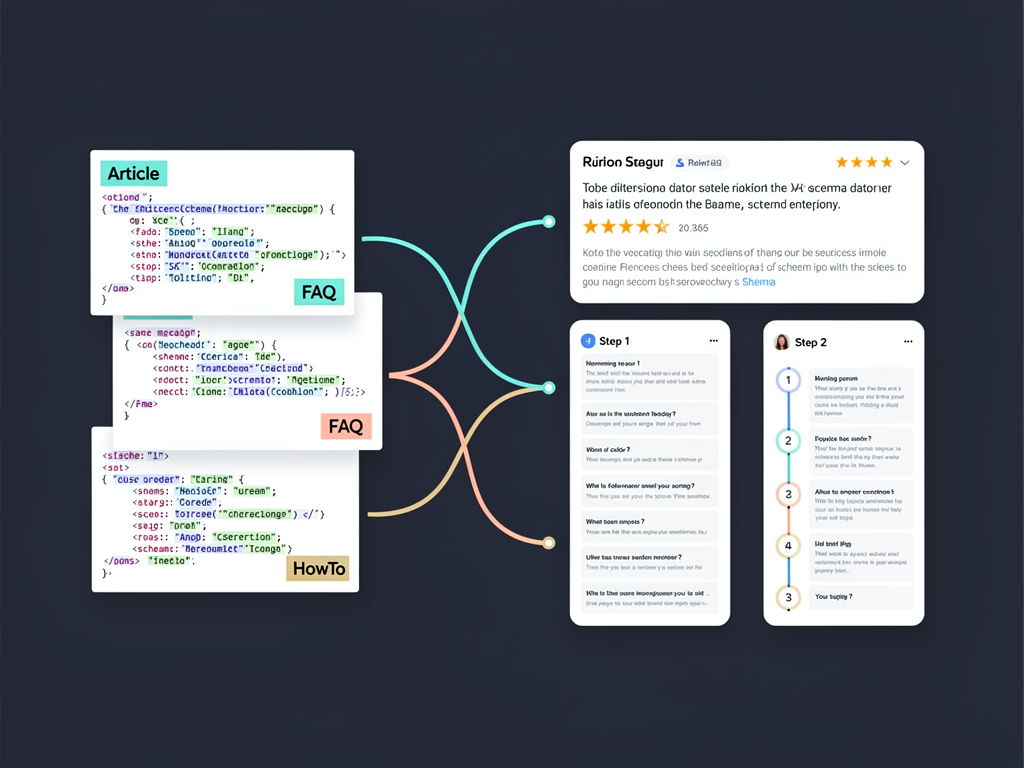
Beyond content generation and publishing, comprehensive autonomous systems handle technical SEO elements that influence search visibility. Schema markup, in particular, has become increasingly important as search engines use structured data to power rich results and AI-generated answers.
Effective platforms automatically generate appropriate schema markup for each content type. Article schema, FAQ schema, how-to schema, and product schema each serve different purposes and trigger different search result enhancements. Automated schema generation ensures consistent implementation without requiring manual markup for each piece of content.
Meta title and description generation represents another technical SEO element that benefits from automation. Well-crafted meta information improves click-through rates from search results, but manually writing unique meta content for every article consumes significant time. Automated generation that follows best practices and incorporates target keywords streamlines this process.
Internal Linking Automation
Internal link structures significantly impact how search engines understand your site architecture and distribute authority across pages. Manual internal linking requires constant attention as new content is published and existing content is updated. Automated internal linking maintains optimal link structures without ongoing manual effort.
Look for platforms that analyze your existing content to identify relevant linking opportunities for new articles. The best systems consider anchor text diversity, link equity distribution, and topical relevance when placing internal links, creating structures that benefit both search engines and readers.
Automated internal linking should also identify opportunities to add links from existing content to new publications. This bidirectional linking ensures new content receives authority from established pages while keeping older content fresh with links to newer resources.
Multilingual Content Operations at Scale
For businesses targeting international markets, multilingual content production presents unique challenges that autonomous systems can address effectively. Traditional translation workflows involve content creation in one language followed by translation and localization, a process that multiplies production time and costs.
Advanced AI SEO agents can generate content directly in target languages rather than translating from a source language. This approach produces more natural-sounding content that resonates with native speakers while avoiding the awkward phrasing that often results from translation.
Platforms supporting 150 or more languages enable comprehensive international SEO strategies without proportional increases in production resources. A single content sprint subscription can generate articles across multiple language versions of your site, building organic visibility in markets that would otherwise require dedicated content teams.
Localization Beyond Translation
Effective multilingual content goes beyond word-for-word translation to incorporate cultural context, regional terminology, and local search behavior. Autonomous systems should adapt content for specific markets, not merely translate it.
Consider how examples, references, and recommendations should vary by region. A US-focused article might reference American brands, regulations, and cultural touchpoints that would be irrelevant or confusing to European or Asian audiences. Sophisticated localization adapts these elements while maintaining the core content value.
Keyword research must also be localized, as direct translations of English keywords often miss how native speakers actually search. Platforms with built-in multilingual keyword research identify the terms your target audience uses rather than assuming translated keywords will perform.
Quality Control and Human Oversight Strategies
Autonomous does not mean unsupervised. The most effective autonomous content systems incorporate strategic human oversight that maintains quality standards while preserving efficiency gains. Finding the right balance between automation and oversight determines whether your system produces content that builds or damages your reputation.
Establish clear approval workflows that match your risk tolerance and quality requirements. High-stakes content like product pages or legal information may require detailed human review before publication. Lower-stakes blog content might need only spot-checking to verify quality standards are maintained.
Implement sampling strategies for high-volume production. Rather than reviewing every article from a sixty-article monthly sprint, review a representative sample across different topic categories and content types. This approach catches systematic quality issues without requiring review of every piece.
Feedback Loops for Continuous Improvement
Your oversight activities should feed back into system configuration to drive continuous improvement. When you identify recurring quality issues, adjust prompts, update knowledge base materials, or modify configuration parameters to address the root cause.
Track which types of content require the most editing and why. If certain topic categories consistently need significant revision, investigate whether knowledge base gaps, prompt issues, or inherent topic complexity drives the problem. Addressing root causes reduces future editing requirements.
Document your quality standards and editing patterns to inform future configuration updates. This documentation also helps onboard new team members who will participate in content review and provides institutional knowledge that survives personnel changes.

Measuring ROI and Performance Metrics
Justifying investment in autonomous content systems requires clear metrics that demonstrate value. Traditional content marketing metrics like traffic and conversions remain important, but additional metrics specific to autonomous operations provide deeper insight into system performance.
Time savings per article measures the difference between your traditional workflow and the time required to review and approve agent-generated content. This metric directly translates to cost savings or capacity for additional strategic work.
Pipeline coverage percentage indicates how much of your six-stage content pipeline the autonomous system handles versus manual processes. Higher coverage percentages indicate more comprehensive automation and greater efficiency gains.
First-draft acceptance rate tracks what percentage of generated content requires minimal or no editing before publication. Higher acceptance rates indicate better system configuration and more effective knowledge base materials.
Ranking velocity measures how quickly new content achieves target ranking positions. Autonomous systems that integrate backlink building and technical SEO optimization should demonstrate faster ranking achievement than content-only approaches.
Benchmarking Against Traditional Approaches
Establish baseline metrics from your traditional content production before implementing autonomous systems. These baselines enable accurate comparison and ROI calculation after implementation.
Track total cost per published article under both approaches, including labor, tool subscriptions, and any external services. Autonomous systems often show dramatic cost reductions, but accurate comparison requires comprehensive cost accounting.
Compare content performance metrics between traditionally produced and autonomously generated content. If autonomous content underperforms, investigate whether quality issues, topic selection, or optimization gaps drive the difference. Performance parity or superiority validates the autonomous approach.
Common Implementation Pitfalls and How to Avoid Them
Organizations implementing autonomous content systems frequently encounter predictable challenges that undermine results. Understanding these pitfalls in advance enables proactive mitigation strategies.
Insufficient knowledge base development ranks among the most common mistakes. Teams eager to start generating content skip the foundational work of building comprehensive knowledge bases. The resulting content lacks brand voice consistency, misses important context, and requires extensive editing that negates efficiency gains.
Unrealistic quality expectations lead to disappointment when autonomous systems cannot match the output of experienced human writers on first draft. Effective implementation acknowledges that autonomous systems excel at volume and consistency while human oversight ensures quality meets standards.
Neglecting technical integration creates manual bottlenecks that limit automation benefits. If your CMS integration requires manual image uploads or metadata entry, you have not achieved true automation regardless of how efficiently content is generated.
Avoiding Content Homogeneity
High-volume autonomous content production risks creating homogeneous content that fails to differentiate your site from competitors using similar tools. Proactive strategies maintain content distinctiveness.
Incorporate proprietary data, original research, and unique perspectives that competitors cannot replicate. Autonomous systems can structure and present this information, but the underlying insights must come from your organization's unique knowledge and experience.
Vary content formats and approaches across your publication calendar. Mix comprehensive guides with quick-reference posts, data-driven analyses with opinion pieces, and evergreen content with timely commentary. This variety maintains reader interest and demonstrates expertise breadth.
Scaling Autonomous Operations Across Multiple Sites
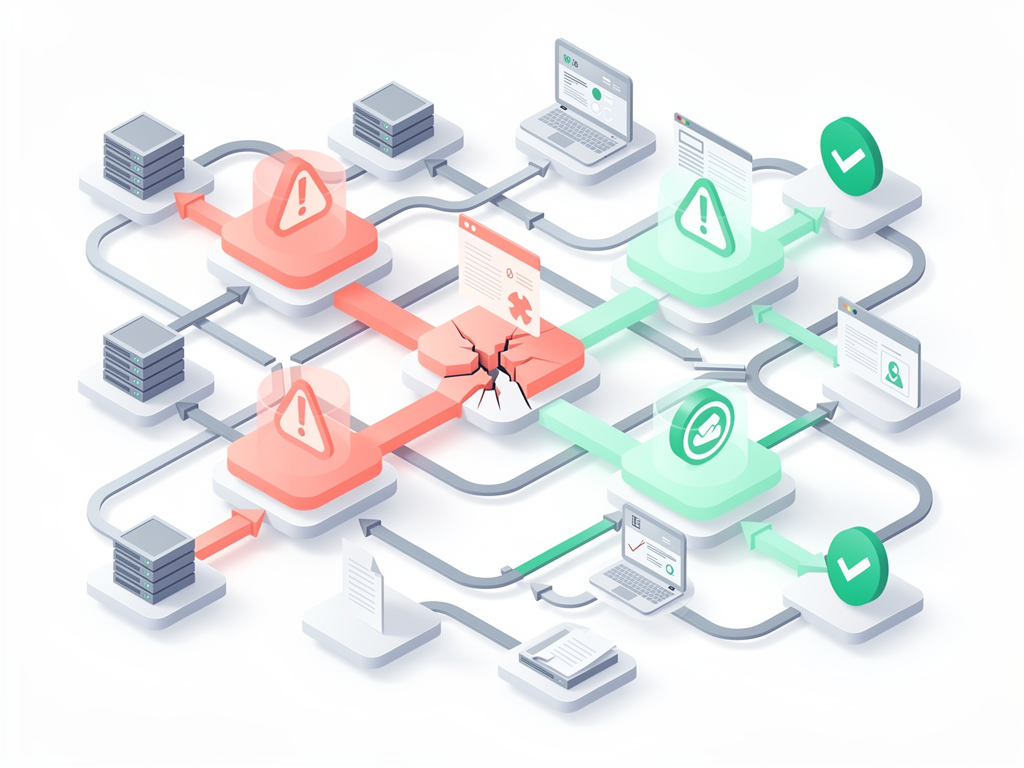
Agencies managing multiple client accounts and businesses operating portfolio sites face unique scaling challenges that autonomous systems can address effectively. The right platform architecture enables efficient management of dozens or hundreds of sites from a single interface.
Look for platforms with multi-site management capabilities that maintain separation between accounts while enabling centralized oversight. Each site should have its own knowledge base, configuration settings, and content calendar while rolling up to unified reporting and management dashboards.
Consider how pricing scales across multiple sites. Some platforms charge per-site fees that become prohibitive at scale, while others offer agency or enterprise tiers with more favorable economics for high-volume operations.
Maintaining Quality Across Scale
Quality control becomes more challenging as you scale across multiple sites with different audiences, industries, and brand voices. Systematic approaches maintain standards without requiring proportional increases in oversight resources.
Develop site-specific quality checklists that capture unique requirements for each property. These checklists enable consistent review processes even when different team members handle different sites.
Implement tiered review processes based on site importance and risk level. High-value client sites may warrant more intensive oversight than lower-stakes properties, enabling efficient allocation of limited review resources.
Future-Proofing Your Autonomous Content Strategy
The AI SEO agent landscape continues evolving rapidly, with new capabilities emerging regularly. Building flexibility into your implementation enables adaptation as the technology advances.
Avoid over-reliance on any single platform by maintaining portable knowledge bases and content archives. If you need to switch platforms, comprehensive documentation of your brand voice, content strategy, and quality standards enables faster migration.
Monitor developments in AI search optimization alongside traditional SEO. As AI-powered search experiences like ChatGPT, Perplexity, and Google's AI Overviews gain market share, content strategies must evolve to optimize for AI citation and recommendation, not just traditional ranking.
Preparing for Increased Autonomy
Current best practices emphasize human approval gates before publication, but platform capabilities continue advancing toward greater autonomy. Prepare your organization for a future where systems earn the right to publish independently based on demonstrated quality.
Document your quality standards in machine-readable formats that can serve as automated validation criteria. As platforms develop more sophisticated self-checking capabilities, these standards enable automated quality gates that reduce human review requirements.
Build organizational comfort with autonomous operations through staged autonomy increases. Start with full human review, progress to sampling-based oversight, and eventually allow autonomous publication for content types where the system has demonstrated consistent quality.

Case Study: Implementing a 60-Article Monthly Sprint
Understanding autonomous content systems in practice helps translate concepts into actionable implementation plans. Consider how a mid-sized e-commerce company might implement a sixty-article monthly sprint to build organic visibility.
The company sells specialty outdoor equipment and has struggled to compete with larger retailers for organic search visibility. Their small marketing team cannot produce content at the volume needed to build topical authority across their product categories.
They begin by configuring their autonomous system with comprehensive knowledge base materials: product catalogs, brand voice guidelines, customer FAQ documentation, and examples of high-performing existing content. This foundation ensures generated content accurately represents their products and brand.
Configuration and Launch
The team selects article templates appropriate for their strategy: product comparison guides, how-to tutorials for equipment use, buying guides for different activity types, and seasonal content addressing timely topics. This template mix ensures content variety while maintaining strategic focus.
They configure the system to generate two articles daily, scheduled for publication during morning hours when their analytics show peak audience engagement. Each article includes AI-generated images matching their brand aesthetic, embedded YouTube videos for relevant topics, and internal links to product pages and related content.
The backlink exchange network integration ensures new content receives authority signals from relevant outdoor and recreation websites. This combination of content volume and link building accelerates ranking achievement beyond what content alone could accomplish.
Results and Optimization
After three months of operation, the company has published 180 articles covering topics they could never have addressed with their small team. Organic traffic has increased 340% as new content ranks for long-tail keywords across their product categories.
Quality review sampling reveals consistent performance, with 85% of articles requiring no editing before publication. The remaining 15% need minor adjustments, primarily adding product-specific details that the knowledge base did not fully capture.
The team updates their knowledge base monthly based on review findings, continuously improving output quality. They also expand their template library to address content gaps identified through keyword research, ensuring the system generates content aligned with evolving search demand.

Selecting the Right Platform for Your Needs
With numerous platforms competing for attention, selecting the right solution requires matching capabilities to your specific requirements. Different organizations have different priorities based on their size, technical resources, and strategic objectives.
For SEO agencies and consultants, multi-site management, white-label capabilities, and scalable pricing matter most. Look for platforms that enable efficient management of diverse client portfolios without per-site costs that erode margins.
For content marketing managers at B2B companies, integration with existing marketing technology stacks and enterprise security requirements take priority. Evaluate how platforms connect to your CRM, marketing automation, and analytics systems.
For small business owners managing their own SEO, ease of use and minimal technical requirements matter most. Platforms with intuitive interfaces and strong onboarding support enable effective use without SEO expertise.
For affiliate marketers and niche site builders, content volume capabilities and backlink building integration drive ROI. Platforms offering high-volume sprint subscriptions with integrated link building provide the most comprehensive solution.
For e-commerce store owners, product integration and schema markup automation ensure content supports commercial objectives. Look for platforms that can reference product catalogs and generate appropriate structured data.
Getting Started: Your First Week Action Plan
Translating this guide into action requires a structured approach that builds momentum while managing risk. This first-week action plan provides a roadmap for initial implementation.
Day One: Document your current content workflow in detail, identifying time spent at each stage and bottlenecks that limit production capacity. This baseline enables accurate ROI measurement after implementation.
Day Two: Audit your existing content assets to identify materials for knowledge base development. Gather brand guidelines, style guides, high-performing content examples, and product documentation.
Day Three: Evaluate three to five platforms against the six-stage pipeline framework. Request demos or trials to assess interface usability and output quality firsthand.
Day Four: Select a platform and begin knowledge base configuration. Upload brand materials, configure voice settings, and establish quality parameters.
Day Five: Generate your first pilot batch of five to ten articles. Review each piece against your quality standards, noting patterns and improvement opportunities.
Days Six and Seven: Refine configuration based on pilot findings. Adjust prompts, update knowledge base materials, and prepare for expanded production.

Conclusion
The emergence of autonomous content ranking systems represents a fundamental shift in how organizations approach SEO. What once required large teams and significant budgets can now be accomplished by intelligent systems that research, write, optimize, publish, and monitor content with minimal human intervention.
Success with these systems requires more than simply subscribing to a platform and pressing start. Effective implementation demands thoughtful knowledge base development, strategic configuration, and ongoing optimization based on performance data. Human oversight remains essential, not for every task, but at strategic checkpoints that maintain quality while preserving efficiency gains.
The organizations that thrive in this new landscape will be those that embrace autonomous capabilities while maintaining the strategic thinking and quality standards that differentiate exceptional content from generic AI output. The technology handles the execution; humans provide the vision, judgment, and continuous improvement that drive long-term success.
Whether you manage a single website or dozens of client accounts, the principles outlined in this guide provide a framework for building autonomous content operations that scale. Start with solid foundations, implement incrementally, measure rigorously, and optimize continuously. The future of SEO belongs to those who harness autonomous systems effectively while never losing sight of the human readers and customers they ultimately serve.
Frequently Asked Questions
How Much Does an Autonomous SEO Content System Typically Cost?
Pricing varies significantly based on platform capabilities and volume requirements. Entry-level solutions offering basic content generation start around $49 to $99 monthly, while comprehensive platforms with full pipeline coverage typically range from $199 to $499 monthly for individual sites. Agency and enterprise tiers supporting multiple sites often run $500 to $2,000 monthly depending on volume. When evaluating costs, consider the complete picture: a $299 monthly platform that eliminates the need for separate keyword research, writing, optimization, and publishing tools may cost less than assembling individual point solutions. Calculate your current content production costs, including labor time valued at appropriate rates, to establish a meaningful comparison baseline. Most organizations find autonomous systems deliver positive ROI within two to three months of implementation when factoring in time savings and increased content velocity.
Can Autonomous Content Systems Produce Quality Comparable to Human Writers?
Quality comparisons depend heavily on the specific use case and how "quality" is defined. For informational content covering well-documented topics, properly configured autonomous systems routinely produce content that matches or exceeds average human writer output in accuracy, comprehensiveness, and optimization. The systems excel at synthesizing information from multiple sources, maintaining consistent structure, and incorporating SEO best practices that human writers sometimes overlook. However, autonomous systems currently struggle with highly specialized technical content requiring deep expertise, opinion pieces requiring genuine perspective, and content demanding original research or interviews. The most effective approach combines autonomous generation for appropriate content types with human creation for pieces requiring capabilities beyond current AI limitations. Expect 70 to 85% of typical business blog content to be suitable for autonomous generation with minimal editing.
How Long Before Autonomously Generated Content Starts Ranking?
Ranking timelines depend on factors beyond content generation method, including domain authority, competitive landscape, and technical SEO foundation. That said, autonomous systems with integrated backlink building and comprehensive optimization typically achieve faster ranking than content-only approaches. For sites with established authority, new content often begins ranking for long-tail keywords within two to four weeks, with more competitive terms taking three to six months. New sites require longer timeframes as they build domain authority through consistent publication and link acquisition. The volume advantage of autonomous systems accelerates topical authority building, which can compress ranking timelines compared to slower traditional production. Sites publishing sixty articles monthly build topical coverage in months that would take years at traditional production rates, creating compound ranking benefits as Google recognizes comprehensive topic expertise.
What Happens If Google Penalizes AI-Generated Content?
Google has explicitly stated that AI-generated content is not inherently against their guidelines; the focus remains on content quality and helpfulness regardless of production method. The risk lies not in AI generation itself but in producing low-quality, unhelpful content at scale, which autonomous systems make possible but not inevitable. Mitigation strategies include maintaining human oversight and quality standards, ensuring content provides genuine value rather than merely targeting keywords, and incorporating unique perspectives and proprietary information that differentiate your content. Diversifying traffic sources beyond organic search also reduces dependency on any single channel. Monitor Google Search Console for manual actions or algorithmic impacts, and maintain the ability to quickly remove or improve content if issues arise. Organizations following quality-focused implementation approaches have not experienced penalties specifically related to AI content generation.
How Do I Maintain Brand Voice Consistency Across High-Volume Production?
Brand voice consistency requires upfront investment in knowledge base development and ongoing refinement based on output review. Start by documenting your brand voice in specific, actionable terms: vocabulary preferences, sentence structure patterns, tone characteristics, and examples of on-brand versus off-brand writing. Upload multiple examples of high-performing content that exemplifies your voice. Most platforms allow voice configuration through examples, explicit guidelines, or both. During initial production, review all content specifically for voice consistency, noting patterns where the system deviates from your standards. Use these observations to refine guidelines and add examples that address specific gaps. Over time, the system learns your voice more accurately, and review can shift from comprehensive to sampling-based. Some organizations create voice-specific prompt templates for different content types, ensuring appropriate tone variation between formal whitepapers and casual blog posts while maintaining overall brand consistency.
Can Autonomous Systems Handle Technical or Specialized Industry Content?
Autonomous systems can handle technical content effectively when properly configured with comprehensive knowledge base materials. The key is providing sufficient context about your industry, terminology, products, and audience expertise level. Upload technical documentation, glossaries, product specifications, and examples of successful technical content. Configure the system to use appropriate terminology and assume appropriate reader knowledge. For highly specialized content, consider a hybrid approach: use autonomous systems to generate initial drafts that human subject matter experts then review and enhance with specialized knowledge. This approach captures efficiency benefits while ensuring technical accuracy. Industries with regulatory requirements, such as healthcare, finance, and legal, require additional oversight to ensure compliance with disclosure and accuracy requirements. Build compliance checkpoints into your review workflow and consider having compliance specialists review samples regularly to verify adherence to industry standards.
Ready to Build Your Autonomous Content Ranking System?
Transform your content operations with a platform designed for hands-free SEO success. SeoSmart delivers brand-tailored 5,000-word articles complete with images, internal links, and YouTube videos, publishes them automatically to your CMS, and builds backlinks through an integrated exchange network. Whether you need 30 or 60 articles monthly, the content sprint subscription handles everything from research through publication while you focus on strategy and growth. Start with 500 free credits and discover how autonomous content production can transform your organic visibility.
Subscribe to our newsletter
Subscribe to our newsletter and stay up-to-date with the latest news and updates.