Automate Schema Markup for Enhanced SEO Visibility
Discover how schema markup generators can transform your SEO strategy by automating structured data implementation. Learn to boost search visibility and click-through rates with JSON-LD and other essential tools.

Zakariae

Search engines have evolved far beyond simple keyword matching. Today, Google, Bing, and other search platforms rely heavily on structured data to understand the context, meaning, and relationships within your content. Without proper schema markup, your pages compete at a disadvantage, missing opportunities for rich snippets, knowledge panels, and enhanced search visibility that can dramatically increase click-through rates.
For SEO professionals, content marketers, and business owners managing their own search optimization, implementing structured data manually presents a significant challenge. The JSON-LD syntax requires technical precision, schema.org vocabulary demands constant learning, and scaling implementation across hundreds or thousands of pages becomes nearly impossible without automation. This is precisely where a schema markup generator transforms from a convenience into a necessity.
This comprehensive guide explores everything you need to know about automating structured data implementation. From understanding the fundamental concepts to selecting the right tools, implementing at scale, and avoiding common pitfalls, you will gain the knowledge to leverage structured data for measurable SEO improvements.
Key Takeaways
- Structured data directly influences search visibility by enabling rich snippets, knowledge panels, and enhanced SERP features that increase click-through rates by 20 to 30 percent on average.
- JSON-LD is the preferred format for implementing schema markup, as Google explicitly recommends it for ease of implementation and maintenance.
- Automation tools eliminate technical barriers by generating valid, properly nested schema code without requiring manual coding expertise.
- Schema types must match content accurately because mismatched or spammy structured data can result in manual actions and ranking penalties.
- Testing and validation are non-negotiable before deploying schema markup to ensure search engines can parse and utilize your structured data correctly.
- Scaling structured data requires systematic approaches including templates, CMS integrations, and automated generation based on page content.
- Regular auditing prevents schema decay as content changes, URLs update, and schema.org vocabulary evolves with new properties and types.

Understanding Structured Data and Why It Matters for Search Visibility
Structured data serves as a translation layer between your content and search engine algorithms. While humans can easily understand that a page contains a recipe, a product review, or an event listing, search engines require explicit signals to interpret content with the same accuracy. Schema markup provides these signals through a standardized vocabulary that all major search engines understand and utilize.
The impact on search visibility extends far beyond simple indexing improvements. When search engines confidently understand your content, they can display it in enhanced formats that capture user attention. Recipe pages gain cooking times, calorie counts, and star ratings directly in search results. Product pages display prices, availability, and review scores. Event listings show dates, locations, and ticket information without requiring users to click through.
According to research from various SEO studies, pages with properly implemented structured data can experience click-through rate improvements ranging from 20 to 35 percent compared to standard blue link listings. For competitive keywords where multiple results appear similar, rich snippets provide the differentiation that drives traffic to your pages rather than competitors.
Beyond immediate visibility benefits, structured data plays an increasingly important role in voice search, AI-powered search features, and knowledge graph integration. As search technology evolves toward understanding entities and relationships rather than just matching keywords, websites with comprehensive structured data gain compounding advantages in how they appear across all search interfaces.
The Technical Foundation of Schema Markup Formats
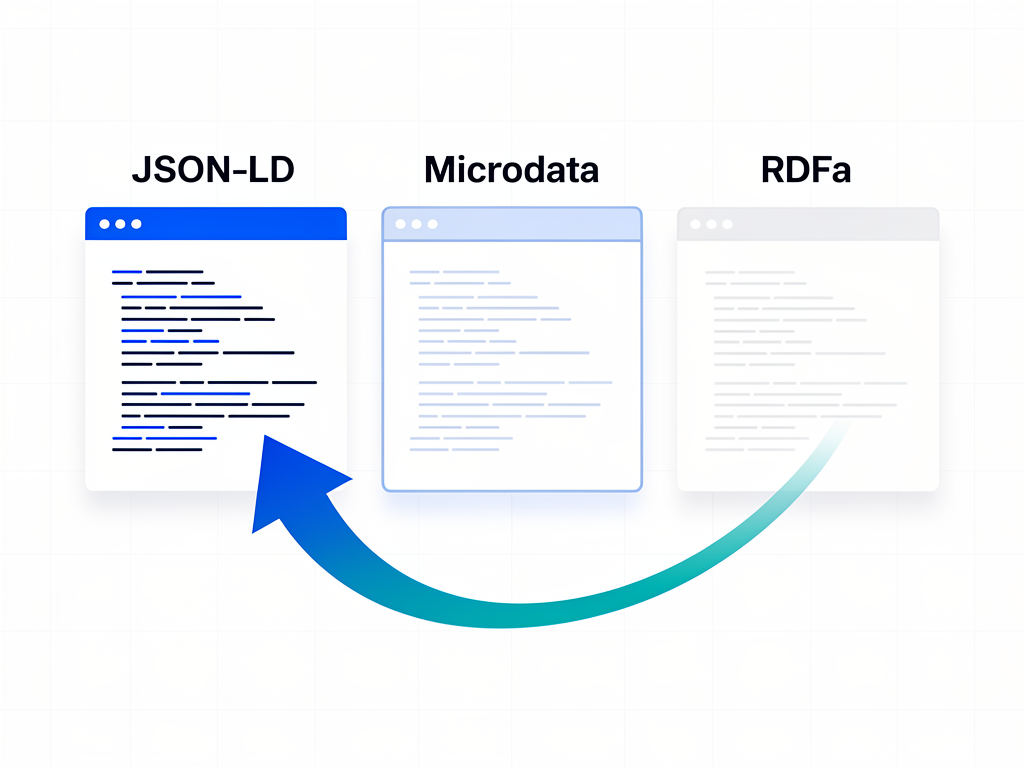
Schema markup can be implemented using three primary formats, each with distinct characteristics that influence implementation decisions. Understanding these formats helps you select the right approach for your specific situation and ensures compatibility with your content management system and technical infrastructure.
JSON-LD: The Recommended Standard
JavaScript Object Notation for Linked Data represents the current best practice for schema implementation. Google explicitly recommends JSON-LD because it separates structured data from HTML content, making implementation and maintenance significantly easier. The code exists within a script tag in the page head or body, completely independent of your visible content structure.
This separation provides tremendous flexibility. You can update structured data without modifying page templates, inject schema dynamically based on content attributes, and maintain clean HTML that remains easy to read and edit. For content management systems and automated publishing workflows, JSON-LD integrates seamlessly with template systems and API-driven content delivery.
Microdata: The Inline Approach
Microdata embeds structured data directly within HTML elements using specific attributes like itemscope, itemtype, and itemprop. While search engines still support this format, it creates tight coupling between your content structure and schema implementation. Any changes to page layout or HTML structure require corresponding updates to microdata attributes.
Some legacy systems and older CMS platforms may still rely on microdata, and certain use cases benefit from the inline approach. However, for new implementations and scalable SEO strategies, JSON-LD provides superior flexibility and maintainability.
RDFa: The Semantic Web Legacy
Resource Description Framework in Attributes predates both JSON-LD and microdata, originating from semantic web initiatives. Like microdata, RDFa embeds structured data within HTML attributes but uses a different syntax. While still technically supported, RDFa sees limited adoption in modern SEO implementations due to its complexity and the availability of simpler alternatives.
Essential Schema Types Every Website Should Implement
The schema.org vocabulary contains hundreds of types and thousands of properties, but practical SEO implementation focuses on a subset that directly influences search appearance. Prioritizing the right schema types ensures your implementation efforts deliver measurable results rather than disappearing into technical overhead.
Organization and Local Business Schema
Every business website should implement Organization schema at minimum, providing search engines with authoritative information about your company name, logo, contact details, and social profiles. This foundational schema supports knowledge panel generation and helps establish entity recognition across Google's systems.
For businesses with physical locations, LocalBusiness schema (or more specific subtypes like Restaurant, Store, or ProfessionalService) enables local pack appearances and Google Business Profile integration. Properties including address, opening hours, accepted payment methods, and service areas directly influence local search visibility.
Article and Blog Posting Schema
Content publishers benefit significantly from Article schema, which helps search engines understand authorship, publication dates, and content categorization. For news publishers, NewsArticle schema can qualify content for Google News inclusion and Top Stories carousel placement.
BlogPosting schema serves similar purposes for blog content, with properties for author information, word count, and article sections. Implementing these schemas consistently across your content library improves how search engines evaluate freshness, authority, and topical relevance.
Product and Offer Schema
E-commerce websites absolutely require Product schema to compete effectively in search results. This schema type enables rich snippets displaying price, availability, review ratings, and shipping information directly in search listings. The visual differentiation these elements provide can dramatically impact click-through rates in competitive product searches.
Offer schema works alongside Product schema to specify pricing, currency, availability status, and valid date ranges for promotional pricing. Properly implemented product structured data also qualifies pages for Google Shopping free listings, expanding visibility beyond traditional organic results.
FAQ and How-To Schema
FAQ schema transforms frequently asked questions into expandable accordion-style results that can dominate significant SERP real estate. When implemented correctly, multiple questions and answers appear directly in search results, providing immediate value to users while establishing your page as an authoritative resource.
HowTo schema serves instructional content, displaying step-by-step processes with estimated times, required tools, and supply lists. Recipe schema functions similarly for culinary content, with additional properties for nutrition information, cooking methods, and dietary restrictions.
Review and Rating Schema
Review schema enables star ratings to appear in search results, one of the most visually impactful rich snippet types. AggregateRating schema summarizes multiple reviews into an overall score, while individual Review schema provides detailed review content for specific products, services, or businesses.
Google maintains strict guidelines for review schema implementation, requiring reviews to be genuinely about the item being rated rather than the website or company in general. Violations can result in rich snippet removal or broader manual actions affecting site visibility.
How Automated Schema Generation Tools Transform Implementation
Manual schema creation requires understanding JSON syntax, memorizing property names, and ensuring proper nesting relationships. For a single page, this process might take 15 to 30 minutes for someone familiar with structured data. Multiply that across hundreds of pages, and manual implementation becomes completely impractical for most organizations.
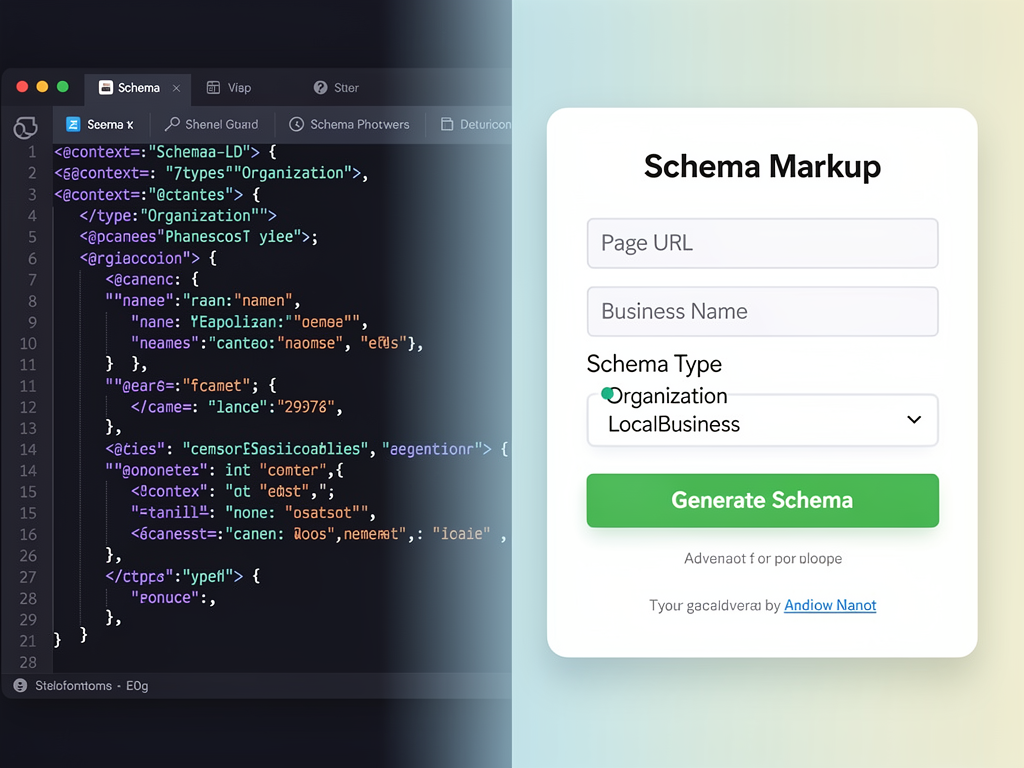
Automated generation tools address this challenge through various approaches. Form-based generators present user-friendly interfaces where you input content details and receive properly formatted JSON-LD code. Template-based systems integrate with content management platforms to generate schema automatically based on page content and metadata.
The efficiency gains extend beyond initial implementation. When schema.org introduces new properties or Google changes rich snippet requirements, automated systems can update across your entire site simultaneously. Manual implementations require page-by-page updates that often remain incomplete, leaving sites with inconsistent or outdated structured data.
For agencies managing multiple client websites, automation becomes even more critical. Standardized schema generation ensures consistent quality across all client implementations while reducing the time investment required for each engagement. The scalability enables agencies to include comprehensive structured data as a standard service rather than a premium add-on.
Selecting the Right Schema Generation Approach for Your Needs
The optimal schema generation strategy depends on your technical resources, content volume, and specific SEO objectives. Understanding the available options helps you invest in solutions that match your actual requirements rather than over-engineering or under-serving your structured data needs.
Standalone Generator Tools
Web-based generators like those offered by technical SEO platforms provide quick solutions for individual page implementation. You select a schema type, fill in the required and optional properties, and copy the generated JSON-LD code to paste into your page HTML. These tools work well for small sites, one-off implementations, and learning how structured data functions.
The limitation becomes apparent at scale. Each page requires individual attention, and there is no connection between the generator and your actual content. Updates require regenerating and re-implementing code manually, creating maintenance overhead that compounds over time.
CMS Plugins and Extensions
WordPress plugins, Shopify apps, and similar CMS extensions automate schema generation based on existing content fields. A well-designed plugin maps your post titles, authors, publication dates, and featured images to corresponding schema properties automatically. Product plugins pull pricing, inventory, and review data directly from your e-commerce platform.
This approach works excellently for standard content types that match your CMS data model. The challenge emerges with custom content types, unique page structures, or schema requirements that do not map cleanly to existing fields. Plugin limitations may force compromises between your content needs and structured data implementation.
Integrated Content Platforms
Modern content platforms increasingly incorporate schema generation as a native feature rather than an afterthought. These systems understand your content structure from creation through publication, enabling intelligent schema generation that reflects actual page content without manual mapping or configuration.
Platforms designed for SEO-focused content production can generate appropriate schema types based on content characteristics, automatically include relevant properties, and update structured data when content changes. This integration eliminates the gap between content creation and technical SEO implementation that causes schema decay in other approaches.
Custom Development Solutions
Enterprise websites with unique requirements may need custom schema generation systems built specifically for their content architecture. These solutions can pull data from multiple sources, apply business logic to schema selection, and integrate with existing publishing workflows.
The investment required for custom development only makes sense at significant scale or for organizations with highly specialized structured data needs. Most businesses find that existing tools and platforms provide sufficient capability without the development and maintenance costs of custom solutions.
Implementing Schema Markup Across Different Content Types
Effective schema implementation requires matching the right schema types to your specific content while including properties that genuinely enhance search appearance. Generic or incomplete implementations fail to deliver the rich snippet benefits that justify the implementation effort.
Blog and Article Content
For blog posts and articles, start with Article or BlogPosting schema including headline, author, datePublished, dateModified, and image properties. The author property should reference a Person schema with name and potentially url pointing to an author bio page. This author connection supports E-E-A-T signals that influence how Google evaluates content quality.
Consider adding speakable schema for content suitable for voice assistant reading. This emerging schema type identifies sections of articles appropriate for text-to-speech conversion, positioning your content for voice search opportunities as that technology matures.
E-commerce Product Pages
Product schema implementation should include name, description, image, brand, sku, and offers at minimum. The Offer schema nested within Product must specify price, priceCurrency, availability, and url. For products with variants, use the hasVariant property to connect parent products with size, color, or configuration options.
Review and AggregateRating schema significantly impact product page click-through rates. If your platform collects customer reviews, implementing this schema should be a priority. Ensure reviews are genuine, recent, and specifically about the product rather than general company feedback.
Service and Professional Pages
Service businesses benefit from Service schema describing what you offer, along with LocalBusiness or Organization schema establishing your business entity. Include areaServed to specify geographic coverage, hasOfferCatalog for service menus, and aggregateRating if you collect client reviews.
Professional service providers should implement Person schema for individual practitioners, potentially with additional types like Physician, Attorney, or Accountant that provide industry-specific properties. These specialized types can influence how profiles appear in knowledge panels and professional directories.

Testing and Validating Your Structured Data Implementation
Generating schema markup represents only half the implementation process. Validation ensures that search engines can parse your structured data correctly and that your implementation qualifies for the rich snippet features you are targeting. Skipping validation frequently results in wasted effort when schema errors prevent any search enhancement.
Google Rich Results Test
Google's Rich Results Test tool should be your primary validation resource. Enter a URL or paste code directly to see which rich result types your structured data supports. The tool identifies errors that prevent rich result eligibility and warnings that might limit functionality without completely blocking enhancement.
Pay particular attention to the "eligible for rich results" indicators for each schema type. Meeting schema.org syntax requirements does not guarantee rich result eligibility, as Google imposes additional requirements for many enhanced features. The Rich Results Test reveals whether your implementation meets Google's specific criteria.
Schema.org Validator
The official schema.org validator checks syntax compliance with the vocabulary specification independent of any search engine's implementation. This tool catches structural errors, invalid property names, and type mismatches that might not trigger warnings in search engine tools but could cause parsing failures.
Using both Google's tool and the schema.org validator provides comprehensive coverage. Google's tool confirms search appearance eligibility while the schema.org validator ensures technical correctness that supports future compatibility as search engines evolve their structured data processing.
Google Search Console Monitoring
After deployment, Search Console's Enhancement reports track how Google processes your structured data across your entire site. These reports identify pages with errors, pages with valid structured data, and trends over time that might indicate systematic issues.
Set up alerts for significant changes in structured data status. A sudden increase in errors often indicates template changes that broke schema implementation, content updates that invalidated previously correct markup, or CMS updates that affected plugin functionality.
| Validation Tool | Primary Purpose | Best Used For | Limitations |
|---|---|---|---|
| Google Rich Results Test | Rich snippet eligibility | Pre-deployment testing | Google-specific requirements only |
| Schema.org Validator | Syntax correctness | Technical validation | Does not confirm search appearance |
| Search Console Enhancements | Site-wide monitoring | Ongoing maintenance | Delayed reporting, sampling |
| Bing Markup Validator | Bing compatibility | Multi-engine optimization | Bing-specific features only |
Common Schema Implementation Mistakes and How to Avoid Them
Even experienced SEO professionals encounter schema implementation challenges that reduce effectiveness or create compliance issues. Understanding common mistakes helps you avoid pitfalls that undermine your structured data investment.
Mismatched Schema Types
Applying incorrect schema types to content represents one of the most frequent errors. Using Product schema for service pages, Article schema for product descriptions, or LocalBusiness schema for online-only businesses creates confusion for search engines and may trigger manual review.
Always verify that your schema type accurately describes the page content. When content does not fit cleanly into a specific type, use more general types like WebPage or Thing rather than forcing an inappropriate specific type. Accuracy matters more than specificity.
Missing Required Properties
Each schema type has required properties that must be present for valid implementation. Product schema requires name and at least one of offers, review, or aggregateRating. Article schema requires headline, image, datePublished, and author. Missing required properties often results in complete rich snippet ineligibility.
Review Google's documentation for each schema type you implement to understand both required and recommended properties. Recommended properties are not technically required but significantly increase the likelihood of rich snippet display and the quality of that display when it occurs.
Invisible or Hidden Content
Schema markup must describe content visible to users on the page. Including prices, reviews, or other information in structured data that does not appear in visible page content violates Google's guidelines and can result in manual actions. The structured data should reflect what users actually see, not aspirational or supplementary information.
This guideline extends to dynamically loaded content. If reviews load via JavaScript after initial page render, ensure your schema generation accounts for this content or that search engines can access the fully rendered page including dynamic elements.
Duplicate or Conflicting Schema
Multiple schema blocks describing the same entity with different information creates parsing conflicts. This commonly occurs when CMS plugins generate schema automatically while developers also add manual implementations, or when multiple plugins attempt to handle the same schema types.
Audit your pages for duplicate schema using browser developer tools or validation services. Consolidate multiple implementations into a single authoritative schema block that contains all relevant properties without redundancy or contradiction.

Scaling Structured Data Across Large Websites
Implementing schema on a 10-page website differs fundamentally from managing structured data across thousands of pages. Scale introduces challenges around consistency, maintenance, and performance that require systematic approaches rather than page-by-page attention.
Template-Based Implementation
For sites built on consistent templates, implementing schema at the template level ensures every page of that type receives appropriate structured data automatically. A product template generates Product schema for every product page. A blog post template generates Article schema for every article.
Template implementation requires careful variable mapping to ensure dynamic content populates schema properties correctly. Test templates with various content examples to verify that edge cases (missing images, no reviews, special characters in titles) do not break schema validity.
Content Type Mapping
Large sites typically contain multiple content types requiring different schema implementations. Create a comprehensive map connecting each content type to its appropriate schema type and required properties. This documentation guides both initial implementation and ongoing maintenance as content types evolve.
Consider creating a schema implementation guide specific to your organization that documents decisions, property mappings, and validation procedures. This resource ensures consistency across team members and provides onboarding material for new staff.
Automated Quality Assurance
Manual validation becomes impossible at scale. Implement automated testing that crawls your site, extracts structured data from each page, validates against schema.org specifications, and reports errors for remediation. Tools like Screaming Frog, Sitebulb, and custom scripts can perform this function.
Schedule regular automated audits rather than relying on reactive error discovery. Monthly or quarterly comprehensive crawls catch issues before they affect significant portions of your site and before search engines reduce rich snippet display due to quality concerns.
Performance Considerations
Extensive schema markup adds to page weight and can impact load times if implemented carelessly. While JSON-LD is generally lightweight, pages with multiple complex schema types (product with variants, reviews, FAQ, and organization) can accumulate significant code volume.
Monitor page weight and load time metrics after schema implementation. Consider whether all schema properties are necessary or if some optional properties add minimal value relative to their performance cost. Prioritize properties that directly influence rich snippet display over comprehensive but rarely utilized properties.
Integrating Schema Generation with Content Workflows
The most effective structured data implementations integrate seamlessly with content creation and publishing processes. When schema generation requires separate manual steps, it frequently gets skipped during busy periods or forgotten entirely for certain content types.
Content Brief Integration
Include schema requirements in content briefs and editorial guidelines. Specify which schema types apply to different content formats, what information writers need to provide for schema population, and how to structure content to support rich snippet eligibility.
For FAQ content, brief writers on the question-answer format requirements. For how-to content, specify the need for clear step delineation. This upstream integration ensures content arrives ready for schema implementation rather than requiring restructuring.
Editorial Workflow Checkpoints
Add schema validation as a required step in your publishing workflow. Before content goes live, verify that appropriate structured data exists and validates correctly. This checkpoint catches issues before they reach production and establishes schema as a standard quality criterion.
For teams using editorial calendars or project management systems, create schema-related tasks or checklist items that must be completed before publication approval. Systematizing the requirement prevents schema from becoming an afterthought.
Automated Content Platform Benefits
Content platforms designed for SEO can eliminate manual schema steps entirely by generating structured data automatically based on content characteristics. When you create an article, the platform generates Article schema. When you publish a product review, Review schema appears automatically.
This automation removes the possibility of human error or oversight while ensuring every piece of content receives appropriate structured data from the moment of publication. For organizations publishing at volume, this integration transforms schema from a bottleneck into a seamless background process.

Advanced Schema Strategies for Competitive Advantage
Beyond basic implementation, sophisticated schema strategies can differentiate your search presence and capture opportunities that competitors miss. These advanced approaches require deeper understanding but deliver proportionally greater benefits.
Entity Relationship Mapping
Schema markup can express relationships between entities on your site and across the web. Connecting authors to their articles, products to their brands, and local businesses to their parent organizations creates a knowledge graph that search engines can leverage for enhanced understanding.
Use the sameAs property to link your entities to authoritative external sources like Wikipedia, LinkedIn, or official brand pages. These connections strengthen entity recognition and can influence knowledge panel generation for your brand or key personnel.
Nested and Complex Schema
Real-world content often requires nested schema structures that go beyond simple type implementation. A recipe page might include Recipe schema with nested NutritionInformation, HowToStep sequences, and AggregateRating. An event listing might nest Offer, Place, and Performer schemas within the parent Event.
Mastering nested schema enables richer search appearances and more accurate content representation. Study schema.org documentation for expected property types and ensure your nesting follows the specified patterns for each relationship.
Emerging Schema Types
Schema.org continuously evolves with new types and properties. Staying current with these additions positions your site to capture early-mover advantages when search engines begin supporting new rich result types. Recent additions include schemas for educational content, health information, and various specialized business types.
Monitor schema.org release notes and Google Search Central announcements for new structured data opportunities. Early implementation of emerging schemas can provide competitive advantages before widespread adoption levels the playing field.
Cross-Platform Schema Consistency
If your content appears across multiple platforms (main website, AMP pages, mobile apps), ensure schema implementation remains consistent across all versions. Inconsistent structured data across platforms can confuse search engines and reduce the authority signals that comprehensive implementation provides.
Audit all content delivery channels for schema presence and accuracy. Implement centralized schema generation that serves all platforms from a single source of truth rather than maintaining separate implementations that can drift apart over time.
Measuring the Impact of Structured Data on SEO Performance
Implementing schema without measuring results leaves you uncertain whether the investment delivers value. Establishing clear metrics and tracking mechanisms enables data-driven optimization of your structured data strategy.
Rich Snippet Appearance Tracking
Search Console's Performance report allows filtering by search appearance type. Track impressions and clicks for pages appearing with rich results versus standard listings. This comparison reveals the actual click-through rate impact of your schema implementation.
Note that rich snippet display is not guaranteed even with valid schema. Google decides whether to show enhanced results based on query context, user intent, and competitive factors. Tracking appearance rates over time reveals whether your implementation quality supports consistent rich result display.
Click-Through Rate Analysis
Compare click-through rates for pages before and after schema implementation. Control for other variables like ranking position changes, title tag updates, or seasonal traffic patterns. Isolating the schema impact requires careful analysis but provides the clearest evidence of structured data value.
Segment analysis by schema type to understand which implementations deliver the greatest impact. FAQ schema might dramatically increase CTR for informational queries while Product schema drives improvements for commercial searches. This segmentation guides prioritization of future implementation efforts.
Ranking Correlation Studies
While Google states that structured data is not a direct ranking factor, correlational studies frequently show positive relationships between comprehensive schema implementation and ranking performance. This correlation likely reflects the broader quality signals that accompany well-implemented structured data.
Track ranking changes for pages receiving schema implementation, controlling for other optimization activities. Even if the relationship is correlational rather than causal, understanding this pattern informs resource allocation decisions.

Schema Markup and the Future of Search
Structured data importance continues growing as search technology evolves beyond traditional keyword matching toward semantic understanding, AI-powered features, and multi-modal search experiences. Investing in schema implementation today positions your content for emerging search paradigms.
AI and Large Language Model Integration
AI-powered search features like Google's Search Generative Experience rely heavily on structured data to understand content accurately. Pages with comprehensive schema implementation provide clearer signals that AI systems can use when generating responses and citations.
As AI search features expand, the gap between schema-optimized content and unstructured content will likely widen. Early investment in structured data creates advantages that compound as these technologies mature and gain user adoption.
Voice Search and Smart Assistants
Voice assistants need structured data to answer queries accurately and attribute information to sources. Speakable schema specifically marks content suitable for voice reading, while FAQ and HowTo schemas provide the structured answers that voice responses require.
The shift toward voice interaction makes structured data essential rather than optional for maintaining search visibility. Content without schema becomes invisible to voice assistants even when it would rank well in traditional text search.
Knowledge Graph Expansion
Google's Knowledge Graph continues expanding to cover more entities, relationships, and information types. Schema markup provides the structured signals that feed this expansion, potentially earning your content and brand representation in knowledge panels and entity-based search features.
Organizations that establish strong entity recognition through comprehensive structured data gain persistent advantages in how they appear across Google's ecosystem. This recognition extends beyond individual page rankings to brand-level visibility improvements.

Building a Sustainable Schema Implementation Strategy
One-time schema implementation quickly becomes outdated as content changes, schema.org evolves, and search engine requirements shift. Building sustainable processes ensures your structured data investment continues delivering value over time.
Documentation and Standards
Create internal documentation specifying your schema implementation standards. Document which schema types apply to which content, required versus optional properties for each type, and validation procedures. This documentation enables consistent implementation across team members and over time.
Review and update documentation quarterly to incorporate schema.org changes, lessons learned from implementation experience, and evolving best practices from the SEO community. Treat schema standards as living documents rather than static references.
Regular Audit Schedules
Schedule comprehensive schema audits at regular intervals, typically monthly or quarterly depending on site size and content velocity. These audits should verify that existing schema remains valid, new content receives appropriate structured data, and no errors have accumulated since the previous audit.
Assign clear ownership for schema maintenance to prevent the common pattern where structured data degrades because no one considers it their responsibility. Whether this ownership sits with SEO specialists, developers, or content teams, explicit assignment ensures accountability.
Continuous Learning and Adaptation
Schema.org releases updates regularly, and search engines continuously refine their structured data processing. Designate team members to monitor these changes and assess implications for your implementation. Join SEO communities where practitioners share insights about structured data developments.
Test new schema types and properties on limited page sets before rolling out broadly. This controlled experimentation reveals opportunities and issues without risking site-wide problems from untested implementations.

Practical Implementation Checklist for Immediate Action
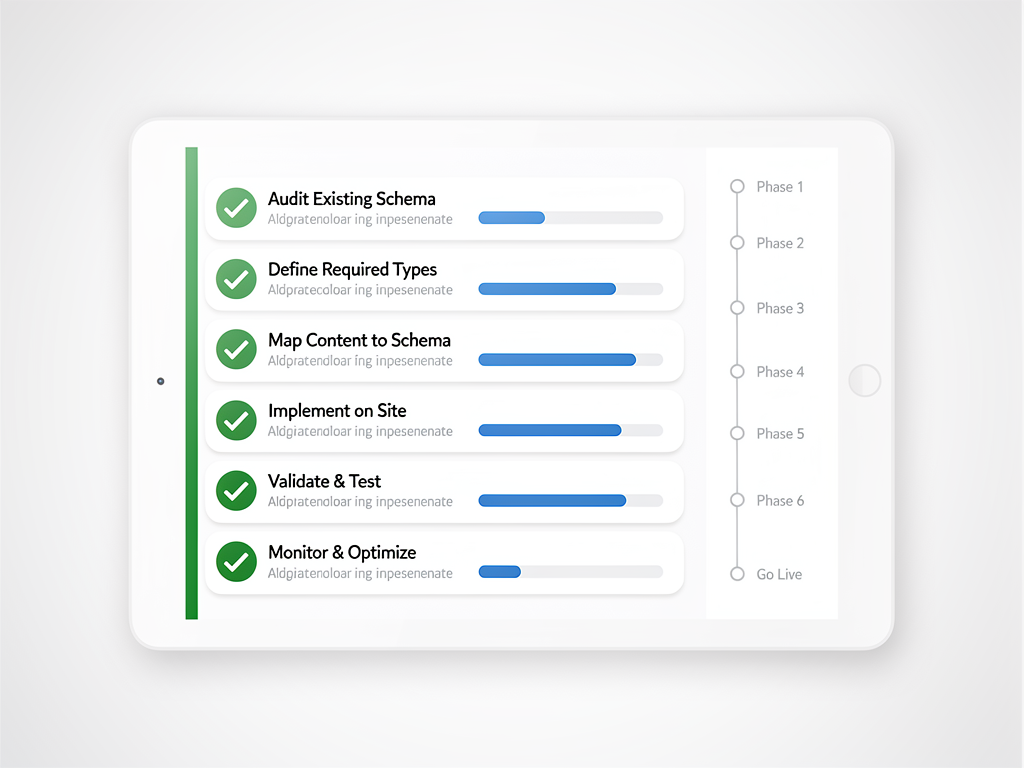
Theory becomes valuable only through application. This checklist provides a structured approach to implementing or improving schema markup on your website, whether you are starting from scratch or optimizing existing structured data.
Assessment Phase
Begin by auditing your current structured data status. Crawl your site to identify pages with existing schema, pages missing structured data, and pages with errors in their implementation. Tools like Screaming Frog or Sitebulb can extract and validate schema across your entire site efficiently.
Catalog your content types and map each to appropriate schema types. Identify which content types have the highest traffic or conversion value to prioritize implementation efforts. Create a prioritized implementation roadmap based on this analysis.
Tool Selection Phase
Evaluate schema generation options based on your technical capabilities, content management system, and scale requirements. Test multiple tools with sample content to assess output quality, ease of use, and integration capabilities before committing to a specific approach.
Consider both immediate needs and future scalability. A tool that works for current requirements but cannot scale with growth creates migration challenges later. Invest in solutions that support your anticipated growth trajectory.
Implementation Phase
Start with high-priority pages and schema types identified in your assessment. Implement, validate, and deploy in controlled batches rather than attempting site-wide changes simultaneously. This phased approach limits risk and enables learning from early implementations.
Document implementation decisions and any customizations made to standard approaches. This documentation supports troubleshooting, future updates, and knowledge transfer within your organization.
Monitoring Phase
Establish baseline metrics before implementation to enable accurate impact measurement. Set up Search Console monitoring for structured data status and configure alerts for significant changes. Schedule regular reviews of schema performance and error reports.
Create feedback loops between monitoring insights and implementation improvements. When errors appear or rich snippets fail to display, investigate root causes and update implementation standards to prevent recurrence.
Conclusion
Structured data implementation through automated schema generation has evolved from a technical nice-to-have into a fundamental SEO requirement. As search engines increasingly rely on explicit content signals to power rich results, AI features, and knowledge graph integration, websites without comprehensive schema markup compete at a significant disadvantage.
The tools and strategies covered in this guide enable implementation at any scale, from small business websites to enterprise content operations. Whether you choose standalone generators for quick implementations, CMS plugins for automated generation, or integrated content platforms that handle schema seamlessly, the key is taking action rather than leaving structured data as a perpetual future task.
Start with your highest-value content types, implement appropriate schema using the tools that match your technical capabilities, validate thoroughly before deployment, and establish sustainable maintenance processes. The click-through rate improvements, enhanced search visibility, and future-proofing benefits justify the implementation investment many times over.
Search technology will continue evolving toward semantic understanding, AI-powered features, and entity-based results. Organizations that build strong structured data foundations today position themselves to capture these emerging opportunities while competitors scramble to catch up. The time to invest in comprehensive schema implementation is now.
Frequently Asked Questions
How long does it take to see results from schema markup implementation?
The timeline for seeing results from schema markup varies based on several factors including your site's crawl frequency, the competitiveness of your keywords, and Google's processing queue. Typically, you can expect Google to recognize new structured data within one to four weeks after implementation, though rich snippet display may take longer. High-authority sites with frequent crawling often see faster recognition, sometimes within days. To accelerate the process, use Search Console's URL Inspection tool to request indexing after implementing schema on important pages. Monitor the Enhancements section in Search Console to track when Google begins recognizing your structured data. Remember that valid schema does not guarantee rich snippet display, as Google makes algorithmic decisions about when enhanced results appear based on query context and user intent.
Can schema markup hurt my SEO if implemented incorrectly?
Yes, incorrect schema implementation can negatively impact your SEO in several ways. The most serious risk involves manual actions from Google when schema violates their guidelines, such as marking up content that is not visible to users, using review schema for self-promotional purposes, or implementing schema types that do not match page content. These violations can result in rich snippet removal for specific pages or, in severe cases, site-wide penalties. Even without manual actions, incorrect schema wastes crawl budget as search engines attempt to parse invalid markup, and it can confuse search algorithms about your content's nature. Always validate schema before deployment using Google's Rich Results Test, implement only schema types that accurately describe your content, and ensure all marked-up information appears visibly on the page.
What is the difference between JSON-LD, Microdata, and RDFa for schema implementation?
These three formats represent different technical approaches to embedding structured data in web pages. JSON-LD (JavaScript Object Notation for Linked Data) places schema in a separate script block, completely independent of your HTML content structure. This separation makes JSON-LD easier to implement, maintain, and update without touching page templates. Google explicitly recommends JSON-LD as the preferred format. Microdata embeds schema directly within HTML elements using specific attributes (itemscope, itemtype, itemprop), creating tight coupling between content structure and structured data. RDFa similarly embeds schema in HTML attributes but uses different syntax originating from semantic web standards. While all three formats are technically supported by search engines, JSON-LD's flexibility, ease of dynamic generation, and Google's stated preference make it the clear choice for new implementations. Legacy systems using Microdata or RDFa continue functioning but should consider migration to JSON-LD for improved maintainability.
How do I choose which schema types to implement first on my website?
Prioritize schema implementation based on the intersection of content importance and rich snippet potential. Start with Organization or LocalBusiness schema as foundational elements that establish your entity identity across all pages. Next, focus on your highest-traffic or highest-converting content types. E-commerce sites should prioritize Product and Offer schema for product pages. Content publishers should implement Article or BlogPosting schema for their primary content. Service businesses benefit from Service and LocalBusiness schema combinations. After covering primary content types, expand to opportunity-specific schemas like FAQ (for pages with question-answer content), HowTo (for instructional content), or Review (for review content). Use Search Console data to identify pages with strong impressions but lower click-through rates, as these represent prime candidates for rich snippet enhancement through schema implementation.
Do I need technical skills to implement schema markup on my website?
The technical skills required depend on your implementation approach. Modern schema generation tools and CMS plugins have dramatically reduced the technical barrier, enabling marketers and content creators to implement structured data without coding knowledge. Form-based generators produce ready-to-use JSON-LD code that you can paste into your page HTML with basic copy-paste skills. WordPress plugins like Yoast SEO or RankMath handle schema automatically based on content fields you already populate. However, more advanced implementations, such as custom schema types, complex nested structures, or template-level implementation across large sites, do require technical understanding of JSON syntax, HTML structure, and potentially server-side scripting. For organizations without in-house technical resources, integrated content platforms that automate schema generation provide the most accessible path to comprehensive structured data implementation without requiring dedicated development support.
How often should I audit and update my schema markup?
Establish a regular audit schedule based on your content velocity and site complexity. For most websites, quarterly comprehensive audits provide sufficient coverage to catch issues before they significantly impact search visibility. High-volume publishers or e-commerce sites with frequent inventory changes should consider monthly audits. Beyond scheduled audits, trigger reviews whenever you make significant changes to page templates, update your CMS or schema plugins, or notice changes in Search Console enhancement reports. Schema.org releases updates approximately quarterly, so review these releases to identify new properties or types relevant to your content. Google also periodically changes rich snippet requirements, sometimes deprecating previously supported features or adding new eligibility criteria. Subscribe to Google Search Central announcements and schema.org release notes to stay informed about changes requiring implementation updates.
Ready to Automate Your Schema Implementation?
Implementing comprehensive structured data across your content should not require manual coding or constant maintenance. SeoSmart automatically generates appropriate schema markup for every article, ensuring your content arrives in search results with the rich snippet potential it deserves. From Article schema with proper author attribution to FAQ markup that captures SERP real estate, the platform handles structured data as a seamless part of content creation. Start your free trial today and experience how automated schema generation transforms your SEO workflow while delivering measurable improvements in search visibility and click-through rates.
Subscribe to our newsletter
Subscribe to our newsletter and stay up-to-date with the latest news and updates.