AI Writing for SEO: Transforming Content Strategy for Top Rankings
Discover how AI writing tools revolutionize SEO content creation by bridging the gap between publishing and ranking. Learn to leverage AI for strategic keyword research, semantic optimization, and efficient workflows that enhance both human and algorithmic engagement.

Zakariae

The gap between publishing content and ranking content has never been wider. Every day, millions of new articles flood the internet, yet only a fraction ever reach the first page of search results. For SEO agencies, content marketing managers, and business owners managing their own digital presence, this reality creates an impossible equation: produce more content, make it better, and do it faster, all while competing against organizations with seemingly unlimited resources.
This is precisely where artificial intelligence transforms the content creation landscape. Modern AI tools do not simply generate text; they analyze search intent, identify content gaps, optimize for semantic relevance, and help writers produce comprehensive articles that satisfy both algorithms and human readers. The question is no longer whether to incorporate these tools into your workflow, but how to leverage them strategically for maximum ranking potential.
Throughout this guide, we will explore the complete journey from initial concept to first page rankings, examining how intelligent content systems can accelerate every phase of the SEO content lifecycle. Whether you manage content for a single niche site or oversee production for dozens of clients, understanding this workflow will fundamentally change how you approach content strategy.
Key Takeaways
- AI writing tools excel at research and structure, helping you identify ranking opportunities and create comprehensive outlines that match search intent before writing a single paragraph.
- First drafts should be starting points, not final products; the most successful content combines AI efficiency with human expertise, examples, and authentic voice.
- Semantic optimization matters more than keyword density; modern algorithms evaluate topical coverage, entity relationships, and contextual relevance rather than simple keyword matching.
- Content that ranks requires systematic workflows, from keyword research through publication and link building, with AI tools supporting each phase rather than replacing strategic thinking.
- Automation enables scale without sacrificing quality when properly configured; platforms like SeoSmart's automated content platform can produce and publish dozens of optimized articles monthly while maintaining brand consistency.
- Backlink acquisition remains essential; even perfectly optimized content needs authority signals, making integrated link building networks increasingly valuable for competitive niches.

Understanding the Modern SEO Content Landscape
Search engine optimization has evolved dramatically over the past decade. The days of keyword stuffing and thin content generating traffic are long gone. Google's algorithms now employ sophisticated natural language processing to understand search intent, evaluate content quality, and assess topical authority. This evolution means content creators must produce genuinely valuable material that comprehensively addresses user queries.
For content marketing managers at B2B companies and SEO agencies serving multiple clients, this shift creates significant production challenges. A single high-quality article targeting a competitive keyword might require extensive research, careful structuring, thorough writing, and meticulous optimization. Multiply this effort across dozens of keywords and multiple client websites, and the resource requirements become overwhelming.
The emergence of AI search features, including Google's AI Overviews and platforms like Perplexity, adds another layer of complexity. Content must now satisfy traditional ranking factors while also being structured in ways that AI systems can easily parse, cite, and reference. According to recent industry analyses, pages that rank well in traditional search increasingly appear in AI-generated summaries, creating a compounding advantage for well-optimized content.
This environment demands efficiency without compromising quality. Small business owners managing their own SEO cannot dedicate weeks to each article, yet they compete against established sites with professional content teams. Affiliate marketers and niche site builders need to produce volume while maintaining the depth that earns rankings. The solution lies not in choosing between quality and quantity, but in leveraging technology to achieve both simultaneously.
The Strategic Foundation: Keyword Research and Topic Selection
Every successful piece of SEO content begins with strategic keyword selection. This foundational step determines whether your content has realistic ranking potential or will languish in search obscurity regardless of quality. AI tools have revolutionized this research phase, enabling faster identification of opportunities that match your site's authority level and business objectives.
Effective keyword research involves analyzing multiple factors simultaneously: search volume indicates potential traffic, keyword difficulty suggests competitive intensity, and search intent reveals what users actually want when they enter a query. Traditional manual research might identify dozens of potential keywords; AI-powered research tools can analyze thousands, clustering them by topic and identifying patterns human researchers might miss.
For e-commerce store owners needing blog content, this analysis might reveal informational queries their product pages cannot target. A store selling hiking boots might discover significant search volume for "how to break in hiking boots" or "best hiking boots for wide feet," creating content opportunities that attract potential customers earlier in their buying journey. AI research tools can surface these opportunities systematically rather than relying on intuition alone.
The most sophisticated platforms go beyond basic keyword metrics to analyze content gaps in existing search results. They identify questions competitors fail to answer, subtopics that ranking pages overlook, and angles that could differentiate your content. This competitive intelligence transforms keyword research from a numbers exercise into strategic planning, ensuring every article you produce has a clear path to ranking success.
Pro Tip: When evaluating keyword opportunities, prioritize topics where you can provide unique value through proprietary data, original research, or specialized expertise. AI tools can help you produce content efficiently, but genuine differentiation still comes from human insight and experience.

Crafting Search-Intent Aligned Content Outlines
The outline phase bridges research and writing, establishing the structural framework that determines whether content will satisfy search intent. This step is where many content creators, particularly those working under time pressure, make critical mistakes. Rushing into writing without a solid outline often produces content that meanders, misses key subtopics, or fails to match what searchers actually want.
AI tools excel at outline generation because they can analyze top-ranking content at scale. Rather than manually reviewing ten competing articles and synthesizing their structures, intelligent systems can identify common heading patterns, frequently covered subtopics, and structural elements that correlate with ranking success. This analysis produces outlines that are inherently aligned with what search engines expect to see.
However, the best outlines combine AI analysis with human judgment. Freelance content strategists and SEO specialists understand that blindly copying competitor structures produces derivative content. The goal is identifying what ranking pages cover while finding opportunities to provide additional value. Perhaps competitors all discuss a topic superficially, creating an opening for deeper analysis. Maybe they all miss a related question that searchers frequently ask.
Consider the structure of this very article. An AI analysis of top-ranking content about using artificial intelligence for SEO content would reveal common sections: keyword research, content creation, optimization, and measurement. But the outline goes further, addressing specific audience needs like automation at scale, backlink integration, and workflow efficiency that differentiate it from generic treatments of the topic.
Effective outlines also consider content hierarchy and information architecture. Main headings (H2 tags) should represent distinct topical sections, while subheadings (H3 tags) break these into digestible components. This structure helps both readers and search engines understand content organization, improving user experience metrics that influence rankings.
From Blank Page to First Draft: AI-Assisted Writing Workflows
The actual writing phase is where AI tools deliver their most visible productivity gains. What once required hours of focused writing can now be accomplished in a fraction of the time, freeing content creators to focus on strategy, editing, and optimization rather than initial text generation. But maximizing this efficiency requires understanding how to work with AI effectively rather than simply accepting whatever output it produces.
The most successful approach treats AI as a collaborative writing partner rather than an autonomous content generator. As one experienced SEO practitioner noted in a recent LinkedIn analysis, "I don't let AI write. I use AI to write with me." This distinction is crucial. Providing AI tools with detailed context, including target audience, content objectives, brand voice guidelines, and specific points to cover, produces dramatically better results than generic prompts.
For SaaS companies requiring regular content production, this collaborative approach might involve feeding AI systems with product documentation, customer success stories, and industry terminology. The resulting drafts incorporate company-specific language and examples rather than generic filler. Marketing teams with limited content resources can produce more material without sacrificing the brand consistency that builds audience trust.
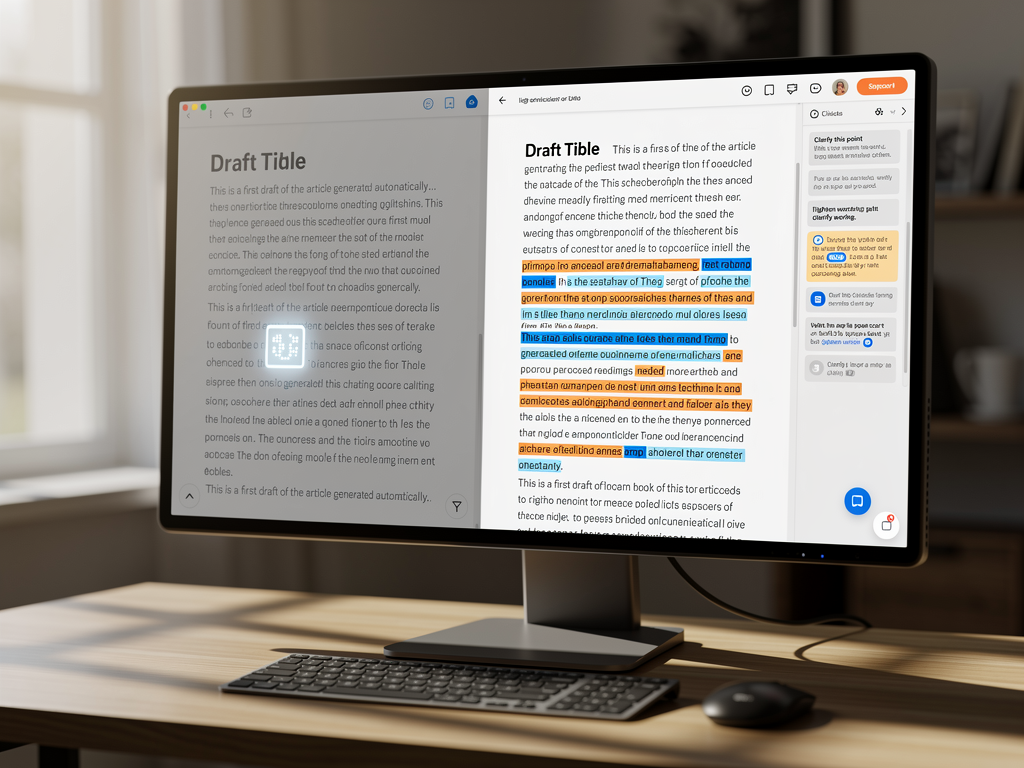
The first draft should never be the final product. AI-generated content requires human review to add authentic examples, verify factual claims, inject personality, and ensure logical flow. This editing process is where content transforms from competent to compelling. The time saved on initial drafting creates space for the thoughtful refinement that separates ranking content from content that merely exists.
| Writing Phase | AI Contribution | Human Contribution |
|---|---|---|
| Research | Data gathering, source identification, trend analysis | Source evaluation, insight synthesis, angle selection |
| Outlining | Competitor analysis, structure suggestions, subtopic identification | Strategic differentiation, audience alignment, gap identification |
| Drafting | Initial text generation, section expansion, variation creation | Voice injection, example addition, logical refinement |
| Editing | Grammar checking, readability analysis, consistency review | Fact verification, tone adjustment, quality assurance |
| Optimization | Keyword placement, semantic analysis, technical markup | Intent alignment, user experience, strategic linking |
Semantic Optimization: Beyond Basic Keyword Placement
Traditional keyword optimization focused on including target phrases a specific number of times throughout content. Modern SEO requires a fundamentally different approach. Search engines now understand language semantically, evaluating whether content comprehensively covers a topic rather than simply checking for keyword presence. This shift demands optimization strategies that address topical depth, entity relationships, and contextual relevance.
Semantic optimization begins with understanding the concepts and terms that naturally accompany your target keyword. An article about "email marketing automation" should naturally discuss related concepts like "drip campaigns," "segmentation," "open rates," and "conversion tracking." AI tools can identify these semantic relationships by analyzing what top-ranking content includes, ensuring your article covers the full topical landscape that search engines expect.
Entity optimization represents another crucial dimension. Search engines maintain knowledge graphs connecting people, places, organizations, and concepts. Content that clearly identifies and contextualizes relevant entities, such as mentioning specific tools, citing recognized experts, or referencing authoritative organizations, demonstrates topical expertise. This entity recognition helps search engines understand what your content is actually about and how it relates to broader knowledge structures.
For affiliate marketers and niche site builders, semantic optimization creates opportunities to rank for clusters of related keywords rather than isolated terms. A single well-optimized article might capture traffic from dozens of variations and related queries, multiplying the return on content investment. AI tools that analyze semantic relationships can identify these clustering opportunities during the planning phase, informing content strategy at scale.
Internal linking also contributes to semantic optimization by establishing topical relationships between pages on your site. When you link from one article to another using descriptive anchor text, you signal to search engines how these pages relate conceptually. Platforms offering automated internal linking capabilities can manage these connections systematically, ensuring your content architecture supports topical authority development.
Technical SEO Elements: Schema Markup and Structured Data
Content quality and semantic relevance form the foundation of ranking success, but technical implementation determines whether search engines can fully understand and feature your content. Schema markup provides explicit signals about content type, structure, and key information, enabling rich results and enhanced search appearances that improve click-through rates.
For article content, relevant schema types include Article, BlogPosting, and HowTo markup. These structured data formats tell search engines exactly what type of content you have published, who authored it, when it was published and updated, and what topics it covers. Properly implemented schema can result in enhanced search listings with publication dates, author information, and other details that build credibility and attract clicks.
FAQ schema deserves particular attention for SEO content. When your article includes frequently asked questions with clear answers, FAQ markup can generate expandable question-and-answer results directly in search listings. This enhanced visibility occupies more search result real estate and provides immediate value to searchers, often improving click-through rates significantly.
Manual schema implementation requires technical knowledge that many content creators lack. This is where automated solutions provide substantial value. Platforms that automatically generate and insert appropriate schema markup remove technical barriers, ensuring every published article includes the structured data that maximizes search visibility. For agencies managing multiple client sites, this automation prevents the inconsistency and errors that manual implementation often introduces.
Beyond schema, other technical elements influence content performance. Page speed affects both rankings and user experience; images must be properly compressed and served in modern formats. Mobile responsiveness is non-negotiable given Google's mobile-first indexing. Core Web Vitals metrics measure loading performance, interactivity, and visual stability. While these factors extend beyond content creation itself, choosing publishing platforms that handle technical optimization automatically simplifies the path from draft to ranking.

Visual Content Integration: Images and Video Embedding
Text-only content rarely achieves optimal engagement or ranking performance. Modern SEO content requires strategic visual integration, including relevant images, informative graphics, and embedded videos that enhance user experience and increase time on page. AI tools have expanded capabilities in this area, enabling automated image generation and intelligent video embedding that previously required significant manual effort.
Images serve multiple purposes in SEO content. They break up text walls, improving readability and reducing bounce rates. They provide visual explanations of complex concepts, enhancing comprehension. They create opportunities for image search traffic through proper alt text optimization. And they make content more shareable on social platforms, potentially generating referral traffic and backlink opportunities.
AI image generation has reached a quality level where generated visuals can effectively illustrate concepts without requiring stock photo subscriptions or custom graphic design. For content marketing managers producing high volumes of articles, this capability dramatically reduces production costs and timelines. Rather than searching stock libraries for imperfect matches or commissioning custom graphics, AI can generate precisely relevant visuals based on content context.
Video embedding adds another engagement dimension. YouTube videos relevant to your topic can significantly increase time on page, a user engagement signal that correlates with ranking success. Strategic video placement after key sections provides alternative content consumption options for visitors who prefer visual learning. The challenge lies in identifying relevant videos efficiently; AI-powered search and embedding features can automate this process, suggesting contextually appropriate videos based on surrounding content.
Alt text optimization for images deserves careful attention. Descriptive alt text serves accessibility purposes while also providing search engines with context about image content. Rather than generic descriptions like "image" or "photo," effective alt text describes the specific subject, setting, and relevance of each visual. This optimization creates additional ranking opportunities through image search while ensuring content accessibility compliance.
Content Automation at Scale: Sprint Workflows for Agencies
Individual article optimization matters, but sustainable SEO success requires systematic content production at scale. For SEO agencies managing multiple clients, small business owners competing in content-heavy niches, and affiliate marketers building authority sites, manual article-by-article production cannot match the volume that competitive rankings often demand.
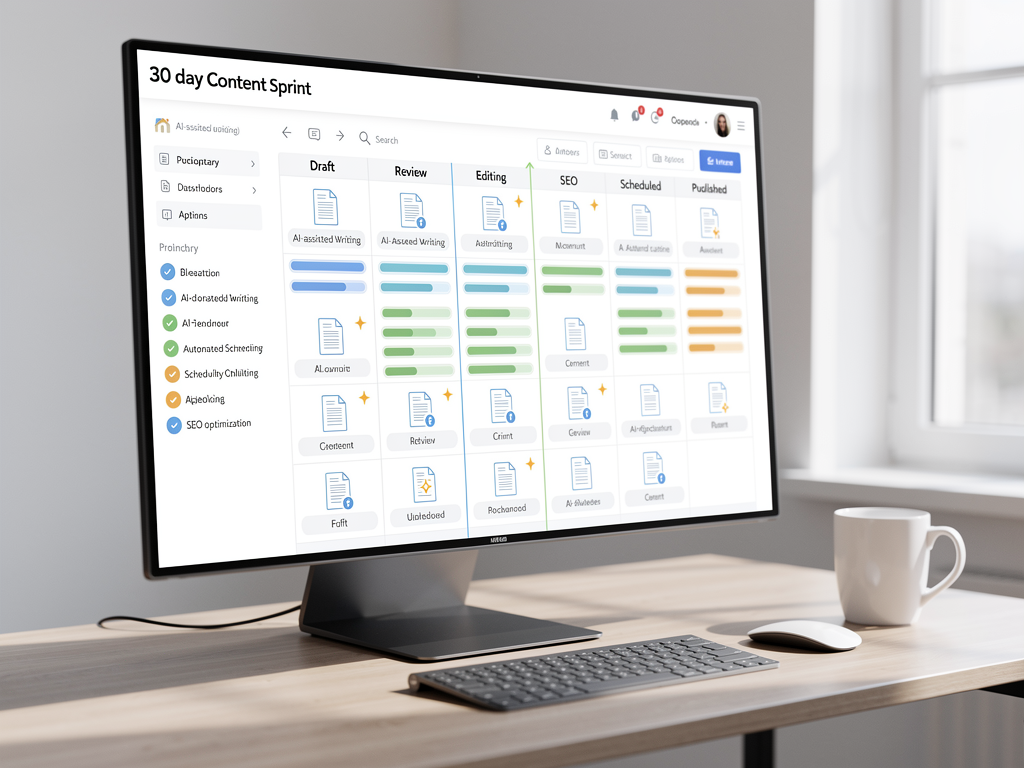
Content sprint workflows address this challenge by automating the entire production pipeline from topic selection through publication. Rather than treating each article as a separate project requiring individual attention at every phase, sprint systems batch similar tasks and automate repetitive elements. AI handles research, outline generation, draft creation, image production, and technical optimization while human oversight ensures quality standards are maintained.
The mathematics of content production illustrate why automation matters. Producing one thoroughly optimized 5,000-word article manually might require 8-12 hours of focused work across research, writing, editing, and optimization phases. At that pace, a single content creator can produce perhaps 15-20 articles monthly while maintaining quality. Automated sprint workflows can produce 30-60 articles monthly per website, dramatically accelerating the timeline to topical authority.
This acceleration does not require sacrificing quality. Properly configured automation systems incorporate brand guidelines, maintain consistent voice, ensure topical relevance, and apply optimization best practices systematically. The key is establishing robust workflows upfront, including content templates, style guides, and quality checkpoints, then letting automation handle execution while humans focus on strategy and oversight.
For e-commerce store owners building content marketing programs, sprint workflows enable competitive content production without hiring dedicated content teams. A single marketing manager can oversee automated production that matches or exceeds the output of much larger organizations. This democratization of content capability levels the playing field between resource-constrained businesses and established competitors.
The Critical Role of Backlinks in Content Ranking
Even perfectly optimized content faces an uphill battle without backlink support. Search engines use links from other websites as authority signals, essentially treating them as votes of confidence in your content quality. For new content on sites without established authority, acquiring these links often determines whether articles reach first page rankings or stagnate beyond the first few search result pages.
Traditional link building requires significant outreach effort: identifying potential linking sites, crafting personalized pitches, following up repeatedly, and managing relationships over time. This process demands substantial time investment that competes with content creation itself. Many content creators produce excellent material that never ranks simply because they lack the resources for effective link building.
Backlink exchange networks offer an alternative approach, connecting site owners who can provide mutual value through strategic linking. Rather than cold outreach to strangers, these networks facilitate connections between relevant sites in complementary niches. A site about productivity software might exchange links with sites covering remote work, project management, or business efficiency, creating natural contextual links that benefit all parties.
The integration of content production and link building represents a significant workflow advancement. Platforms that combine automated article generation with backlink exchange networks address both sides of the ranking equation simultaneously. Content gets produced and published automatically while the same platform facilitates the link acquisition that helps that content rank. This integration eliminates the common scenario where excellent content sits unpromoted because link building fell through the cracks.
For freelance content strategists and SEO specialists, understanding this integration helps when advising clients on platform selection. Tools that only handle content creation leave clients responsible for separate link building efforts, often with inconsistent results. Comprehensive platforms that address the full ranking equation deliver more predictable outcomes with less client-side effort.
Important Note: Quality matters more than quantity in link building. A few relevant links from authoritative sites in your niche provide more ranking value than dozens of links from unrelated or low-quality sources. Effective exchange networks prioritize relevance matching to ensure link value.
Publishing Workflows: From Draft to Live Content
The journey from completed draft to published content involves more steps than many content creators anticipate. Formatting for your specific CMS, adding internal links, inserting images with proper optimization, configuring meta titles and descriptions, setting publication dates, and ensuring technical elements are properly implemented all require attention. Each step introduces potential for errors or delays.
Manual publishing workflows create bottlenecks that limit content velocity. A content marketing manager might complete three articles in a day but spend equal time on publishing tasks. This overhead becomes increasingly problematic as content volume increases, eventually consuming more time than content creation itself. For agencies managing multiple client sites on different platforms, the complexity multiplies further.
One-click publishing integrations eliminate these bottlenecks by connecting content creation directly to popular CMS platforms. WordPress, Webflow, Shopify, and Ghost integrations enable automatic content transfer with proper formatting preserved. Meta information, schema markup, images, and internal links all transfer correctly without manual intervention. What previously required 30-60 minutes of publishing work per article happens automatically.
Scheduling capabilities add another efficiency dimension. Rather than publishing content immediately upon completion, strategic scheduling distributes content over time for consistent publishing cadence. This consistency signals active site maintenance to search engines while preventing the feast-or-famine publishing patterns that can confuse both algorithms and audiences.
For small business owners managing their own SEO, these publishing efficiencies are transformative. Limited time can focus on strategic decisions, such as topic selection and content review, rather than technical implementation. The barrier between creating content and having it live on your site essentially disappears, enabling faster iteration and more responsive content strategies.

Multilingual Content: Expanding Global Reach
English-language content represents only a fraction of global search volume. For businesses targeting international markets or serving multilingual audiences, content must be available in relevant languages to capture available traffic. Traditional translation workflows are expensive and slow, often requiring professional translators and multiple review cycles per language.
AI translation capabilities have advanced dramatically, enabling content production in 150+ languages with quality that approaches professional human translation for many use cases. This capability transforms international content strategy from a luxury available only to large enterprises into an accessible option for businesses of all sizes.
The strategic implications extend beyond simple translation. Different markets have different search behaviors, competitive landscapes, and content expectations. AI tools can adapt content for local markets rather than producing literal translations that miss cultural nuances. This localization ensures content resonates with target audiences while maintaining SEO optimization for local search engines.
For e-commerce store owners selling internationally, multilingual content creates significant competitive advantages. Many competitors neglect non-English markets, leaving substantial traffic opportunities for businesses willing to invest in localized content. A product guide available in Spanish, French, German, and Portuguese reaches audiences that English-only competitors cannot serve effectively.
Implementation considerations include proper hreflang markup to signal language and regional targeting to search engines, appropriate URL structures for multilingual sites, and content management approaches that enable efficient updates across language versions. Platforms handling these technical elements automatically simplify multilingual content management considerably.
Measuring Success: Analytics and Performance Tracking
Content production without performance measurement is essentially guessing. Understanding which articles rank, which drive traffic, and which convert visitors into customers enables strategic refinement that improves results over time. This measurement discipline separates professional SEO operations from amateur efforts that produce content without learning from outcomes.
Key metrics for SEO content include keyword rankings (positions for target and related terms), organic traffic (visitors from search engines), engagement metrics (time on page, bounce rate, pages per session), and conversions (desired actions like sign-ups, purchases, or contact form submissions). Each metric provides different insights into content performance and improvement opportunities.
Ranking tracking reveals whether optimization efforts are working. New content typically takes weeks or months to achieve stable rankings, so patience is necessary. However, tracking ranking progression over time shows whether content is gaining traction or stagnating. Sudden ranking drops might indicate algorithm updates, competitive changes, or technical issues requiring attention.
Traffic analysis contextualizes ranking success. A first-page ranking for a low-volume keyword might generate less traffic than a third-page ranking for a high-volume term. Understanding traffic patterns helps prioritize future content investments toward topics with the greatest potential impact. Seasonal patterns, trending topics, and evergreen performance all inform content strategy.
Conversion tracking connects content to business outcomes. Traffic without conversions has limited value; understanding which content drives desired actions enables optimization for business impact rather than vanity metrics. This connection between content and revenue justifies continued investment in SEO content programs.

Common Pitfalls and How to Avoid Them
Despite the power of AI-assisted content creation, common mistakes can undermine results. Understanding these pitfalls helps content creators avoid wasted effort and maximize the return on their content investments. Many of these errors stem from misunderstanding how AI tools should be used rather than limitations of the tools themselves.
Over-reliance on AI without human oversight produces generic content that fails to differentiate from competitors. AI tools generate competent text, but competent is not enough for competitive rankings. Human expertise, unique examples, original insights, and authentic voice transform AI drafts into content that stands out. Never publish AI output without thoughtful human editing and enhancement.
Ignoring search intent wastes effort on content that cannot rank regardless of quality. If searchers want product comparisons but you provide theoretical explanations, your content will not satisfy their needs. Analyzing top-ranking content reveals what search engines believe users want; your content must deliver that value while adding unique elements.
Neglecting technical optimization leaves ranking potential unrealized. Brilliant content on a slow-loading page with broken schema markup and missing alt text handicaps itself unnecessarily. Technical excellence should be table stakes, not an afterthought. Automated platforms that handle technical elements consistently prevent these self-inflicted wounds.
Producing content without promotion strategy expects search engines to discover and rank content through quality alone. While quality matters enormously, new content on sites without established authority needs promotional support. Link building, social sharing, email distribution, and other promotion activities accelerate the path to rankings.
Inconsistent publishing undermines topical authority development. Search engines favor sites that demonstrate ongoing expertise through regular content production. Sporadic publishing, even of high-quality content, signals less commitment than consistent output. Sprint workflows and automation help maintain the publishing consistency that builds authority over time.
Building Long-Term Content Strategy
Individual articles contribute to larger strategic objectives. Building sustainable organic traffic requires thinking beyond single pieces of content to comprehensive topic coverage that establishes your site as an authoritative resource. This strategic perspective guides content investments toward maximum cumulative impact.
Topic clustering organizes content around pillar pages and supporting articles. A pillar page provides comprehensive coverage of a broad topic, while cluster content addresses specific subtopics in greater depth. Internal links connect these pieces, creating topical hubs that demonstrate expertise to search engines. AI tools can identify clustering opportunities and ensure comprehensive topic coverage.
Content calendars translate strategy into execution plans. Rather than producing content reactively based on immediate needs or inspiration, calendars ensure systematic coverage of priority topics. This planning prevents gaps in important areas while avoiding redundant coverage of topics already well-addressed. Automated content planning features can generate calendars based on keyword research and competitive analysis.
Content refreshing maintains ranking performance over time. Even successful content eventually becomes outdated as information changes, competitors improve their coverage, and search algorithms evolve. Regular content audits identify pieces needing updates, while AI tools can assist with identifying outdated information and generating refreshed sections.
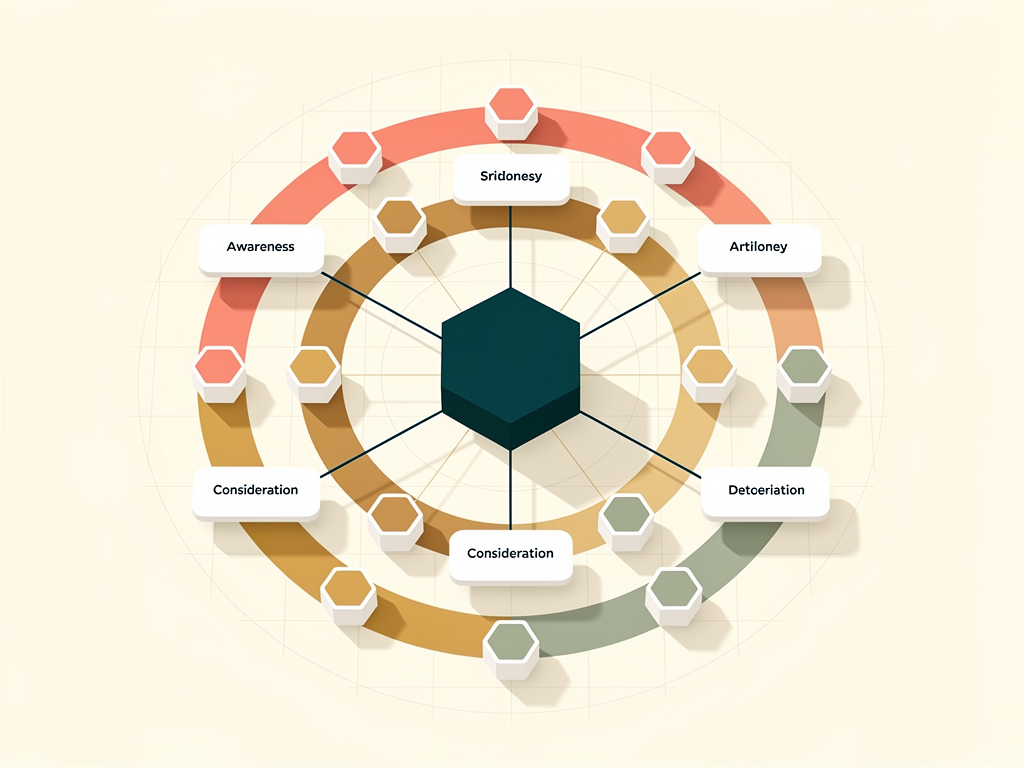
For SaaS companies requiring regular content production, long-term strategy connects content to the customer journey. Awareness-stage content attracts prospects unfamiliar with your solution category. Consideration-stage content helps prospects evaluate options. Decision-stage content supports final purchase decisions. Mapping content to journey stages ensures comprehensive coverage that supports business objectives.
The Future of AI-Assisted SEO Content
The capabilities available today represent early stages of a rapidly evolving landscape. Understanding emerging trends helps content creators prepare for changes that will reshape SEO content production in coming years. Staying ahead of these developments provides competitive advantages as capabilities expand.
AI search integration is already changing how content gets discovered and consumed. Google's AI Overviews, Perplexity, and similar systems synthesize information from multiple sources rather than simply linking to individual pages. Content structured for AI citation, with clear answers, well-organized information, and authoritative sourcing, gains visibility in these new search paradigms.
Personalization capabilities are advancing rapidly. Future AI tools may generate content variations optimized for different audience segments, automatically adapting tone, examples, and emphasis based on visitor characteristics. This personalization could dramatically improve engagement and conversion rates while creating new optimization dimensions.
Real-time optimization based on performance data represents another frontier. Rather than static content that remains unchanged after publication, future systems might continuously refine content based on ranking performance, user engagement signals, and competitive changes. This dynamic optimization could maintain ranking performance with less manual intervention.
Voice search optimization will grow in importance as voice assistants become more capable. Content optimized for conversational queries and featured snippet capture will gain advantages in voice search results. AI tools that understand natural language patterns can help optimize content for these emerging search modalities.

Selecting the Right Tools for Your Workflow
The market offers numerous AI content tools with varying capabilities, pricing models, and target use cases. Selecting appropriate tools requires honest assessment of your specific needs, technical capabilities, and resource constraints. The best tool for an enterprise content team differs significantly from the best option for a solo affiliate marketer.
Evaluation criteria should include output quality across different content types, workflow integration with your existing processes and platforms, scalability to match your production requirements, customization options for brand voice and style, and total cost including both subscription fees and time investments.
For agencies and consultants managing multiple clients, platform flexibility matters significantly. Tools that support multiple websites, different brand voices, and varied content requirements reduce the need for multiple subscriptions and workflow fragmentation. Centralized management of diverse content programs improves efficiency and consistency.
Integration capabilities determine how smoothly tools fit into existing workflows. Native connections to popular CMS platforms, keyword research tools, and analytics systems reduce manual data transfer and enable more automated workflows. Platforms offering comprehensive integration ecosystems, like SeoSmart's WordPress and Webflow integrations, minimize friction between content creation and publication.
Support and documentation affect long-term success with any platform. Complex tools require learning investment; adequate support resources accelerate this learning and help resolve issues that inevitably arise. Community resources, tutorial content, and responsive support teams all contribute to successful tool adoption.
| Feature Category | Questions to Ask | Why It Matters |
|---|---|---|
| Content Quality | Does output require minimal editing? Does it match search intent? | Poor quality means more editing time, negating efficiency gains |
| Customization | Can you define brand voice? Upload knowledge bases? | Generic output fails to differentiate from competitors |
| Integration | Does it connect to your CMS? Keyword tools? Analytics? | Manual transfers waste time and introduce errors |
| Scalability | Can it handle your volume needs? Multiple sites? | Outgrowing tools forces disruptive platform changes |
| Link Building | Does it include backlink support? Exchange networks? | Content without links struggles to rank competitively |
| Pricing | What's the true cost per article? Hidden fees? | Unexpected costs undermine ROI calculations |

Conclusion
The path from first draft to first page rankings has never been more accessible, yet it has also never required more strategic sophistication. AI tools have democratized content production capabilities, enabling small teams and solo practitioners to compete with established organizations that once held insurmountable resource advantages. But technology alone does not guarantee success; strategic application of these tools within comprehensive SEO workflows determines outcomes.
The most successful content creators understand that AI excels at certain tasks while humans remain essential for others. Research, outline generation, draft creation, and technical optimization benefit enormously from AI assistance. Strategic direction, unique insights, authentic voice, and quality judgment require human expertise. The winning formula combines both, leveraging AI efficiency to free human creativity for the work that truly differentiates content.
For SEO agencies, content marketing managers, small business owners, affiliate marketers, e-commerce operators, SaaS companies, freelance strategists, and resource-constrained marketing teams, this combination offers a path to sustainable organic traffic growth. The tools exist to produce comprehensive, optimized content at scale while maintaining the quality standards that earn rankings and engage audiences.
Success requires commitment to continuous learning as capabilities evolve, willingness to experiment with new approaches, and discipline to measure results and refine strategies based on data. The content landscape will continue changing, but the fundamental principles, creating genuine value for searchers while satisfying technical ranking factors, will remain constant. AI tools make executing these principles faster and more efficient than ever before.
Frequently Asked Questions
Can AI-generated content actually rank on the first page of Google?
Yes, AI-assisted content regularly achieves first page rankings when properly executed. Google has clarified that they evaluate content quality rather than production method; well-optimized, valuable content can rank regardless of whether AI assisted in its creation. The key factors are search intent alignment, comprehensive topic coverage, proper technical optimization, and sufficient authority signals like backlinks. Many successful SEO practitioners report first page rankings for content where AI handled initial drafting while humans provided strategic direction, unique examples, and quality refinement. The critical distinction is between content that uses AI as a tool within a strategic framework versus content that simply publishes raw AI output without human oversight or optimization.
How much human editing does AI-generated content typically require?
The editing requirement varies based on AI tool quality, prompt specificity, and content complexity, but most practitioners report spending 20-40% of the time they would spend writing from scratch. Initial AI drafts typically require adding specific examples and case studies, verifying factual claims and statistics, adjusting tone to match brand voice, improving logical flow between sections, and inserting unique insights that differentiate from competitors. Content for technical topics or specialized audiences generally requires more editing than general informational content. The goal is not eliminating editing but rather shifting human effort from initial text generation to higher-value refinement activities that AI cannot perform as effectively.
What is the ideal content length for SEO in 2024 and beyond?
Optimal content length depends on search intent and competitive landscape rather than arbitrary word counts. For comprehensive guides targeting informational queries, 2,000-5,000 words often performs well because it allows thorough topic coverage. For transactional queries or simple questions, shorter content that directly answers the query may outperform lengthy articles. The best approach is analyzing top-ranking content for your specific target keywords to understand what length search engines currently reward. AI tools can help produce longer content efficiently, but length should serve comprehensiveness rather than being a goal itself. Focus on covering topics thoroughly, answering related questions, and providing unique value rather than hitting specific word counts.
How important are backlinks compared to content quality for rankings?
Both factors are essential, and their relative importance varies by competitive intensity. In low-competition niches, excellent content with minimal backlinks can achieve first page rankings relatively quickly. In competitive markets, even outstanding content struggles without authority signals from quality backlinks. Think of content quality as the foundation that makes ranking possible and backlinks as the accelerant that determines ranking speed and ceiling. The most effective strategies address both simultaneously: producing content worthy of links while actively building those links through outreach, relationship development, or exchange networks. Neglecting either factor limits results; content without links stagnates while links to poor content provide diminishing returns.
How can small businesses compete with larger competitors in content marketing?
Small businesses can compete effectively by leveraging AI tools for production efficiency, focusing on specific niches where they can establish authority, and emphasizing unique perspectives that larger competitors cannot replicate. While enterprise competitors may produce more total content, small businesses can often move faster, target more specific long-tail keywords, and inject authentic expertise that generic corporate content lacks. Automated content sprint workflows enable small teams to maintain consistent publishing that builds topical authority over time. Additionally, small businesses often have direct customer relationships that provide insights for content that genuinely addresses audience needs. The key is strategic focus rather than trying to match competitor volume across all topics.
What technical requirements should I consider when choosing an AI content platform?
Essential technical considerations include CMS integration capabilities (WordPress, Webflow, Shopify, or your specific platform), API availability for custom workflows, export format options, schema markup automation, image generation and optimization features, and multilingual support if targeting international markets. Security and data handling practices matter for businesses with compliance requirements. Evaluate whether the platform can scale with your needs, both in content volume and number of managed websites. Consider the learning curve and available support resources, as complex platforms may require significant onboarding investment. Finally, assess the platform's track record for reliability and feature development, as you are building workflows that depend on continued platform availability and improvement.
Ready to Transform Your Content Strategy?
Stop struggling with the impossible equation of producing more content, making it better, and doing it faster. SeoSmart combines AI-powered content creation with automated publishing and integrated backlink building to help you achieve first page rankings on autopilot. Start with 500 free credits and experience how brand-tailored 5,000-word articles with images, internal links, and YouTube videos can transform your SEO results. Whether you need 30 or 60 articles monthly through sprint subscriptions or on-demand content through Quick Write, SeoSmart provides the complete solution for ranking success.
Subscribe to our newsletter
Subscribe to our newsletter and stay up-to-date with the latest news and updates.