AI Tools for Bloggers: Revolutionize Content Creation in 2026
Discover how AI tools are transforming blogging by automating writing, publishing, and SEO. Learn to leverage these technologies for efficiency and higher search rankings.

Zakariae

The landscape of content creation has fundamentally transformed. What once required teams of writers, editors, and SEO specialists can now be accomplished by a single blogger armed with the right artificial intelligence solutions. For SEO agencies, content marketing managers, small business owners, and affiliate marketers alike, understanding and implementing these powerful tools for bloggers has become essential for maintaining competitive advantage in an increasingly crowded digital marketplace.
According to recent industry reports, over 80% of marketing professionals now incorporate AI into their content workflows. This shift represents more than a passing trend. It signals a permanent change in how successful content operations function. The bloggers and content teams that embrace these technologies are publishing more frequently, ranking higher, and generating significantly more organic traffic than their competitors who rely solely on traditional methods.
This comprehensive guide explores the essential AI tools that are reshaping blogging in 2026. From automated writing assistants to sophisticated SEO optimization platforms, from image generation to seamless publishing workflows, you will discover how to build a content production system that operates with remarkable efficiency while maintaining the quality and authenticity your audience expects.
Key Takeaways
- AI writing assistants can reduce content creation time by up to 70% while maintaining quality when properly guided with human oversight and editing.
- Automated publishing workflows eliminate the bottleneck of manual formatting, scheduling, and distribution across multiple platforms.
- SEO optimization tools powered by AI provide real-time content scoring, keyword analysis, and competitor insights that dramatically improve search rankings.
- Image generation platforms create custom visuals in seconds, eliminating the need for expensive stock photography or graphic design resources.
- Content repurposing automation transforms single pieces into multiple formats, maximizing the return on every content investment.
- Integrated platforms like SeoSmart combine writing, publishing, SEO, and backlink building into unified systems that operate on autopilot.
- Human oversight remains critical for fact-checking, brand voice consistency, and adding the unique perspectives that differentiate your content.

The Evolution of AI in Content Creation
The journey from basic spell-checkers to sophisticated AI writing systems spans several decades, but the most dramatic advances have occurred within just the past few years. Early content tools focused on grammar correction and basic readability analysis. Today's platforms understand context, maintain consistent tone across thousands of words, generate original ideas, and even predict which topics will resonate with specific audiences.
This evolution has been driven by advances in natural language processing and large language models. These systems have been trained on vast datasets encompassing virtually every writing style, industry terminology, and content format imaginable. The result is AI that can produce remarkably human-like content across any niche or subject matter.
For B2B content marketing managers and SaaS companies requiring regular content production, this evolution represents a fundamental shift in what is possible with limited resources. A single content strategist can now oversee production volumes that previously required entire teams. Small business owners managing their own SEO no longer need to choose between quality and quantity. They can achieve both through intelligent automation.
The implications extend beyond mere efficiency gains. AI tools have democratized access to sophisticated content capabilities that were once available only to enterprises with substantial budgets. Affiliate marketers and niche site builders can now compete effectively against much larger competitors by leveraging these same technologies. The playing field has been leveled in ways that create unprecedented opportunities for those willing to adapt.
AI Writing Assistants: The Foundation of Modern Blogging
At the core of any automated content workflow sits the AI writing assistant. These platforms have matured dramatically, moving from novelty tools that produced obviously artificial content to sophisticated systems capable of generating nuanced, engaging prose that passes both human and algorithmic scrutiny.
The leading AI writing platforms in 2026 share several critical capabilities. They understand context deeply, maintaining coherence across lengthy articles. They can adopt and maintain specific brand voices with remarkable consistency. They incorporate SEO best practices automatically, weaving keywords naturally throughout content. And they learn from feedback, improving their output based on editorial corrections and preferences.
Choosing the Right AI Writing Platform
Selecting an appropriate AI writing assistant depends heavily on your specific use case and workflow requirements. General-purpose platforms like ChatGPT and Claude excel at brainstorming, outlining, and drafting across virtually any topic. They offer flexibility and power but require more manual intervention for SEO optimization and publishing.
Specialized platforms designed specifically for blog content offer more streamlined workflows. These tools typically include built-in SEO analysis, content templates optimized for search performance, and direct publishing integrations. For e-commerce store owners needing blog content or marketing teams with limited resources, these specialized solutions often provide better value through reduced learning curves and faster time to publication.
Platforms like SeoSmart's AI article writer represent the cutting edge of this category, generating comprehensive articles up to 5,000 words complete with images, internal links, and embedded videos. This level of automation transforms content production from a time-intensive process into a streamlined operation that runs largely on autopilot.
| AI Writing Platform Type | Best For | Key Strengths | Considerations |
|---|---|---|---|
| General Purpose (ChatGPT, Claude) | Brainstorming, varied content types | Flexibility, broad knowledge | Requires manual SEO and publishing |
| Marketing Focused (Jasper, Copy.ai) | Ad copy, marketing content | Brand voice, templates | May lack deep SEO features |
| SEO Integrated (SeoSmart, Surfer) | Blog posts, organic traffic | Built-in optimization, publishing | More specialized focus |
| Enterprise Solutions | Large-scale operations | Team features, governance | Higher cost, complexity |
SEO Optimization: AI-Powered Strategies for Higher Rankings
Creating content is only half the battle. Ensuring that content ranks well in search results requires sophisticated optimization that AI tools now handle with remarkable precision. The days of manually researching keywords, analyzing competitor content, and guessing at optimal content structure have given way to data-driven approaches that dramatically improve success rates.
Modern SEO optimization platforms analyze search engine results pages in real-time, identifying the specific factors that correlate with top rankings for any given query. They examine content length, keyword density, semantic relationships, heading structures, and dozens of other variables to provide actionable recommendations that transform average content into ranking content.

Keyword Research Automation
Traditional keyword research involved hours of manual work, sifting through spreadsheets and attempting to identify opportunities through intuition as much as data. AI-powered keyword research tools have transformed this process entirely. They analyze search volumes, competition levels, and ranking difficulty simultaneously, presenting opportunities that align with your site's authority and content strategy.
These platforms go beyond simple keyword suggestions. They identify semantic clusters, related questions, and content gaps that represent untapped opportunities. For freelance content strategists and SEO specialists, this automation frees up time for higher-value strategic work while ensuring no promising opportunities are overlooked.
The AI-powered keyword research capabilities available today can generate entire content calendars based on opportunity analysis. Rather than manually planning topics, content teams receive data-driven recommendations that maximize the potential return on every piece of content produced.
Content Scoring and Optimization
Real-time content scoring has become an essential component of professional content workflows. These systems analyze your content against top-ranking competitors, providing specific recommendations for improvement. They identify missing topics, suggest additional keywords, flag readability issues, and ensure your content meets the implicit requirements that search engines reward.
The most sophisticated platforms incorporate natural language processing to evaluate content quality beyond simple keyword metrics. They assess topical depth, semantic relevance, and the overall comprehensiveness of your coverage. This ensures that optimization efforts improve both search performance and reader experience simultaneously.
Automated Publishing Workflows: From Draft to Live
The most significant bottleneck in content production often occurs not during writing but during publishing. Formatting content for your CMS, adding images, creating internal links, setting meta descriptions, scheduling publication times, and distributing across channels consumes hours that could be spent on higher-value activities.
Automated publishing workflows eliminate these bottlenecks entirely. Modern platforms integrate directly with popular content management systems including WordPress, Webflow, Shopify, and Ghost, enabling one-click publication that handles all formatting and optimization automatically. This integration transforms content production from a multi-step process into a streamlined operation.
CMS Integration Capabilities
Direct CMS integration represents one of the most valuable features of modern content automation platforms. Rather than copying and pasting content, manually uploading images, and configuring SEO settings, these integrations handle everything automatically. Content flows from creation to publication without manual intervention.
For agencies managing multiple client sites or e-commerce operations with extensive blog requirements, this automation multiplies productivity dramatically. What once required dedicated publishing staff now happens automatically, freeing resources for strategy, optimization, and client communication.
The one-click WordPress publishing feature exemplifies this capability, pushing complete articles with images, meta data, and proper formatting directly to your site. Similar integrations exist for other major platforms, ensuring that regardless of your technical infrastructure, automated publishing remains accessible.
Scheduling and Content Calendars
Consistent publishing schedules correlate strongly with search performance and audience engagement. AI-powered scheduling tools optimize publication timing based on audience behavior patterns, competitive analysis, and historical performance data. They ensure content reaches audiences at optimal moments while maintaining the regular cadence that search engines reward.
Advanced platforms generate entire content calendars automatically, balancing topic variety, keyword targeting, and seasonal relevance. For small business owners managing their own SEO alongside other responsibilities, this automation ensures content strategy remains on track without requiring constant attention.

AI Image Generation for Blog Content
Visual content significantly impacts both reader engagement and search performance. Articles with relevant images receive more shares, longer reading times, and better search rankings than text-only alternatives. However, sourcing appropriate images has traditionally been expensive, time-consuming, or both.
AI image generation has revolutionized this aspect of content creation. Modern platforms produce custom images in seconds based on text descriptions, eliminating the need for stock photography subscriptions or graphic design resources. These generated images are unique to your content, avoiding the generic feel of overused stock photos.
Image Generation Best Practices
Effective AI image generation requires thoughtful prompting and an understanding of what makes images effective for blog content. The most successful approaches specify not just subject matter but also style, mood, composition, and context. Detailed prompts produce images that feel intentional and professional rather than randomly generated.
Consider the purpose each image serves within your content. Hero images should capture attention and convey the article's core theme. Supporting images should illustrate specific points or break up lengthy text sections. Infographic-style images can communicate complex information visually. Each type requires different prompting approaches for optimal results.
Platforms like SeoSmart include AI-generated blog images as part of their article creation process, automatically producing relevant visuals that enhance content without requiring separate tools or additional effort. This integration streamlines workflows significantly compared to managing image generation separately.
Image Optimization for SEO
Generated images require proper optimization to contribute to search performance. This includes descriptive file names, comprehensive alt text, appropriate sizing, and modern compression formats. AI tools increasingly handle these optimizations automatically, ensuring images enhance rather than hinder page performance.
Alt text deserves particular attention as it serves both accessibility and SEO purposes. Effective alt text describes the image content specifically and incorporates relevant keywords naturally. AI platforms can generate appropriate alt text automatically, though human review remains valuable for ensuring accuracy and relevance.
Content Repurposing and Multi-Format Distribution
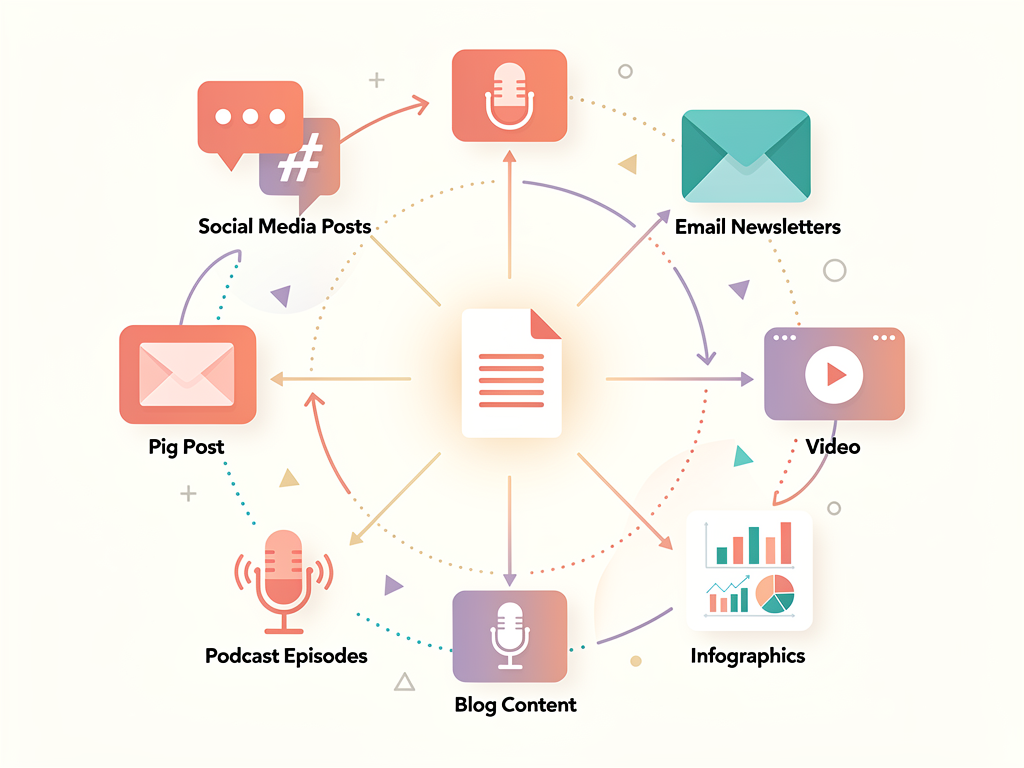
Creating content once and distributing it across multiple formats and channels maximizes the return on every content investment. A single comprehensive blog post can become social media threads, email newsletter content, video scripts, podcast episodes, and more. AI tools make this repurposing process nearly effortless.
The most sophisticated content operations treat each piece as raw material for multiple outputs. A 3,000-word article might generate a dozen social posts, several email segments, a video outline, and multiple shorter blog posts targeting related keywords. This multiplication effect transforms content economics entirely.
Video Content from Blog Posts
Video content continues growing in importance for both audience engagement and search visibility. AI tools can transform written content into video scripts, generate synthetic voiceovers, and even create complete videos with minimal human intervention. This capability opens video marketing to content teams without dedicated video production resources.
The reverse process proves equally valuable. Video content, whether from YouTube, webinars, or podcasts, can be automatically transcribed and transformed into blog posts. This repurposing captures search traffic for audiences who prefer reading while maximizing the value of video production investments.
Social Media Automation
Social distribution amplifies content reach and drives initial traffic that can improve search performance through engagement signals. AI tools generate platform-specific social content automatically, adapting tone, length, and format for each channel. They can schedule posts across platforms, ensuring consistent presence without manual effort.
For marketing teams with limited content resources, this automation is transformative. A single blog post automatically generates weeks of social content, maintaining active profiles without requiring dedicated social media staff. The efficiency gains compound over time as content libraries grow.
Backlink Building Through AI and Automation
Backlinks remain among the most influential ranking factors, yet building them manually is notoriously time-consuming and often ineffective. AI-powered approaches to link building are transforming this critical aspect of SEO, making quality backlink acquisition more accessible and scalable.
Automated outreach tools identify link opportunities, personalize outreach messages, and manage follow-up sequences without manual intervention. They analyze competitor backlink profiles to identify promising targets and prioritize opportunities based on domain authority, relevance, and likelihood of success.
Backlink Exchange Networks
Collaborative link building through exchange networks offers another avenue for acquiring quality backlinks efficiently. These networks connect site owners with complementary content, facilitating mutually beneficial link placements that improve authority for all participants.
The backlink exchange network approach automates the matching and coordination process, identifying appropriate partners and managing placements without requiring manual outreach. For affiliate marketers and niche site builders, this automation provides access to link building at scale that would otherwise require significant time investment.
Content-Driven Link Acquisition
The most sustainable link building strategy creates content so valuable that others link to it naturally. AI tools help identify topics with high link potential, analyze what makes existing link magnets successful, and optimize content specifically for attracting organic backlinks.
This approach aligns link building with content strategy rather than treating them as separate activities. Every piece of content becomes a potential link acquisition opportunity when optimized appropriately. The compounding effect of this approach builds authority steadily over time.
Schema Markup and Technical SEO Automation
Technical SEO elements like schema markup significantly impact search visibility, particularly for featured snippets and rich results. However, implementing schema correctly requires technical knowledge that many content creators lack. AI tools now handle schema generation automatically, ensuring content receives maximum search visibility without requiring technical expertise.
Automated schema markup analyzes content and generates appropriate structured data for articles, FAQs, how-to guides, reviews, and other content types. This markup helps search engines understand content context and display it more prominently in search results.
Meta Title and Description Generation
Meta titles and descriptions influence click-through rates from search results, making them critical for traffic generation. AI tools generate optimized meta content that incorporates target keywords while compelling clicks. They can test multiple variations and optimize based on performance data.
The AI meta title and description generator capabilities available today produce professional-quality meta content instantly. This automation ensures every piece of content receives proper optimization without requiring manual attention to these often-overlooked elements.
Internal Linking Optimization
Internal links distribute authority throughout your site and help search engines understand content relationships. AI tools analyze your content library and suggest relevant internal links automatically, ensuring new content connects appropriately to existing resources.
This automation is particularly valuable for sites with extensive content libraries where manual internal linking becomes impractical. The tools identify topically relevant connections that human editors might miss, strengthening overall site architecture and improving crawlability.

Multilingual Content Creation at Scale
Global audiences require content in multiple languages, but traditional translation approaches are expensive and time-consuming. AI-powered translation and localization tools have reached quality levels that make multilingual content production practical for organizations of any size.
Modern AI translation goes beyond word-for-word conversion to capture nuance, adapt cultural references, and maintain brand voice across languages. The quality now approaches professional human translation for most content types, with significant cost and time advantages.
Localization Beyond Translation
Effective multilingual content requires more than translation. It demands localization that adapts content for specific markets, including cultural references, examples, and terminology. AI tools increasingly handle these adaptations automatically, producing content that feels native to each target audience.
For e-commerce operations targeting international markets or SaaS companies with global user bases, this capability opens new markets without proportional increases in content production costs. A single content team can effectively serve audiences across dozens of languages.
Platforms supporting multilingual AI content generation across 150 or more languages make global content strategies accessible to organizations that previously could not justify the investment. The democratization of multilingual capability represents one of AI's most significant contributions to content marketing.
Content Sprint Strategies for Rapid Growth
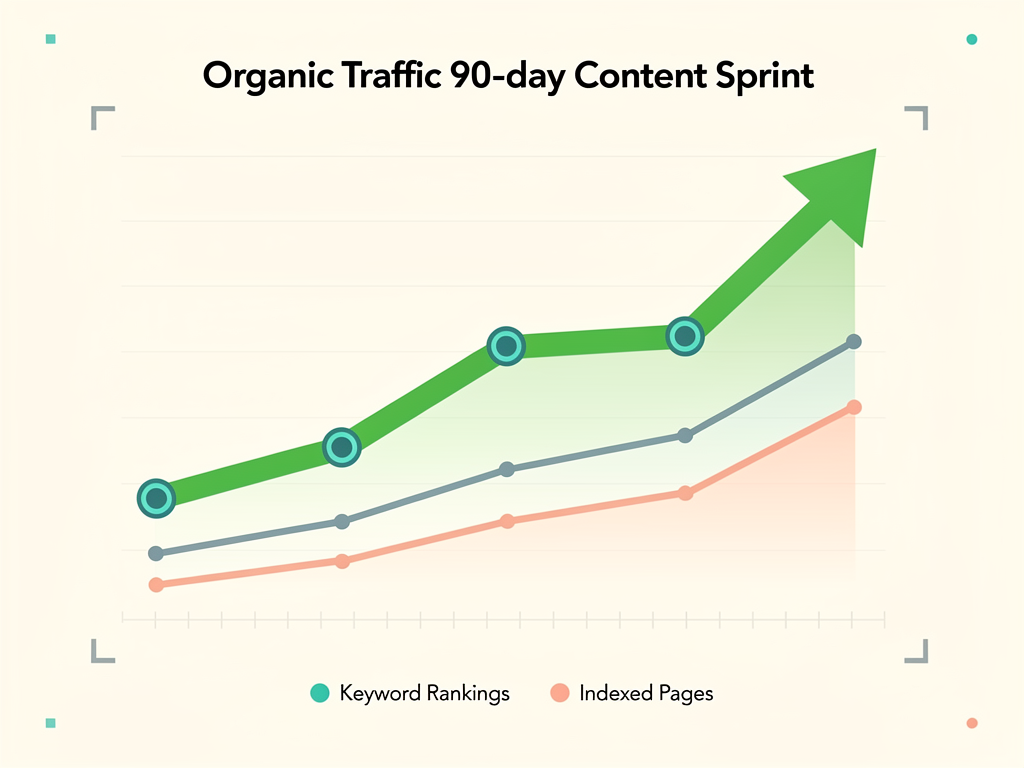
Aggressive content production strategies, often called content sprints, can accelerate organic traffic growth dramatically. These approaches involve publishing high volumes of optimized content over concentrated periods, building topical authority quickly and capturing long-tail search opportunities at scale.
AI automation makes content sprints practical in ways that were previously impossible. Producing 30 or 60 articles monthly would overwhelm most content teams using traditional methods. With AI handling research, writing, optimization, and publishing, these volumes become manageable even for small teams.
Planning Effective Content Sprints
Successful content sprints require careful planning to ensure quality remains high despite increased volume. This includes establishing clear topic clusters, defining content templates, setting quality standards, and building review workflows that scale efficiently.
The automated content sprint subscription model handles much of this planning automatically. AI analyzes your niche, identifies topic opportunities, deduplicates against existing content, and generates publication schedules that maximize impact. The human role shifts from production to oversight and strategic direction.
Measuring Sprint Performance
Content sprint success requires careful measurement and optimization. Key metrics include indexation rates, ranking velocity, traffic growth, and conversion performance. AI analytics tools track these metrics automatically, identifying what works and informing future content decisions.
The data generated during content sprints provides valuable insights for ongoing strategy refinement. Patterns emerge showing which topics, formats, and approaches generate the best results for your specific audience and niche. This learning accelerates over time, continuously improving content effectiveness.
Quality Control and Human Oversight
Despite remarkable advances in AI capabilities, human oversight remains essential for producing content that truly serves audiences and builds lasting brand value. AI tools are powerful assistants, not replacements for human judgment, creativity, and expertise.
The most effective content operations establish clear quality control processes that leverage AI efficiency while ensuring human standards are met. This includes fact-checking, brand voice verification, accuracy review, and the addition of unique insights that differentiate content from competitors.
Fact-Checking AI-Generated Content
AI systems can generate plausible-sounding but inaccurate information, a phenomenon sometimes called hallucination. Robust fact-checking processes must verify claims, statistics, and references before publication. This is particularly critical for content in regulated industries or topics where accuracy directly impacts reader decisions.
Establishing verification workflows that scale with increased production volumes requires thoughtful process design. This might include automated fact-checking tools, subject matter expert review for technical content, and clear escalation paths for uncertain claims. The goal is maintaining accuracy without creating bottlenecks that negate automation benefits.
Maintaining Brand Voice Consistency
Brand voice distinguishes your content from competitors and builds audience connection over time. AI tools can be trained to maintain consistent voice, but periodic human review ensures this consistency is actually achieved. Voice drift can occur gradually, making regular audits valuable.
Creating detailed brand voice guidelines and providing them to AI tools as context improves consistency significantly. These guidelines should specify tone, vocabulary preferences, perspective, and stylistic elements that define your brand's communication style. The more specific the guidance, the more consistent the AI output.
Building Your AI Content Stack
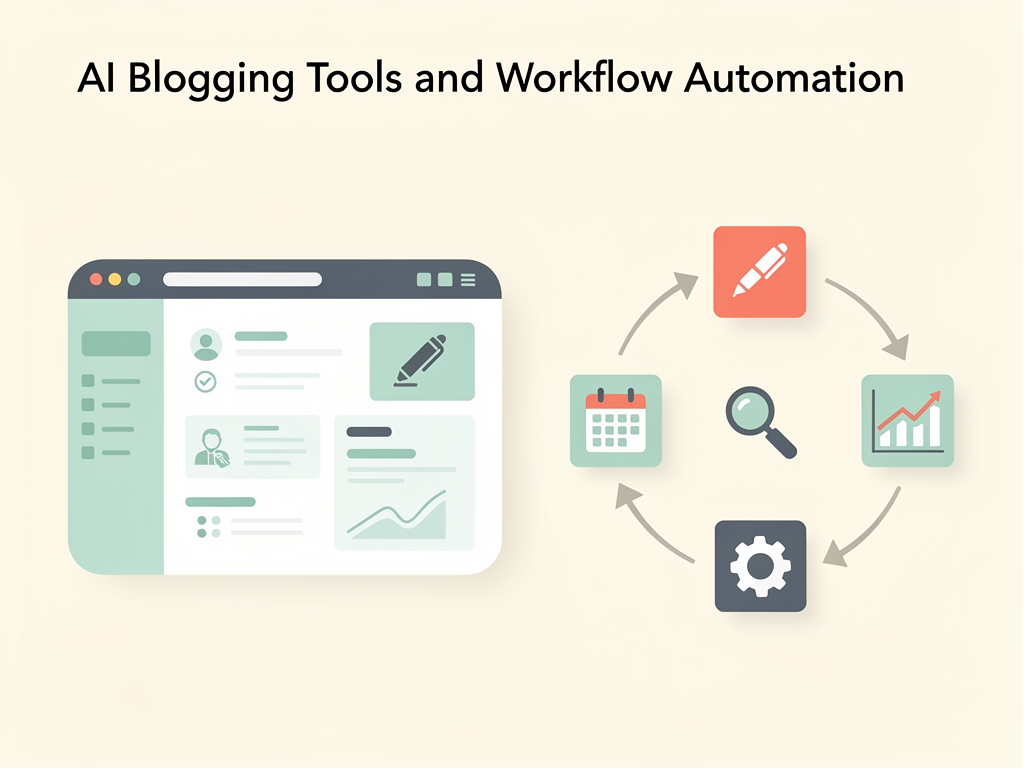
Assembling the right combination of AI tools requires understanding your specific needs, workflows, and resources. The optimal stack varies significantly based on content volume, team size, technical capabilities, and strategic priorities.
Some organizations benefit from comprehensive platforms that handle the entire content lifecycle in one system. Others prefer best-of-breed approaches that combine specialized tools for different functions. Both approaches can succeed when implemented thoughtfully.
Integrated Platform Advantages
Integrated platforms like SeoSmart offer significant advantages for teams seeking simplicity and efficiency. When writing, optimization, image generation, and publishing happen within a single system, workflows are streamlined and data flows seamlessly between functions.
These platforms typically require less technical expertise to implement and maintain. They eliminate integration challenges and reduce the learning curve associated with managing multiple tools. For small business owners or marketing teams with limited technical resources, integrated platforms often provide the fastest path to productive AI content operations.
Best-of-Breed Considerations
Organizations with specific requirements or existing tool investments may prefer assembling custom stacks from specialized tools. This approach offers maximum flexibility and the ability to select the absolute best tool for each function. However, it requires more technical capability to integrate and maintain.
Integration platforms and automation tools can connect disparate systems, creating unified workflows from separate tools. This approach requires more initial setup but can deliver highly customized solutions that precisely match organizational needs.
Cost-Benefit Analysis of AI Content Tools
Evaluating AI tool investments requires understanding both direct costs and the value of time saved. The most expensive tool may deliver the best return if it saves significant time or improves content performance substantially. Conversely, free or low-cost tools may prove expensive if they require extensive manual work or produce inferior results.
Direct costs for AI content tools range from free tiers with limited capabilities to enterprise solutions costing hundreds of dollars monthly. Most professional-grade tools fall in the $50 to $150 monthly range for individual users, with team plans scaling based on usage and features.
Calculating Time Savings
Time savings represent the most significant value proposition for most AI content tools. If a tool saves 10 hours weekly on content production, and that time is valued at $50 per hour, the tool delivers $2,000 monthly in time value. Even expensive tools become bargains when evaluated against this calculation.
Tracking time spent on content tasks before and after implementing AI tools provides concrete data for ROI calculations. Most organizations discover savings exceed expectations once they account for all the small tasks that accumulate: research, outlining, drafting, editing, formatting, optimizing, and publishing.
Performance Improvement Value
Beyond time savings, AI tools often improve content performance measurably. Better SEO optimization leads to higher rankings and more traffic. More consistent publishing schedules improve audience engagement. Higher quality visuals increase sharing and time on page. These improvements compound over time, delivering ongoing value.
Quantifying performance improvements requires baseline measurements and ongoing tracking. Establish clear metrics before implementing new tools, then monitor changes over time. The data often reveals value that justifies tool investments many times over.

Future Trends in AI Content Creation
The rapid pace of AI advancement suggests capabilities will continue expanding dramatically. Understanding emerging trends helps organizations prepare for future opportunities and avoid investments in technologies that may become obsolete.
Current trajectories point toward increasingly autonomous content systems that require less human intervention while producing higher quality output. The tools available today will seem primitive compared to what emerges in coming years. Building flexible, adaptable content operations positions organizations to leverage these advances as they arrive.
Multimodal Content Generation
The boundaries between text, image, video, and audio content are dissolving. Emerging AI systems generate multiple content formats simultaneously from single prompts. A content brief might produce a complete article, accompanying images, social media variations, and video script in one operation.
This convergence will further streamline content operations while opening new creative possibilities. Organizations that develop comfort with AI-generated multimedia content now will be better positioned to leverage these advancing capabilities.
Personalization at Scale
AI increasingly enables content personalization that was previously impractical. Rather than creating single pieces for broad audiences, future systems will generate variations tailored to specific segments, personas, or even individuals. This personalization will improve engagement and conversion while maintaining production efficiency.
The implications for content strategy are significant. Planning will shift from creating definitive content pieces to establishing content frameworks that AI adapts for different contexts. This represents a fundamental change in how content operations function.
Implementation Roadmap for Content Teams
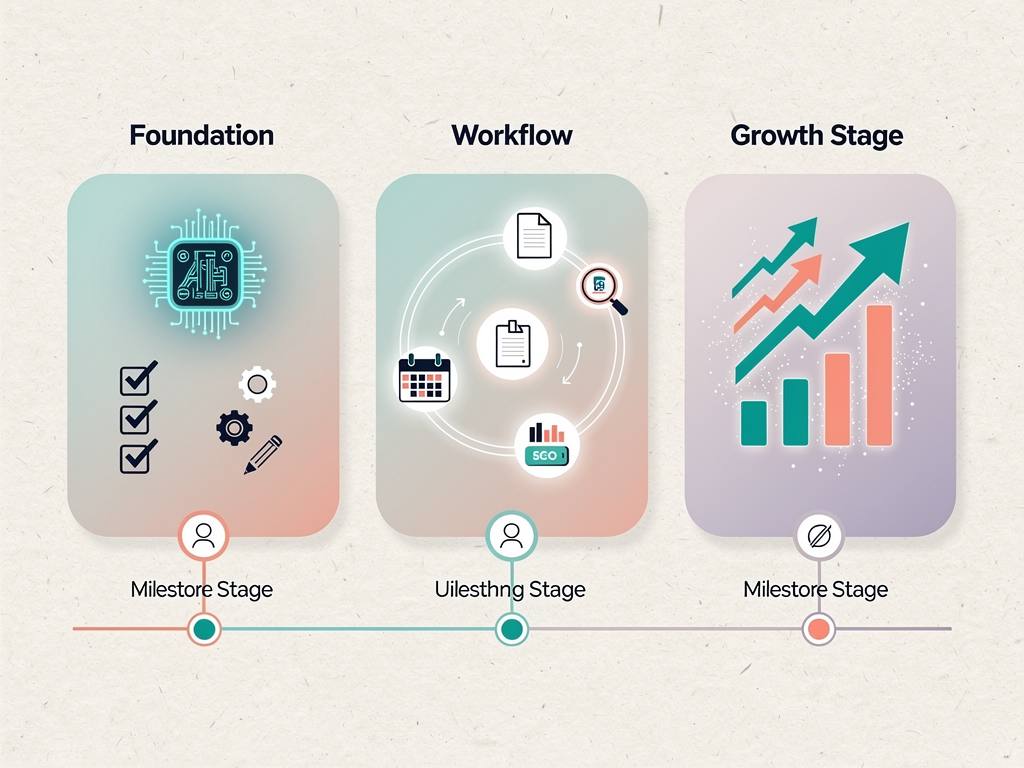
Successfully implementing AI content tools requires thoughtful planning and phased execution. Attempting to transform content operations overnight typically produces frustration and suboptimal results. A structured approach delivers better outcomes with less disruption.
Begin by auditing current content workflows to identify the highest-impact automation opportunities. Focus initial efforts on tasks that consume significant time without requiring substantial creative judgment. These quick wins build momentum and demonstrate value while teams develop AI proficiency.
Phase One: Foundation Building
The first implementation phase establishes foundational capabilities. This typically includes selecting and configuring primary AI writing tools, establishing quality control processes, and training team members on effective AI collaboration. Start with lower-stakes content to build confidence before applying AI to critical assets.
Document processes and learnings during this phase. The insights gathered inform subsequent phases and help scale successful approaches across the organization. Expect some experimentation and adjustment as teams discover what works best for their specific context.
Phase Two: Workflow Integration
Once foundational capabilities are established, focus shifts to integrating AI tools into existing workflows. This includes connecting tools to your CMS, establishing automated publishing pipelines, and building content calendars that leverage AI planning capabilities.
Integration often reveals workflow inefficiencies that can be addressed alongside AI implementation. Use this opportunity to streamline processes holistically rather than simply automating existing approaches that may themselves be suboptimal.
Phase Three: Optimization and Scaling
The final phase focuses on optimizing AI content operations and scaling successful approaches. This includes refining prompts and templates based on performance data, expanding into new content types or markets, and building increasingly sophisticated automation.
Continuous improvement becomes the ongoing focus once initial implementation is complete. AI capabilities evolve rapidly, and content operations should evolve alongside them. Regular evaluation of new tools and approaches ensures your content stack remains competitive.
Common Pitfalls and How to Avoid Them
Organizations implementing AI content tools frequently encounter similar challenges. Understanding these common pitfalls helps teams avoid them and achieve successful outcomes more quickly.
The most frequent mistake is expecting AI to replace human judgment entirely. While AI handles many tasks effectively, it lacks the contextual understanding, creativity, and strategic thinking that humans provide. Treating AI as a powerful assistant rather than a replacement produces better results.
Over-Reliance on Automation
Automation can become a crutch that degrades content quality over time. When teams stop reviewing AI output carefully, errors accumulate and brand voice drifts. Maintaining appropriate oversight ensures automation enhances rather than undermines content quality.
Establish clear review requirements that scale appropriately with content volume. Not every piece needs exhaustive review, but systematic sampling and quality audits catch problems before they compound. The goal is efficient oversight, not elimination of human involvement.
Neglecting Strategy for Tactics
AI tools make content production so efficient that teams sometimes lose sight of strategy. Publishing more content is not inherently valuable. Publishing the right content, optimized for the right audiences and objectives, drives business results.
Maintain strategic focus even as tactical execution becomes more automated. Regular strategy reviews ensure content efforts align with business objectives. AI should serve strategy, not substitute for it.
Pro Tip: Schedule monthly content strategy reviews that examine not just production metrics but business impact. Are you attracting the right audiences? Converting at expected rates? Building the authority you need? These questions matter more than raw content volume.
Measuring Success: KPIs for AI-Powered Content
Effective measurement ensures AI content investments deliver expected returns and identifies opportunities for improvement. Establishing clear KPIs before implementation provides baselines for comparison and keeps teams focused on outcomes rather than activities.
Key metrics typically include production efficiency measures, content performance indicators, and business impact assessments. Each category provides different insights into how well AI content operations are functioning.
Production Efficiency Metrics
Production metrics track how efficiently content moves from concept to publication. Key indicators include time per article, cost per piece, publication frequency, and backlog size. These metrics reveal whether AI tools are delivering expected efficiency gains.
Compare these metrics against pre-implementation baselines to quantify improvement. Most organizations see dramatic gains in production efficiency, often reducing time per article by 50% or more while maintaining or improving quality.
Content Performance Metrics
Performance metrics assess how well published content achieves its objectives. For SEO-focused content, key indicators include rankings, organic traffic, click-through rates, and engagement metrics like time on page and bounce rate. These metrics reveal whether AI-produced content performs comparably to traditionally created content.
Many organizations discover AI content performs as well or better than manually created content when properly optimized. The combination of AI efficiency and built-in SEO optimization often produces superior results at scale.

Conclusion
The AI tools available to bloggers and content teams in 2026 represent a fundamental transformation in what is possible. Tasks that once required extensive teams and substantial budgets can now be accomplished by individuals or small teams armed with the right technology. This democratization creates unprecedented opportunities for organizations willing to embrace these capabilities.
Success with AI content tools requires more than simply adopting new technology. It demands thoughtful integration into existing workflows, appropriate human oversight, and strategic focus that ensures content efforts serve business objectives. The tools are powerful, but they require skilled operators to deliver their full potential.
For SEO agencies, content marketing managers, small business owners, affiliate marketers, and all others navigating the modern content landscape, the message is clear: AI-powered content creation is no longer optional. It has become essential for competitive content operations. Those who master these tools will outproduce and outrank those who do not.
The path forward involves selecting appropriate tools, implementing them thoughtfully, maintaining quality through human oversight, and continuously optimizing based on performance data. Organizations that follow this path will build content operations that deliver sustainable competitive advantage in an increasingly AI-powered world.
Frequently Asked Questions
Can AI-generated content rank well in search engines?
Yes, AI-generated content can rank exceptionally well when properly optimized and reviewed. Search engines evaluate content based on quality, relevance, and user value rather than how it was produced. The key factors for ranking success include comprehensive topic coverage, appropriate keyword optimization, strong internal and external linking, and genuine usefulness to readers. Many organizations report that their AI-assisted content outperforms manually created content because AI tools incorporate SEO best practices automatically. However, human review remains essential to ensure accuracy, add unique insights, and maintain brand voice. Content that simply publishes raw AI output without editing typically underperforms compared to content that combines AI efficiency with human expertise and oversight.
How much time can AI tools realistically save in content production?
Time savings vary based on content type, existing workflows, and implementation quality, but most organizations report 50% to 70% reductions in time per article. A blog post that previously required four to six hours might be completed in one to two hours with AI assistance. These savings come from multiple workflow stages: research is faster with AI summarization, outlining happens in seconds rather than hours, first drafts generate in minutes, and optimization recommendations appear in real-time. The most dramatic savings occur in high-volume operations where efficiency gains multiply across many pieces. Organizations publishing 30 or more articles monthly often save 40 or more hours weekly through comprehensive AI implementation. However, some time investment shifts to oversight, editing, and quality control rather than disappearing entirely.
What is the best AI tool for bloggers just starting with automation?
For bloggers beginning their automation journey, integrated platforms that combine multiple functions offer the smoothest learning curve. Platforms like SeoSmart provide writing, optimization, image generation, and publishing in unified systems that eliminate the complexity of managing multiple tools. Starting with comprehensive platforms allows new users to experience the full potential of AI content automation without technical integration challenges. As experience grows, bloggers can evaluate whether specialized tools for specific functions might improve particular aspects of their workflow. The most important factor is choosing a tool that matches your primary content goals, whether that is SEO performance, production volume, or content quality. Free trials offered by most platforms allow testing before commitment.
How do I maintain authenticity when using AI writing tools?
Maintaining authenticity requires treating AI as a collaborator rather than a replacement for your voice and perspective. Start by providing AI tools with detailed context about your brand voice, values, and communication style. Many platforms allow uploading brand guidelines or example content that trains the AI to match your established tone. Always review and edit AI output to inject personal experiences, unique insights, and perspectives that only you can provide. The most authentic AI-assisted content uses AI for efficiency in research, structure, and initial drafting while relying on human input for the distinctive elements that differentiate your content. Consider AI as handling the "what" while you focus on the "so what" that makes content genuinely valuable to your specific audience.
Are there risks to using AI for content creation?
Several risks require management when implementing AI content tools. Accuracy concerns are paramount, as AI can generate plausible but incorrect information. Robust fact-checking processes must verify claims before publication, particularly for technical or regulated topics. Brand voice drift can occur if AI output is published without sufficient review, gradually shifting your content away from established standards. Over-reliance on automation may reduce the unique value that differentiates your content from competitors using similar tools. Additionally, some audiences may react negatively to AI-generated content if not disclosed appropriately. Managing these risks requires maintaining appropriate human oversight, establishing clear quality standards, and treating AI as a tool that enhances rather than replaces human judgment. Organizations that implement thoughtful governance around AI content typically avoid significant problems.
How do AI content tools handle different industries and niches?
Modern AI writing tools demonstrate remarkable versatility across industries and niches, though effectiveness varies based on topic complexity and available training data. General topics with extensive online coverage produce excellent results with minimal guidance. Specialized or technical niches may require more detailed prompting and careful review to ensure accuracy. Most platforms allow uploading knowledge bases or reference materials that improve output quality for specific industries. For highly technical content, combining AI efficiency with subject matter expert review produces optimal results. The unlimited knowledge base feature available in some platforms enables training AI on your specific industry terminology, products, and messaging. Organizations in specialized niches often find that initial setup investment in training AI on their specific context pays dividends through consistently relevant output over time.
Ready to Transform Your Content Operations?
The tools and strategies outlined in this guide represent the current state of the art in AI-powered content creation. Implementing these approaches can dramatically increase your content output, improve search rankings, and free your team to focus on strategy and creativity rather than production mechanics.
Start your AI content journey with SeoSmart today and discover how automated article creation, one-click publishing, built-in SEO optimization, and backlink exchange networks can transform your content operations. With 500 free credits to start and comprehensive automation features, you can experience the future of content creation immediately.
Subscribe to our newsletter
Subscribe to our newsletter and stay up-to-date with the latest news and updates.