AI Content Creation: Transforming SEO Workflows for Marketers
Discover how AI is revolutionizing content creation for SEO, enabling faster production without sacrificing quality. Learn to integrate AI into your workflow for competitive advantage and measurable traffic growth.

Zakariae

Creating content that ranks well in search engines has always been a challenge for marketers. Between keyword research, competitive analysis, drafting, optimization, and publishing, the process can consume dozens of hours per piece. Now, artificial intelligence is fundamentally changing how marketing teams approach this workflow, enabling faster production cycles without sacrificing the quality that both readers and search engines demand.
For SEO agencies, content marketing managers, small business owners, and affiliate marketers alike, understanding how to integrate AI into your content creation process is no longer optional. It has become a competitive necessity. According to industry research, over 67% of businesses now use AI for content marketing and SEO purposes, with the majority reporting satisfaction with their results. The question is no longer whether to adopt these tools, but how to implement them effectively within a structured workflow that maintains brand consistency and delivers measurable organic traffic growth.
Key Takeaways
- AI content creation accelerates every stage of the SEO content workflow, from initial research through final optimization and publishing.
- A structured, step-by-step approach ensures AI outputs align with brand voice, audience intent, and search engine requirements.
- Human oversight remains essential at critical checkpoints, particularly for strategy, fact-checking, and final approval.
- Integrating AI with content management systems enables one-click publishing and consistent scheduling across multiple platforms.
- Backlink building and internal linking strategies should be incorporated into your AI workflow from the beginning, not treated as afterthoughts.
- Measuring performance and iterating based on data transforms good content into ranking content over time.
- The most successful teams treat AI as an operational capability embedded in workflows, not a standalone tool used in isolation.
Understanding the Modern SEO Content Landscape
Before diving into the workflow itself, it is important to understand why traditional content creation methods are struggling to keep pace with modern SEO demands. Research from Ahrefs reveals that approximately 96.55% of all web pages receive zero organic traffic from Google. This staggering statistic underscores a fundamental truth: simply publishing content is not enough. Your content must be strategically crafted, thoroughly optimized, and genuinely useful to stand any chance of ranking.
The challenge compounds when you consider the sheer volume of content being published daily. WordPress alone sees over 70 million new posts each month. Competing in this environment requires both quality and efficiency, a combination that was nearly impossible to achieve at scale before AI tools matured. Marketing teams with limited resources found themselves caught in an impossible trade-off between publishing frequency and content depth.

Additionally, user behavior has shifted dramatically. SparkToro research indicates that only about 36% of Google searches in the United States result in clicks to external websites. The rise of featured snippets, knowledge panels, and AI-generated overviews means that even ranking on page one does not guarantee traffic. Content must be structured to capture these opportunities while still providing enough depth to earn the click when users want more information.
For B2B companies, e-commerce stores, and SaaS businesses requiring regular content production, these challenges create significant pressure on marketing budgets and team bandwidth. The solution lies not in working harder, but in working smarter through AI-augmented workflows that multiply the impact of every hour invested in content creation.
Step One: Strategic Keyword Research and Topic Discovery
Every effective SEO content workflow begins with understanding what your audience is actually searching for. This foundational step determines everything that follows, from the topics you cover to the specific phrases you target within each piece. AI has transformed this process from a manual, time-intensive task into a rapid discovery exercise that surfaces opportunities human researchers might miss.
Traditional keyword research involved manually entering seed terms into tools, exporting spreadsheets, and spending hours analyzing search volumes and competition levels. Modern AI-powered keyword research platforms can analyze your website, understand your niche, and generate comprehensive keyword clusters in minutes. These tools identify not just high-volume terms, but also the long-tail variations and question-based queries that often convert better.
When conducting AI-assisted keyword research, focus on understanding search intent behind each term. Google has become increasingly sophisticated at matching content to user intent, so a piece targeting "best project management software" needs to deliver comparison content, while "how to use project management software" requires tutorial-style information. AI tools can help categorize keywords by intent, saving significant analysis time.
Pro Tip: Use AI to generate topic clusters around your primary keywords. This approach helps you build topical authority by creating interconnected content that signals expertise to search engines. A single pillar page supported by multiple related articles will typically outperform isolated pieces targeting the same keywords.
For affiliate marketers and niche site builders, this research phase is particularly critical. The difference between targeting a keyword with genuine ranking potential and wasting effort on an impossible term often comes down to thorough competitive analysis. AI can rapidly assess the domain authority, content depth, and backlink profiles of current ranking pages, helping you identify realistic opportunities within your competitive range.
Step Two: Competitive Analysis and Content Gap Identification
Once you have identified target keywords, the next step involves understanding what currently ranks for those terms and identifying opportunities to create something better. This competitive analysis phase reveals the content standards you must meet or exceed to earn rankings. AI dramatically accelerates this process by analyzing multiple competing pages simultaneously and extracting actionable insights.
Start by examining the top ten results for your primary keyword. AI tools can extract the heading structures, word counts, topics covered, and questions answered by each ranking page. This analysis reveals the baseline expectations search engines have established for that query. If every ranking page exceeds 3,000 words and covers specific subtopics, your content must match or exceed these parameters.

Content gap analysis goes beyond matching competitors to finding what they have missed. AI can identify questions searchers commonly ask that existing content fails to address adequately. These gaps represent opportunities to provide unique value that differentiates your content. Perhaps competitors cover the basics thoroughly but neglect advanced use cases, or they focus on features without addressing implementation challenges.
For content marketing managers at B2B companies, this analysis phase often reveals opportunities to leverage industry expertise that generic competitors cannot match. Your organization likely possesses specialized knowledge, case studies, and data that would significantly enhance content on relevant topics. AI helps identify where this proprietary information would have the greatest impact on content quality and ranking potential.
Document your findings in a structured brief that will guide the content creation phase. This brief should include target word count, required headings and subtopics, questions to answer, unique angles to pursue, and any proprietary information to incorporate. The more detailed this brief, the more effective AI assistance will be in the drafting phase.
Step Three: Building Comprehensive Content Outlines
With research complete and competitive insights gathered, the next step involves creating a detailed outline that will structure your content. This outline serves as the blueprint for both AI-assisted drafting and human refinement. A well-constructed outline ensures logical flow, comprehensive coverage, and alignment with search intent before any actual writing begins.
AI excels at generating outline suggestions based on your research inputs. By providing your target keyword, competitive analysis findings, and content brief, AI can propose heading structures that address the topics searchers expect while incorporating your unique angles. However, human judgment remains essential for evaluating these suggestions and ensuring they align with your brand voice and strategic objectives.
| Outline Element | AI Contribution | Human Contribution |
|---|---|---|
| Main Headings (H2) | Suggests topics based on competitor analysis and search intent | Prioritizes based on audience needs and business goals |
| Subheadings (H3) | Generates comprehensive subtopic coverage | Ensures logical flow and removes redundancy |
| Key Points | Identifies information searchers expect | Adds proprietary insights and unique perspectives |
| Examples | Suggests common examples from research | Incorporates brand-specific case studies |
| FAQs | Extracts questions from "People Also Ask" data | Adds questions from customer interactions |
For freelance content strategists and SEO specialists working with multiple clients, developing a standardized outline template accelerates this phase significantly. Your template should include sections for target keywords, search intent classification, required topics, internal linking opportunities, and calls to action. AI can then populate this template based on the specific project parameters, ensuring consistency across all client work.
Consider the outline as a contract between your content and your audience. Each heading promises to deliver specific information, and the content beneath must fulfill that promise. AI can help identify when outline elements might overlap or when important topics are missing, but the final structure should reflect strategic decisions about what your content will and will not cover.
Step Four: Drafting Content with AI Assistance
The drafting phase is where AI delivers its most visible productivity gains. What once required hours of writing can now be accomplished in a fraction of the time, freeing human creators to focus on refinement, fact-checking, and adding unique value. However, effective AI-assisted drafting requires more than simply generating text. It demands a systematic approach that maintains quality while maximizing efficiency.
Begin by providing AI with your detailed outline, target keywords, brand voice guidelines, and any specific information to incorporate. The more context you provide, the more relevant and useful the initial draft will be. Platforms like SeoSmart are designed to accept comprehensive inputs including website context, knowledge bases, and content templates, producing drafts that align with your brand from the start.

Rather than generating entire articles in a single prompt, consider a section-by-section approach. This method allows you to review and refine each section before moving forward, ensuring the content maintains coherence and quality throughout. It also enables you to inject human insights and examples at natural points rather than attempting to retrofit them into a completed draft.
For e-commerce store owners needing blog content to support product categories, AI drafting proves particularly valuable. Product-related content often requires covering similar information across multiple articles, such as buying guides, comparison posts, and how-to content. AI can generate these variations efficiently while you focus on adding the product expertise and customer insights that differentiate your content from competitors.
Quality Checkpoint: Never publish AI-generated content without human review. AI can produce factually incorrect information, miss important nuances, or generate text that sounds generic. Your role is to verify accuracy, add expertise, and ensure the content genuinely helps your target audience.
The goal of AI-assisted drafting is not to eliminate human involvement but to eliminate the blank page problem and accelerate the journey from outline to rough draft. The real work of content creation, which involves adding insight, ensuring accuracy, and crafting compelling narratives, remains firmly in human hands.
Step Five: On-Page SEO Optimization
With a solid draft in hand, the optimization phase ensures your content is technically prepared to compete in search results. This step involves refining elements that search engines use to understand and rank your content, from title tags and meta descriptions to header structures and internal linking. AI can assist with each of these elements, but strategic decisions should guide the process.
Title tags and meta descriptions represent your content's first impression in search results. AI can generate multiple variations for testing, incorporating target keywords while maintaining readability and click appeal. The best titles balance keyword inclusion with emotional triggers that encourage clicks. Test different approaches, such as question formats, number-based titles, and benefit-focused headlines, to identify what resonates with your audience.
Header optimization goes beyond simply including keywords in H2 and H3 tags. Your headers should create a logical hierarchy that helps both readers and search engines understand content structure. AI can analyze your headers for keyword coverage and suggest improvements, but ensure the final structure serves reader navigation first. Headers that accurately describe section content improve user experience metrics that indirectly influence rankings.
Internal linking deserves particular attention during optimization. Each piece of content should connect to relevant existing content on your site, distributing link equity and helping search engines understand topical relationships. AI can suggest internal linking opportunities based on your content inventory, but you must verify that suggested links genuinely add value for readers. Automated article generation platforms can incorporate internal links during the drafting phase, streamlining this often-neglected optimization element.
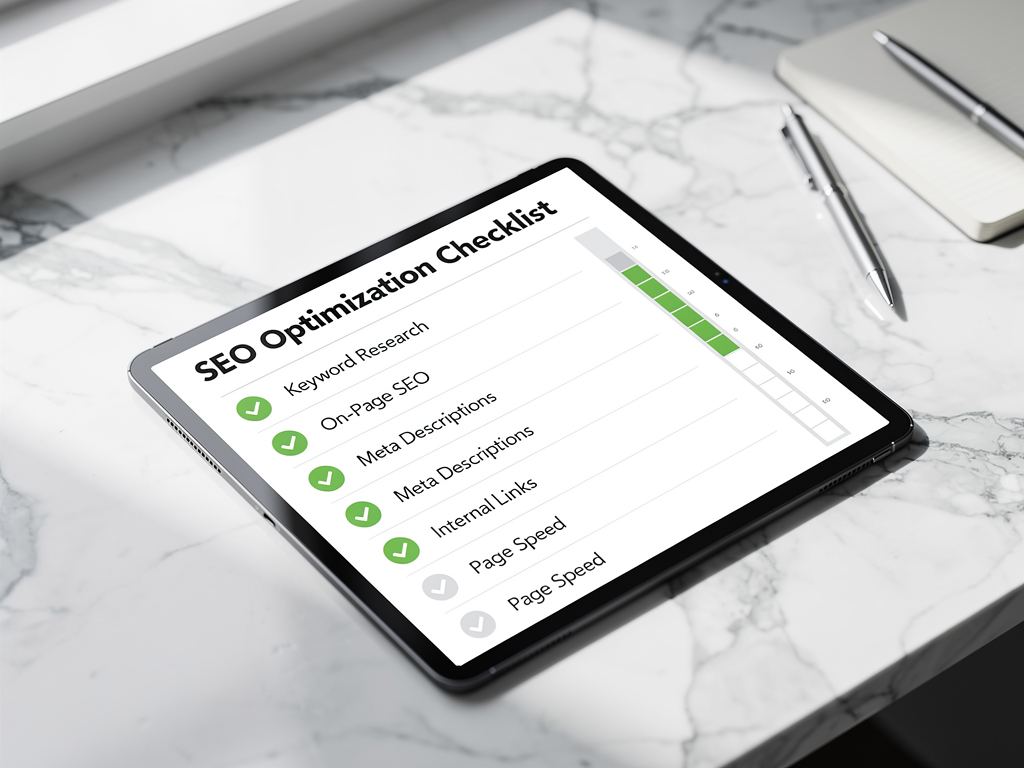
Schema markup provides another optimization opportunity that AI can facilitate. Structured data helps search engines understand your content's context and can enable rich results like FAQ snippets, how-to carousels, and review stars. AI can generate appropriate schema markup based on your content type, though implementation requires technical verification to ensure proper formatting.
Step Six: Visual Content Integration
Modern SEO content requires more than text. Images, diagrams, videos, and other visual elements improve engagement, increase time on page, and provide additional ranking opportunities through image search. Integrating visual content into your workflow ensures each piece is complete before publishing rather than requiring return visits to add missing elements.
AI image generation has matured significantly, enabling creation of custom visuals that perfectly match your content's needs. Rather than searching stock photo libraries for approximate matches, you can generate images that illustrate specific concepts discussed in your article. These unique visuals differentiate your content from competitors using the same stock images and can improve click-through rates when displayed in search results.
For each article, plan visual content during the outline phase. Identify concepts that would benefit from visual explanation, data that could be presented as charts or infographics, and opportunities for screenshots or process diagrams. This planning ensures visual content serves strategic purposes rather than being added as decoration. Platforms offering AI-generated blog images can produce these visuals as part of the content creation workflow, maintaining consistency and efficiency.
Video content provides particularly strong engagement signals. Embedding relevant YouTube videos adds value for readers who prefer video explanations while increasing time on page. AI can help identify appropriate videos to embed based on your content topics, or you can create original video content to accompany written pieces. The combination of text and video often outperforms either format alone.
Image optimization extends beyond creation to include proper file naming, alt text, and compression. Alt text should describe images accurately while incorporating relevant keywords naturally. AI can generate alt text suggestions, but verify they accurately describe the visual content rather than simply stuffing keywords. Properly optimized images contribute to accessibility, user experience, and image search visibility.
Step Seven: Content Review and Quality Assurance
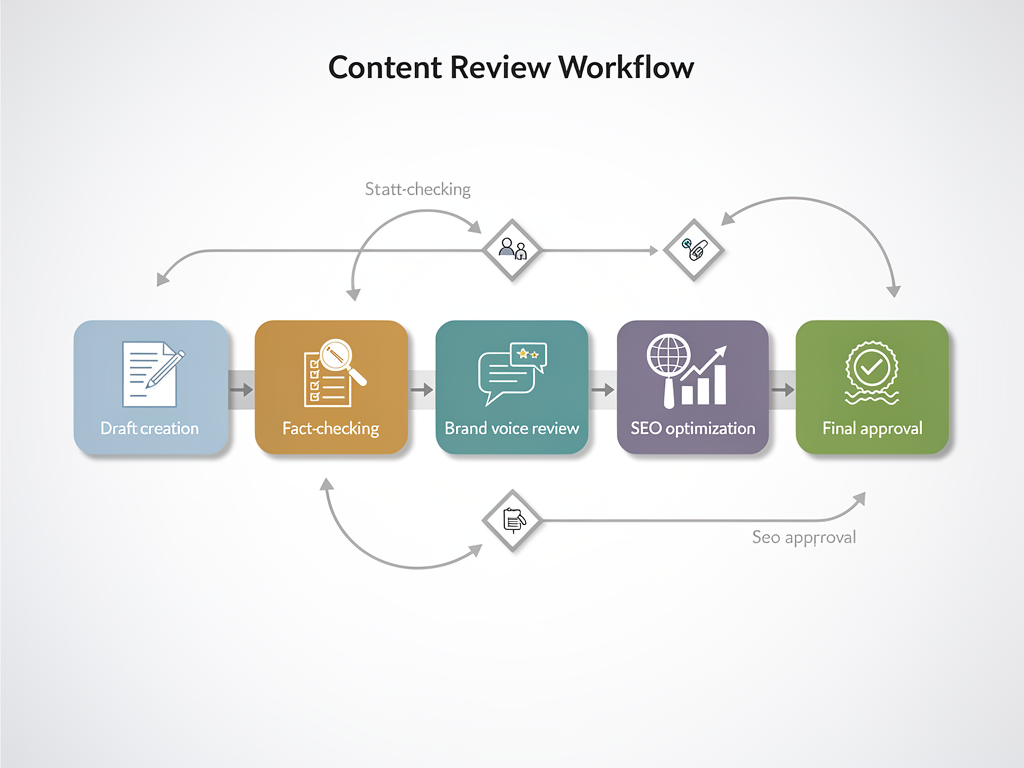
Before any content reaches publication, it must pass through a rigorous review process that catches errors, verifies accuracy, and ensures alignment with brand standards. This quality assurance phase is where human expertise proves irreplaceable. AI can assist with certain review tasks, but final approval must rest with knowledgeable team members who understand your audience and industry.
Factual accuracy verification should top your review checklist. AI can generate plausible-sounding information that is partially or completely incorrect. Every statistic, claim, and technical detail requires verification against authoritative sources. For B2B content especially, inaccuracies can damage credibility with sophisticated audiences who will notice errors in their areas of expertise.
Brand voice consistency often suffers in AI-generated content. While AI can approximate a specified tone, subtle elements of brand personality may be lost or inconsistently applied. Review content specifically for voice alignment, adjusting passages that feel generic or off-brand. Over time, you can refine your AI prompts and guidelines to improve initial output quality, but human review remains essential for maintaining authentic brand expression.
| Review Category | Key Questions | Common Issues |
|---|---|---|
| Factual Accuracy | Are all statistics current and correctly cited? Are technical details accurate? | Outdated data, fabricated statistics, technical errors |
| Brand Voice | Does the content sound like our brand? Is tone consistent throughout? | Generic language, inconsistent formality, missing personality |
| Audience Alignment | Does content address reader needs? Is complexity level appropriate? | Too basic or too advanced, missing context, wrong assumptions |
| SEO Elements | Are keywords naturally incorporated? Is structure optimized? | Keyword stuffing, missing meta elements, poor header hierarchy |
| Legal/Compliance | Are claims substantiated? Are disclosures included where required? | Unsubstantiated claims, missing disclosures, copyright issues |
For marketing teams with limited content resources, establishing clear review protocols prevents bottlenecks while maintaining quality. Define who reviews what, establish turnaround expectations, and create checklists that ensure consistent evaluation criteria. AI can assist by flagging potential issues for human review, such as passages that may need fact-checking or sections that deviate from brand guidelines.
Step Eight: Publishing and Distribution Automation
The publishing phase transforms approved content from documents into live web pages. While this step might seem straightforward, inefficiencies here can create significant delays and introduce errors. Automation streamlines publishing while ensuring content appears correctly across all intended platforms and formats.
Content management system integration eliminates manual copying and formatting that wastes time and introduces errors. Modern AI content platforms connect directly to WordPress, Webflow, Shopify, Ghost, and other popular CMS platforms, enabling one-click publishing that maintains formatting, images, and metadata. This integration is particularly valuable for teams managing multiple websites or publishing high volumes of content.
Scheduling capabilities allow you to maintain consistent publishing cadences without requiring team members to manually publish at specific times. Automated content scheduling tools can queue articles for optimal publishing times, distribute content evenly across your editorial calendar, and ensure your site maintains the regular update frequency that search engines favor.
For SaaS companies requiring regular content production, publishing automation provides particular value. These organizations often need to maintain blogs, help documentation, and marketing content simultaneously. Automated workflows can route different content types to appropriate destinations while maintaining consistent branding and formatting across all properties.
Distribution extends beyond your own website to include social media, email newsletters, and content syndication platforms. While full automation of distribution requires careful consideration to avoid appearing spammy, AI can assist with creating platform-specific variations of your content. A single article can generate LinkedIn posts, Twitter threads, email summaries, and more, maximizing the reach of each piece you create.
Step Nine: Building Backlinks Through Strategic Outreach
Content quality alone rarely guarantees rankings. Backlinks from authoritative websites remain one of the strongest ranking signals, and building these links requires deliberate effort beyond content creation. Integrating link building into your content workflow ensures this critical factor receives appropriate attention rather than being treated as an afterthought.
Link-worthy content starts with strategic planning during the research phase. Certain content types naturally attract links: original research, comprehensive guides, useful tools, and expert roundups all provide value that other websites want to reference. When planning your content calendar, include pieces specifically designed for link acquisition alongside content targeting direct search traffic.

Outreach for link building can be partially automated, though personalization remains essential for success. AI can help identify potential link targets by analyzing who links to competing content, generate personalized outreach templates, and track response rates across campaigns. However, genuine relationship building requires human touch, particularly for high-value link opportunities.
Backlink exchange networks offer another avenue for building links at scale. These networks connect website owners who agree to link to each other's quality content, creating mutual benefit while building the link profiles that search engines reward. Platforms offering backlink exchange network access can significantly accelerate link acquisition compared to purely manual outreach efforts.
For affiliate marketers and niche site builders, link building often determines the difference between sites that achieve rankings and those that languish in obscurity. Dedicating consistent effort to link acquisition, whether through content promotion, guest posting, or exchange networks, should be a non-negotiable component of your SEO strategy.
Step Ten: Performance Monitoring and Analytics
Publishing content is not the end of the workflow but rather the beginning of a measurement and optimization cycle. Performance monitoring reveals which content succeeds, which underperforms, and why. These insights inform future content decisions and identify opportunities to improve existing pieces for better results.
Establish baseline metrics before expecting results. New content typically requires three to six months to achieve stable rankings, though this timeline varies based on domain authority, competition level, and content quality. Track rankings, organic traffic, engagement metrics, and conversions for each piece, understanding that early data may not reflect long-term performance.
Google Search Console provides essential data for SEO performance analysis. Monitor which queries drive impressions and clicks, identify pages experiencing ranking declines, and discover opportunities where you rank on page two but could reach page one with optimization. AI can help analyze this data at scale, identifying patterns across large content libraries that would be difficult to spot manually.
| Metric Category | Key Metrics | What They Indicate |
|---|---|---|
| Visibility | Rankings, impressions, click-through rate | How well content appears in search results |
| Traffic | Organic sessions, new users, traffic trends | How many visitors content attracts |
| Engagement | Time on page, bounce rate, pages per session | How well content satisfies visitor intent |
| Conversion | Goal completions, conversion rate, revenue | How effectively content drives business results |
| Authority | Backlinks acquired, referring domains, social shares | How content builds site authority over time |
For SEO agencies managing multiple client accounts, standardized reporting templates accelerate analysis while ensuring consistent evaluation criteria. AI can generate performance summaries, highlight significant changes, and suggest optimization priorities based on data patterns. This automation frees analysts to focus on strategic interpretation rather than data compilation.

Step Eleven: Content Refresh and Optimization Cycles
SEO content is not a publish-and-forget asset. Search results evolve, competitors improve their content, and information becomes outdated. Establishing regular refresh cycles ensures your content remains competitive and continues delivering value over time. AI can identify refresh opportunities and assist with updates, making this maintenance more manageable at scale.
Prioritize refresh efforts based on performance data. Content that ranks on page two or at the bottom of page one often needs only modest improvements to achieve significant traffic gains. Similarly, content experiencing ranking declines may recover with updates that address whatever caused the drop, whether new competitor content, outdated information, or changed search intent.
Content audits should occur at least quarterly for active SEO programs. During these audits, evaluate each piece against current search results, identify outdated information requiring updates, and assess whether content still aligns with current business priorities. AI can accelerate audits by analyzing content against current ranking pages and flagging pieces that have fallen behind competitive standards.
Refresh Strategy: When updating content, focus on adding new information rather than simply rewriting existing sections. Search engines recognize meaningful updates that add value, while superficial changes provide little benefit. Add new sections addressing emerging subtopics, update statistics with current data, and incorporate insights from recent developments in your industry.
For small business owners managing their own SEO, content refresh cycles provide an opportunity to maximize existing assets rather than constantly creating new content. A well-maintained library of twenty comprehensive articles often outperforms a neglected library of one hundred pieces. Focus on quality and relevance over quantity, using AI to make maintenance more efficient.
Step Twelve: Scaling Your AI Content Workflow
Once you have established an effective workflow for individual pieces, the next challenge involves scaling production while maintaining quality. This scaling phase requires systematization, team coordination, and careful selection of tools that support high-volume operations without creating bottlenecks or quality degradation.
Content sprint models offer one approach to scaling. Rather than producing content continuously at a steady pace, sprints concentrate effort into focused periods of high production followed by optimization and analysis phases. Automated content sprint subscriptions can generate 30 or 60 articles per month on autopilot, handling research, writing, and publishing while your team focuses on strategy and quality oversight.

Team roles should be clearly defined as production scales. Even with AI handling much of the drafting work, humans remain essential for strategy, quality assurance, and specialized expertise. Consider roles such as content strategist (owns keyword research and topic selection), content editor (reviews and refines AI output), SEO specialist (handles technical optimization), and publisher (manages scheduling and distribution).
Quality control becomes more challenging at scale, requiring systematic approaches rather than ad-hoc review. Establish clear quality standards, create checklists that ensure consistent evaluation, and implement approval workflows that prevent substandard content from reaching publication. AI can assist by flagging potential issues, but human judgment remains the final quality gate.
For agencies serving multiple clients, scaling requires additional considerations around brand differentiation and knowledge management. Each client's content must reflect their unique voice, expertise, and audience, even when produced through similar workflows. Maintaining separate knowledge bases, style guides, and approval processes for each client ensures scaled production does not result in generic, interchangeable content.
Common Pitfalls and How to Avoid Them
Even well-designed AI content workflows can fail if teams fall into common traps. Understanding these pitfalls helps you build safeguards into your process and maintain the quality standards that drive SEO success. Learn from others' mistakes rather than repeating them yourself.
Over-reliance on AI without human oversight produces content that may rank initially but fails to build lasting audience relationships. Search engines increasingly reward content that demonstrates genuine expertise and provides unique value. If your content reads like it could have been written by anyone (or any AI), it lacks the differentiation needed for sustainable success. Always add human insight, proprietary information, and authentic perspective.

Neglecting technical SEO fundamentals undermines even excellent content. Page speed, mobile responsiveness, crawlability, and site architecture all influence how well your content can rank. AI content workflows should include technical checks that verify content will be properly indexed and displayed. Do not assume that great content automatically overcomes technical deficiencies.
Ignoring search intent leads to content that ranks for the wrong queries or fails to satisfy visitors who do click through. Before creating any piece, verify that your planned approach matches what searchers actually want. AI can help analyze intent based on current search results, but you must translate those insights into content decisions that serve real user needs.
Publishing without a promotion strategy limits content reach and link acquisition potential. Even the best content needs initial visibility to attract the engagement and links that drive long-term rankings. Build promotion into your workflow, whether through social sharing, email distribution, outreach, or paid amplification. Content that nobody sees cannot earn the signals that search engines reward.
Future-Proofing Your Content Strategy
The AI landscape continues evolving rapidly, with new capabilities emerging regularly. Building flexibility into your workflow ensures you can adopt improvements without completely restructuring your processes. Stay informed about developments while maintaining focus on fundamentals that remain constant regardless of technological change.
Search engines will continue rewarding content that genuinely helps users. This fundamental principle has remained consistent through every algorithm update and will likely continue guiding search quality for the foreseeable future. Focus your AI workflow on producing helpful content rather than gaming specific ranking factors that may change.

Multimodal content will likely become increasingly important as search evolves. AI tools that generate text, images, and video from unified workflows position you to meet changing content expectations. Invest in platforms that support multiple content types rather than text-only solutions that may become limiting.
Personalization and localization represent growing opportunities that AI makes more accessible. Content tailored to specific audience segments, regions, or languages can capture traffic that generic content misses. Multilingual AI content generators enable expansion into new markets without proportional increases in production resources.
Build measurement and learning into your workflow from the start. The teams that improve fastest are those that systematically analyze what works, document insights, and apply learnings to future content. AI can assist with this analysis, but organizational commitment to continuous improvement determines whether insights translate into better results.
Conclusion
Implementing an AI-powered content creation workflow transforms how marketing teams approach SEO content. From initial keyword research through publishing, optimization, and ongoing maintenance, AI assistance accelerates every phase while enabling quality levels that manual processes struggle to achieve at scale. The workflow outlined in this guide provides a framework that SEO agencies, content marketing managers, small business owners, and affiliate marketers can adapt to their specific needs and resources.
Success with AI content creation requires balancing automation with human expertise. AI excels at research, drafting, and optimization tasks that benefit from processing large amounts of data quickly. Humans remain essential for strategy, quality assurance, brand voice, and the genuine expertise that differentiates valuable content from generic alternatives. The most effective workflows leverage both capabilities appropriately.
Start by implementing one or two workflow stages with AI assistance, measure results, and expand gradually. Attempting to automate everything simultaneously often creates more problems than it solves. Build competence and confidence incrementally, refining your approach based on what works for your specific situation. The goal is sustainable improvement, not overnight transformation.
Remember that content creation serves business objectives, not the other way around. Track metrics that matter for your organization, whether traffic, leads, sales, or brand awareness. AI workflows should ultimately deliver measurable business results, and those results should guide ongoing optimization of your approach. Technology enables success, but strategy determines whether that potential is realized.
Frequently Asked Questions
How Long Does It Take to See Results from AI-Generated SEO Content?
The timeline for seeing results from AI-generated SEO content typically mirrors that of traditionally created content, ranging from three to six months for new pieces to achieve stable rankings. Several factors influence this timeline, including your domain authority, the competitiveness of target keywords, and the quality of your content relative to existing ranking pages. Newer websites with lower domain authority may require longer timeframes, while established sites with strong backlink profiles often see faster results. To accelerate results, focus on lower-competition keywords initially, ensure thorough optimization of all on-page elements, and actively build backlinks to new content. Monitoring Google Search Console data helps identify early ranking signals that indicate content is gaining traction, even before significant traffic materializes.
Can Search Engines Detect AI-Generated Content and Penalize It?
Search engines like Google have stated that they do not penalize content simply for being AI-generated. Their focus remains on content quality and helpfulness rather than production method. However, AI-generated content that lacks originality, contains factual errors, or fails to provide genuine value may struggle to rank regardless of detection. The key is ensuring your AI-assisted content meets the same quality standards you would apply to human-written content. Add unique insights, verify all facts, maintain consistent brand voice, and ensure content genuinely addresses user needs. Content that provides real value to readers will perform well whether created by humans, AI, or a combination of both. The risk lies not in AI detection but in publishing low-quality content that fails to serve users.
What Is the Ideal Word Count for AI-Generated SEO Articles?
There is no universal ideal word count for SEO content, as optimal length varies based on topic complexity, search intent, and competitive standards. The best approach involves analyzing what currently ranks for your target keywords and matching or exceeding that depth. For comprehensive guides and pillar pages, lengths of 3,000 to 5,000 words are common among top-ranking content. For more focused topics or transactional queries, shorter content of 1,500 to 2,500 words may be appropriate. AI tools can help analyze competitor content to establish benchmarks for specific keywords. More important than hitting a specific word count is ensuring comprehensive coverage of the topic without unnecessary padding. Every section should add value, and content should be as long as needed to thoroughly address the subject, no longer.
How Do I Maintain Brand Voice When Using AI for Content Creation?
Maintaining brand voice with AI-generated content requires deliberate effort at multiple workflow stages. Start by creating detailed brand voice guidelines that specify tone, vocabulary preferences, sentence structure patterns, and examples of on-brand versus off-brand writing. Provide these guidelines to AI tools as part of your prompts and inputs. Many platforms allow you to upload knowledge bases or style guides that inform content generation. During the review phase, specifically evaluate content for voice consistency, adjusting passages that feel generic or misaligned with your brand personality. Over time, refine your prompts based on what produces the best results. Consider maintaining a library of approved content examples that demonstrate ideal brand voice, using these as references during both generation and review. Human editing remains essential for achieving authentic brand expression that resonates with your audience.
How Many Articles Should I Publish Per Month for Effective SEO?
Publishing frequency depends on your resources, competitive landscape, and content quality capabilities rather than a universal optimal number. For most businesses, consistency matters more than volume. Publishing four high-quality, well-optimized articles monthly will typically outperform publishing twenty mediocre pieces. However, highly competitive niches may require higher volumes to build topical authority quickly. Consider your capacity for maintaining quality across the entire workflow, including research, drafting, optimization, and promotion. AI tools enable higher production volumes without proportional resource increases, but human oversight remains necessary for quality assurance. Start with a sustainable pace, measure results, and adjust based on performance data. Some organizations find success with content sprint models that concentrate production into focused periods, allowing time for optimization and analysis between sprints.
What Should I Do If My AI-Generated Content Is Not Ranking?
When AI-generated content fails to rank, systematic diagnosis helps identify the cause and appropriate solution. First, verify technical factors: is the content properly indexed, does the page load quickly, and is the site mobile-friendly? Use Google Search Console to check for crawling or indexing issues. Next, evaluate content quality against current ranking pages. Does your content cover the topic as comprehensively? Does it address the same search intent? Are there unique insights or information that competitors provide but you lack? Consider whether the keyword target is realistic given your domain authority. Highly competitive terms may require building more backlinks or targeting related lower-competition keywords first. Finally, assess whether the content has had sufficient time to rank, as new content typically requires months to achieve stable positions. Based on your diagnosis, implement targeted improvements rather than wholesale rewrites, then monitor for ranking changes over subsequent weeks.
Ready to Transform Your Content Workflow?
Implementing an AI-powered SEO content workflow does not have to be complicated. SeoSmart provides everything you need to research, create, optimize, and publish ranking content on autopilot. With features including AI keyword research, automated content sprints of 30 or 60 articles per month, built-in image generation, YouTube video embedding, and one-click publishing to WordPress, Webflow, Shopify, and more, you can start seeing results without building complex systems from scratch. Join the growing community of marketers who have discovered that better rankings do not require more hours, just smarter workflows. Start your free trial today and experience how AI-powered content creation can transform your SEO results.
Subscribe to our newsletter
Subscribe to our newsletter and stay up-to-date with the latest news and updates.