AI Alt Text Generators: Enhance SEO & Accessibility Effortlessly
Discover how AI-powered alt text generators can automate image SEO and improve accessibility compliance. Learn to optimize your visual content efficiently and boost search rankings.

Zakariae

Images account for a significant portion of web content, yet many websites overlook one of the most critical elements that determines both search visibility and user accessibility: alternative text. For SEO agencies, content marketing managers, and e-commerce store owners, the challenge of writing descriptive, keyword-optimized alt text for hundreds or thousands of images can feel overwhelming. Enter the modern alt text generator, a category of AI-powered tools that automates this essential but time-consuming task while simultaneously improving your site's accessibility compliance and search engine rankings.
The intersection of accessibility requirements, search engine optimization, and content efficiency has created unprecedented demand for automated solutions. Whether you manage a sprawling e-commerce catalog with thousands of product images or run a content-heavy blog that publishes multiple illustrated articles weekly, understanding how to leverage AI for image optimization can transform your workflow and deliver measurable improvements in organic traffic.
Key Takeaways
- AI-powered alt text tools can reduce manual writing time by up to 90% while maintaining quality standards for accessibility and SEO.
- Proper alt text implementation serves dual purposes: improving search rankings through image SEO and ensuring WCAG, ADA, and EAA compliance for users with visual impairments.
- Modern generators support multiple image formats including JPG, PNG, WebP, SVG, and AVIF, making them suitable for contemporary web development practices.
- Integration capabilities with WordPress, Shopify, WooCommerce, and headless CMS platforms allow seamless automation within existing workflows.
- Bulk processing features enable retroactive optimization of existing image libraries, addressing historical SEO debt efficiently.
- Customization options including keyword emphasis, brand voice alignment, and industry-specific terminology ensure generated text matches your content strategy.
- Cost efficiency typically ranges from one to three cents per image at scale, making automation financially viable for businesses of all sizes.
Understanding Alt Text and Its Critical Role in Modern SEO
Alternative text, commonly abbreviated as alt text, serves as a textual description of an image that appears when the image cannot be displayed or when accessed by screen readers. Originally conceived as an accessibility feature to help visually impaired users understand visual content, alt text has evolved into a fundamental component of technical SEO strategy. Search engines like Google cannot "see" images the way humans do; they rely on alt text, surrounding content, and file names to understand what an image depicts and how it relates to the page's topic.
The importance of alt text extends beyond simple accessibility compliance. Google's image search drives substantial traffic to websites across virtually every industry. According to various industry analyses, image search can account for 20% to 30% of all search queries, representing a significant opportunity for businesses that optimize their visual content effectively. When your images appear in Google Image Search results with properly optimized alt text, you create additional pathways for potential customers to discover your content.
For e-commerce store owners, the stakes are particularly high. Product images with descriptive, keyword-rich alt text can appear in shopping-related image searches, driving qualified traffic directly to product pages. A user searching for "blue leather messenger bag" might discover your product through image search before ever encountering your site through traditional organic results. This discovery mechanism becomes increasingly valuable as visual search technology continues to advance.
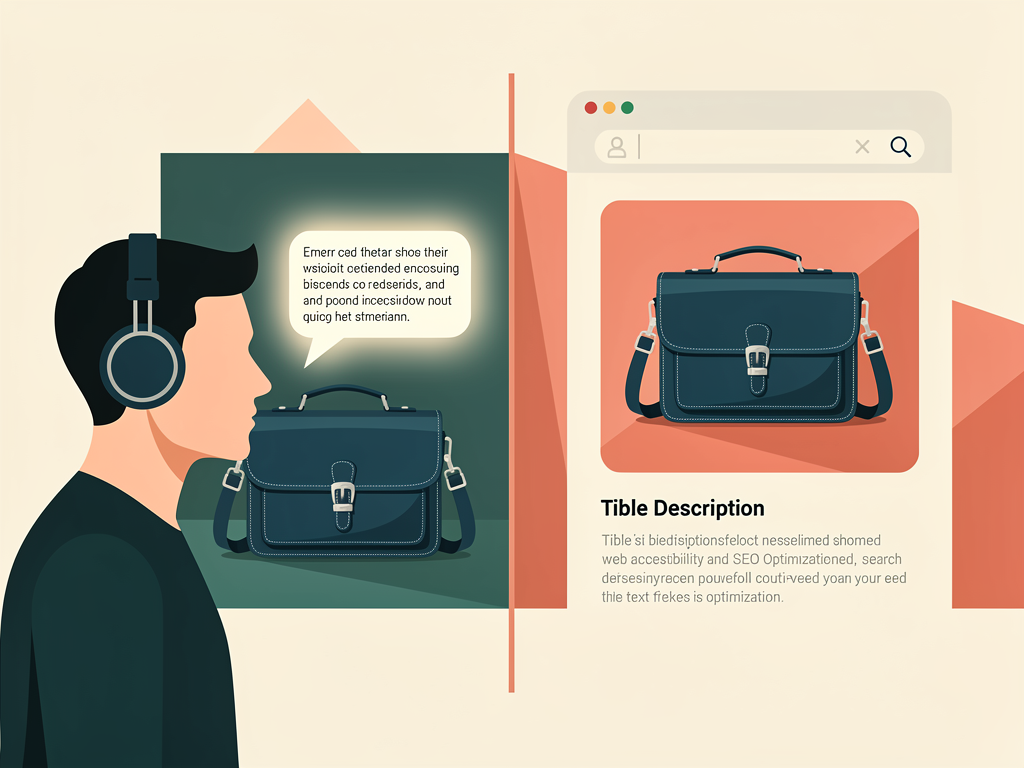
The challenge for content teams lies in scale. A typical blog post might contain five to ten images, each requiring unique, descriptive alt text. An e-commerce site with 500 products, each featuring four to six images, suddenly faces the task of writing 2,000 to 3,000 individual alt text descriptions. Multiply this across seasonal inventory updates, new product launches, and historical image backlogs, and the scope becomes unmanageable without automation.
How AI-Powered Alt Text Generation Works
Modern AI alt text generators leverage computer vision and natural language processing to analyze images and produce human-readable descriptions. The underlying technology typically combines convolutional neural networks (CNNs) for image recognition with large language models (LLMs) for text generation. When you upload an image, the system first identifies objects, people, actions, colors, and spatial relationships within the frame. It then synthesizes this visual information into coherent, descriptive sentences.
The sophistication of these systems has improved dramatically in recent years. Early automated alt text tools produced generic, often inaccurate descriptions that required significant human editing. Contemporary solutions powered by models like GPT-4 Vision and Claude can identify subtle details, understand context, and generate descriptions that read naturally while incorporating SEO considerations. Some platforms even allow you to provide custom prompts or keyword targets, enabling the AI to emphasize specific product features or include branded terminology.
The workflow typically follows a straightforward pattern. You either upload images directly to the generator's interface, connect it to your CMS through an API integration, or install a plugin that processes images automatically upon upload. The AI analyzes each image, generates alt text according to your configured preferences, and either applies the text automatically or presents it for review before implementation. Many tools support batch processing, allowing you to generate alt text for hundreds or thousands of images in a single operation.
Pro Tip: When configuring AI alt text generation, always enable the option to include your primary keyword or product name in the output. This ensures generated descriptions align with your page-level SEO strategy while maintaining natural language patterns.
Integration with popular SEO plugins adds another layer of intelligence. Tools like AltText.ai can pull focus keyphrases from Yoast SEO, Rank Math, All in One SEO, and similar plugins, automatically incorporating these terms into generated alt text. This creates a cohesive optimization strategy where your image descriptions reinforce your broader keyword targeting without requiring manual coordination between different aspects of on-page SEO.
Accessibility Compliance and Legal Considerations
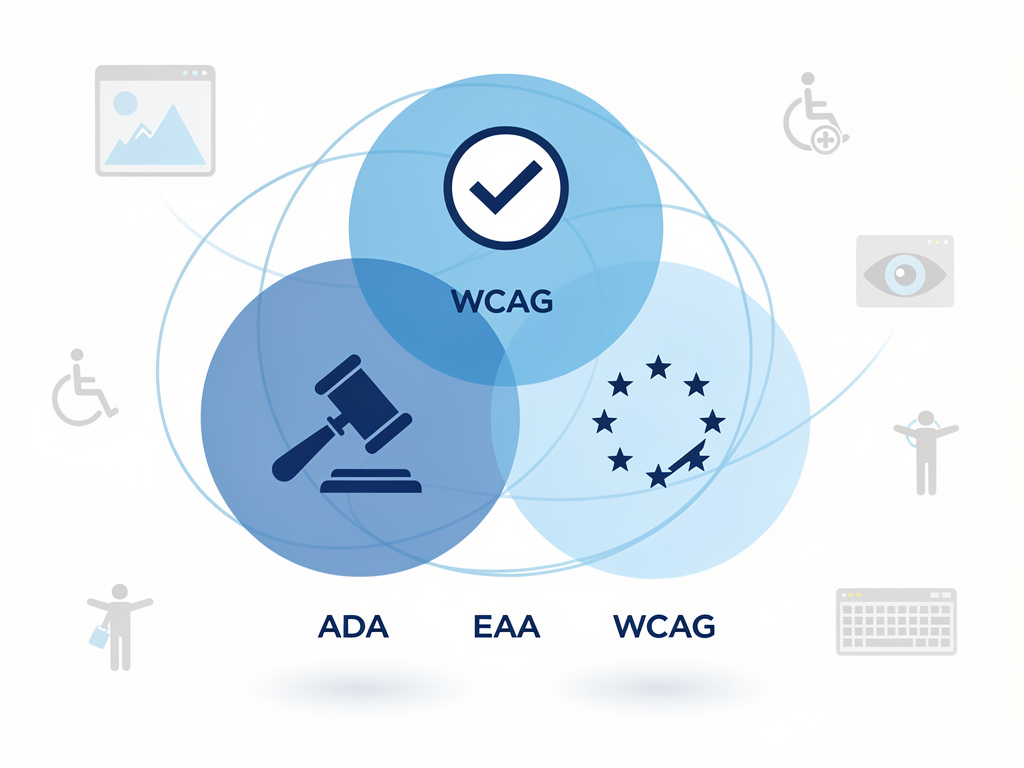
Beyond SEO benefits, proper alt text implementation is increasingly a legal requirement. The Americans with Disabilities Act (ADA) in the United States, the European Accessibility Act (EAA) in the European Union, and the Web Content Accessibility Guidelines (WCAG) internationally all mandate that digital content be accessible to users with disabilities. Images without alt text create barriers for the approximately 285 million people worldwide who are visually impaired and rely on screen readers to navigate the web.
Legal actions related to website accessibility have increased substantially over the past five years. Businesses in retail, hospitality, and financial services have faced lawsuits alleging that their websites discriminate against users with disabilities due to missing or inadequate alt text, among other accessibility failures. While the legal landscape varies by jurisdiction, the trend toward stricter enforcement is clear. Proactive accessibility compliance not only protects your business from legal risk but also expands your potential customer base.
WCAG 2.1 Level AA compliance, which many organizations target as their accessibility standard, requires that all non-decorative images include appropriate alternative text. The guidelines specify that alt text should convey the same information or function as the image itself. For informative images, this means describing the content; for functional images like buttons or links, it means describing the action; for decorative images that add no informational value, an empty alt attribute (alt="") is appropriate to signal that screen readers should skip the element.
AI alt text generators can significantly accelerate compliance efforts, but they require human oversight. Automated systems may occasionally misidentify objects, miss important context, or generate descriptions that technically describe an image but fail to convey its purpose within the surrounding content. Establishing a review workflow where generated alt text is spot-checked before publication helps maintain quality while still capturing the efficiency benefits of automation.
Evaluating Top AI Alt Text Solutions for Different Platforms
The market for automated alt text generation has matured considerably, with solutions available for virtually every major content management system and e-commerce platform. Understanding the strengths and limitations of different tools helps you select the right solution for your specific needs and technical environment.
AltText.ai stands out as one of the most comprehensive standalone solutions, offering integrations with WordPress, Shopify, WooCommerce, BigCommerce, Contentful, DatoCMS, and Storyblok. The platform supports over 130 languages and handles modern image formats including WebP, SVG, and AVIF. Their free site scan tool allows you to audit your existing content for missing alt text before committing to a paid plan, making it easy to assess the scope of your optimization needs.
ShortPixel Image Optimizer combines image compression with AI alt text generation, making it particularly attractive for WordPress users who want to address multiple image optimization concerns with a single plugin. Their context-aware generation considers surrounding page content when creating descriptions, potentially producing more relevant alt text than tools that analyze images in isolation.
| Platform | Best For | Key Features | Pricing Model |
|---|---|---|---|
| AltText.ai | Multi-platform users | 130+ languages, SEO plugin integration, bulk processing | Per-image credits |
| ShortPixel | WordPress optimization | Combined compression and alt text, context awareness | Monthly subscription |
| ALT SEO | Shopify stores | Automatic processing, custom prompts, recurring automation | Tiered monthly plans |
| ImageSEO | Agencies managing multiple sites | White-label options, bulk operations, API access | Agency licensing |
For Shopify merchants specifically, ALT SEO has earned the "Built for Shopify" designation, indicating it meets Shopify's highest standards for performance and integration. The app processes new images automatically in the background and offers customizable prompts to match your brand voice. Pricing starts with a free tier covering 100 images monthly, scaling up to enterprise plans processing 12,000 images per month at approximately one cent per image.
When evaluating solutions, consider factors beyond raw feature lists. Integration depth matters significantly; a tool that merely generates alt text still requires manual copy-paste operations, while deeply integrated solutions can apply generated text directly to your media library. Similarly, review capabilities vary widely. Some tools offer side-by-side comparison of generated text with the original image, while others require you to navigate between different screens to verify accuracy.
Implementing Alt Text Automation in WordPress Environments
WordPress powers over 40% of websites globally, making it the most common platform for content publishers and small business owners managing their own SEO. Fortunately, the WordPress ecosystem offers multiple pathways for implementing automated alt text generation, from dedicated plugins to broader image optimization suites.
The typical WordPress implementation begins with plugin installation and API key configuration. Most alt text plugins require you to create an account with the service provider, obtain an API key, and enter that key in the plugin settings. Once configured, you can typically choose between automatic processing (where every uploaded image receives generated alt text immediately) or manual triggering (where you select specific images for processing).
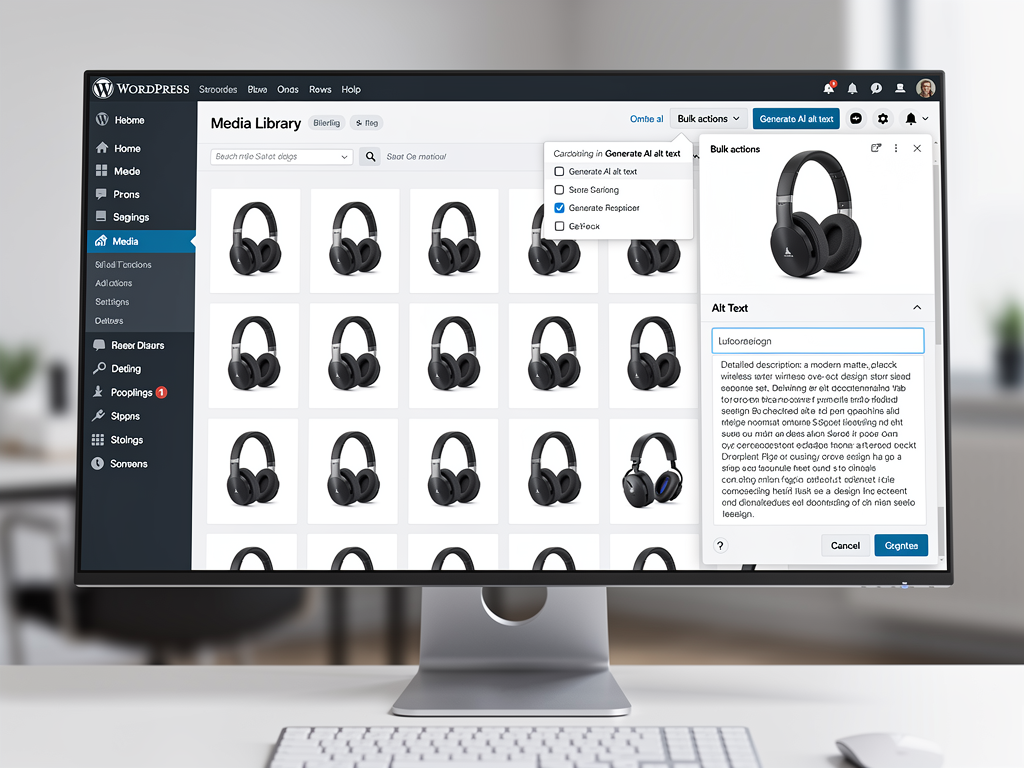
For sites with existing image libraries lacking alt text, bulk generation features become essential. Most WordPress alt text plugins include a dedicated tool or bulk action that scans your media library, identifies images missing alternative text, and processes them in batches. Depending on your library size and the service's processing speed, this operation might take minutes or hours. Some plugins offer scheduling options to spread processing across off-peak hours, minimizing any potential impact on site performance.
WP-CLI support, available in tools like AltText.ai's WordPress plugin, enables command-line automation for developers and agencies managing multiple sites. Commands like wp alttext generate can be incorporated into deployment scripts, cron jobs, or continuous integration pipelines, ensuring alt text generation happens automatically as part of your content workflow without manual intervention.
Implementation Tip: Before running bulk alt text generation on a production site, test the output quality on a sample of 20 to 50 images. Review the generated descriptions for accuracy, appropriate length, and keyword inclusion. Adjust plugin settings or custom prompts based on this sample before processing your entire library.
Integration with popular SEO plugins creates powerful synergies. When your alt text generator pulls focus keyphrases from Yoast SEO or Rank Math, the generated descriptions automatically align with your page-level keyword strategy. This coordination ensures that your image optimization efforts reinforce rather than conflict with your broader SEO work, creating a cohesive optimization profile that search engines can easily interpret.
E-Commerce Applications and Product Image Optimization
E-commerce websites face unique challenges and opportunities when it comes to image alt text. Product catalogs often contain thousands of images, each requiring descriptions that balance accessibility requirements, SEO considerations, and conversion optimization. The right approach to alt text can improve both search visibility and user experience, ultimately driving more sales.
Product images benefit from alt text that includes the product name, key attributes, and relevant descriptive details. For example, rather than generic alt text like "shoes," an optimized description might read "Men's brown leather Oxford dress shoes with brogue detailing and rubber sole." This description serves multiple purposes: it helps visually impaired users understand what they're considering purchasing, it targets long-tail search queries that potential customers might use, and it provides context that can appear in image search results.
Many AI alt text tools designed for e-commerce include specialized "Ecommerce Vision" capabilities that automatically incorporate product names and attributes into generated descriptions. When processing a product image, these systems reference the associated product data (title, category, attributes) to create alt text that's specifically relevant to that item rather than a generic description of what the image depicts visually.
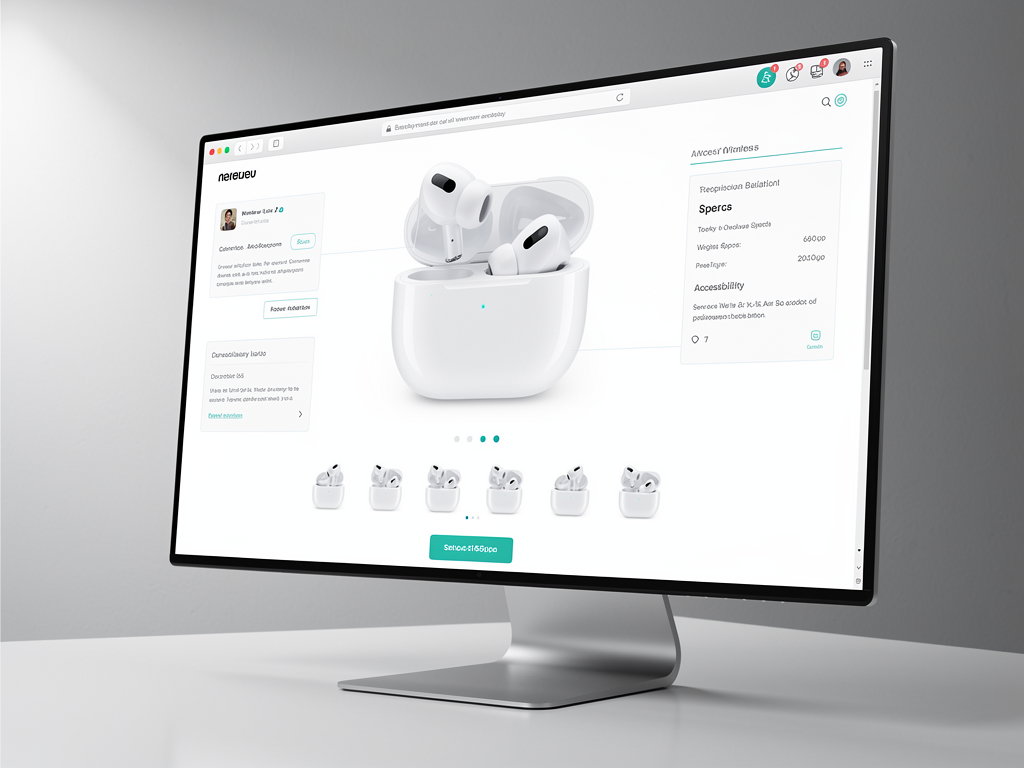
For Shopify stores, the ALT SEO app and similar tools process product images automatically when they're uploaded or when products are created. The automation extends to variant images, lifestyle shots, and size charts, ensuring comprehensive coverage across all visual content. Recurring task automation keeps alt text fresh as you update product imagery, addressing the common problem of optimization degrading over time as catalogs evolve.
WooCommerce users can leverage WordPress-based solutions while taking advantage of WooCommerce-specific features. Some plugins recognize product image contexts and adjust their output accordingly, producing more sales-oriented descriptions for product galleries while generating informational descriptions for blog post images. This contextual awareness helps maintain appropriate tone and content across different areas of your site.
Best Practices for AI-Generated Alt Text Quality
While AI dramatically accelerates alt text creation, achieving optimal results requires understanding best practices and implementing appropriate quality controls. The goal is descriptions that serve both human users and search engines effectively, avoiding common pitfalls that can undermine your accessibility and SEO efforts.
Length and specificity represent the first consideration. Effective alt text typically ranges from 50 to 150 characters, long enough to be descriptive but concise enough to be useful. Overly brief descriptions like "product" or "chart" provide little value, while excessively long descriptions can overwhelm screen reader users and may be truncated by some systems. AI generators can usually be configured with length parameters to ensure output falls within appropriate ranges.
Keyword integration should feel natural rather than forced. Search engines have become sophisticated at detecting keyword stuffing, and awkward phrasing creates a poor experience for screen reader users. The best AI-generated alt text incorporates target keywords as part of genuinely descriptive sentences. "Blue wireless Bluetooth headphones with noise cancellation on white background" naturally includes relevant search terms while accurately describing the image.
- Do include specific details about colors, materials, actions, and contexts visible in the image.
- Do incorporate product names and brand terminology for e-commerce images.
- Do describe the purpose or function of informational graphics like charts and diagrams.
- Don't begin alt text with "Image of" or "Picture of," as screen readers already announce that the element is an image.
- Don't include the same alt text for multiple different images, even if they're similar.
- Don't stuff keywords unnaturally or repeat terms multiple times within a single description.
Context awareness distinguishes good alt text from merely adequate descriptions. An image of a person smiling might require different alt text depending on whether it appears on an "About Us" page (where their role and name matter) or illustrates a blog post about customer satisfaction (where the emotional expression matters more). Some AI tools attempt to incorporate page context, but human review remains valuable for ensuring descriptions serve their specific purpose.
Decorative versus informational distinctions require careful consideration. Not every image needs descriptive alt text. Purely decorative elements like background patterns, spacer images, or visual flourishes that add no informational content should use empty alt attributes (alt="") to signal that screen readers should skip them. AI generators may not always correctly identify decorative images, so establishing clear guidelines for your review process helps maintain appropriate treatment.
Integrating Alt Text Generation Into Content Workflows
Sustainable alt text optimization requires integration into your existing content creation and publishing workflows rather than treatment as a separate, occasional task. The most successful implementations make alt text generation automatic and invisible, requiring human attention only for quality assurance and edge cases.
For content marketing teams publishing regular blog content, the ideal workflow triggers alt text generation immediately upon image upload. Writers add images to their posts without interrupting their creative flow, and by the time they're ready to publish, all images have appropriate descriptions. Review can happen during the standard editorial process, with editors checking alt text accuracy alongside other content quality factors.
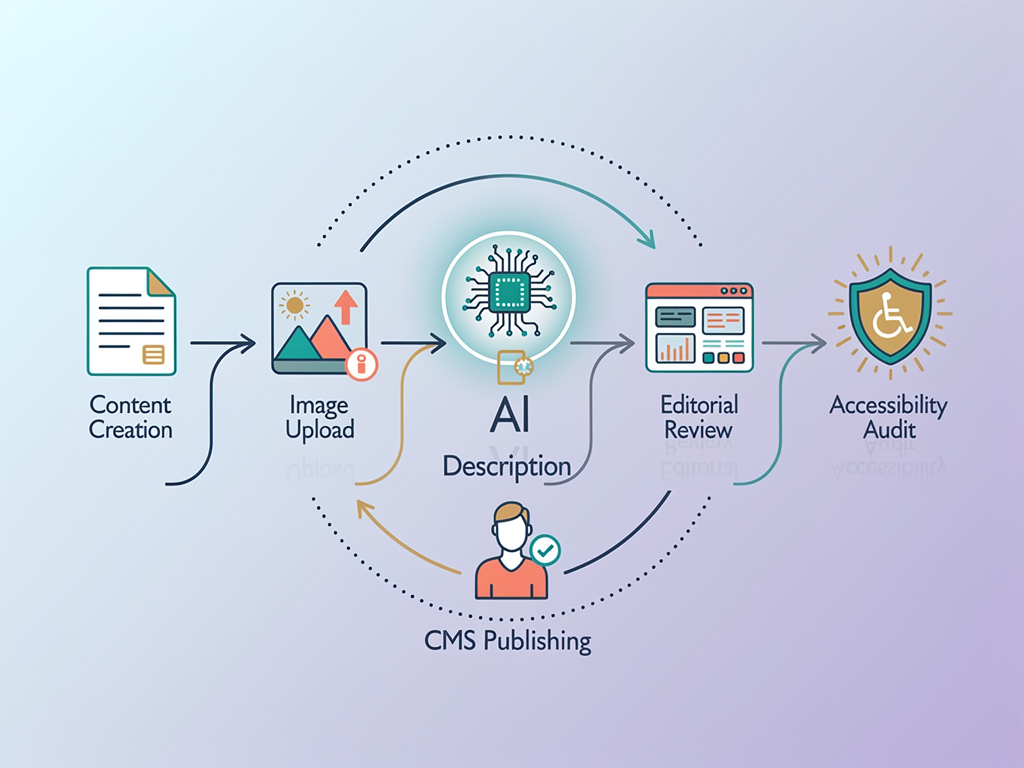
Agencies managing multiple client sites benefit from centralized tools that can process images across different properties while maintaining client-specific configurations. API-based solutions allow custom integrations with project management systems, enabling alt text generation to be triggered as part of broader content delivery workflows. Some agencies establish dedicated quality assurance steps where generated alt text is reviewed before client delivery, ensuring consistent quality across all managed properties.
For businesses using headless CMS platforms like Contentful, DatoCMS, or Storyblok, native integrations with alt text services enable automation within the content modeling layer. Images uploaded to the asset library can be processed automatically, with generated alt text stored as metadata that's available wherever the image is used. This approach ensures consistency across multiple front-end implementations that might consume the same content.
Scheduling and automation features help manage processing costs and server load. Rather than generating alt text immediately for every uploaded image, you might configure daily batch processing that handles all new images from the previous 24 hours. This approach can reduce API costs (some services offer bulk discounts) while ensuring all content receives optimization before significant traffic exposure.
Measuring the Impact of Alt Text Optimization
Like any SEO initiative, alt text optimization should be measured and evaluated to understand its impact and justify continued investment. Several metrics and tools can help you quantify the benefits of your automation efforts and identify opportunities for further improvement.
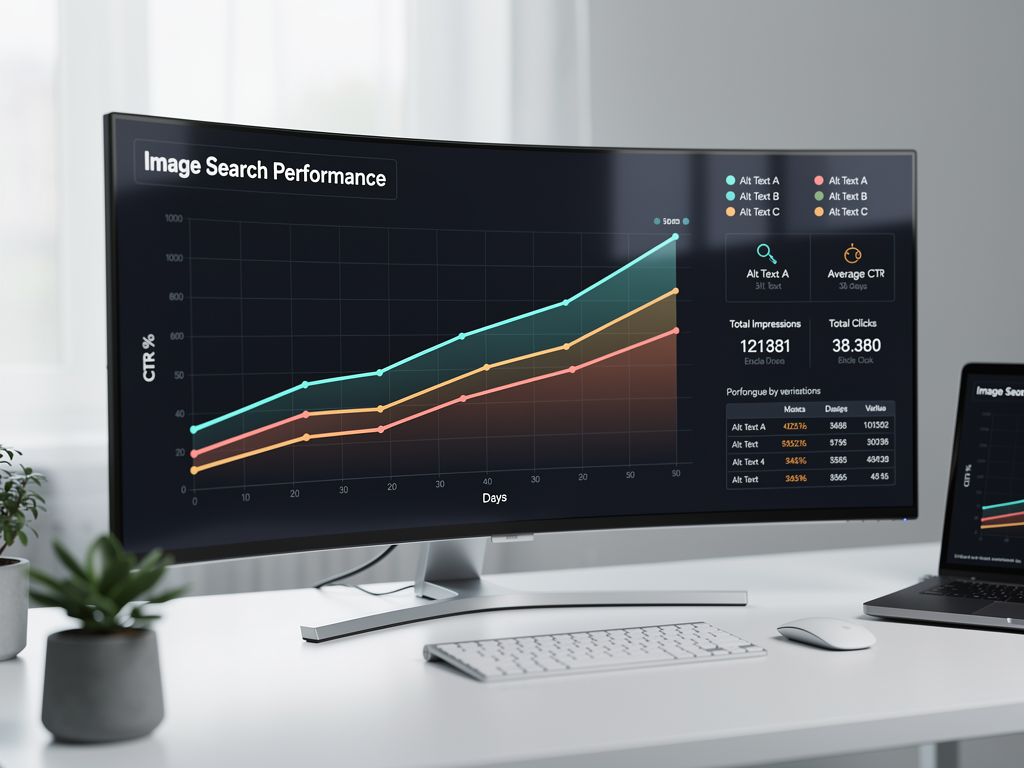
Google Search Console provides direct visibility into image search performance. The Performance report can be filtered to show only image search results, revealing impressions, clicks, and average position for queries where your images appeared. After implementing comprehensive alt text optimization, monitor these metrics for improvement. Increases in image search impressions indicate that Google is indexing and displaying your images for more queries, while improved click-through rates suggest your images (and their associated alt text) are compelling to searchers.
Accessibility audit tools like WAVE, axe, and Lighthouse include alt text evaluation as part of their assessments. Running periodic audits helps ensure your automation is working correctly and identifies any images that may have been missed. These tools can also catch common errors like duplicate alt text across multiple images or descriptions that don't match image content.
| Metric | Tool | What It Indicates | Target Improvement |
|---|---|---|---|
| Image search impressions | Google Search Console | Visibility in image search results | 20-50% increase within 3 months |
| Image search clicks | Google Search Console | Traffic from image search | 15-30% increase within 3 months |
| Accessibility score | Lighthouse/WAVE | Overall accessibility compliance | 90+ score |
| Missing alt text count | Site crawlers | Optimization completeness | Less than 5% of images |
| Alt text quality score | Manual sampling | Description accuracy and relevance | 85%+ acceptable on review |
Site crawling tools like Screaming Frog, Sitebulb, or Ahrefs can audit your entire site for missing or problematic alt text. These tools identify images without alt attributes, images with empty alt text (which may or may not be appropriate), and images with very short or potentially inadequate descriptions. Regular crawls help you maintain optimization quality as your site grows and changes.
For e-commerce sites, correlating alt text optimization with product page performance can reveal business impact. Track organic traffic to product pages before and after optimization, segment by pages that received alt text improvements, and look for patterns in conversion rates. While alt text is just one factor among many, comprehensive image optimization often correlates with improved overall page quality signals that benefit rankings.
Common Challenges and How to Overcome Them
Despite the power of AI automation, implementing alt text generation at scale presents several challenges that require thoughtful solutions. Understanding these obstacles in advance helps you plan effective implementations and set appropriate expectations.
Accuracy limitations remain the most significant challenge. AI systems can misidentify objects, miss important context, or generate descriptions that are technically accurate but miss the point of why an image was included. A chart showing sales growth might receive alt text describing "a bar graph with blue and green bars" rather than "quarterly sales growth chart showing 40% year-over-year increase." Human review remains essential for images where precise accuracy matters.

Processing costs can accumulate quickly for sites with large image libraries. At one to three cents per image, processing 10,000 images costs $100 to $300, a reasonable investment for most businesses but potentially significant for bootstrapped startups or sites with very large catalogs. Strategies for managing costs include prioritizing high-traffic pages, processing only images that appear in indexed content, and leveraging bulk discounts offered by some providers.
Integration complexity varies significantly across platforms. While WordPress and Shopify enjoy robust plugin ecosystems, custom-built sites or less common CMS platforms may require API integration work. Evaluate integration requirements before committing to a specific tool, and factor development time into your implementation planning. Some services offer webhook-based automation that can work with virtually any system capable of making HTTP requests.
Maintaining consistency across large teams presents organizational challenges. When multiple content creators upload images, ensuring everyone follows the same alt text standards requires documentation, training, and potentially automated enforcement. Some organizations establish alt text style guides that specify preferred formats, required elements, and quality standards, then use automated tools to flag descriptions that don't meet criteria.
Challenge Solution: Create a simple alt text checklist for your team: Does it describe the image accurately? Does it include relevant keywords naturally? Is it between 50 and 150 characters? Would it make sense to someone who can't see the image? Four quick checks can catch most quality issues.
Advanced Strategies for Competitive Advantage
Once you've implemented basic alt text automation, advanced strategies can help you extract additional value and outperform competitors who treat image optimization as an afterthought. These approaches require more sophisticated implementation but can deliver significant advantages in competitive markets.
Multilingual alt text opens international markets to your image content. If your site serves multiple language markets, generating alt text in each target language ensures images are discoverable in local search results and accessible to users browsing in their preferred language. Tools supporting 130+ languages can process the same image multiple times with different language outputs, creating comprehensive international optimization.
A/B testing alt text for high-value images can reveal which descriptions drive better engagement. For product images or key landing page visuals, create multiple alt text variations emphasizing different features or keywords, then measure which versions correlate with better image search performance. While this approach requires more sophisticated tracking, it can inform broader optimization strategies.
Structured data integration amplifies alt text effectiveness. When images are associated with schema markup (Product schema for e-commerce, Article schema for blog content, Recipe schema for food sites), search engines gain additional context that enhances their understanding of your visual content. Ensure your alt text aligns with and reinforces the structured data on each page for maximum impact.
Seasonal and trending keyword integration keeps your image optimization current. Rather than treating alt text as static once generated, periodically refresh descriptions for high-value images to incorporate trending search terms or seasonal relevance. An image of winter boots might emphasize "holiday gift" keywords in November and December, then shift to "winter clearance" messaging in January.
For affiliate marketers and niche site builders, competitive analysis of image optimization can reveal opportunities. Use tools to analyze how top-ranking competitors describe their images, identify gaps in their optimization, and target image search queries they're missing. Image search often has less competition than traditional web search, making it a valuable channel for newer sites building authority.
The Future of AI-Powered Image Optimization
The capabilities of AI image analysis and description generation continue to advance rapidly, suggesting even more powerful automation tools in the near future. Understanding emerging trends helps you prepare for changes and position your optimization strategy for long-term success.
Multimodal AI models that understand both images and text in context are becoming increasingly sophisticated. Future alt text generators may analyze not just the image itself but also the surrounding page content, user intent signals, and competitive landscape to generate descriptions optimized for specific ranking opportunities. This contextual awareness could dramatically improve the relevance and effectiveness of automated alt text.
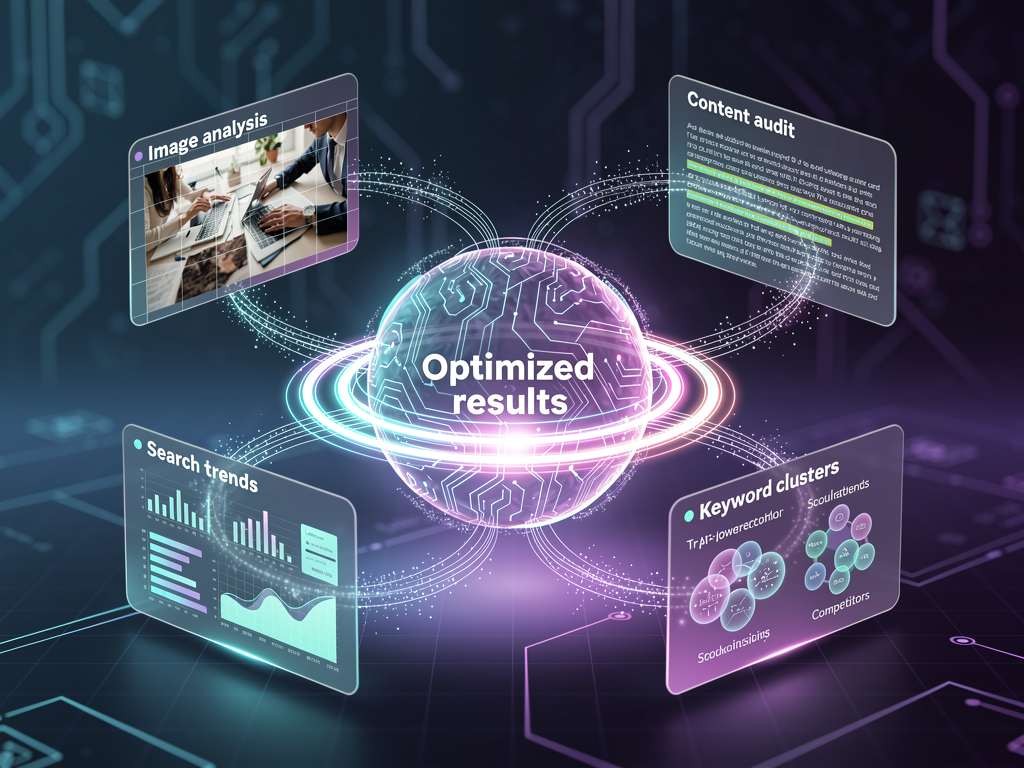
Visual search technology from Google Lens, Pinterest, and other platforms is changing how users discover content. As visual search becomes more prevalent, the relationship between images and text descriptions may evolve. Alt text might need to optimize not just for traditional keyword queries but also for visual similarity searches where users upload reference images to find related content.
Accessibility regulations continue to expand and strengthen globally. The European Accessibility Act, taking full effect in 2025, imposes significant requirements on digital products and services sold in EU markets. Similar legislation is advancing in other jurisdictions. Businesses that establish robust alt text automation now will be better positioned to meet evolving compliance requirements without scrambling to retrofit their content.
Integration with broader content automation represents another frontier. Platforms like SeoSmart that automate article creation with images, internal links, and multimedia content are beginning to incorporate alt text generation as part of their end-to-end workflows. This integration ensures that AI-generated content arrives fully optimized, eliminating the need for separate alt text processing steps.
Building a Comprehensive Image SEO Strategy
Alt text optimization, while critical, represents just one component of comprehensive image SEO. Maximizing the value of your visual content requires attention to multiple factors that work together to improve search visibility and user experience.
File naming conventions provide additional keyword signals to search engines. Before uploading images, rename files from generic camera outputs (IMG_4523.jpg) to descriptive, keyword-rich names (blue-leather-messenger-bag-front-view.jpg). This practice reinforces your alt text optimization and provides another ranking signal.
Image compression and format selection affect page speed, which influences both rankings and user experience. Modern formats like WebP and AVIF offer superior compression while maintaining quality, but ensure your alt text tools support these formats. Some older solutions only process JPG and PNG files, potentially leaving newer format images without descriptions.
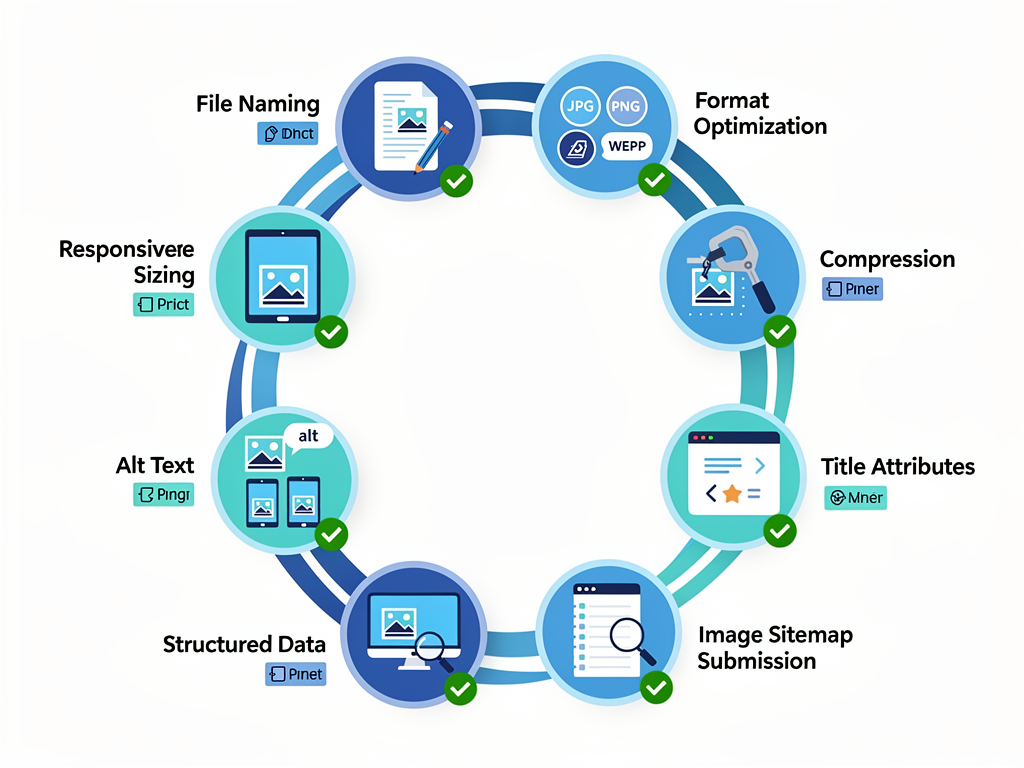
Image sitemaps help search engines discover and index your visual content. While Google can find images through regular crawling, dedicated image sitemaps provide explicit information about image locations and can include additional metadata. Many SEO plugins can generate image sitemaps automatically, ensuring new content is promptly indexed.
Responsive image implementation using srcset attributes ensures appropriate image sizes load for different devices. While this primarily affects performance, it also influences how search engines evaluate your pages. Properly implemented responsive images demonstrate technical quality that can contribute to overall page authority.
Combining these elements with automated alt text generation creates a robust image optimization framework that delivers compounding benefits over time. Each optimized image becomes a potential entry point for organic traffic, and comprehensive optimization across large catalogs can significantly expand your search footprint.
Cost-Benefit Analysis for Different Business Types
The value proposition of AI alt text generation varies based on business model, content volume, and competitive landscape. Understanding the cost-benefit dynamics for your specific situation helps you make informed investment decisions and set appropriate expectations for ROI.
E-commerce businesses typically see the strongest returns from alt text automation. With product images directly tied to revenue-generating pages, improvements in image search visibility translate relatively directly to sales opportunities. A mid-sized e-commerce site with 2,000 products and 8,000 images might invest $80 to $240 in initial alt text generation, with ongoing costs of $20 to $50 monthly for new products. If this investment drives even a modest increase in organic traffic and conversions, the ROI becomes strongly positive.
Content publishers and bloggers benefit from improved article discoverability and accessibility compliance. For sites monetized through advertising, increased traffic from image search directly improves revenue. For sites building authority and email lists, image search provides additional discovery pathways. A blog publishing 20 illustrated articles monthly might spend $10 to $30 monthly on alt text generation, a negligible cost relative to content creation expenses.
| Business Type | Typical Image Volume | Monthly Cost Range | Primary Value Drivers |
|---|---|---|---|
| Small e-commerce (500 products) | 2,000-3,000 images | $20-60 initial, $10-20 ongoing | Product discoverability, compliance |
| Medium e-commerce (2,000 products) | 8,000-12,000 images | $80-360 initial, $30-60 ongoing | Image search traffic, conversion optimization |
| Content blog (20 posts/month) | 100-200 images/month | $10-30 ongoing | Article discoverability, accessibility |
| Agency (10 client sites) | Varies widely | $100-500 ongoing | Client deliverable value, efficiency |
| SaaS company | 500-2,000 images | $50-200 initial, $20-40 ongoing | Documentation accessibility, brand perception |
SEO agencies can leverage alt text automation as both an internal efficiency tool and a client service offering. Automating alt text generation across client portfolios reduces labor costs while improving deliverable quality. Some agencies incorporate alt text optimization into their standard service packages, using automation to deliver value that would be prohibitively expensive with manual processes.
SaaS companies with documentation, help centers, and marketing content benefit from accessibility compliance and improved content discoverability. While the direct revenue impact may be less immediate than for e-commerce, comprehensive accessibility demonstrates commitment to inclusive design that can influence enterprise purchasing decisions and reduce legal risk.
Conclusion
AI-powered alt text generation has transformed what was once a tedious, often-neglected optimization task into an automated process that delivers consistent results at scale. For SEO agencies, content marketing managers, e-commerce store owners, and anyone managing substantial image libraries, these tools offer compelling benefits: improved search visibility through image SEO, enhanced accessibility compliance, and dramatic time savings compared to manual description writing.
The technology has matured to the point where generated alt text quality rivals human-written descriptions for most use cases, while processing speeds and integration capabilities make automation practical for businesses of all sizes. Whether you're optimizing a small blog or a massive e-commerce catalog, solutions exist that can fit your technical environment and budget constraints.
Success with alt text automation requires thoughtful implementation: selecting tools appropriate for your platform, configuring settings to align with your SEO strategy, establishing quality review processes, and measuring results to demonstrate value. The businesses that treat image optimization as an integral part of their content strategy rather than an afterthought will capture increasing value as visual search continues to grow in importance.
As AI capabilities continue to advance and accessibility regulations expand globally, early investment in alt text automation positions your business for long-term success. The combination of improved rankings, expanded traffic sources, reduced legal risk, and enhanced user experience creates a compelling case for making automated alt text generation a standard part of your content operations.
Frequently Asked Questions
How accurate are AI-generated alt text descriptions compared to human-written ones?
Modern AI alt text generators achieve accuracy rates of 85% to 95% for straightforward images containing common objects, people, and scenes. The technology excels at identifying physical elements, colors, spatial relationships, and basic actions. However, accuracy decreases for specialized content like technical diagrams, industry-specific equipment, or images where context significantly affects meaning. For example, an AI might correctly describe "a person pointing at a computer screen" but miss that the screen shows a specific software interface relevant to the article's topic. Most organizations find that AI-generated descriptions work well for the majority of images while flagging 10% to 15% for human review and refinement. Establishing clear review criteria and spot-checking processes helps maintain quality while still capturing significant efficiency benefits.
Will using AI-generated alt text negatively impact my SEO or trigger penalties?
Search engines like Google do not penalize websites for using AI-generated alt text, provided the descriptions are accurate, relevant, and genuinely helpful to users. Google's guidelines focus on whether alt text serves its intended purposes: helping visually impaired users understand image content and providing context for search engine indexing. AI-generated descriptions that meet these criteria are treated the same as human-written ones. The risk arises only if AI tools produce spammy, keyword-stuffed, or inaccurate descriptions that create poor user experiences. Quality AI tools are specifically designed to avoid these pitfalls, generating natural-language descriptions that incorporate keywords appropriately. Regular quality audits ensure your automated alt text maintains standards that benefit rather than harm your SEO performance.
How do I handle alt text for decorative images that don't convey meaningful content?
Decorative images, such as background patterns, visual separators, or purely aesthetic elements that don't add informational value, should use empty alt attributes (alt="") rather than descriptive text. This signals to screen readers that the image can be skipped, preventing unnecessary interruptions for visually impaired users. Most AI alt text generators will attempt to describe any image they process, so you'll need to either exclude decorative images from processing or manually clear their alt text after generation. Some tools allow you to tag images as decorative during upload, preventing automatic processing. Establishing clear guidelines for your team about which images qualify as decorative helps maintain consistency. When in doubt, consider whether removing the image would change the page's meaning; if not, it's likely decorative.
Can AI alt text generators handle product images with multiple items or complex compositions?
AI generators handle complex images with varying degrees of success depending on the specific tool and image complexity. Most modern systems can identify and describe multiple objects within a single frame, producing descriptions like "wooden dining table set with six chairs, white ceramic vase with flowers, and pendant lighting fixture." However, they may struggle with determining which elements are most important or understanding the commercial context. For product images showing bundles, kits, or styled scenes, you may need to configure custom prompts that emphasize the primary product or manually refine generated descriptions. E-commerce-focused tools often perform better in these scenarios because they're trained on product photography and can reference associated product data to prioritize relevant elements in their descriptions.
What's the best approach for retroactively adding alt text to thousands of existing images?
Retroactive alt text optimization for large image libraries requires a prioritized, phased approach rather than attempting to process everything simultaneously. Start by identifying your highest-value pages: top-traffic URLs, key landing pages, and product pages with strong conversion rates. Use site crawling tools to generate a list of images missing alt text, then prioritize based on page importance. Most AI alt text tools support bulk processing that can handle hundreds or thousands of images, but consider spreading processing across multiple days to manage costs and allow for quality review. Process your priority images first, review a sample for quality, adjust settings if needed, then proceed with lower-priority content. This approach ensures your most important pages receive optimization quickly while maintaining quality standards across your entire library.
How do AI alt text tools integrate with content management systems beyond WordPress and Shopify?
Integration options vary significantly across different CMS platforms. Major headless CMS platforms like Contentful, DatoCMS, and Storyblok often have native integrations or marketplace apps from alt text providers. For less common platforms, API-based integration is typically available, allowing developers to connect alt text generation to any system capable of making HTTP requests. The typical API workflow involves sending an image URL or file to the service, receiving generated alt text in the response, and storing that text in your CMS's appropriate field. Webhook-based automation can trigger processing automatically when new images are uploaded. For custom-built sites, most alt text services provide comprehensive API documentation and code examples in multiple programming languages. Implementation complexity ranges from a few hours for straightforward integrations to several days for complex workflows with custom requirements.
Ready to Automate Your Entire Content Workflow?
Alt text optimization is just one piece of the content puzzle. If you're spending hours creating SEO-optimized articles, managing image generation, and coordinating publishing schedules, there's a better way. SeoSmart automates your entire content creation process, generating brand-tailored 5,000-word articles complete with AI images, internal links, YouTube video embeds, and proper schema markup. With 1-click publishing to WordPress, Shopify, Webflow, and Ghost, plus a built-in backlink exchange network, you can focus on strategy while SeoSmart handles execution. Start with 500 free credits and discover how automated content sprints can transform your SEO results.
Subscribe to our newsletter
Subscribe to our newsletter and stay up-to-date with the latest news and updates.